March 2026
M T W T F S S
 1
2345678
9101112131415
16171819202122
23242526272829
3031  

Keeping Family Together at WaimeaBeachHouse

A White Rumped Shama family continues to make our home their home.  Linda and I like this fact.

The female and male that live at and around our yard appeared to be courting last spring.  The singing from each songbird is a joy to hear.  It appears the couple successfully had an offspring.

Recently, an adolescent White Rumped Shama has been flying, perching, and singing in the front and back yards.  It has even flown to rest on a ledge above my office window while I work.

The White Rumped Shama is a songbird from Asia introduced to Kauai in the 1931’s.  It is shy, but curious. Both female, male, and the adolescent come when I give their call.  On average the bird’s territory is relatively small (.22 acres).  That size converts to about 9,679 square feet. Our lot size is about 15,400 square feet.

Mom

Mamma Shama is the front yard.

Dad

Dad in the Backyard.

Latest Family Member

latest family member

Child in the back yard.

A Post on the courtship with some additional background on the bird, is located [here].

Traveling on a Hall of Fame Trail


The Ke Ala Hele Makālae trail on Kaua’i’s Coconut Coast is a dandy.  The trail was recently inducted into The Rails to Trails Conservancy’s Hall of Fame. Ke Ala Hele Makālae in Hawaiian means “The Path that Goes by the Coast.”

The official trail is 7.6 miles in length. It is paved and hugs the eastern coastline of the Island of Kauai from Lydgate to Ahihi Point.
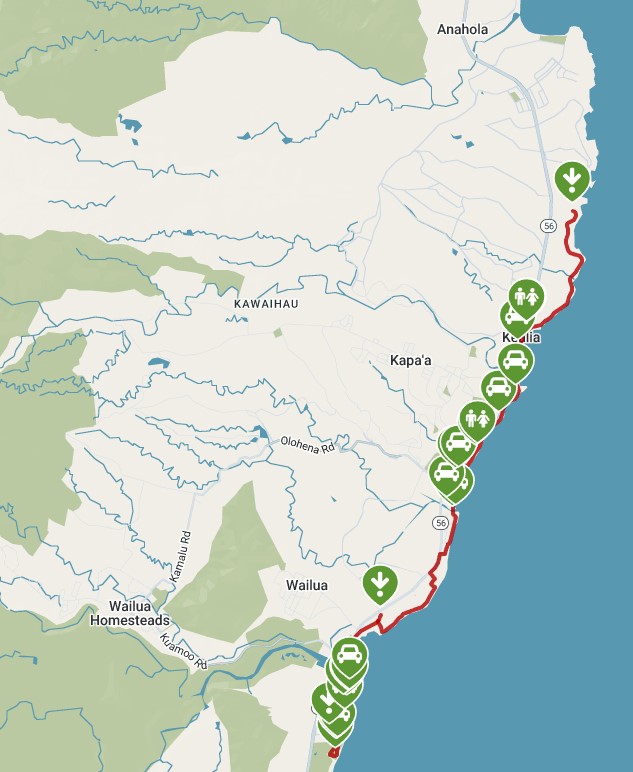
The Trail Map. South: Lydgate to North Ahihi Point.

The Ke Ala Hele Makālae trail is well maintained and built for the general population to utilize.  It travels adjacent to a number of wonderful beaches.  There are bridges over all the streams the trail encounters.  The trail is intended for and used by bike riders, walkers and runners.  Traffic levels on the trail drop considerably starting at Kealia Beach and moving north to Ahihi.

The Ke Ala Hele Makālae trail offers big wave beaches, sandy somewhat secluded coves, and rocky shoreline.

Our Trip

On this day Linda, The Border Collies (Sage and Willow) and I decide to hike the Ke Ala Hele Makālae trail from Kealia Beach to Ahihi Point.  The out and back trip encompasses 5.2 miles of walking.
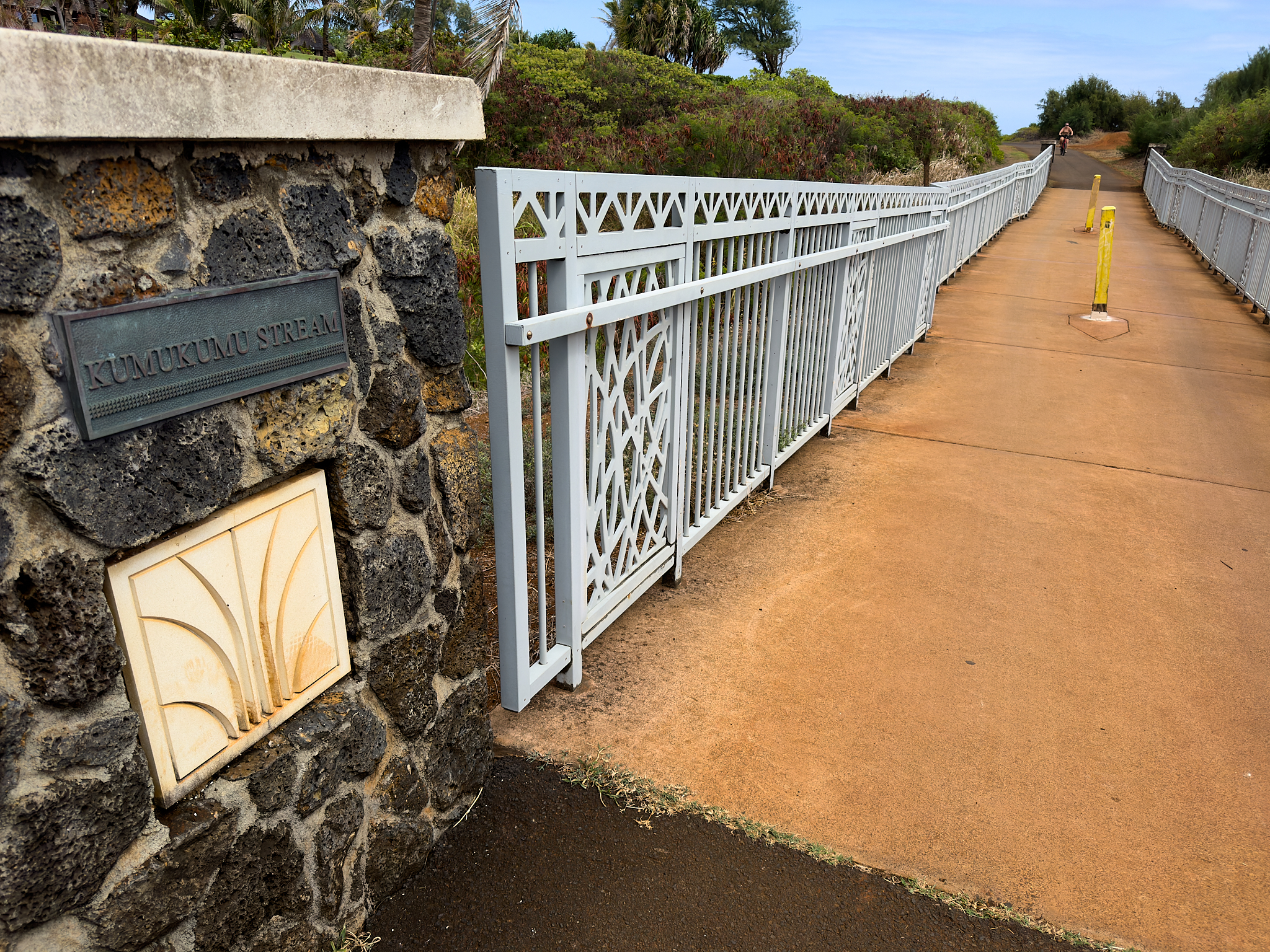
Kumukumu Stream crossing on the Ke Ala Hele Makālae trail

Linda with Sage and Willow on the Ke Ala Hele Makālae trail.

Linda with Sage and Willow on the Ke Ala Hele Makālae trail overlooking Kuna (aka Donkey) Bay.
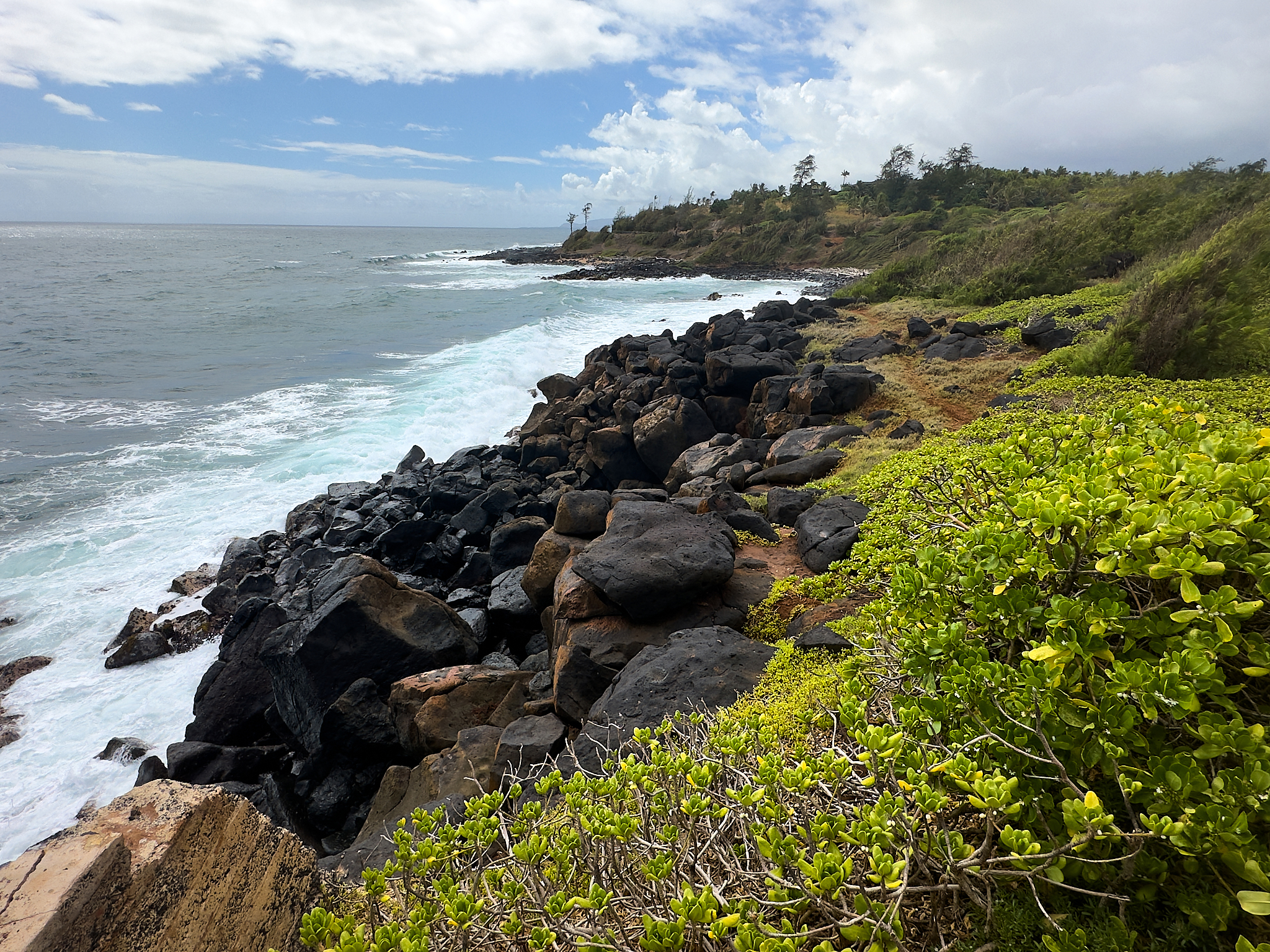
Along the Ke Ala Hele Makālae trail
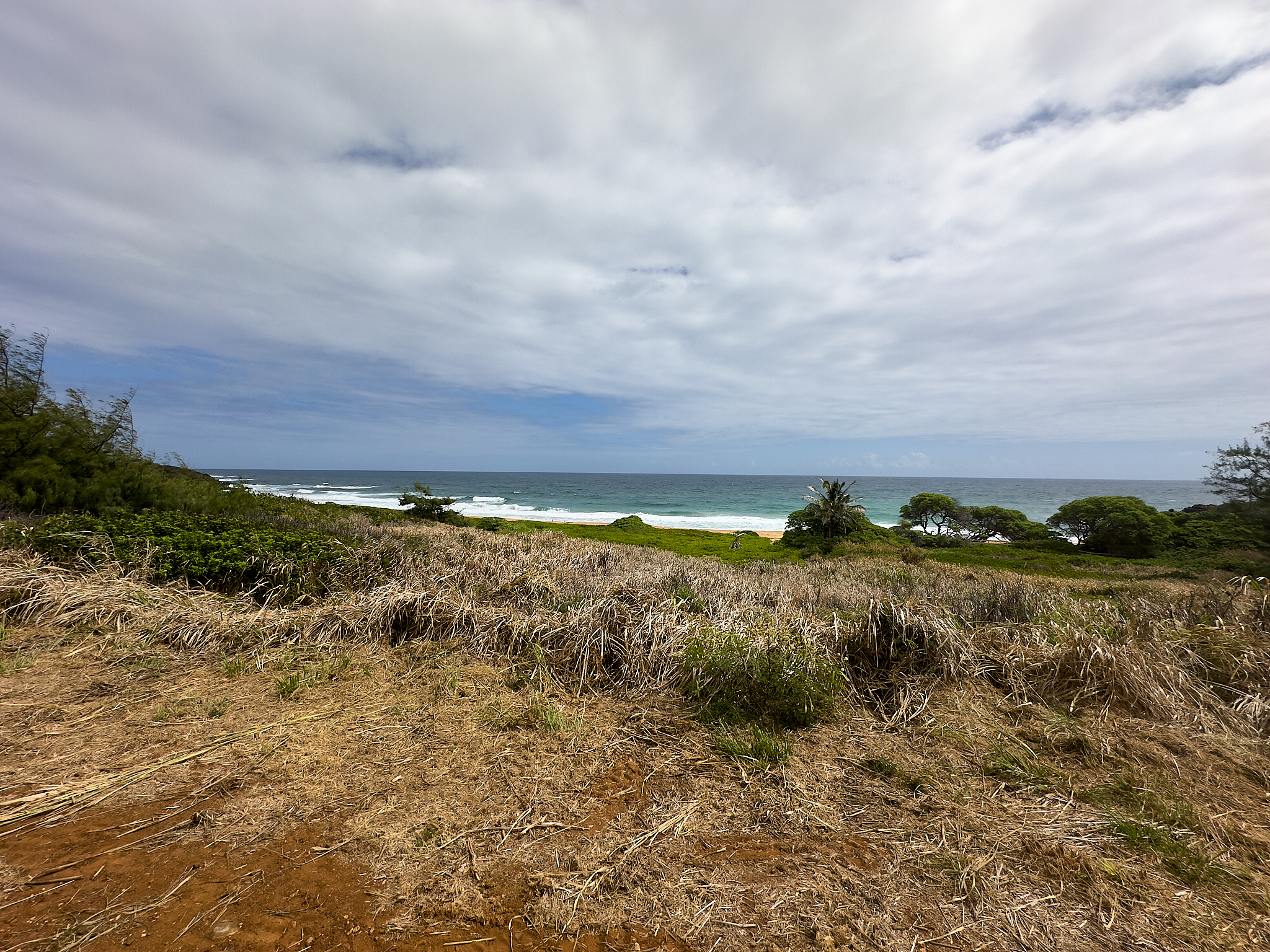
The Kuna (aka Donkey) Bay beach.
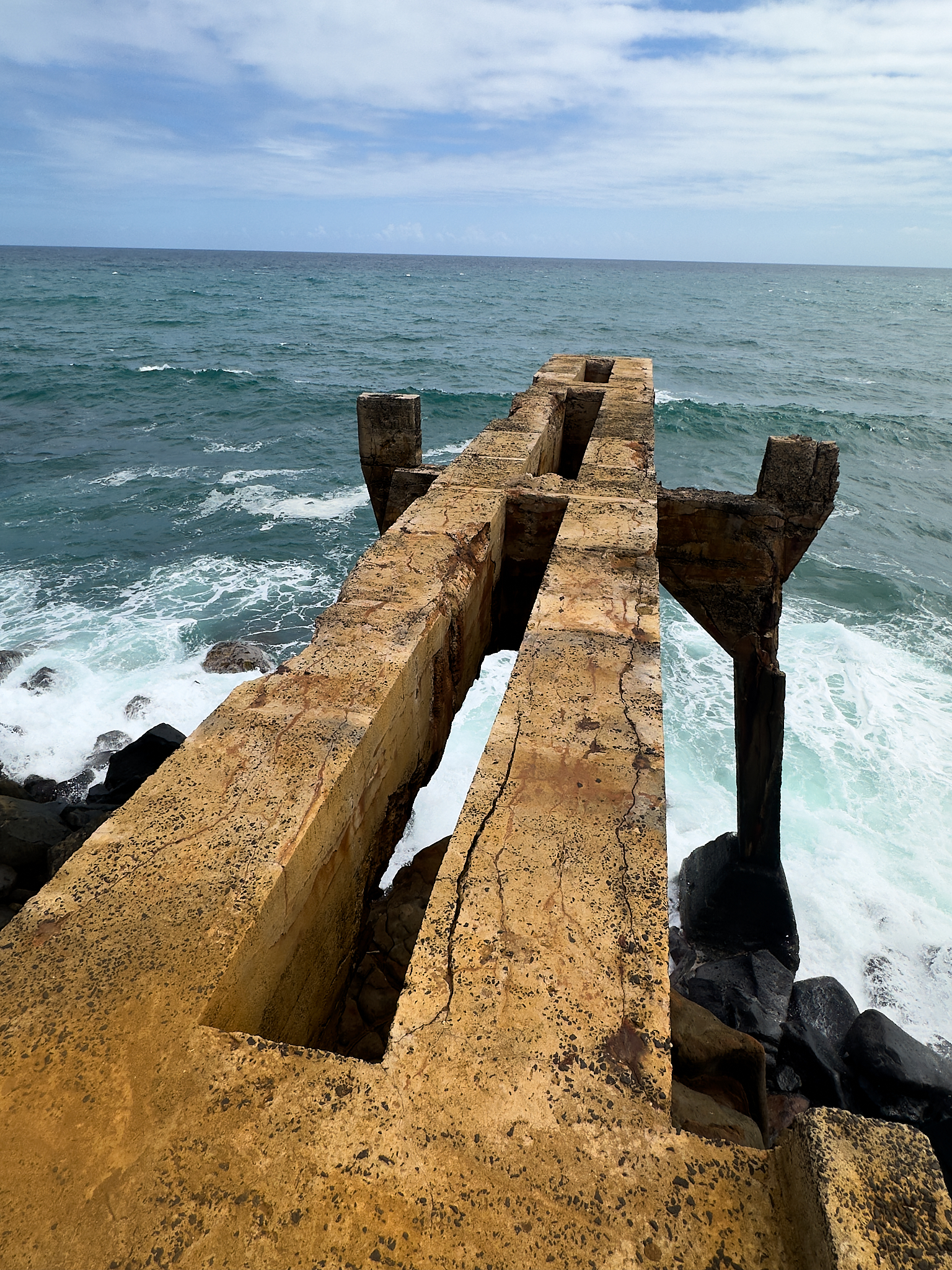
The Drop on the Ke Ala Hele Makālae trail.

Below is some information on the trail and Rails To Trails

Trip

Rails to Trails

*** Jeff’s Thoughts and Other Worthless Trivia ***

Kuna Bay (aka Donkey) beach is a lovely spot.  Access to the beach from the Ke Ala Hele Makālae trail and Kuhio highway (56) is straight-forward.  Donkey Beach used to be a “Clothing Optional.” beach.  This is no longer the case.  The setting of the beach surrounded by Ironwood trees is lovely. It is not a swimming beach as the surf is strong and the under-tow from the ocean current is notoriously dangerous.

This May Seem Stinky

The Drop or the concrete structure on the north end of the trail is a remnant of the sometimes inglorious human past.

The Sugar and Coconut Plantation companies of the 1920’s and 1930’s established it was inconvenient and costly to dispose the refuse from processing.  It was determined the most cost effective approach was to drop the refuse from a railcar into the ocean.

The railroad tracks on the route from the plantations to Lihue via Kapaa were utilized.  A junction, spur and large concrete dropping platform was created about 5 miles from Kapaa.  There the waste refuse was dumped off the platform and over the rocky shore into the ocean.

Unfortunately, a large percentage of the waste did not disappear into the depths of the ocean.  Instead the rotting waste would flow south and sit (some time for weeks on end) on the beaches at the town of Kapaa.

A Surprise Comet Appears in the Sky

Comet Tsuchinshan-ATLAS is a surprise visitor to heavenly sky above Earth. It was discovered in 2023 by observers in China’s Tsuchinshan “Purple Mountain” operation and South Africa’s Asteroid Terrestrial-impact Last Alert System (ATLAS). Thus the name.

Linda and my neighbor Jack decided to take in a flyby of Tsuchinshan-ATLAS from the front yard of our home in Waimea Kauai. 

Luckily our home is located on the oceanfront on the south-west of the island. So if the skies were clear we would be able to observe it about 40-45 minutes after sunset. There was one possible problem impeding a successful viewing.  The moon.  The moon was rising at 93% Waxing (i.e., Full) into view at the same time as the comet.  The implication, is that the comet might possibly not be visible.

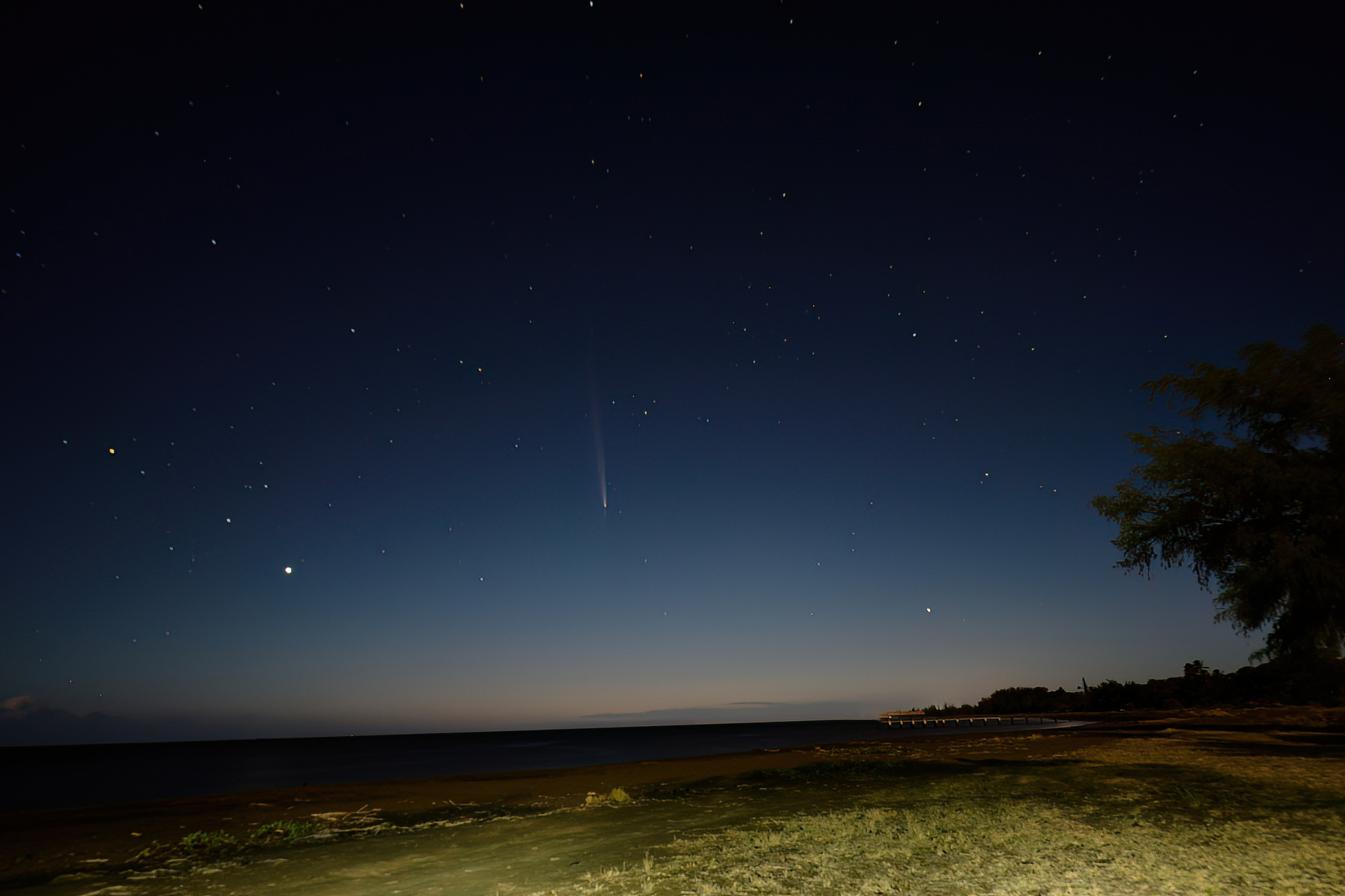
The Comet Tsuchinshan-ATLAS as seen from Waimea, Kauai Hawaii U.S.A.

Luckily the comet was visible and I captured the shot above.

For you Night Sky and Stargazer types… In the image… the planet Venus is located on lower left center… the Constellation Scorpius is located to the upper left of Venus. The bright orange light in Scorpius is Antares. On the upper right is the Constellation Hercules. Way way lower to the right is Waimea Beach Public Pier which Linda and the Border Collies (BC’s) pass by each day at dawn.  The BC’s often get a second session with me later in the day.

*** Jeff’s Thought’s and Other Worthless Trivia ***

I have been intrigued by how, and how well, objects from outer space are tracked. A link related to the subject is located [here].

As for Comet Tsuchinshan-ATLAS… we did not know about it until a year ago. Calculations about where it came from and would go after the Earth Flyby have been updated as more information became available.

There was a good chance that Comet Tsuchinshan-ATLAS would not stop by for a visit – given many comet’s are obliterated as they pass by our sun. Comet Tsuchinshan-ATLAS survived that endeavor.

And a return date?  As late as this week, experts project Comet Tsuchinshan-ATLAS came from the outer reaches of the milky way galaxy (ours) and will return in 80,000 years.  An update was just made by the experts, and Comet Tsuchinshan-ATLAS is likely to leave our galaxy.  I do have a question on the exit prediction.  Who will be around to perform the Fact Checking as it relates to the Return Date?

The image was captured using a Nikon Z9 camera and Nikkor 20MM (1.8) lens.  I captured the image using a manually controlled configuration. Focus: Manual (just short of infinity) ISO: 500, Time Lapse: 25 seconds. Aperture: f4.

The manual shooting is my usual method for capturing images.  However the moon at 93% waxing and shining in the direction of the comet (over my right shoulder) forced immediate improvisation.