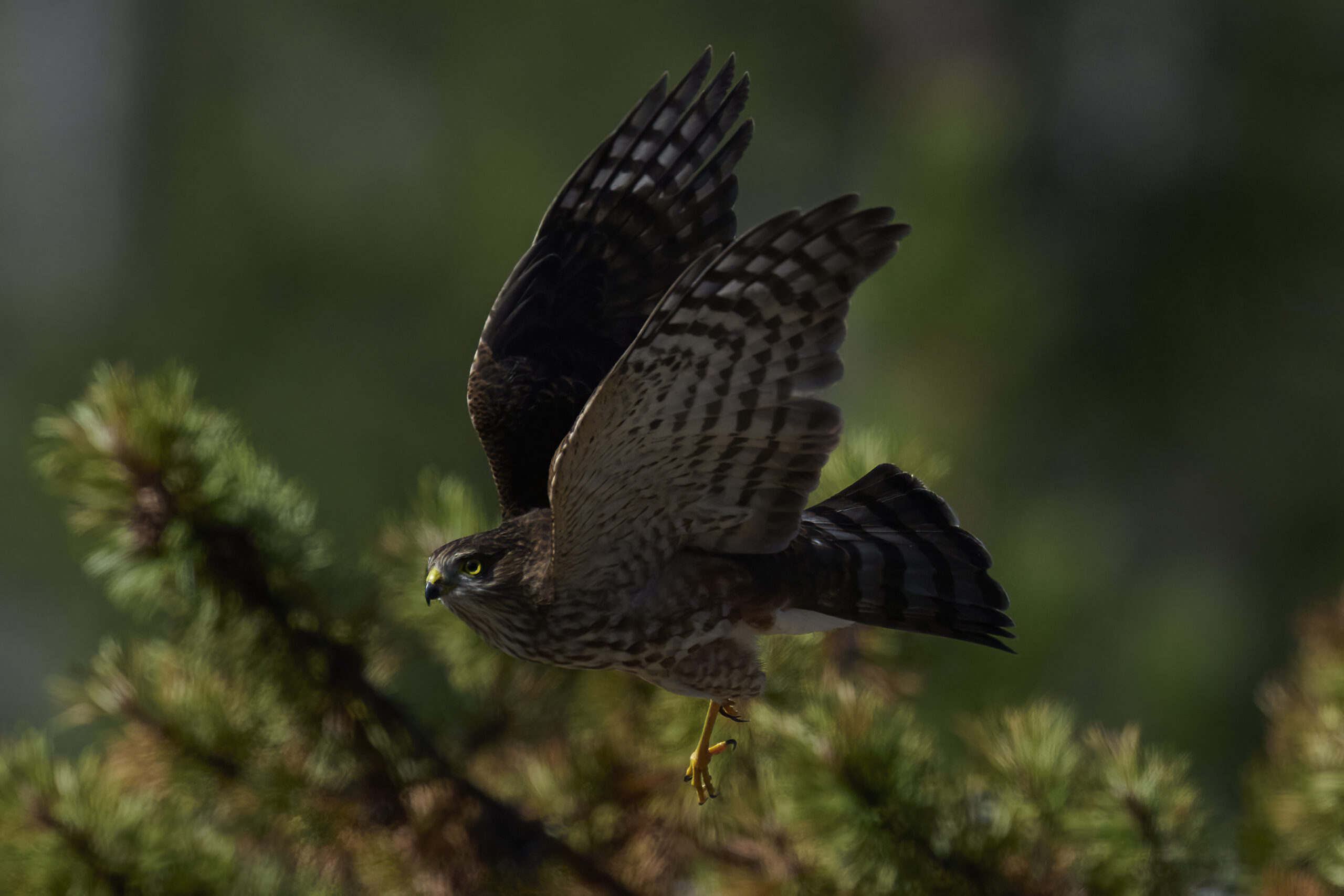
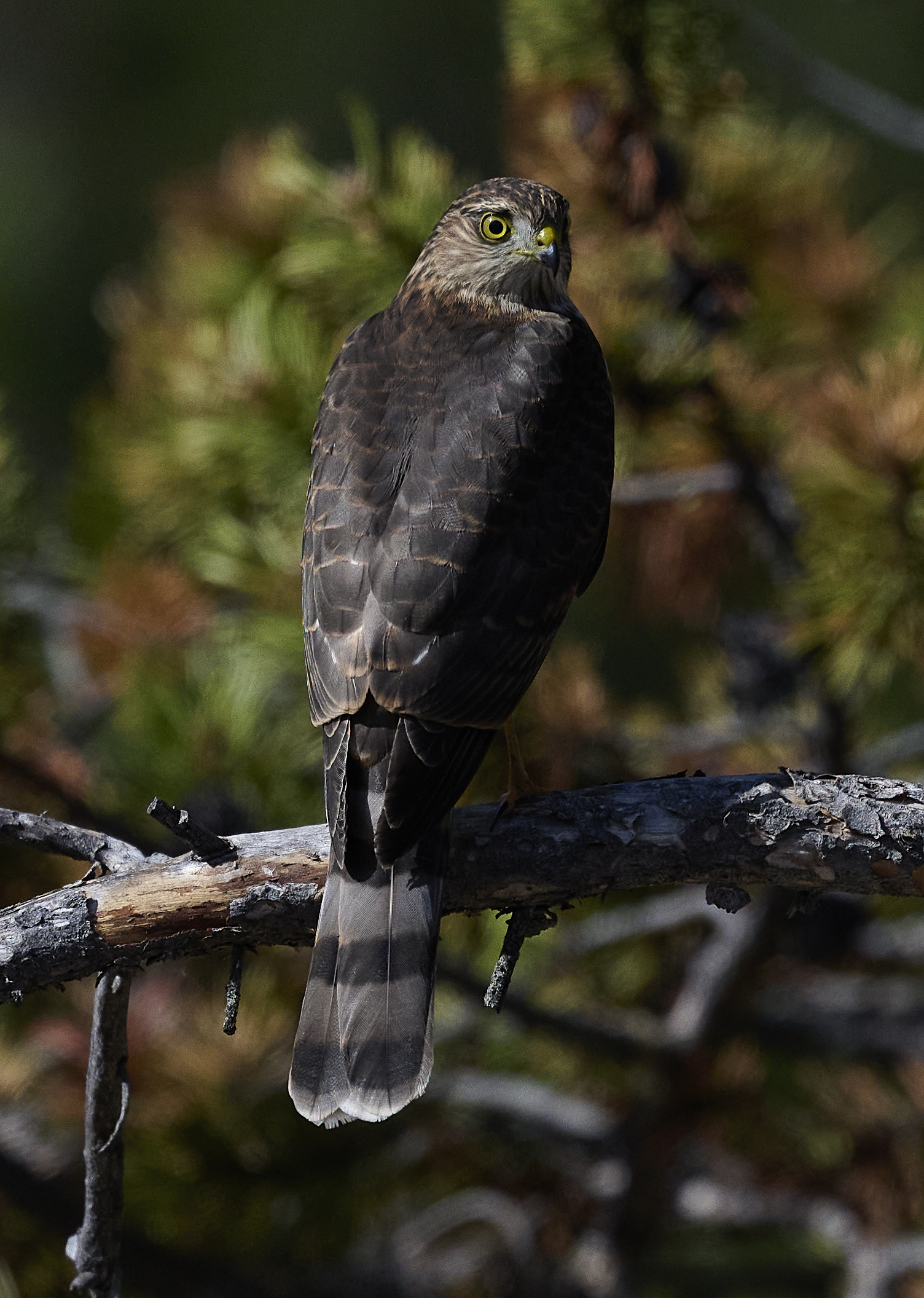
The Sharp-shinned hawk looking for a meal. Copyright Jeffrey H. Lubeck -MESH Art LLC. -all rights reserved,
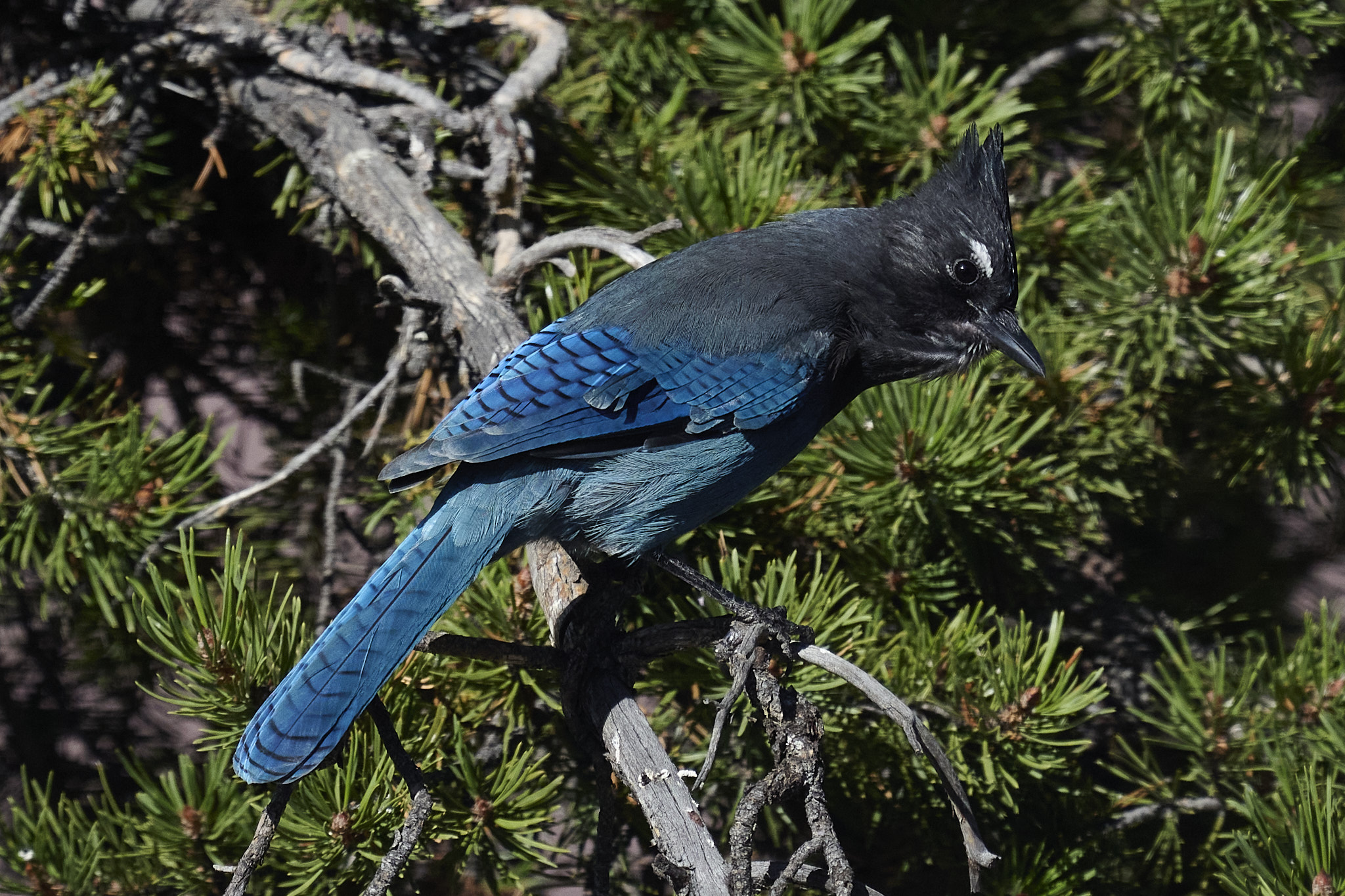
All six members of the three Stellar Jay families on our property seem out of sorts. The morning light and cool air are ideal for their repeated visits to the feeders at our cabin in the confines of the Sawtooth Mountains, Sawtooth National Forest, and the boundary of the Sawtooth National Wilderness.
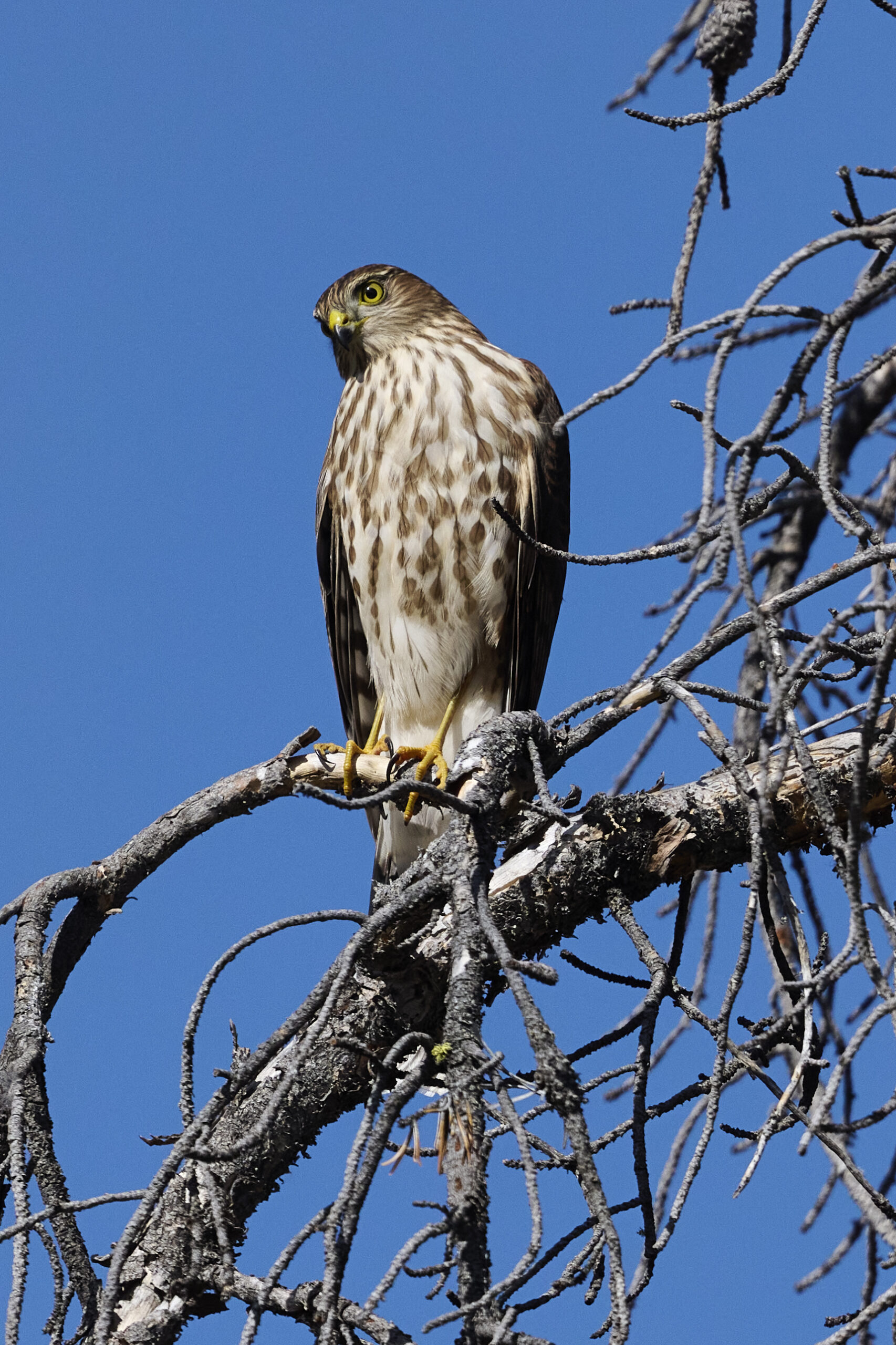
The Stellar Jays and Clark’s Nutcrackers normally run the show. However, something is not quite right. Today, someone new showed up. A juvenile male Sharp-shinned Hawk is on the property. It is looking for food. It feeds on small songbirds. Songbirds are all over the property.
The Sharp-shinned Hawk is the smallest predator bird in North America. The male is smaller than the female. Unlike most hawks, the sharp-shinned hawk is agile and conceals itself among the trees before striking its prey.
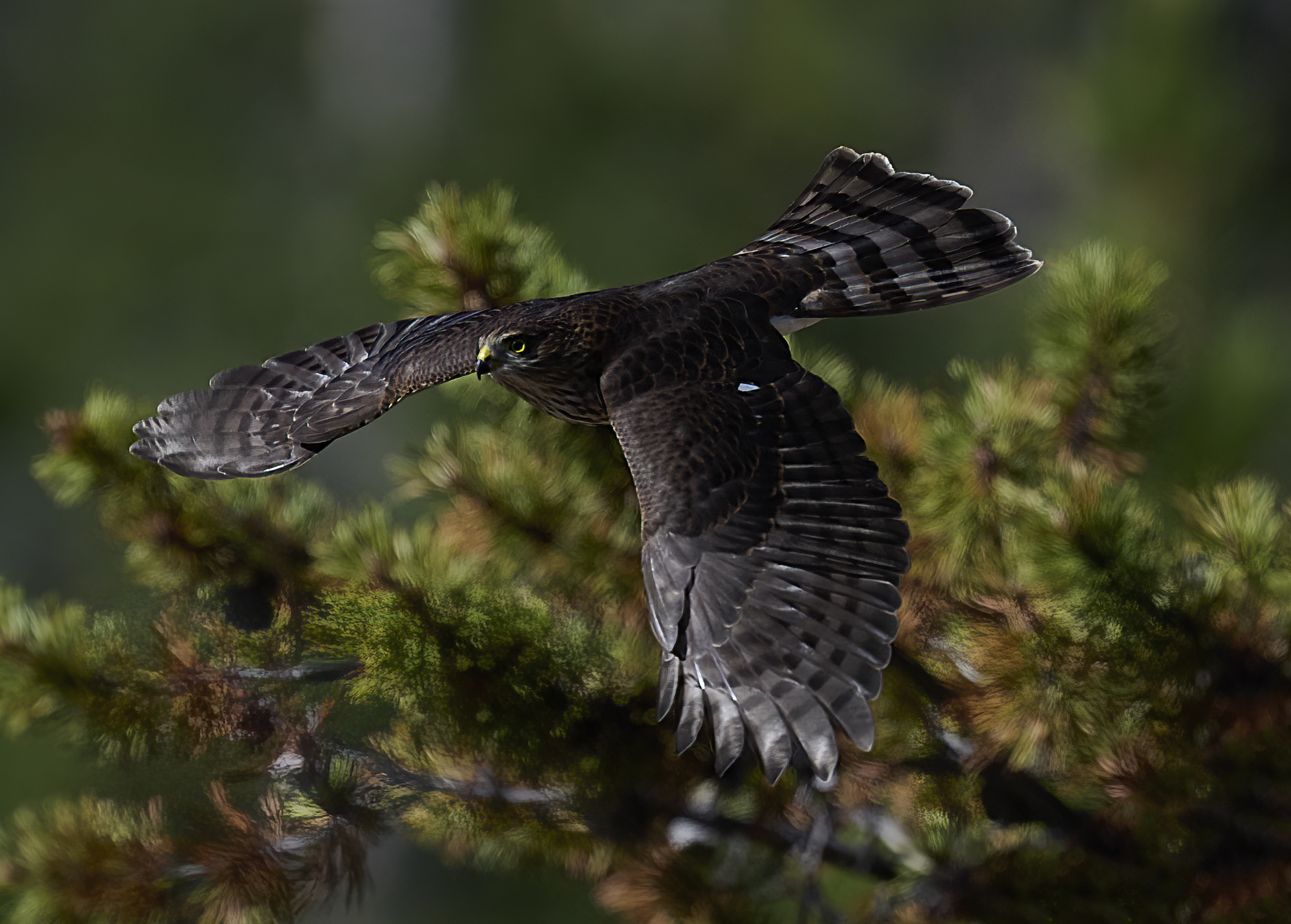
On approach. Copyright Jeffrey H. Lubeck -MESH Art LLC. -all rights reserved,
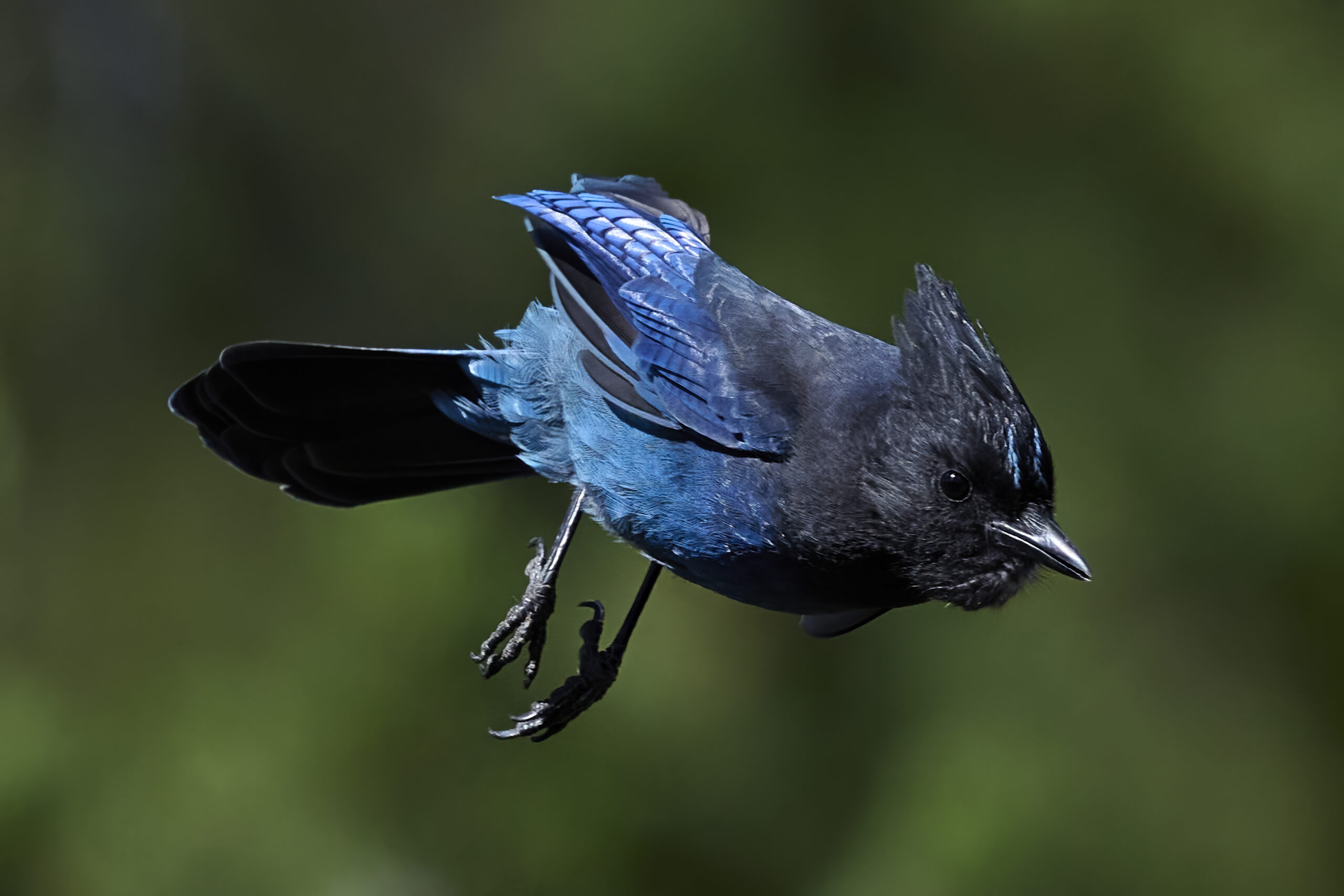
At first, the hawk is challenging a jay, or what appears to be the case. During the next 30 minutes, the opposite proved to be the case. The jay baits the hawk into attacking, only for the jay to flip the scenario. The jay follows the hawk into the trees. It leaps between branches, making the hawk constantly adjust its position.
Eventually, the hawk concedes to the jay. It achieves this by heading to the top of a lodgepole pine close by. It looks back at the jay, squawks, and fly’s off into the distance.
The Sharp-shinned and Cooper’s Hawk are residents of the Sawtooth Mountains of Idaho. Their population base is solid. People often confuse the two as being the same. They are not.
The dimensions of a raven are comparable to those of a Cooper’s hawk. The size of a stellar jay is comparable to that of a sharp-shinned hawk. A sharp-shinned hawk has decidedly thinner legs than a Cooper’s hawk.
Where Are You
We Have a Lease Agreement With The Lubeck Border Collies and Your Name is Not On It
 |
 |
*** Jeff’s Thoughts and Other Worthless Trivia ***
The timing is as good as its gets for this shoot. It is early September in the Sawtooths. The overnight temperatures have dropped into the low 30’s f. As the sun rises the temperatures move into the high 40’s low 50’s as I capture the images of the encounter. The angle of the sun is over my left shoulder. Not too high and not to low.
I am a hand-held manual setting shooter on this one. The Nikon Z400-520MM f2.8 is a big heavy lens. However, it is tac sharp in its capture. After some shots, I settle photographing with the Nikon Z9 Camera at F6.3, 1/5000th, and ISO 800 with full sun behind me. I do utilize the Nikon Z9 3D Bird Auto focus and pull the trigger as I hit the birds eye. This is easier said than done.
I my opinion there is no better lens than the Nikon Z400-520MM f2.8 for this kind of photography. The images captured for this post required no or minor post processing – in order to light the same through out. The bokeh and distortion of the branches in the distance are true to what was captured. I would like to take credit, but cannot.
Wow – incredible images! Thanks for all the information. Hope to see you in Ketchum soon. Enjoy the Sawtooths!
Thanks Sue!