February 2026
M T W T F S S
 1
2345678
9101112131415
16171819202122
232425262728  

Clark’s Nutcracker Comes on the Scene

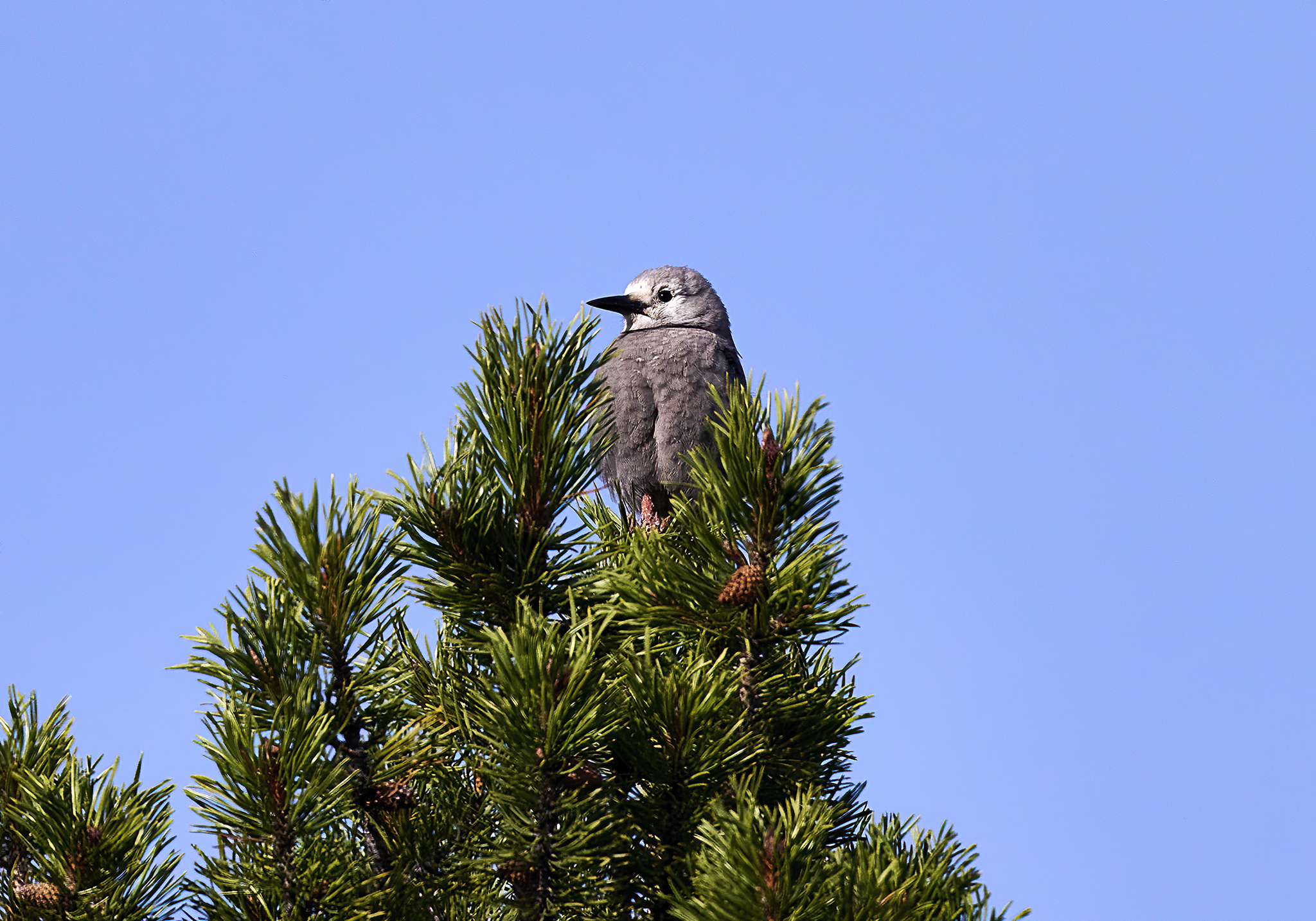
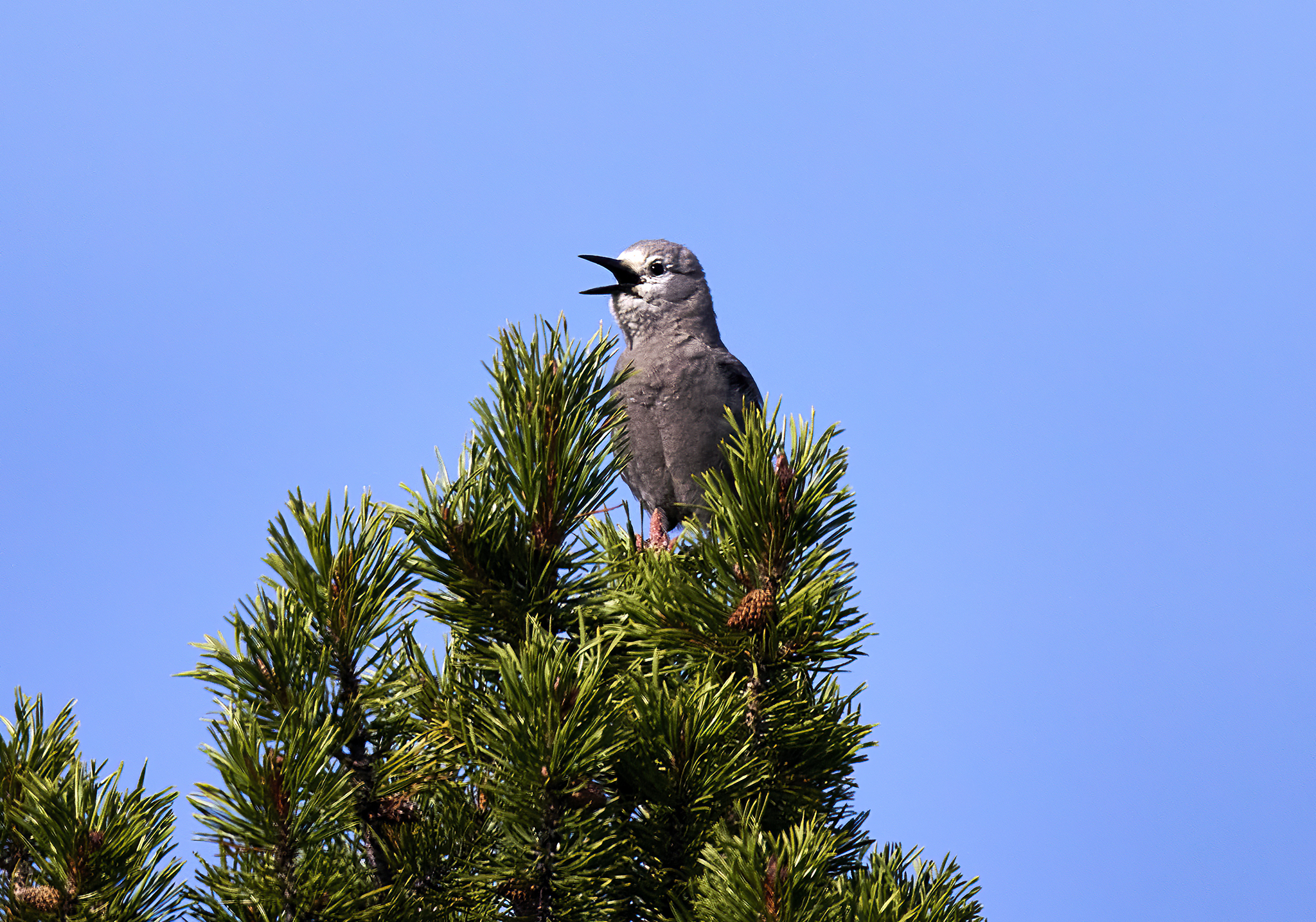
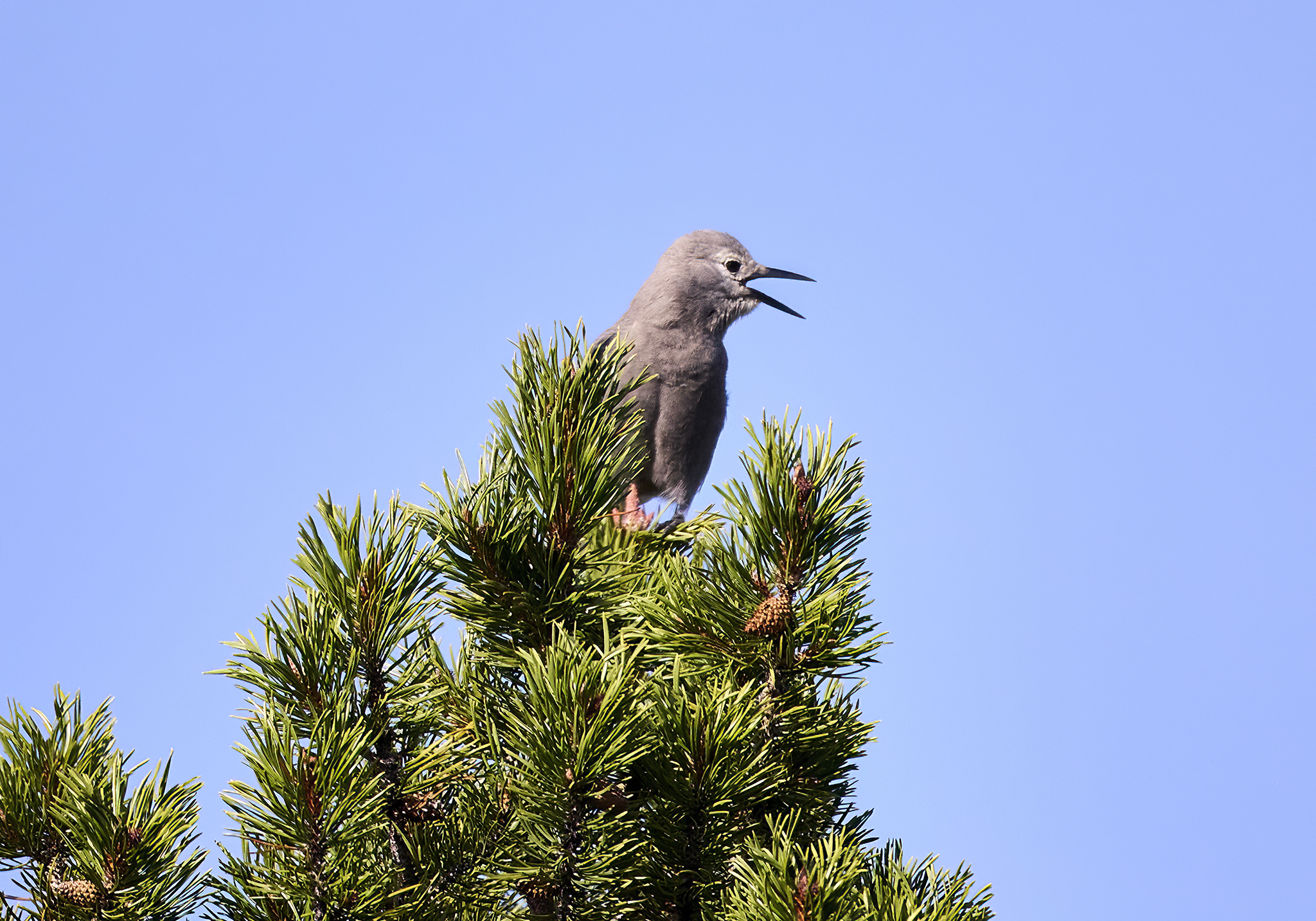
Clark’s Nutcracker (Nucifrago columbiana) is a bird native to the mountains of Idaho.  It normally resides near peaks and at tree-line.

However a pair of Clark’s Nutcrackers have decided to join their cousins – the Stellar Jay – at the feeders of our home in Stanley.

The Clark’s Nutcracker grows to about one foot (12″) in height and lives to about 10-12 years of age.  The bird was first documented on August 22nd, 1805 by William Clark at the North Fork of the Salmon River (in today’s State of Idaho) during the Lewis & Clark Expedition.  A wonderfully descriptive story about the first encounter and complete background is located [here].

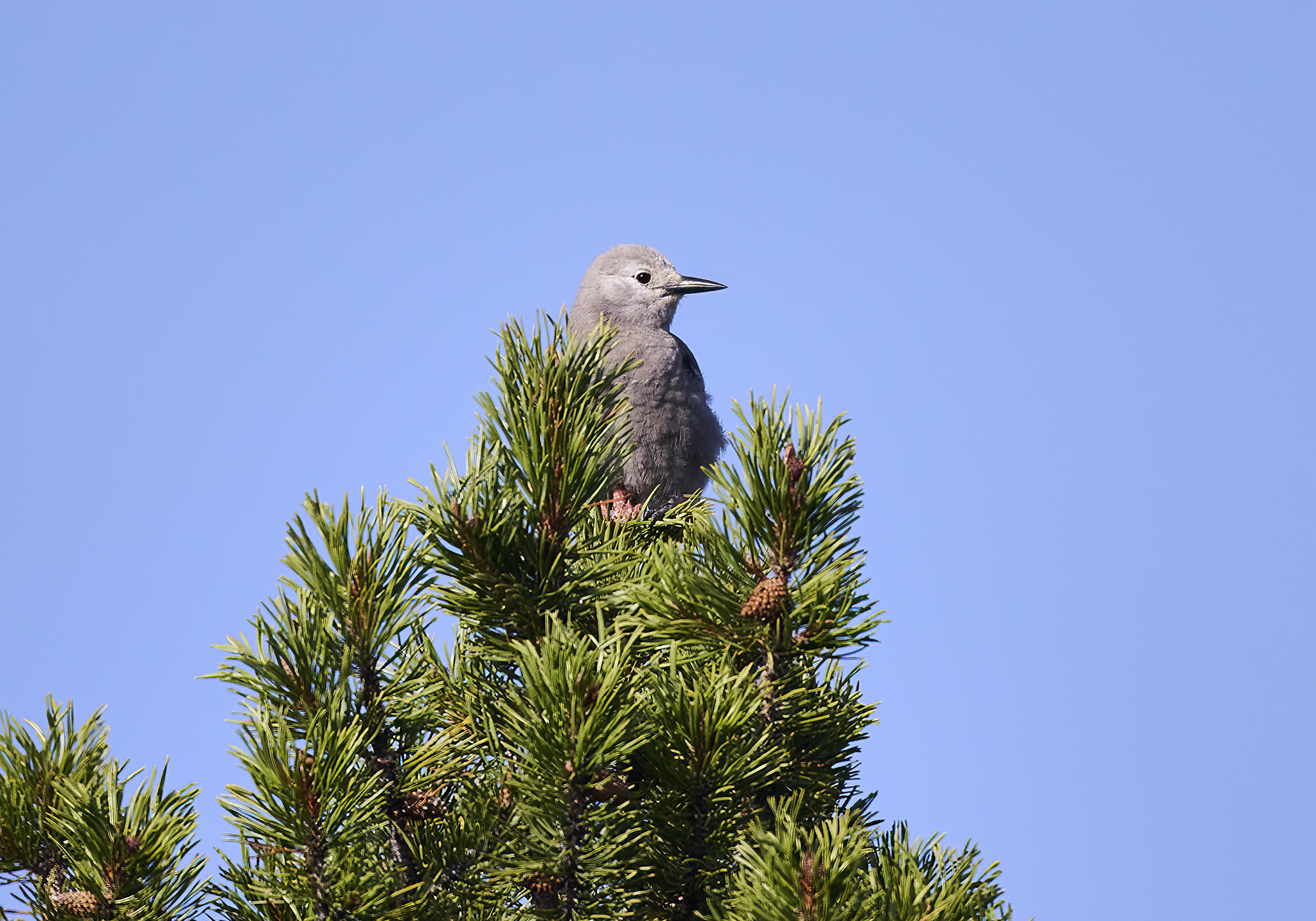
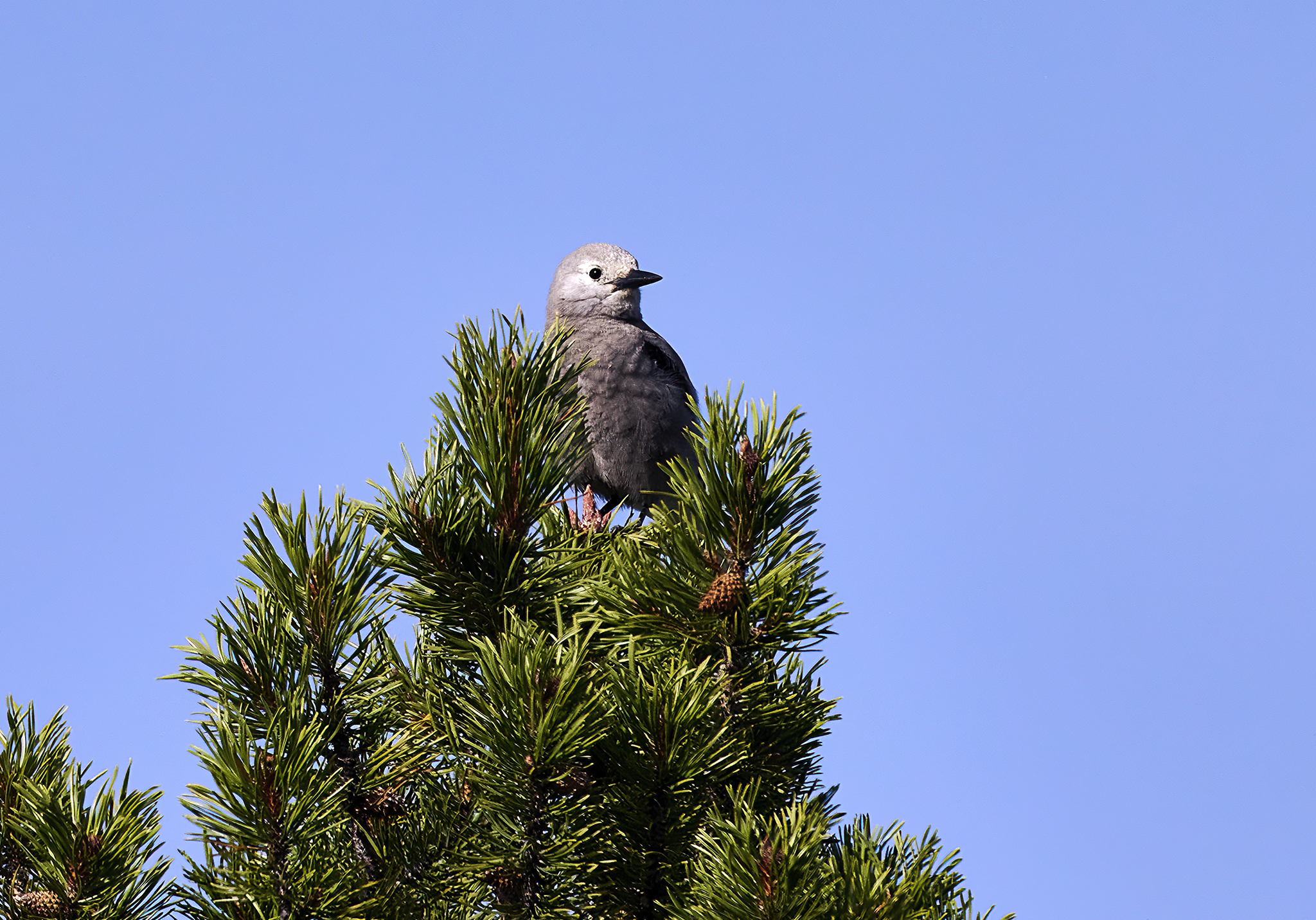
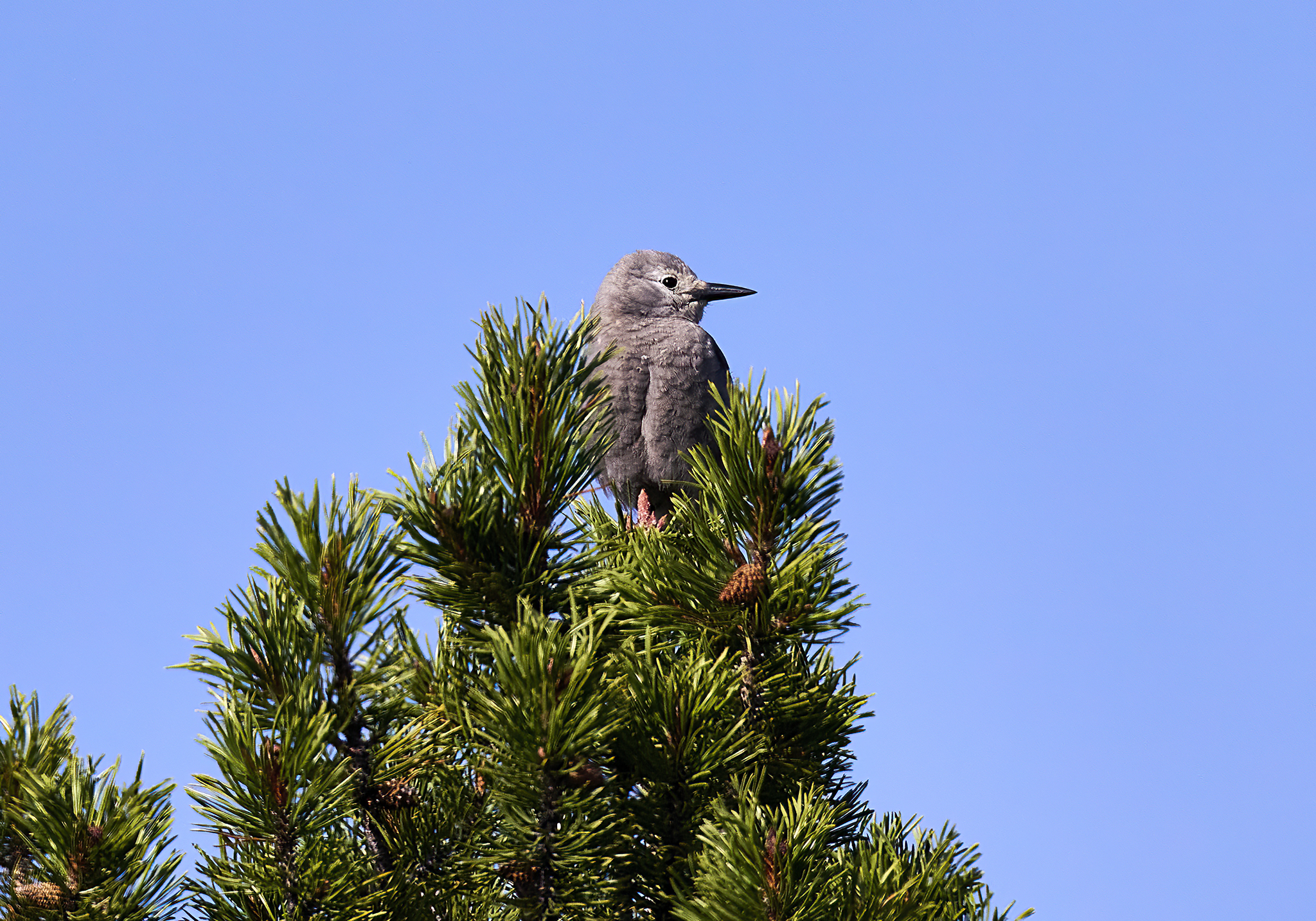
On this morning I notice a Clark’s Nutcracker sitting a top a Lodgepole Pine on our property.  The bird is located about 150 feet in the air and 300 feet from the deck of our cabin.

The bird makes calls and surveys all 360 degrees of the territorial view for a number of minutes before flying off.

Clark's Nutcracker

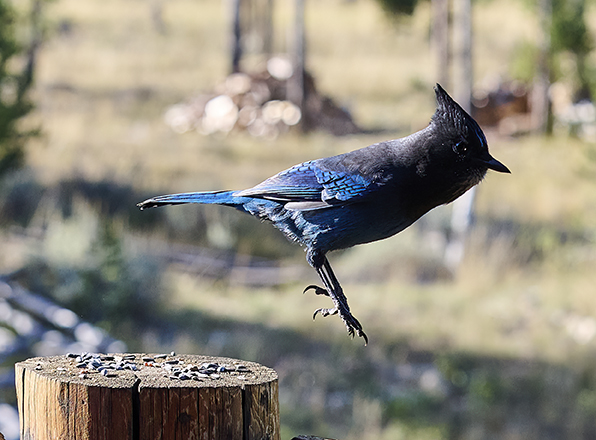
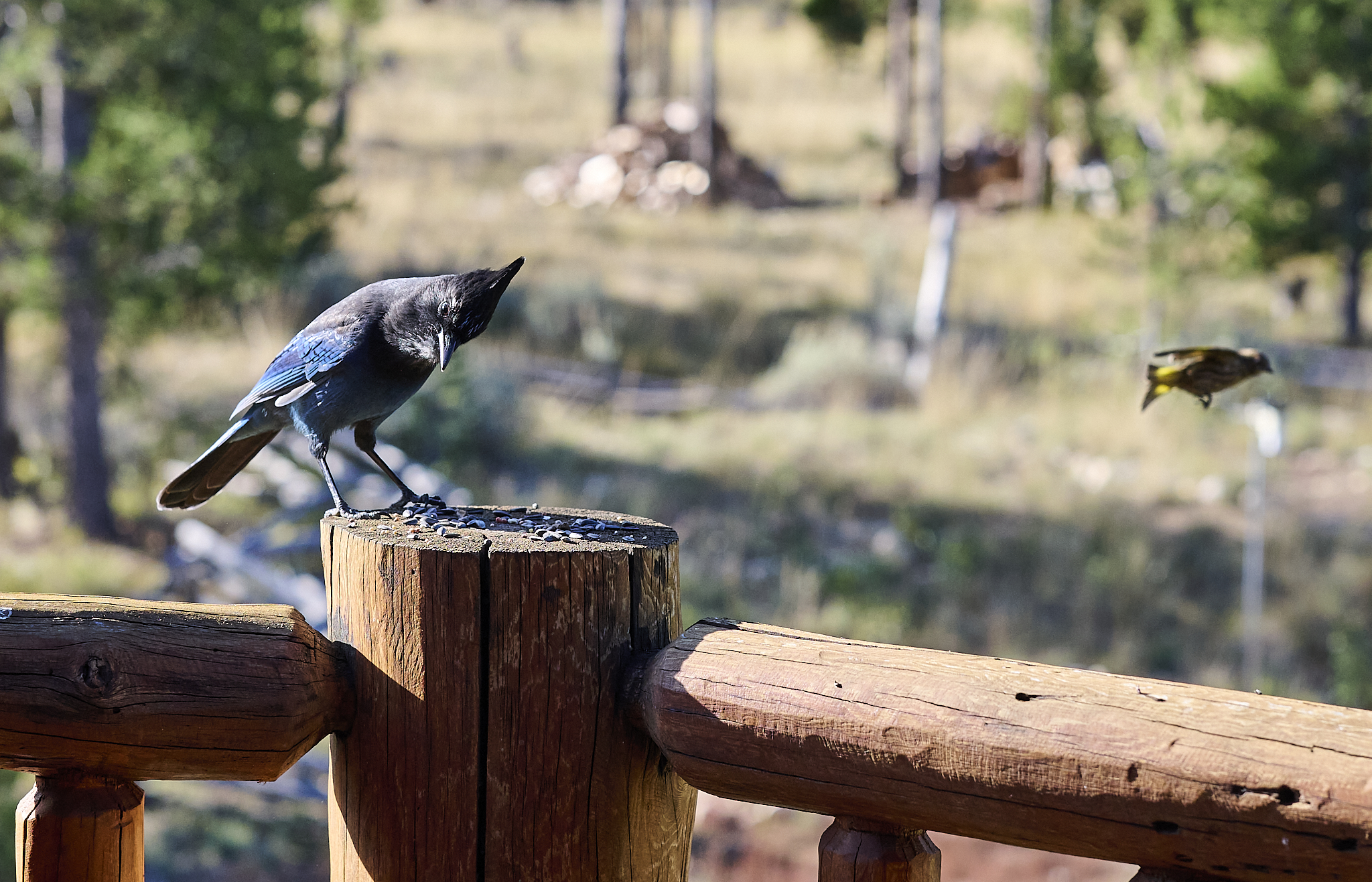
The Stellar at the Lubeck Cabin. The number of Stellar Jays at the feeders has grown from three to eight in the last week.

Stellar Jay with the Grosbeak fly-by

*** Jeff’s Thoughts and Other Worthless Trivia ***

The onset of fall-time in the Sawtooth Mountains and Stanley brings the regular return of sub zero evenings (20 degrees) and warm dry sunny days (mid 70 degrees).  The colors of the vegetation begin their turn to gold and red.  The sun rises and sets with more reds.  The amount of daylight has passed below the 12 hour threshold.  It is my favorite time of year.

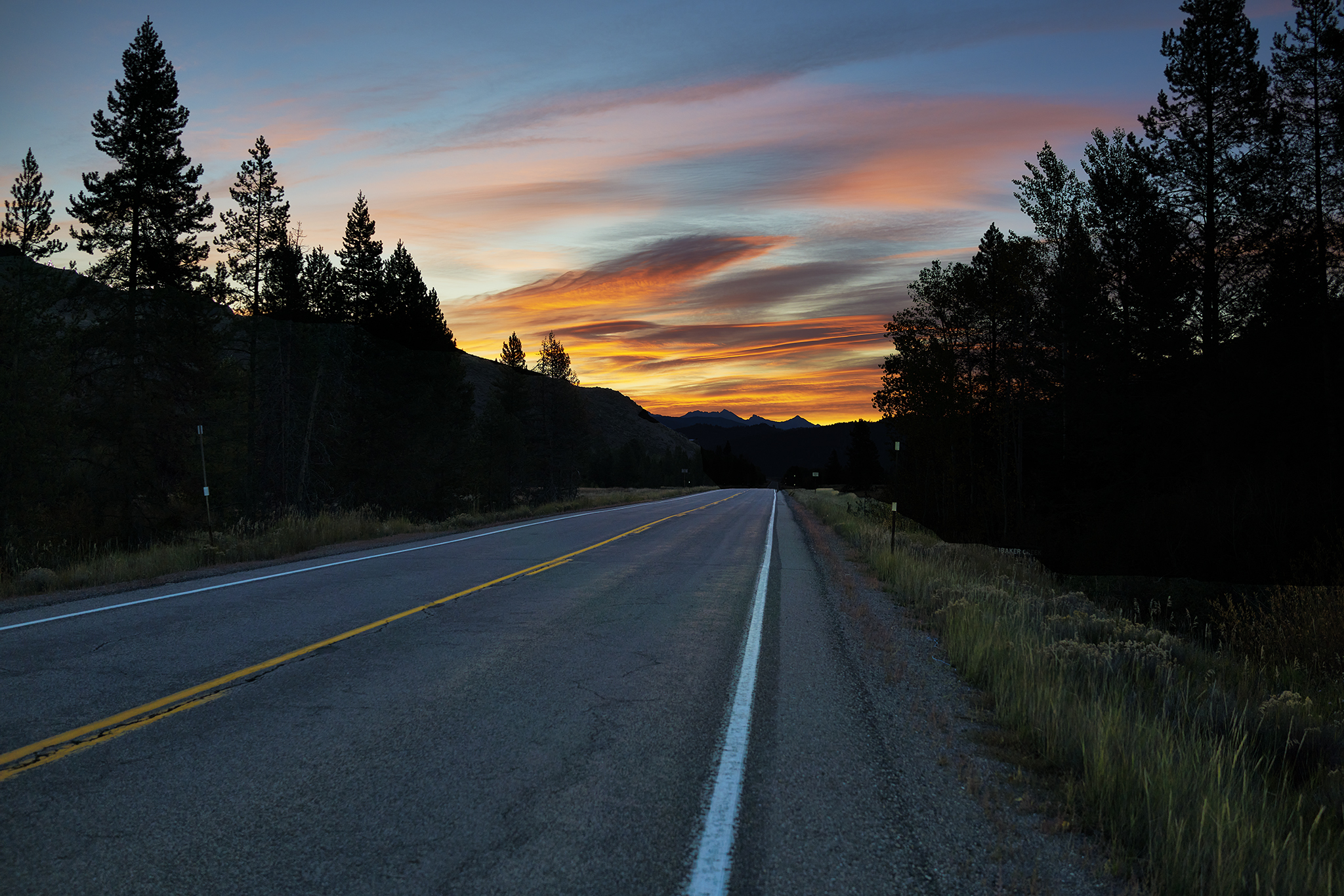
Dawn on Highway 75 at Phantom Hill. Duncan’s Ridge, Hyndman, Old-Hyndman and Cobb Peak are in the distance.

The implication of the weather change is that a good portion of the birds visiting our feeders this spring and summer have moved to other locations.

The photographs of the Clark’s Nutcracker were captured with the Nikon Z9 Camera and the Nikon Z 800MM/f6.3 Prime Lens.  I captured the images with manually configured settings either hand-held or using a tri-pod.

Aperture:  f8 to f11

Speed: f/2000 to f/4000

ISO: 640 to 1000

Color Depth: 14Bit RAW

Color Temperature: 5000

Attempting to establish light reading at 1 Stop Down

For more images of birds with the Z800MM Prime lens, a link is [here].

For an example of action images captured with the Z800MM Prime lens, a link is [here].

The images of the Stellar Jay were captured with the Nikon Z9 Camera and the Nikon Z 50MM/f1.2 Prime Lens.  I captured the images with manually configured settings using a tri-pod.

Aperture:  f3.5

Speed: f/3200

ISO: 800

Color Depth: 14Bit RAW

Color Temperature: 5000

The image of Dawn was captured with the Sony RX1R with the Zeiss 35M/f2.0 lens.  I captured the image with manually configured settings hand-held.

Aperture:  f2.8

Speed: 1/250

ISO: 100

Color Depth: 10Bit RAW

Color Temperature: 4000

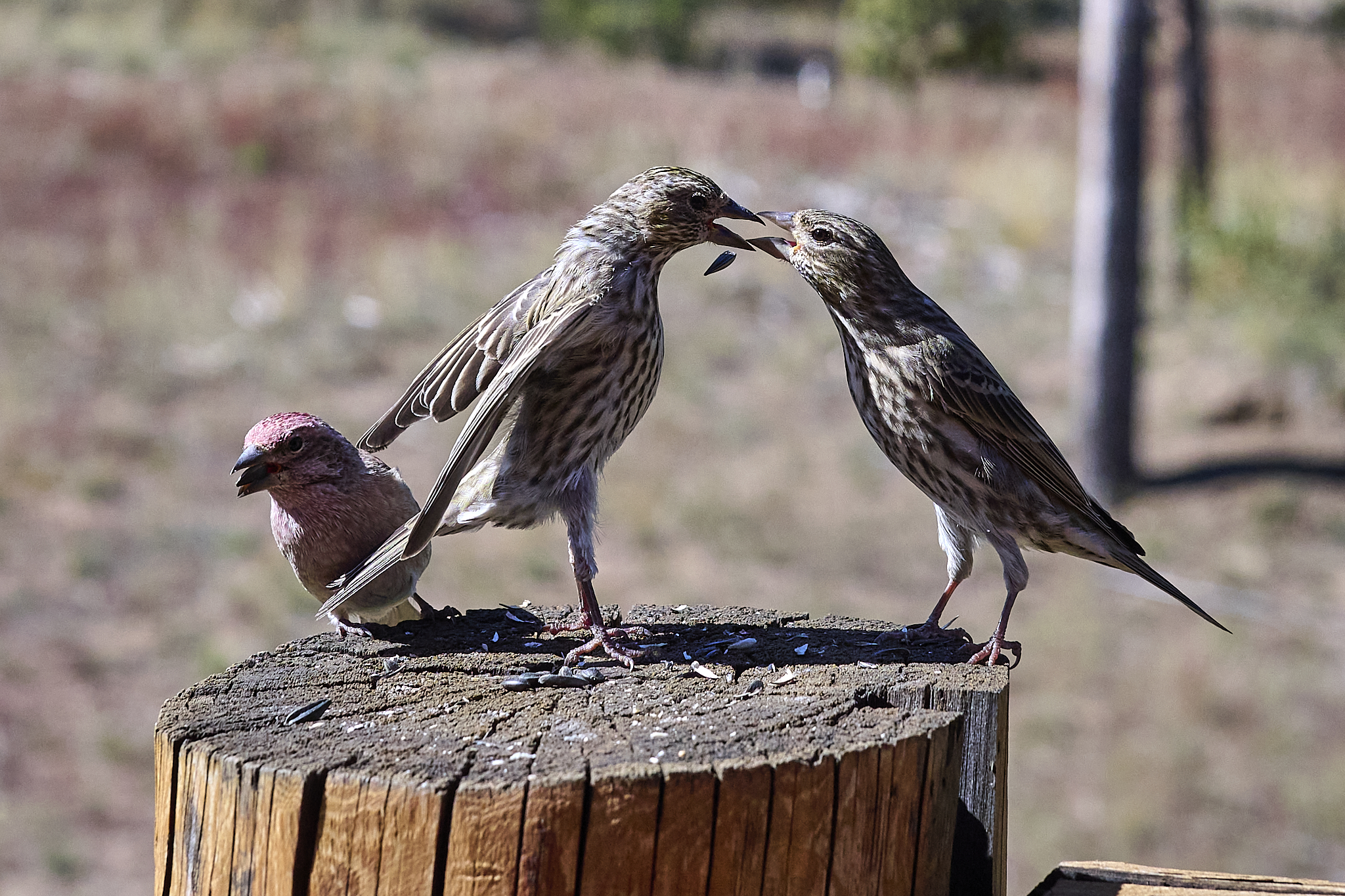
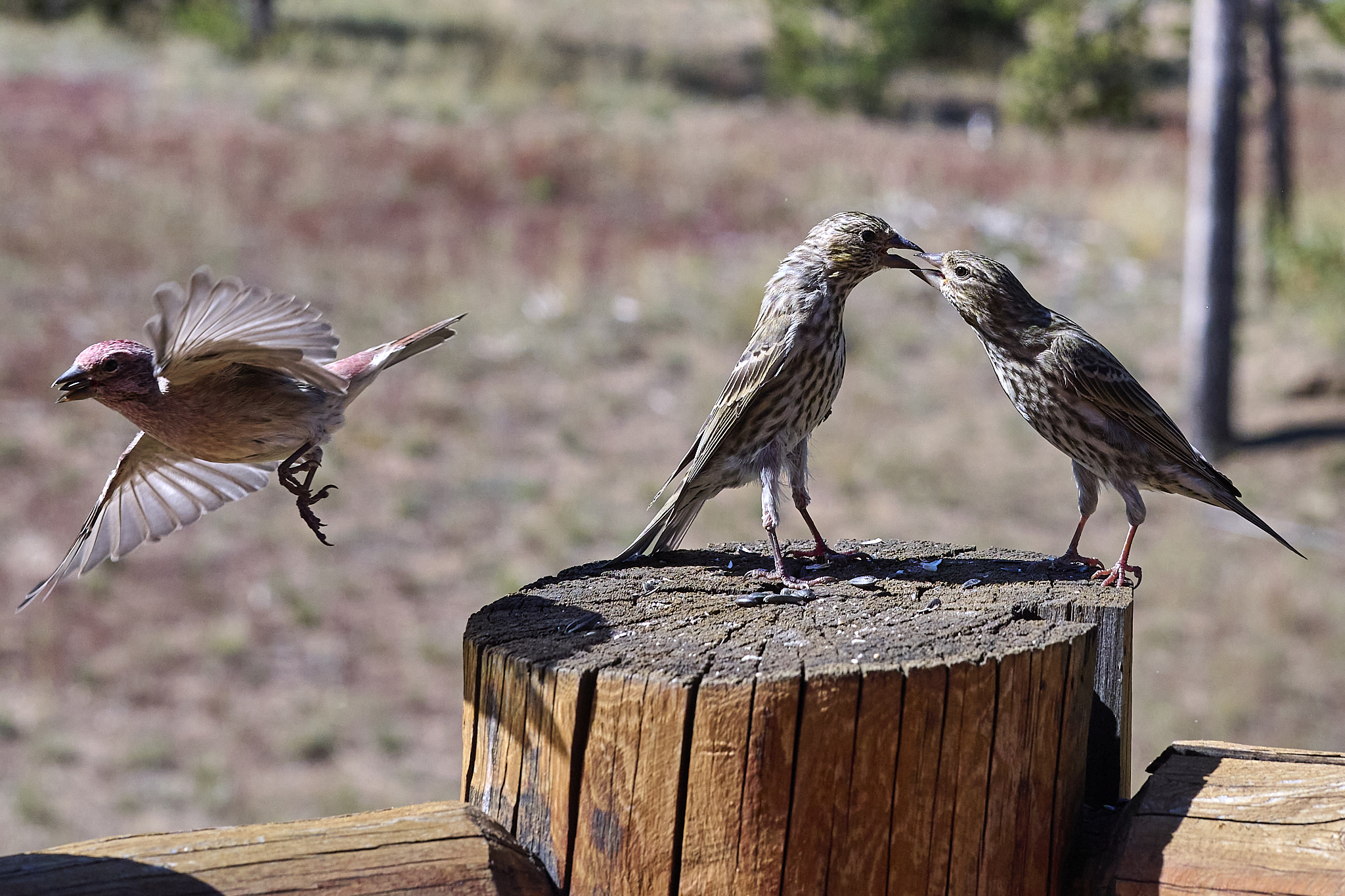
Girls Fighting… What’s a Guy to Do?

There is nothing more dangerous than being in the middle of girls fighting.

However, let me back up, and provide some background.

My name is Cassin.  Cassin Male Finch.

I rest my wings on Goat Creek in the Sawtooth National Recreation Area (SNRA) and Sawtooth Wilderness in the State of Idaho in the United States of America (U.S.A.).  I live here year-round.

I love to eat meals on my deck that looks out on Thompson Peak, Williams Peak, Merritt Peak and the Goat Creek drainage.  The Lubeck’s think the deck is theirs – but it is decidedly not.  However, that is a story for another day.

Usually when eating, I take in a few seeds and keep to myself.  The seeds at my place, while not Boujee, are most assuredly Bussin’.

On occasion, the neighbors will stop by for a bite to eat. Lately, the Stellar Jay, Grosbeak, and Wooley Woodpecker have come over for a visit.

On this day, things are different.  Two Cassin Female Finch’s decide to drop in, and before you can say YOLO, a fight breaks out. It was Salty!

I am kind of old-school.  I do not own a camera-phone.  Besides, Selfies seem so 2020.

Technically, I was not stuck in the middle, but it sure felt like it. Luckily someone nearby captured some pics.

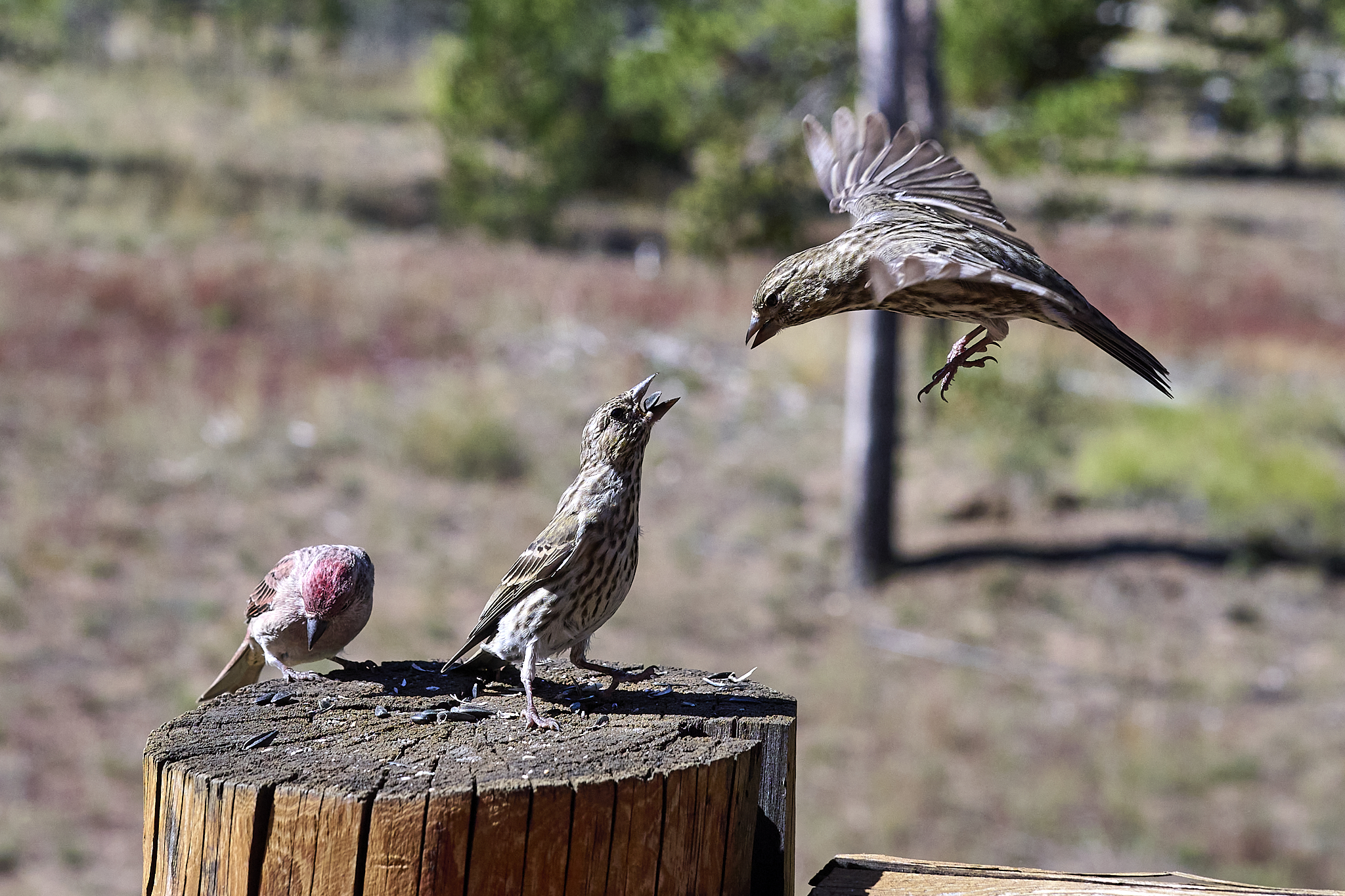
Girls Fighting

Incoming… Keep the head down, keep the head down!

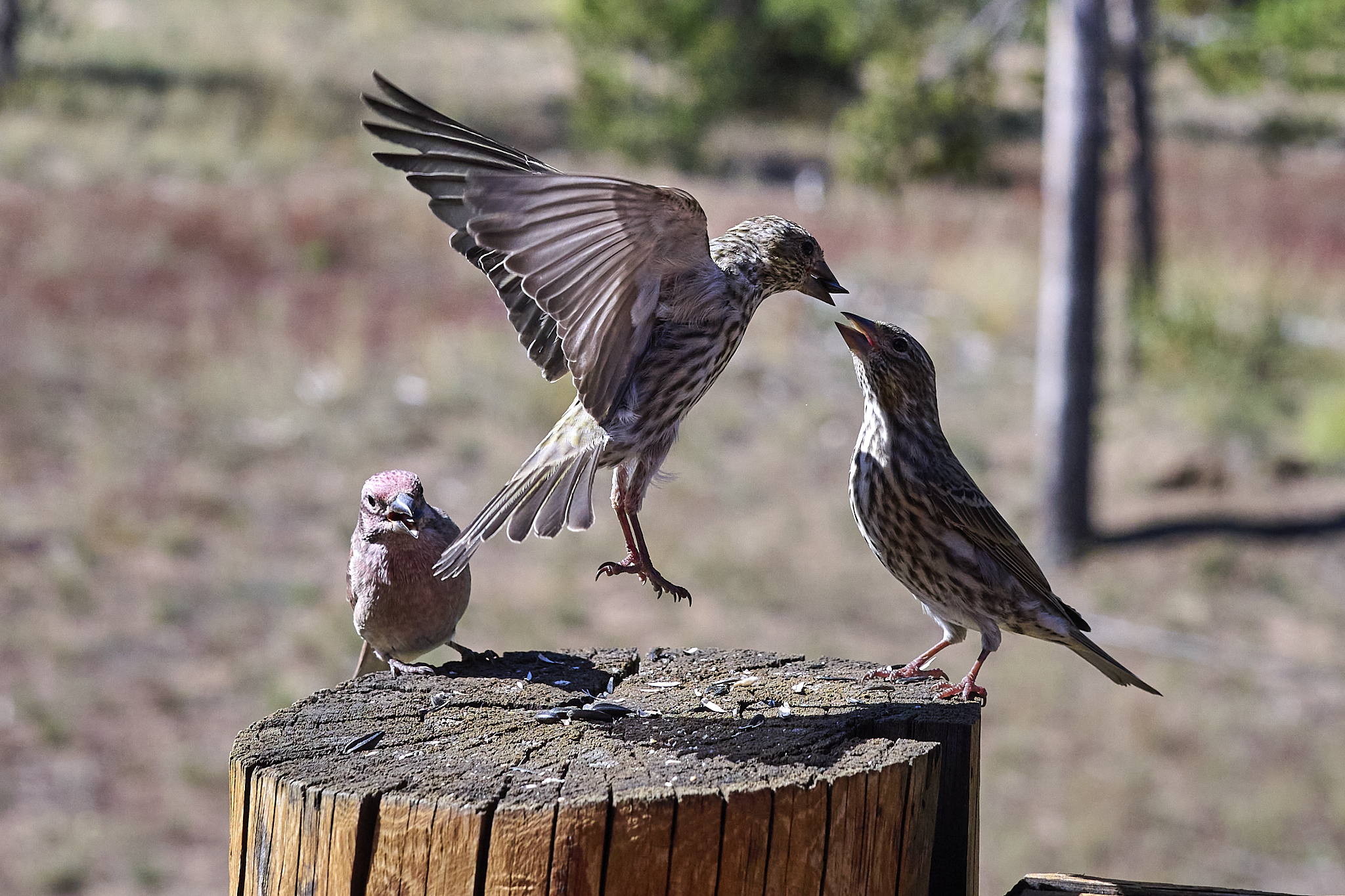
Girls Fighting

I guess she is upset?

Girls Fighting

I hope they will not come for my seed next.

Girls Fighting

Time to Exit – Stage Left!

Alice Lake Two – You Bet!

Was an Alice Lake Two in the offing for 2023?

Alice Lake and El’ Capitan in the Sawtooth Wilderness on a Super Blue Moon was a demanding photo-shoot. The condition in the United States’ only Dark Skies Reserve will not occur again until 2037.

So what about heading to the same spots as part of a normal day hike?

My wife Linda, suggested we retrace my steps during daylight hours and without 62 lbs. of gear on my back.  I, and our two Border Collies, took Linda up on the the proposal.

The result was a 13.8 mile out and back hike with 1,761 vertical feet of elevation gain (to 8,601 feet elevation) that includes six water crossings (.i.e., take the boots off).  Note: The Border Collies did not take their boots off on the water crossings.  However, they did follow Linda’s lead at the crossings, with some bolder hopping of their own, as the water flow was fast and deep in spots.

Alice Lake Two map.

The Alice Lake Toxaway Loop region

This out and back route was first covered by Linda and I in July of 1983.  Then as now, Linda led the way and covered the same water crossings.  I carried up the rear to monitor and record results – for legally binding purposes.

Linda and Willow of the Wood River Valley at Alice Lake. We had a wonderful lunch at Alice Lake with a perfect view of Perfect Peak and Snowyside Peak.  If you would like to see a video of the view at lunch click on the link [here].  You will see the Sawtooths from Perfect Peak to Snowyside Peak.  I am a lucky guy.  I have summited the peaks in the video multiple times including in the last one to five years.

After a lunch of oranges, cheese and Salami (and Kibble for the Broder Collies) we headed back down.

Linda, Willow of Wood River Valley, and Sage of the Wood River Valley at the Pettit Creek Falls.