March 2026
M T W T F S S
 1
2345678
9101112131415
16171819202122
23242526272829
3031  

A Life Rich With Experience

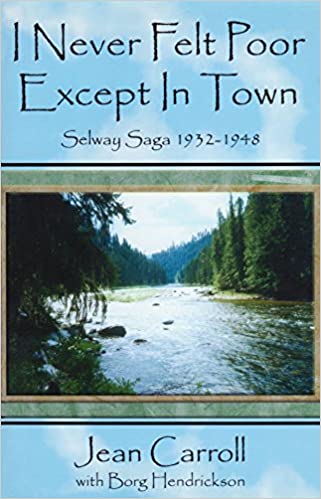
Jean Carroll’s Autobiography, I Never Felt Poor Except In Town – Selway Saga 1932 – 1948 is a worthy read.

Carroll’s story begins as 2 year-old moving with her family into the heart of one of America’s recently designated Primitive Areas by mule to start life as Backcountry Outfitters in 1932.  Their home and ranch are 40 miles from the end of the nearest road and 80 miles from any town. The Primitive Area is the Selway River region in North Central Idaho.  Today the Selway is perhaps the shiniest gem in America’s Crown.  The Selway was the first and only river to be in the original U.S. Wilderness Act of 1964 and original U.S. Wild & Scenic Rivers Act of 1968.

Carroll’s story reveals her feelings of freedom and self responsibility when in the wilderness and restriction when in town or city life. Each new aspect of her story provides insight into life in rural, and isolated America in the 1930’s and 40’s.

Carroll’s story-telling is frank and to-the-point.  The writing style is first-person and conversational.  The narrative feels distinctly her voice.  If you are expecting a polished work – you will be disappointed.  If you desire to read something genuine – you will be rewarded.

I Never Felt Poor Except In Town presents some of the hard realities we experience in human life regardless of the day or age.  However, there is a certain romance generated by Carroll’s words and story.

Jeff’s Worthless Trivia and Other Thoughts

In July 2020 I floated the Selway River as part of a photo-shoot for Selway River Adventures (SRA).  The story is [here]. We started on July 5th at the Paradise Put-In and ended on July 9th at the Race Creek Take-Out.  Jean Carroll passed away on July 9th at the age of 90.  I read this book a month later – not knowing she had passed away or that I would be on the Selway at the moment of her passing.

My parents were kids in the early 1930’s.  Because they shared so many memories of their life with me – both in words and images – I have a picture in my mind of America in the 1930’s that is personalized around them.  That picture is of kids growing up in a city that was the epicenter of America’s industrial revolution and well off by almost any societal standard or material measure.  Carroll’s life from this perspective seems nothing close.  Yet, Carroll lived in, loved, and treasured the experience of a natural setting that is as rewarding as its gets – at least to me.  I know how Carroll felt – I get to live it every day of my life.

There are remarkable parallel’s in the story of life in the 1930’s and 1940’s as revealed to me by my parents and by Carroll.  The implication of a country’s biggest economic depression and world war.  The loss of young siblings for a health reason, tragedy and death to family members via accident, horrible things inflicted on family members for reasons so sensitive and unnerving I care to not mention further detail. 

Another commonality was Carroll’s and my Dad’s coolness with their father.  Neither were estranged from their father.  Carroll’s coolness of feeling was cemented as a teenager by an transaction hard to imagine happening in America today.

While we feel there are material problems facing our 21st Century version of America and society – some even seem dire – Carroll’s story is a great reference point for context.
 

What’s on Your Walk?

When you go out for a walk, hike, run, or some similar type of activity are you focused entirely on the exercise and its successful completion? Or do you take in what is around you as much as the exercise?  My behavior is more in line with the later – even during my days of competitive back-country endurance racing.

So what is on your walk or walks?  Is it city, suburban, small town or wilderness oriented?  Do you get a chance to experience a variety?

One of my walks also performs the role as trail for a hike or run.  It also functions as a route for a back-country ski or snowshoe.

In the summer time we (Linda, Sage Dog & Willow Dog) take the walk early in the morning (usually just after sun rise) on days we are not going for a hike at some other location.

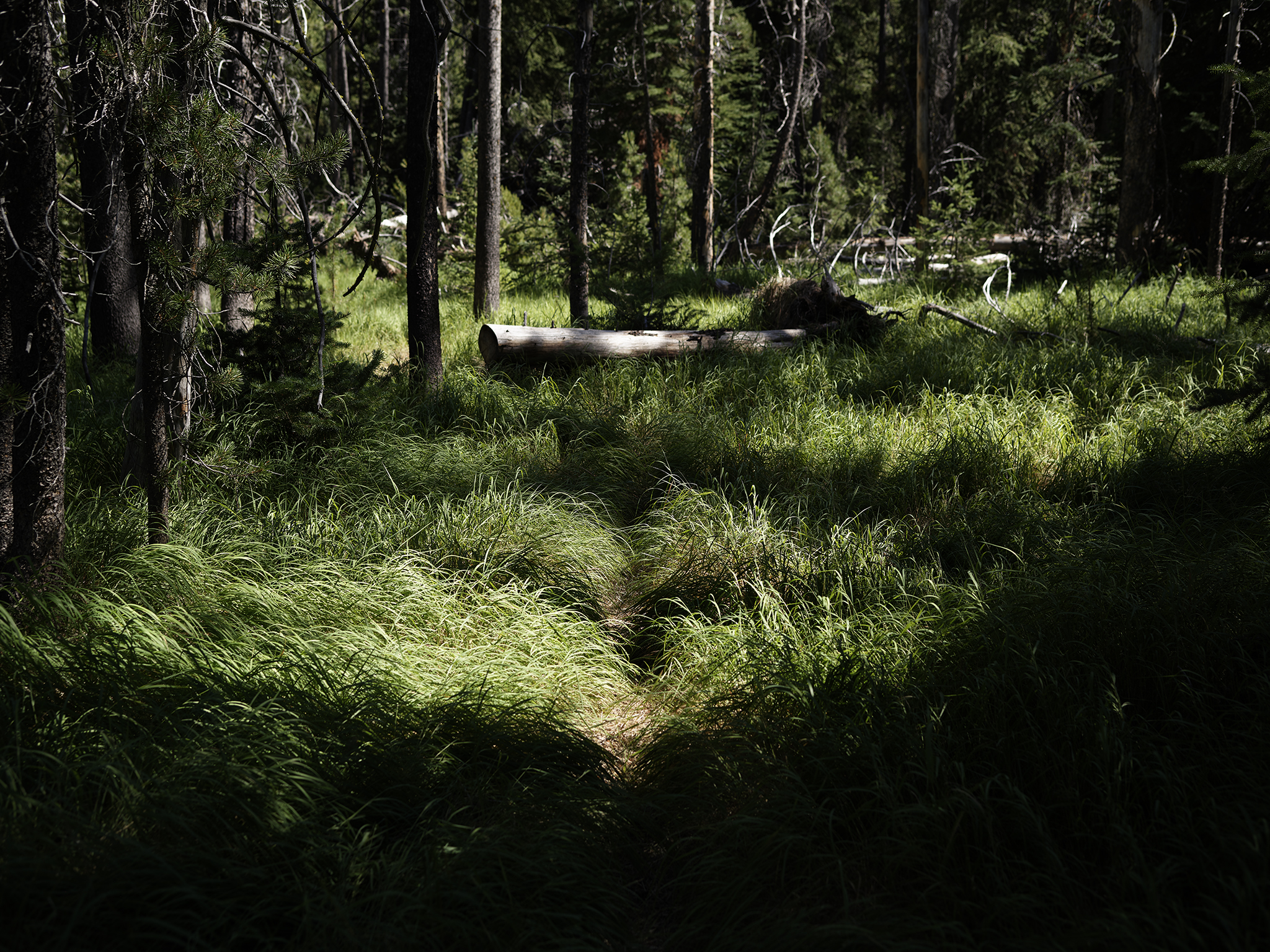
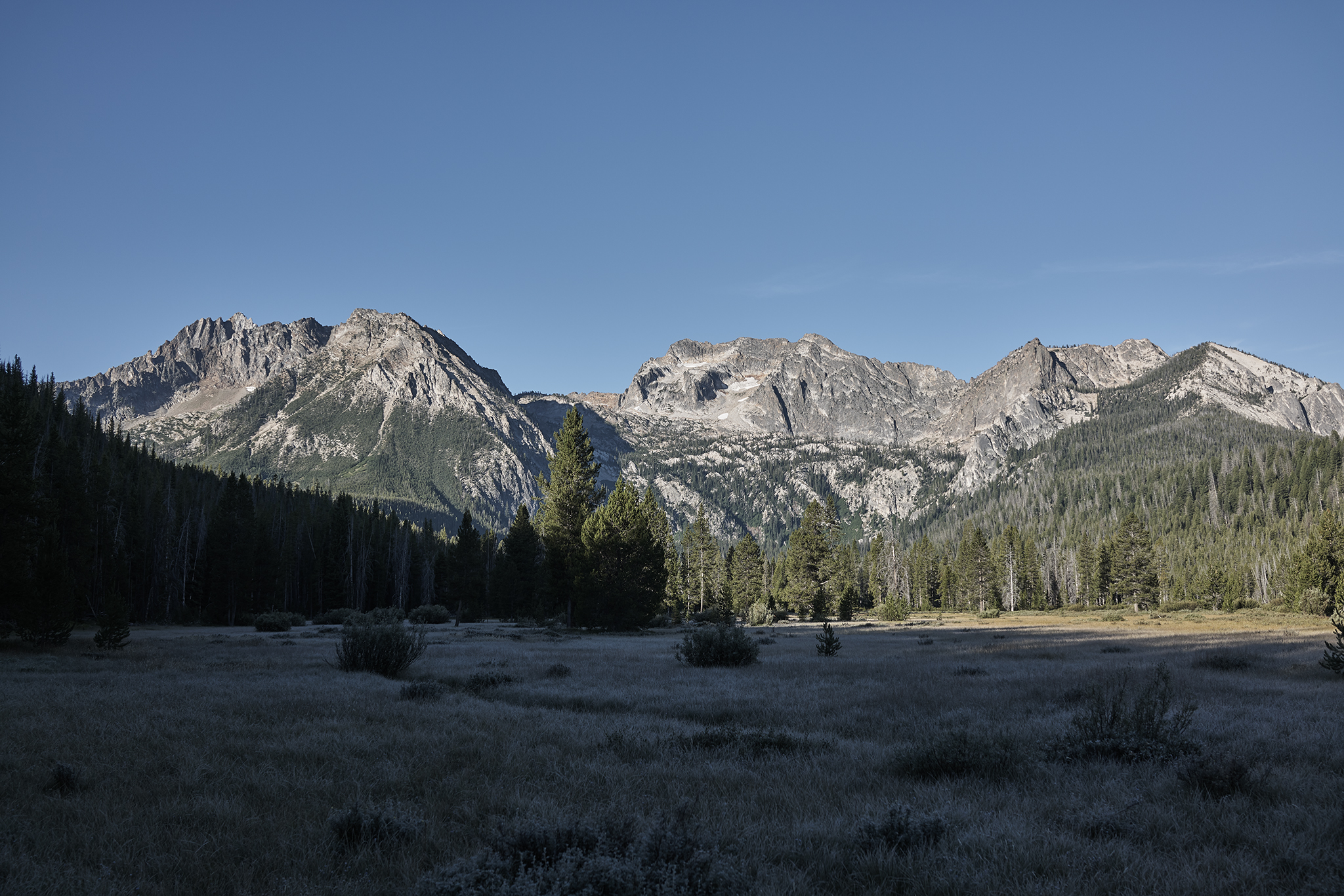
The six-mile (10K) out and back route is best taken at a moderate or leisurely pace.  It starts at our cabin on Goat Creek in Stanley, Idaho which sits on the boundary-line for the Sawtooth National Recreation Area (SNRA).  The route follows Goat Creek, up through the Goat Creek Meadow and into the Sawtooth National Wilderness.

Goat Creek Meadow – © Jeffrey H. Lubeck – MESH Art LLC. – all rights reserved.

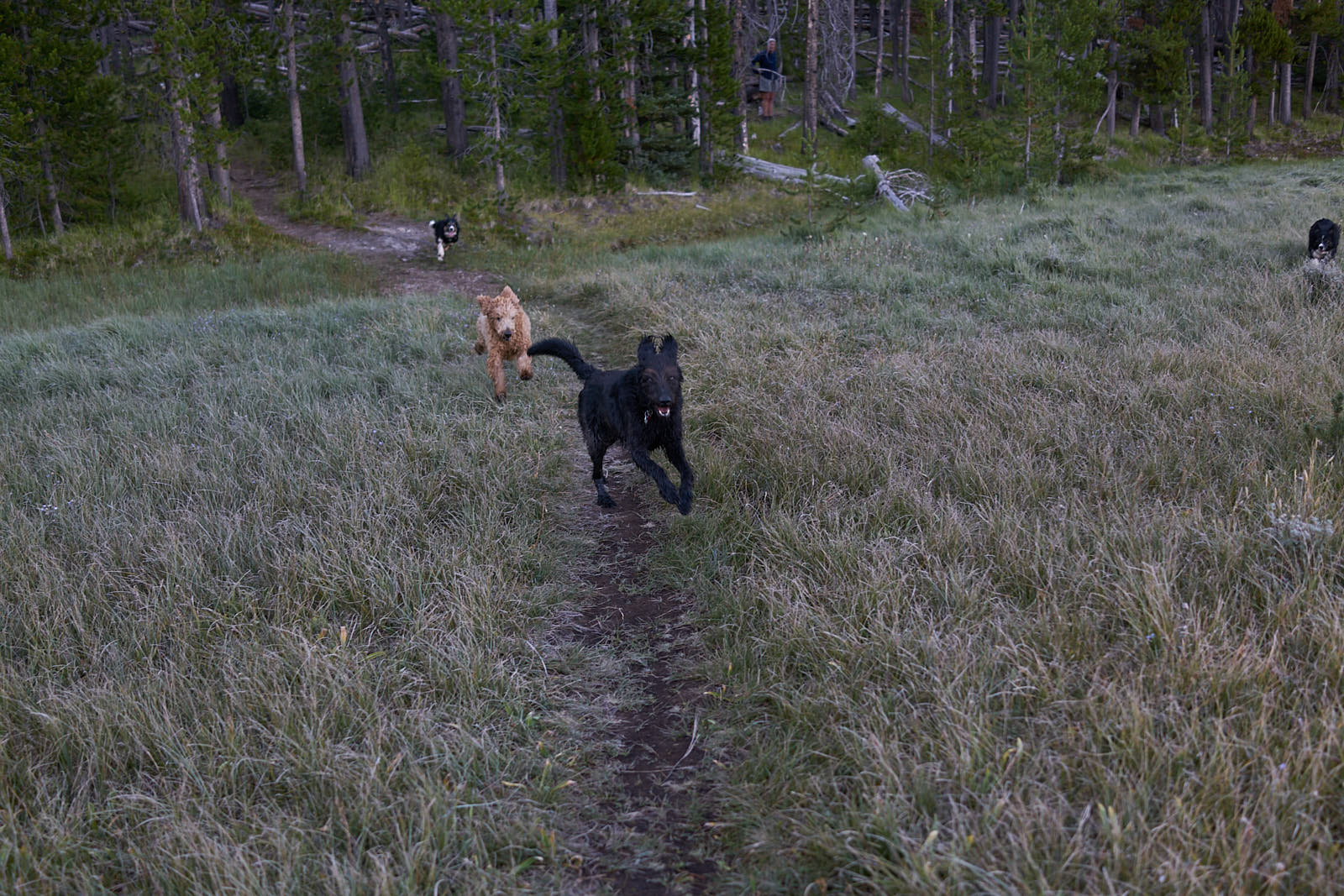
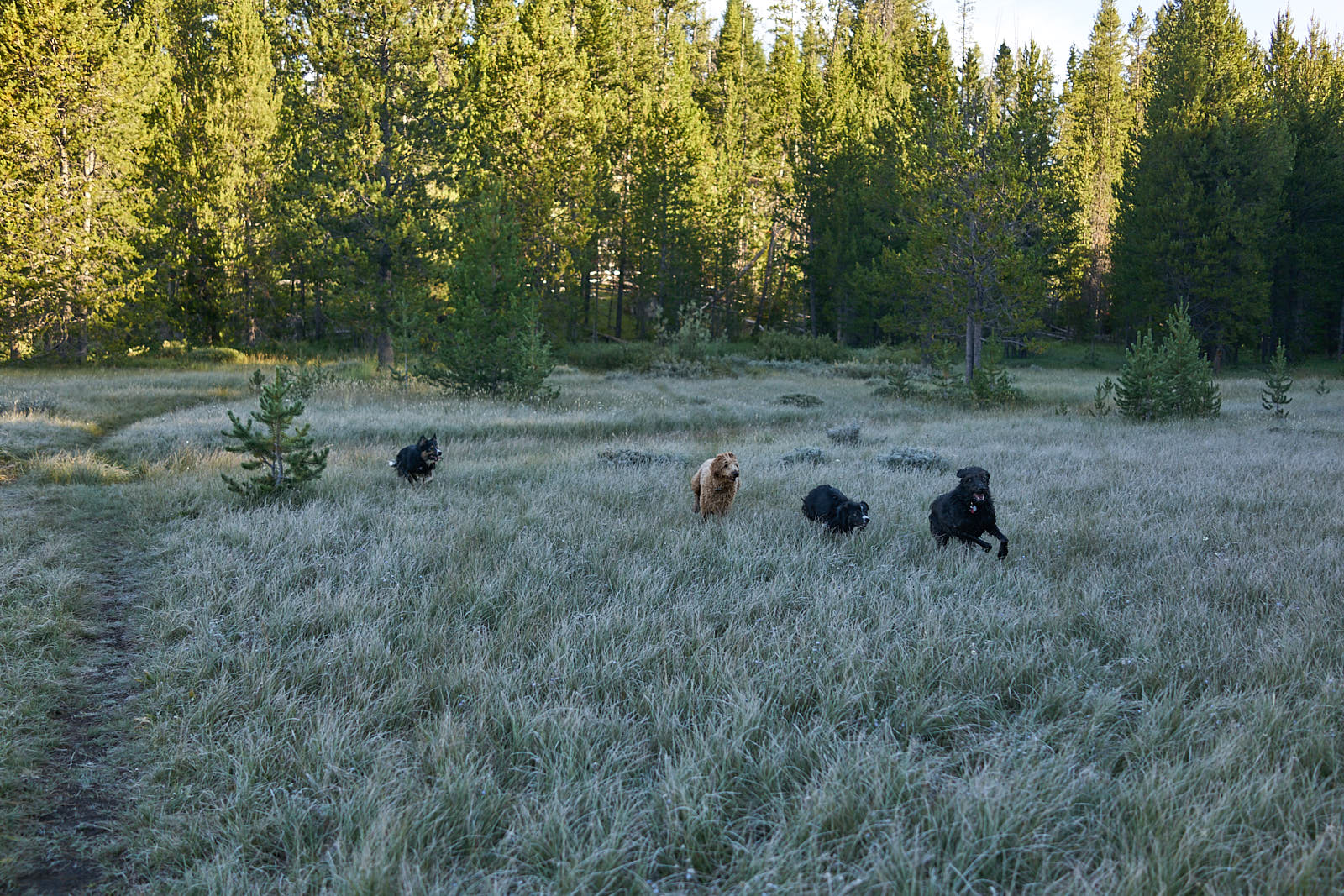
The Goat Creak Meadow is pretty cool and is about three miles in length before reaching the basin rocks.  The trail straddles the left side of the meadow.  From about May 1st to July 1st water in the meadow can be knee high.  On this day the meadow was filled with dogs ignoring their owners.

Sage, Valentine, Willow and, Merry [Christmas] dog stretching out the legs.

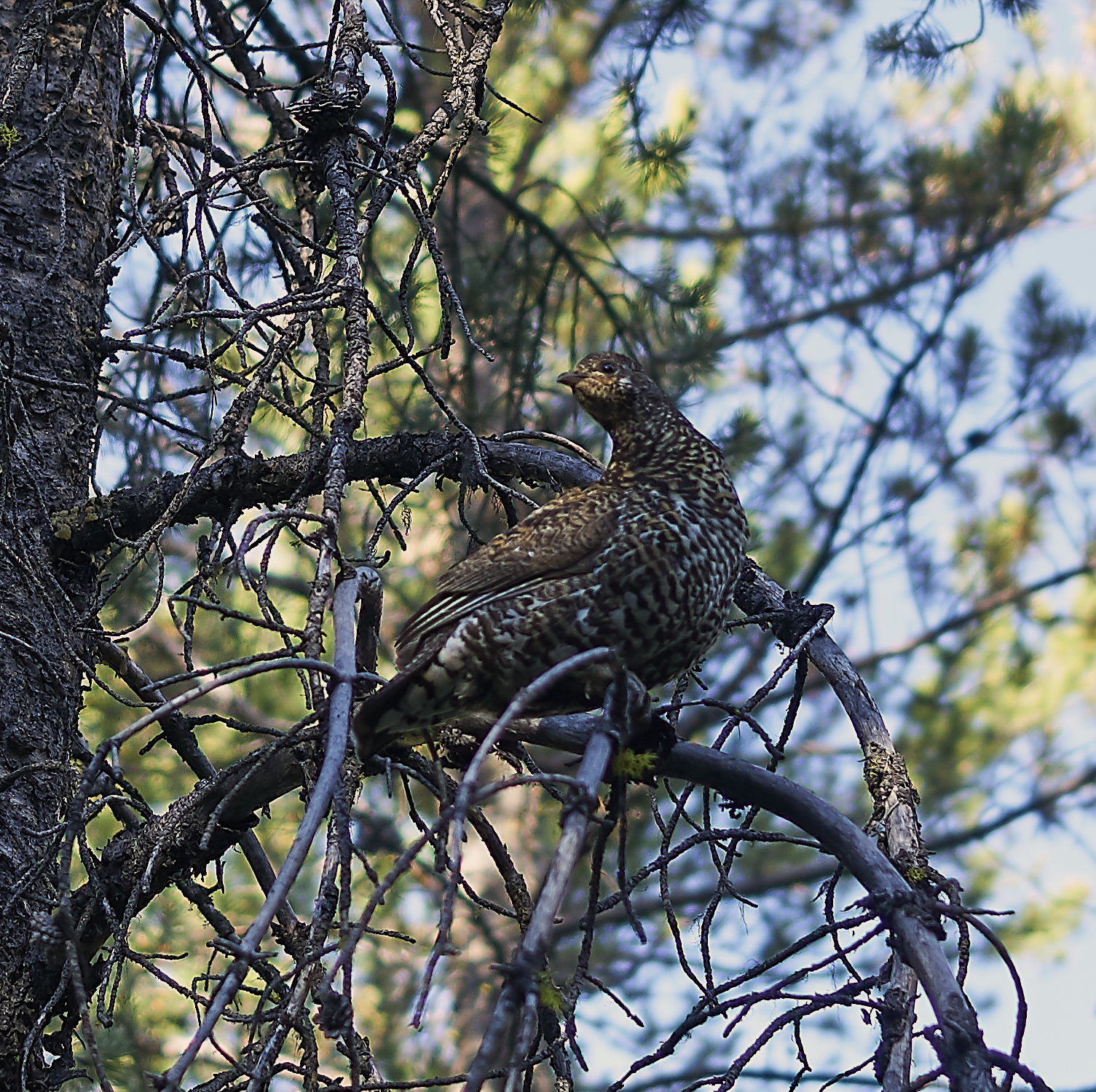
We also ran into and observed wildlife.  Such as this Sage Grouse.

Sage Grouse at the T – © Jeffrey H. Lubeck – MESH Art LLC. – all rights reserved.

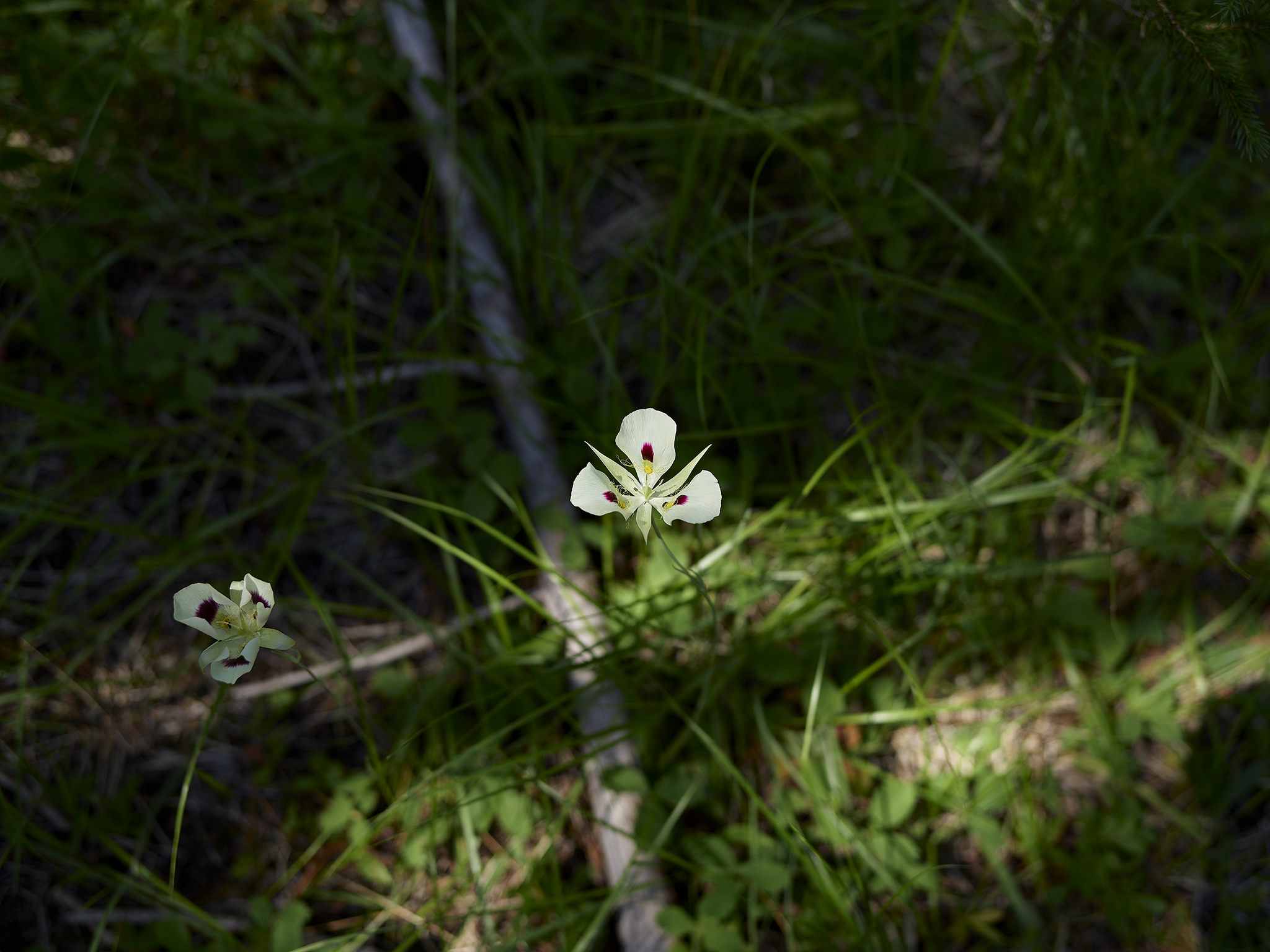
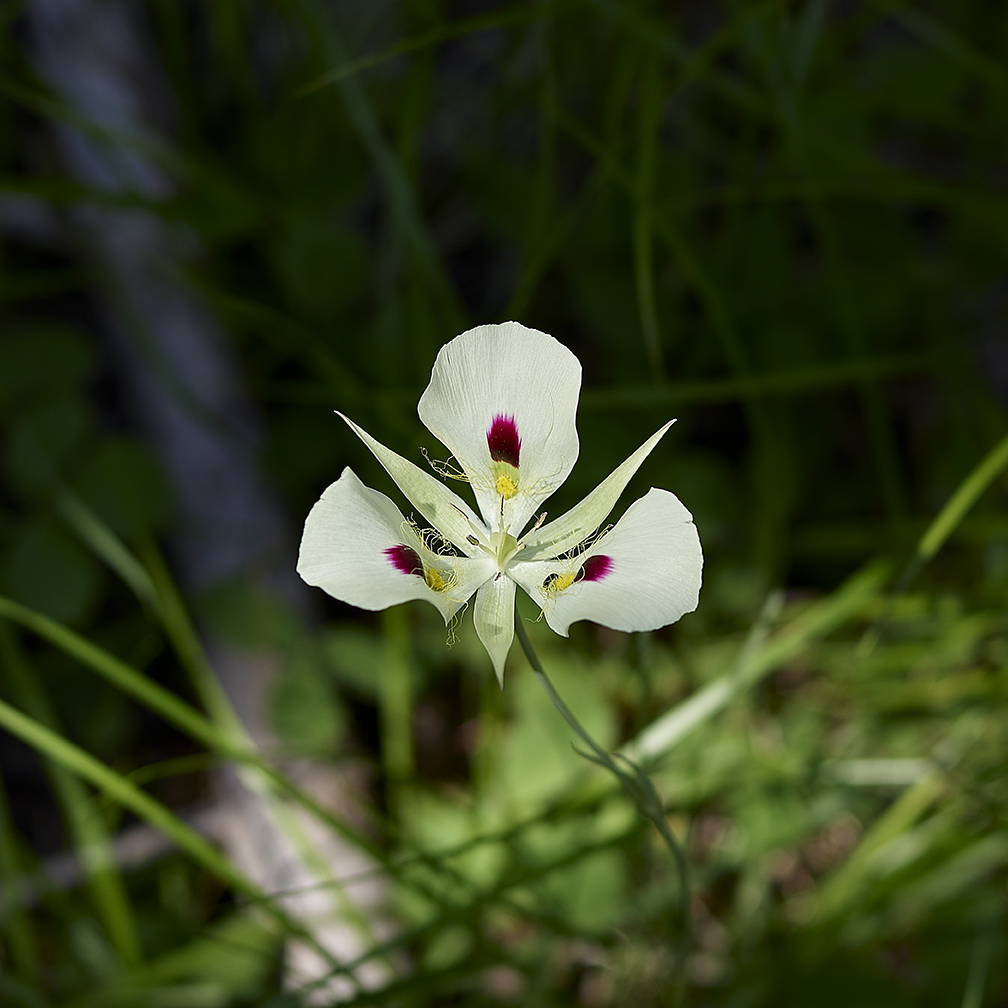
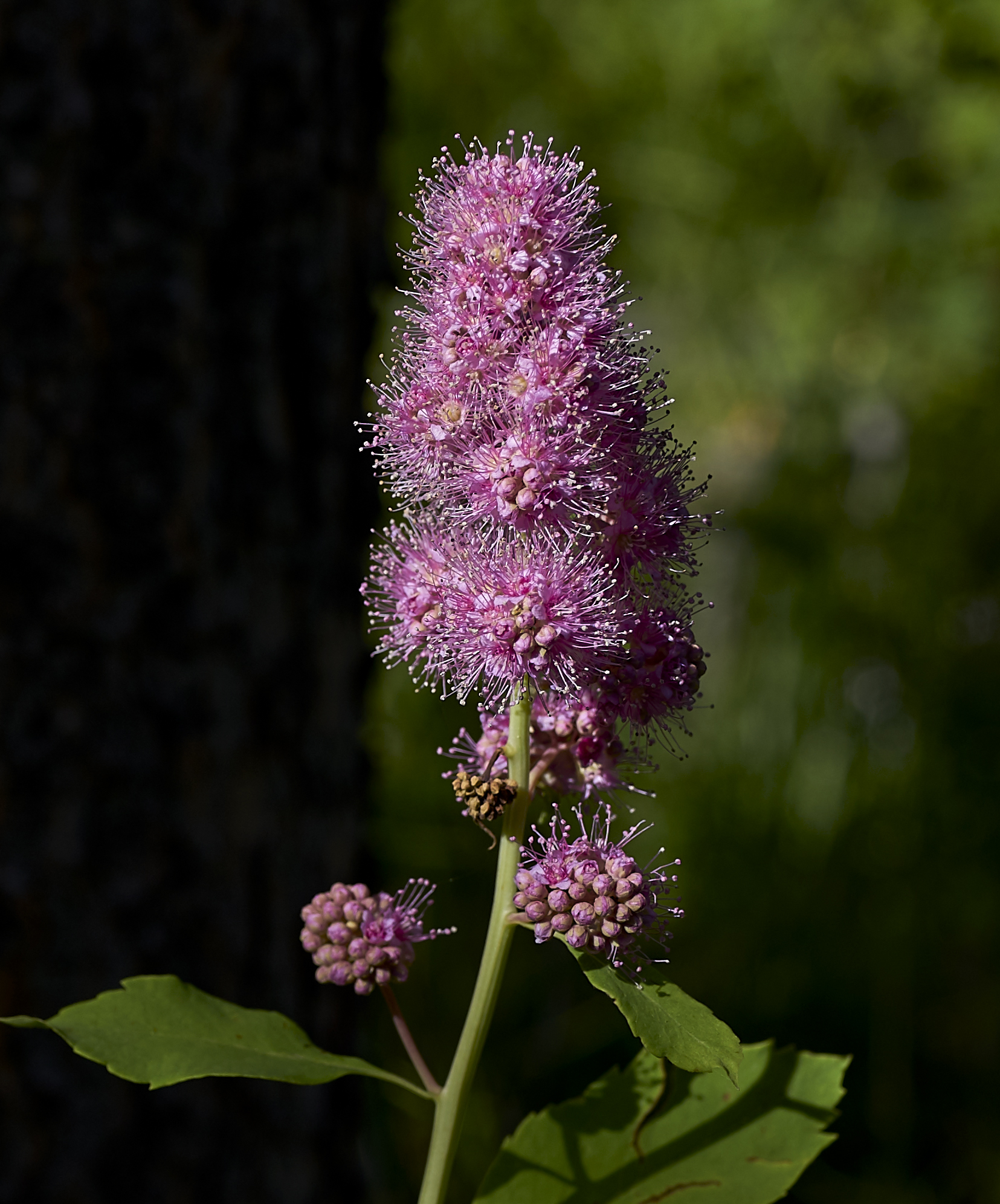
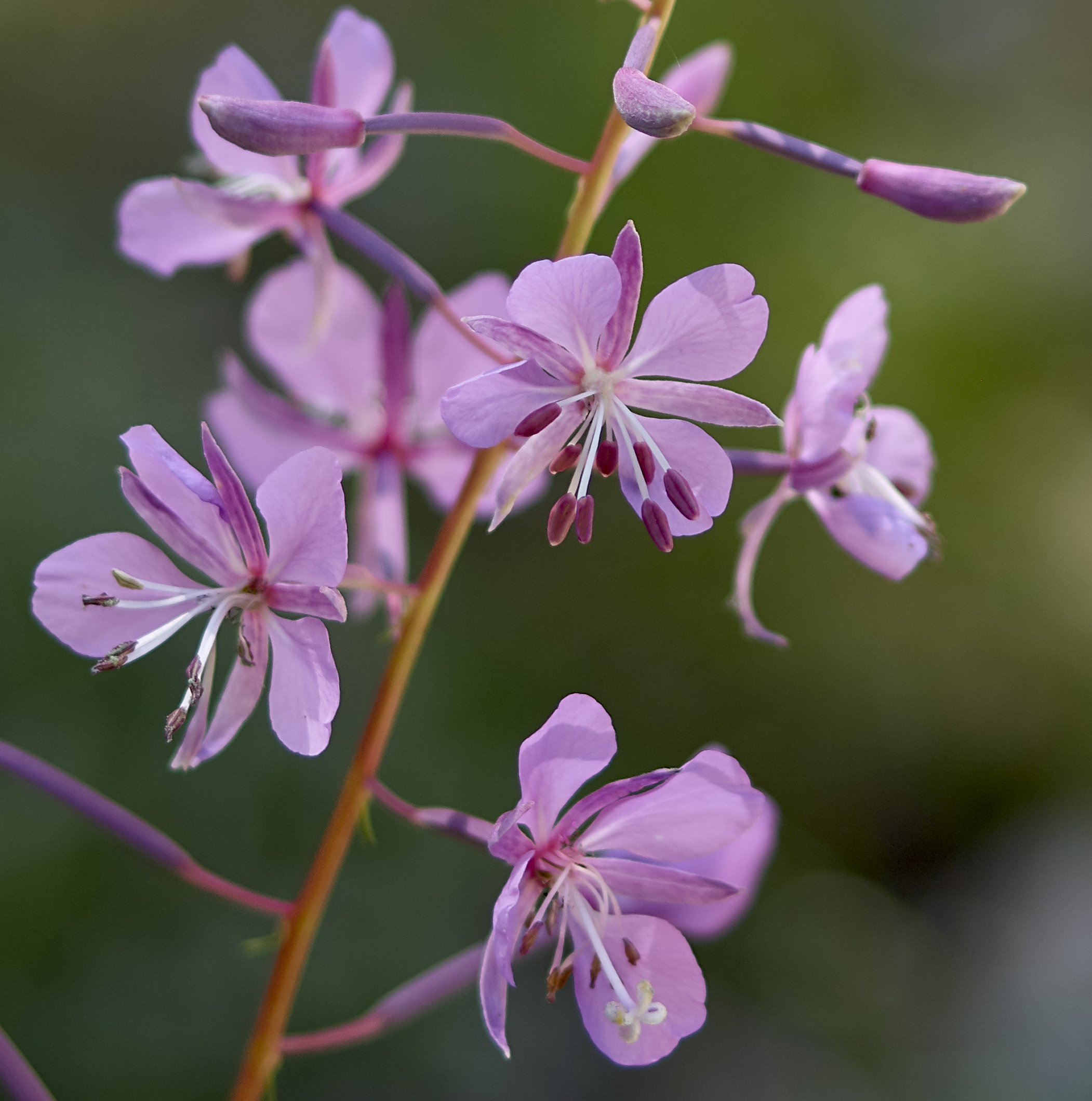
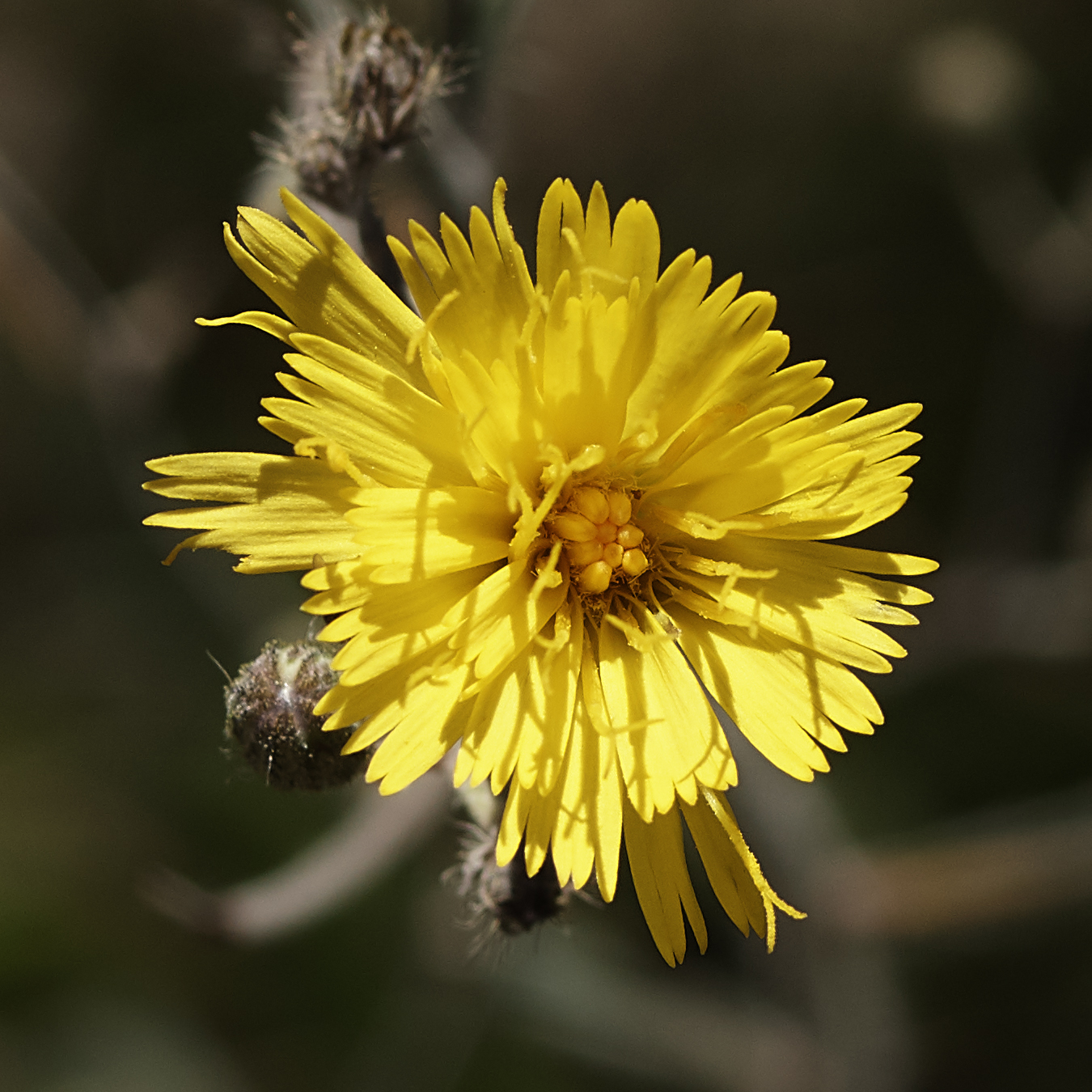
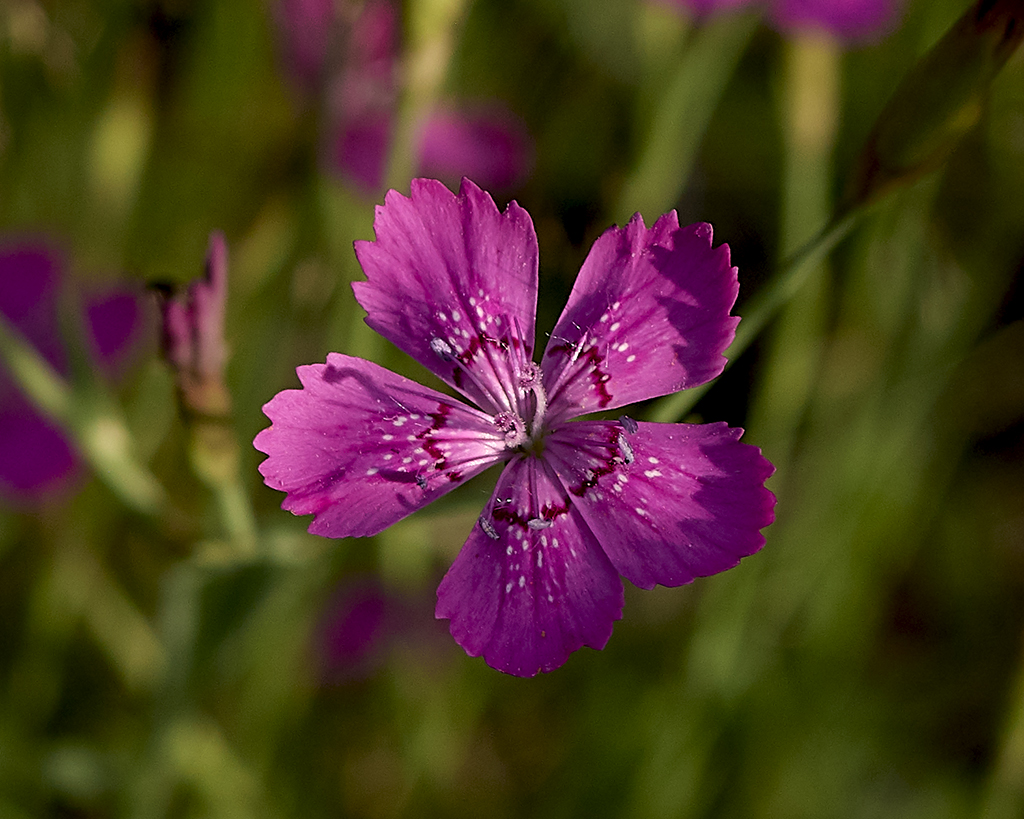
Wild Flowers of all kinds abound. Below is what caught our eye on walks the past two days.

Sego Lily at the Wilderness Border – © Jeffrey H. Lubeck – MESH Art LLC. – all rights reserved.

Sego Lily Close up at the Wilderness Border – © Jeffrey H. Lubeck – MESH Art LLC. – all rights reserved.

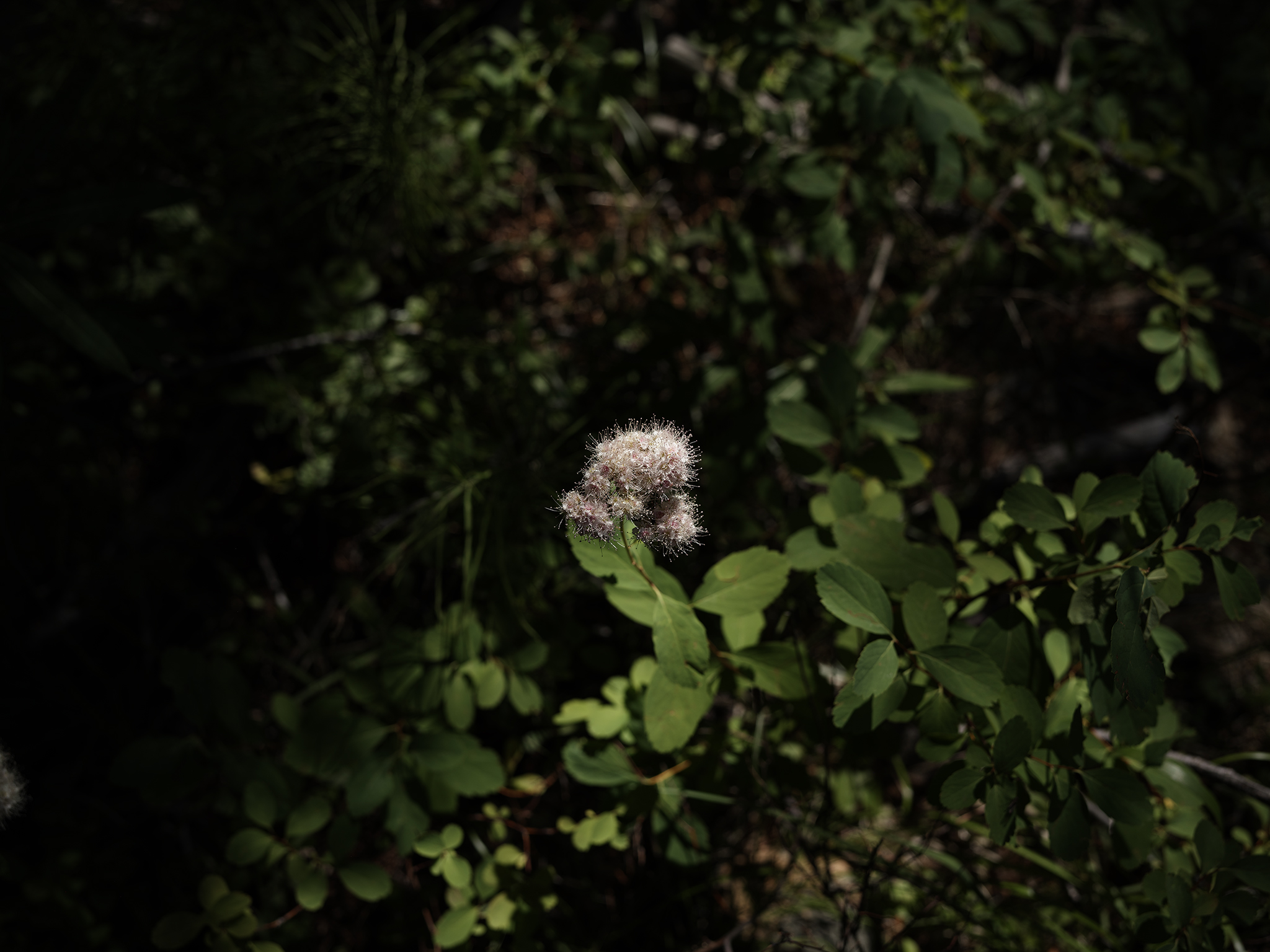
White and Bursting With Energy – © Jeffrey H. Lubeck – MESH Art LLC. – all rights reserved.

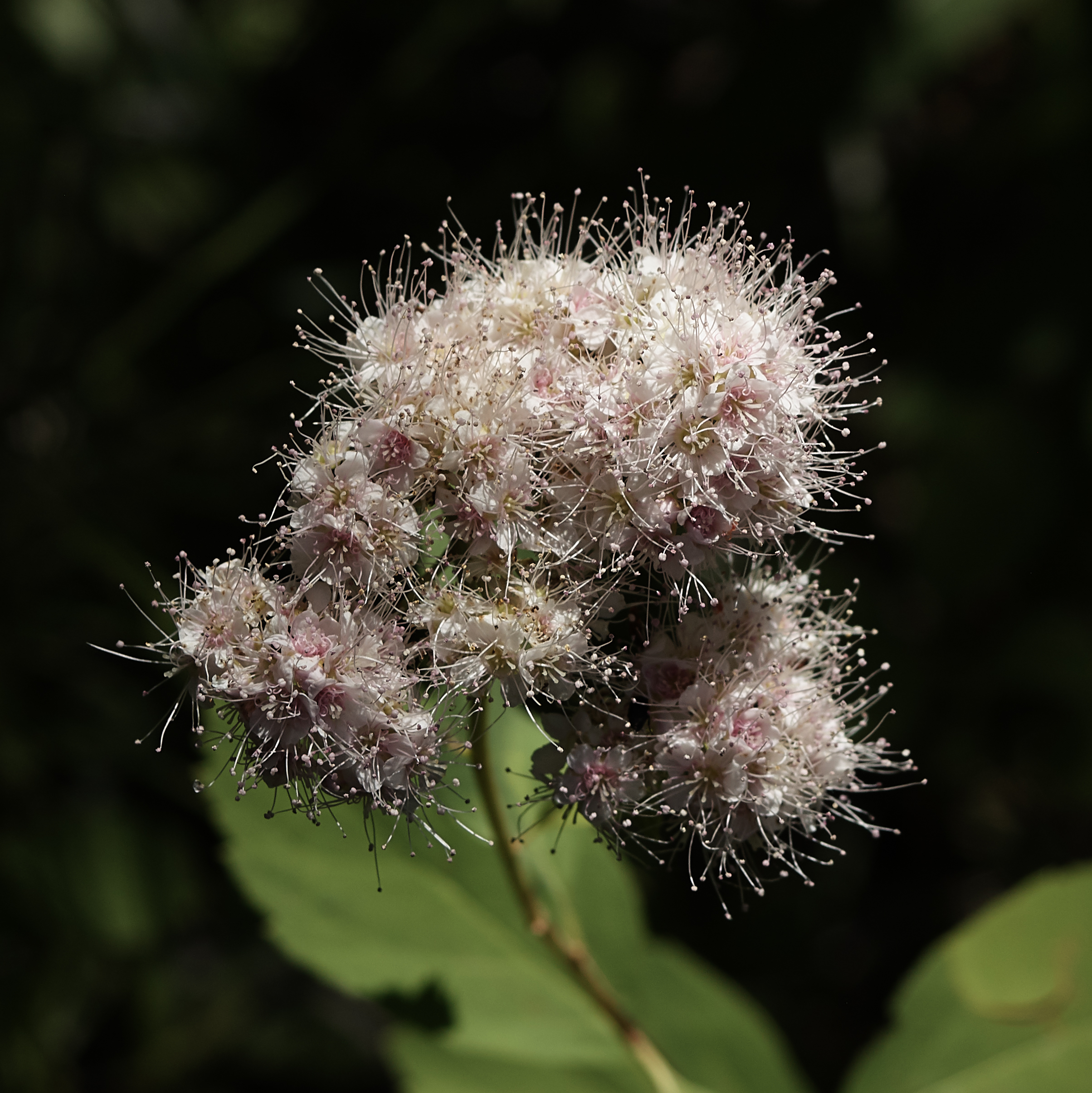
White and Bursting With Energy Close Up – © Jeffrey H. Lubeck – MESH Art LLC. – all rights reserved.

The Secret Spot  - © Jeffrey H. Lubeck - MESH Art LLC. - all rights reserved.

The Secret Spot – © Jeffrey H. Lubeck – MESH Art LLC. – all rights reserved.

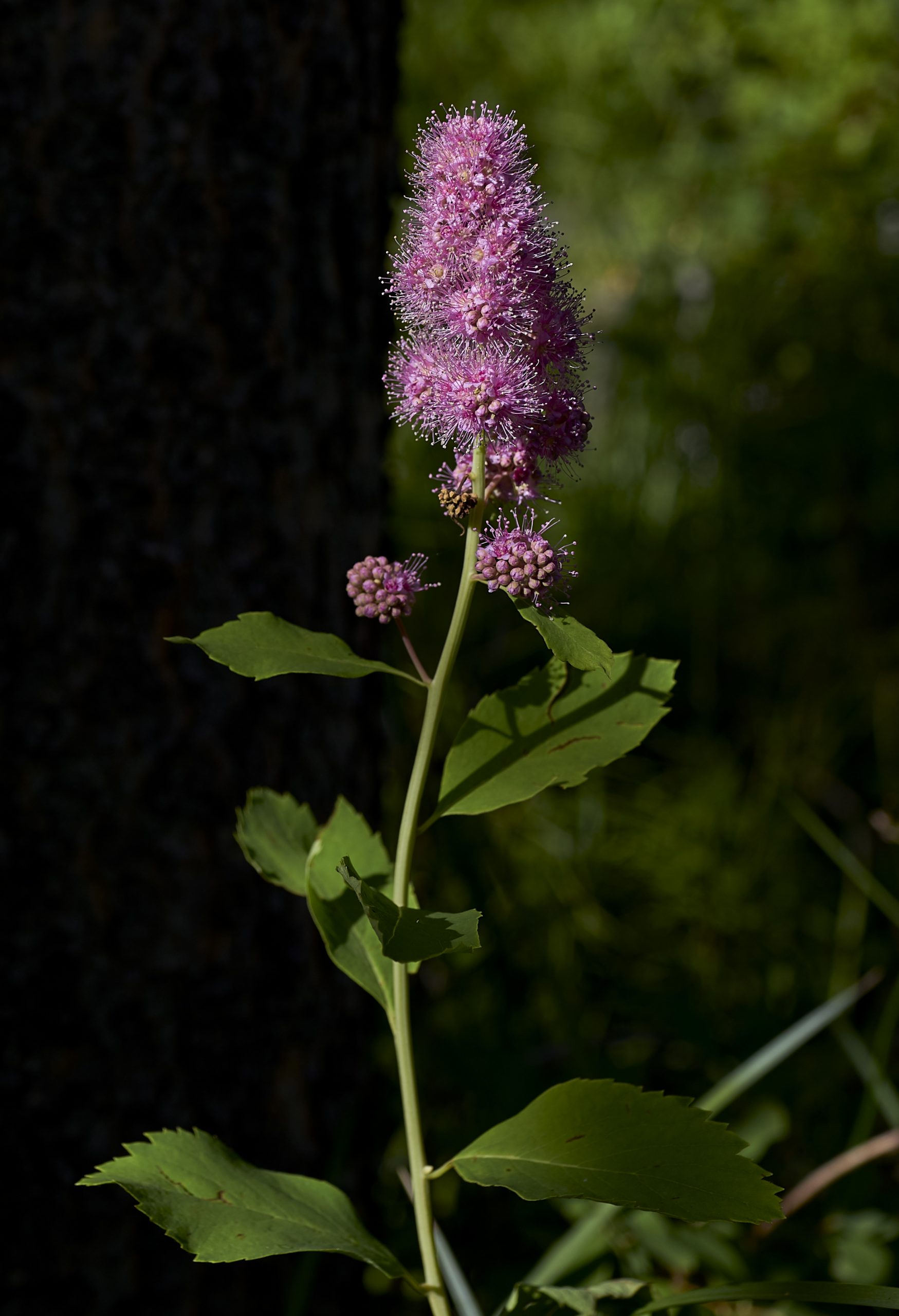
Hot Pink and Reaching Out – © Jeffrey H. Lubeck – MESH Art LLC. – all rights reserved.

Hot Pink and Reaching Out Close Up – © Jeffrey H. Lubeck – MESH Art LLC. – all rights reserved.

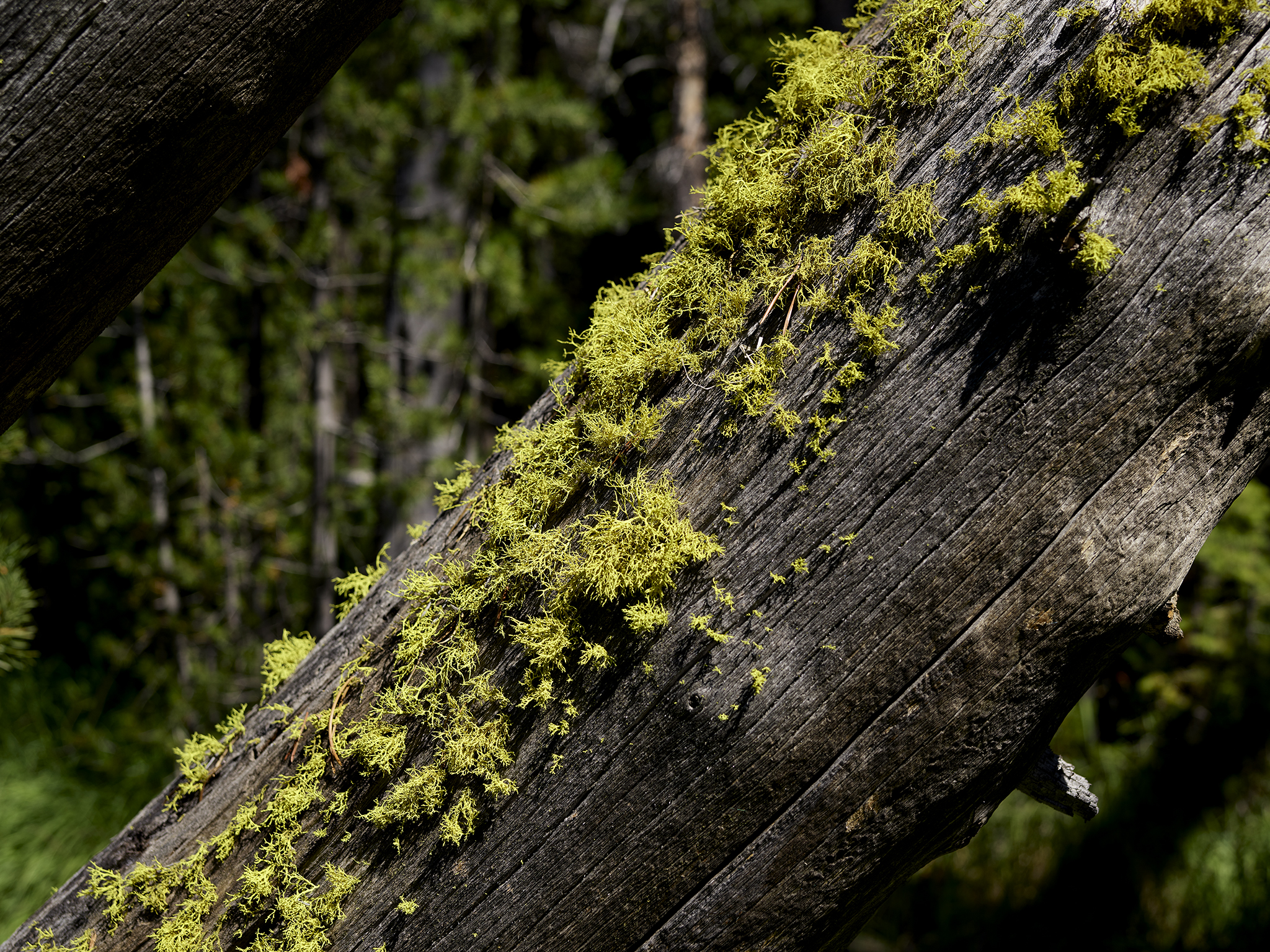
Old Man’s Beard Lichen on the Pine – © Jeffrey H. Lubeck – MESH Art LLC. – all rights reserved.

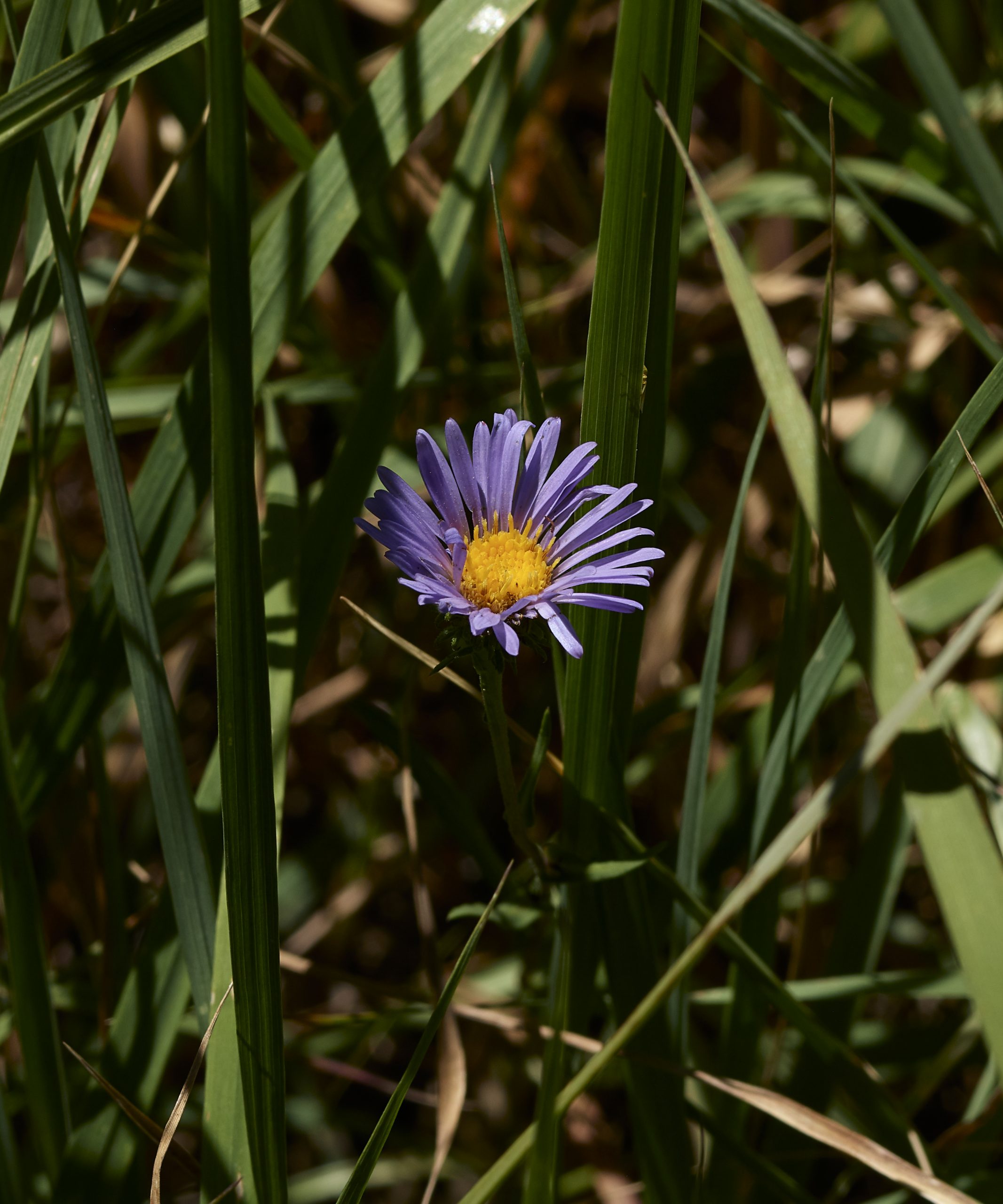
Hiding in the Tall Grass – © Jeffrey H. Lubeck – MESH Art LLC. – all rights reserved.

Dainty Yet Sturdy – © Jeffrey H. Lubeck – MESH Art LLC. – all rights reserved.

All Yellow All the Time – © Jeffrey H. Lubeck – MESH Art LLC. – all rights reserved.


The Range of the Experience

Today the temperature reached a high of 90.9 degrees fahrenheit at our cabin in Stanley, Idaho.  That is fairly warm.  The temperature when Linda, I, and the Border Collies left the cabin for our 6 mile hike at 7AM was 35.1 degrees fahrenheit.  Today was a Double-Dandy.  My buddy Doug Proctor met me upon on our return and he and I repeated the trip.  When Doug and I returned the temperature was 87 degrees.

However lets be clear, the 55 degree change in temperature from low-to-high on this day is pretty common in Stanley, Idaho.  Given that it is mostly sunny and low in humidity in this region, I love the change.  So the good news is that if any of us fall over dead on these hikes – we will not be perspiring.

For 2020 the lowest recorded temperature at the cabin has been -27 degrees, with the highest being +93 degrees.  The difference of 120 degrees is common in any year.  The lowest recorded I have experienced at the cabin is -31 degrees and highest 97 degrees.

However, it is the 2nd of August and one respite is viewing the wildflowers.  Not only do I get to experience the wildflowers on these hikes – I get to experience them in my yard throughout the year.

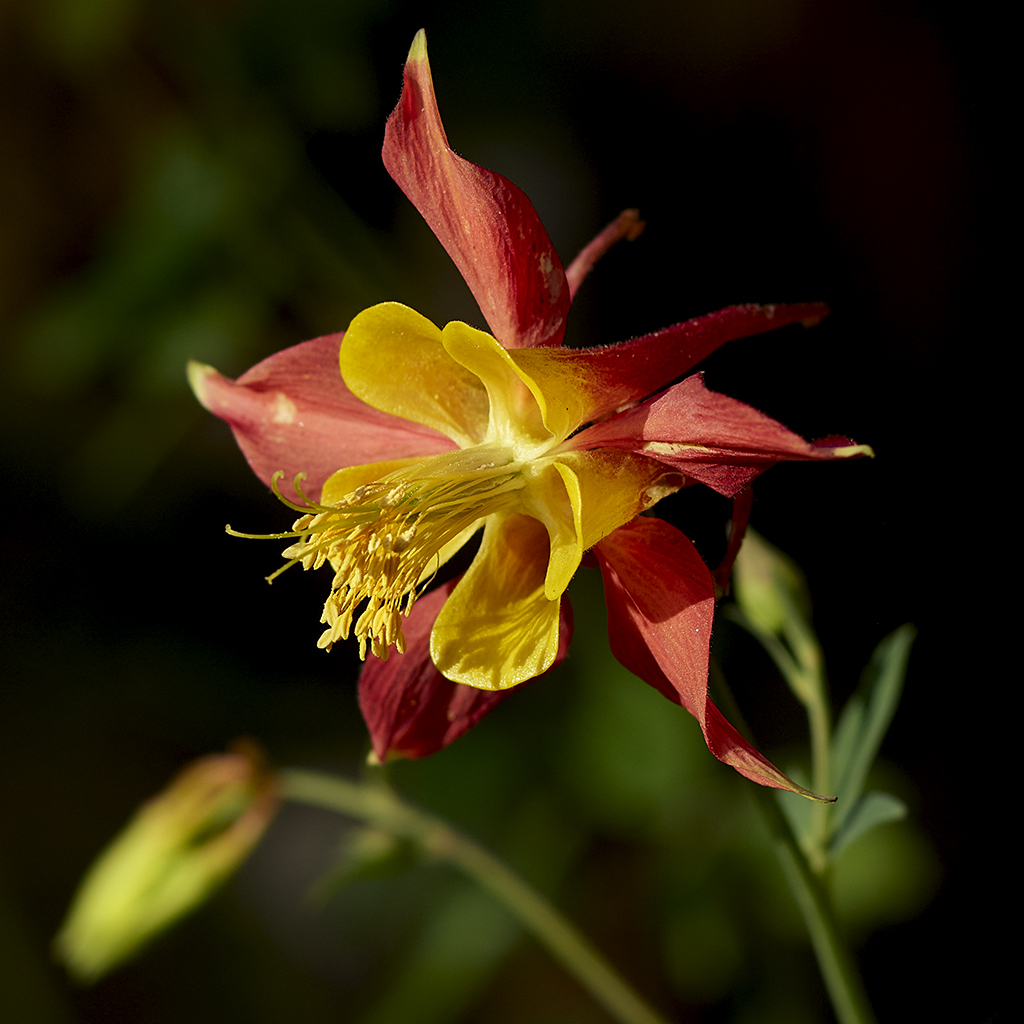
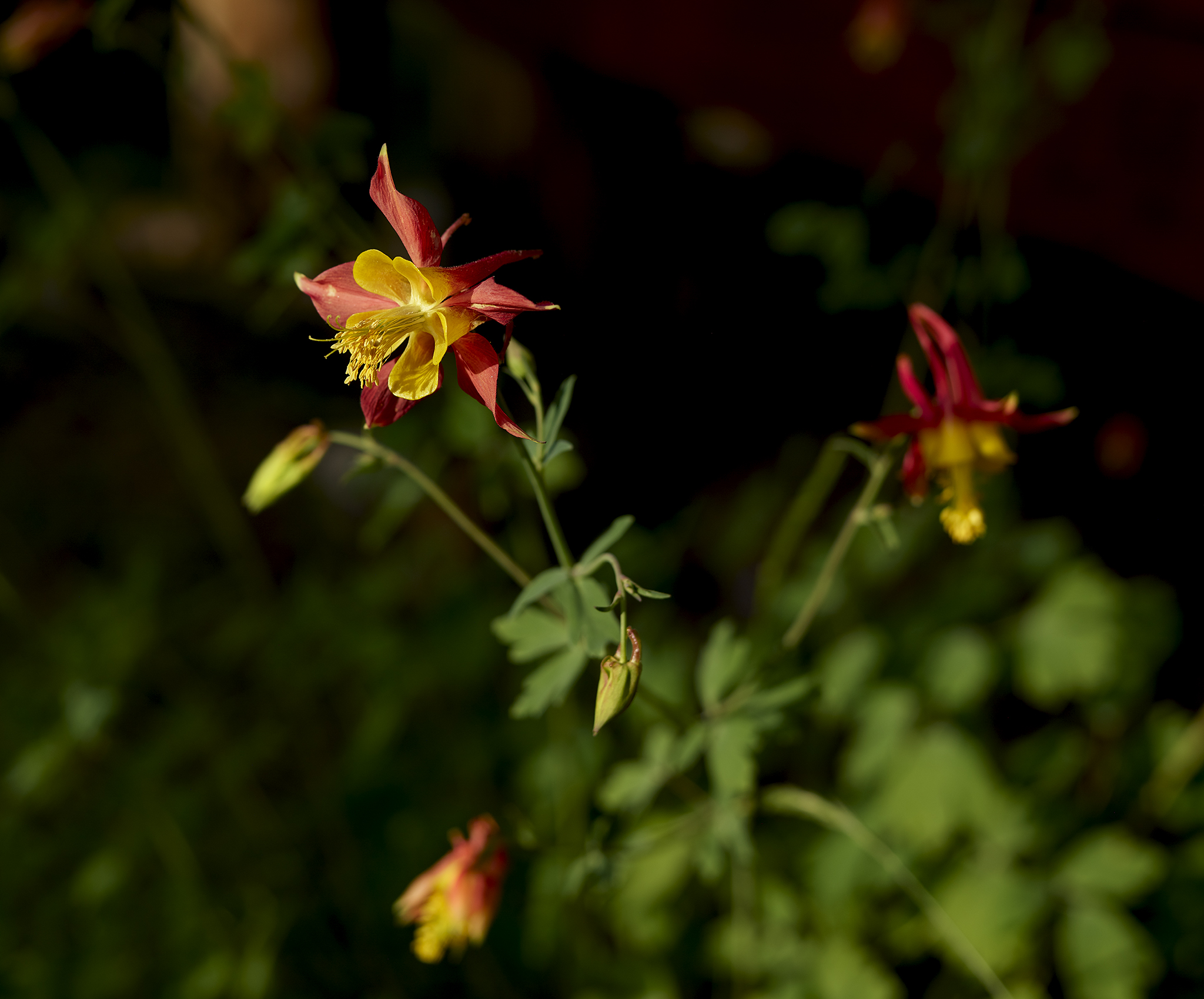
So, the wildflowers on this post are situated less than two feet from from the cabin deck on August 2nd, 2020.

The Western Columbine Shines – © Jeffrey H. Lubeck – MESH Art – all rights reserved.

The Western Columbine Shines – © Jeffrey H. Lubeck – MESH Art – all rights reserved.