December 2025
M T W T F S S
1234567
891011121314
15161718192021
22232425262728
293031  

Capturing Kauai – The River Meets the Ocean.

The Sun rises and begins to shine on the mouth of the Waimea River and Pacific Ocean on Easter Sunday.

The Waimea River and the Pacific Ocean have a give and take relationship.  The mouth of the Waimea is located on the south side of the Island of Kauai in the State of Hawaii, in the United States of America. At 22 miles in length, the Waimea is the longest river on Kauai and 3rd longest in the State of Hawaii.

The Waimea River from the Highway 50 bridge.

The river mouth has a bit of history tied to it.  The beach on the north side of the river, is where Captain James Cook becomes the first European to land on the Hawaiian islands (1/20/1778).  The Center Eyewall of Hawaii’s worst Hurricane in recorded history – Iniki – slams into Kauai at the mouth of the Waimea (9/11/1992).  The peak sustained winds are 160 MPH.  The Pacific Missile Firing Range (PMFR) operation on Makaha ridge records peak winds of 217MPH.  The device has not been calibrated recently, so the measure is not official.

On this day, rains provide a soaking to the south and west side of the Island.  Later on this day, the wood in the photo above is entirely underwater at 5PM.

—Jeff’s Thoughts and other Worthless Trivia —

Our home is located on the beach three houses north (or west) of the Waimea River.  With Weather and surf, the conditions can change dramatically and quickly.  I am constantly looking to see what is going on at the mouth of the river.

The top of the Waimea River Canyon rises 5,000 + feet above sea-level in less than 20 air miles. It often receives the most rain on earth in any given year (460 inches on average).  The combination of conditions is remarkable.  Therefore, Flash Floods can be an issue for the town of Waimea and at the mouth of the Waimea River. Flooding is a major problem in the area prior to the 1970’s.  The town floods to 4-8 feet in height in 1949 and again in 1975.

However, the Federal Government changes laws and funding.  In the 1980’s the Waimea River Flood Plan receives material protection.  Ironically, the Army Corps Engineers Recommendation of Plan A (i.e. greatest protection) is adopted, funded, implemented, and completed in 1984. So flooding in the town of Waimea and at the house would require an major, major event – such as another Iniki.

This does not mean water levels cannot change quickly and to dangerous levels. Especially, if you are on or in the river.  Linda and I experienced the greatest change to streamflow in any three-hour period first-hand.

During a winter storm on March 18, 2020 the streamflow increases from 69 ft. 3/s to 1240 ft. 3/s between 3AM and 6AM.  While the flood control works as planned, the change in streamflow is as large as has been ever recorded.


For Photographers…

In 2022, for the most part, we have the photographic gear and the tools.  For the scenario above, I have all that is needed.  I either get this shot, or I do not.  It is up to me to make this happen. If there is a miss – look to the photographer.

I choose to shoot with the Z9 and the Z 20MM 1.8 S lens. As backup, the Z S Line 35MM 1.8, and 50MM 1.2 are at the ready.  Normally, I would also take this shot with the PHASEONE IQ 4 150 and the XF Body and 35MM Blue Ring Lens or Cambo RS Technical Camera and Rodenstock 32MM lens.

If I hit the shot Dead-On, the result from the PHASEONE is the winner 10 out of 10 times.  16 Bit Color, and 151 Mega Pixels can make you look so very good.  However, lets not get too carried away.  At 20 Frames Per Second and 14 Bit Color, I get the shot with the Nikon Z9 that is very well not realized with the PHASEONE.

I am fortunate.  I desire to have the very best in 35MM and 4×5 equipment as my photographic kits.  Today that means Nikon Mirrorless Z and PHASEONE.

Capturing Kauai – Rooster on the Roost

Control of the yard – from a feral chicken perspective – seems to be established. Currently, a Red Jungle Fowl  (shown below) appears to have full control of the yard.  Three females are his companions throughout the day.

Earlier this year, three males and five females utilized the yard.

For chickens, Kauai represents a reversal of fortune.  Domestic chickens were bought to the Hawaiian islands from Polynesia hundreds of years ago. Hurricanes Iwa (1982), and Iniki (1992) effectively blew up the commercial operations and freed the birds.  With no natural predators, the domestic chickens have cross-bred with the wild Jungle Fowl of the forest.  It is estimated there are over 450,000 wild chickens on Kauai. The wild versions live to about five to seven years of age.

For more background a story in livescience is [here]


Capturing Kauai – Cruising The Na Pali Coast with Makana

What a difference one week’s time can make. Especially when in comes to perspective.

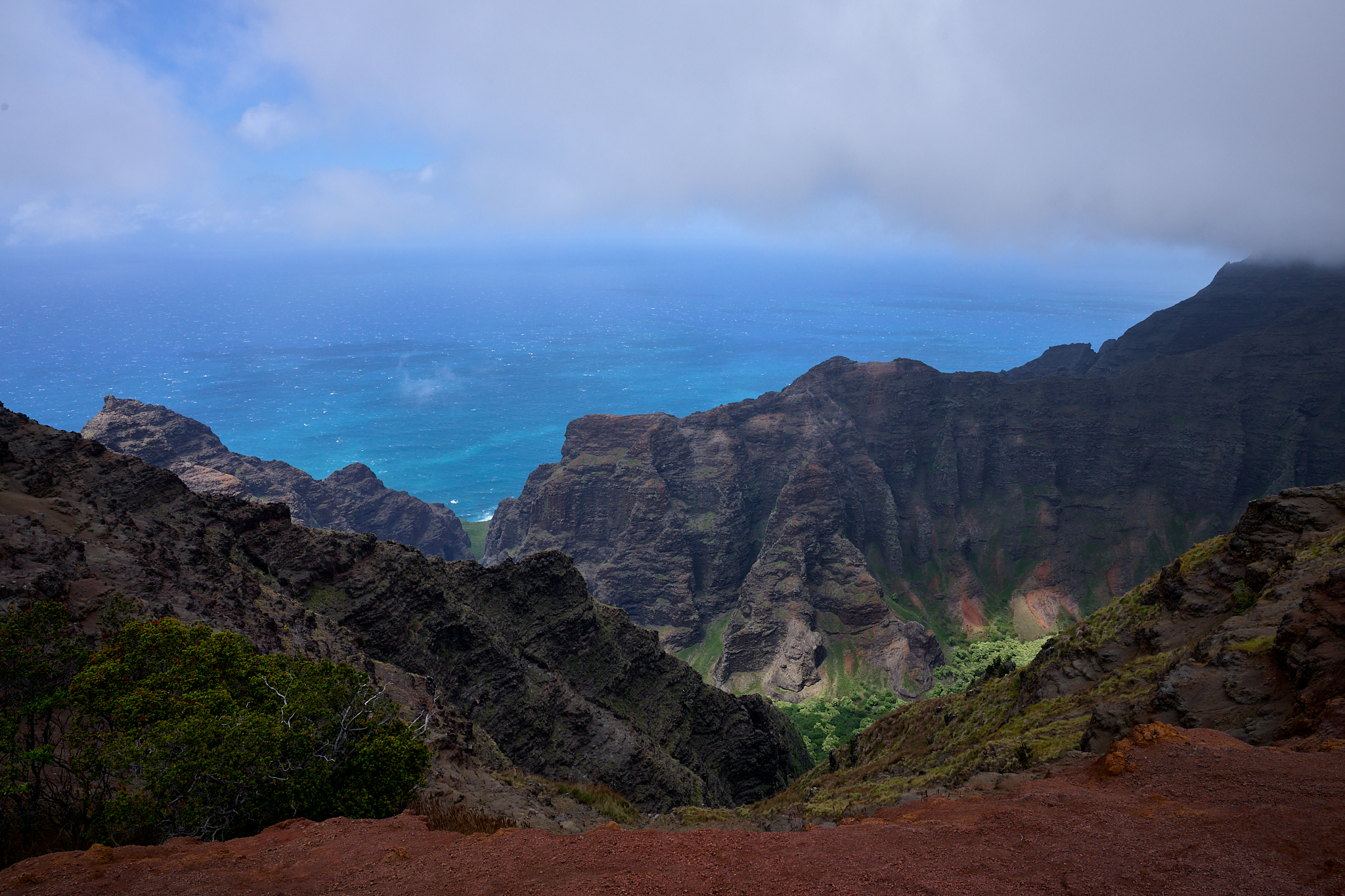
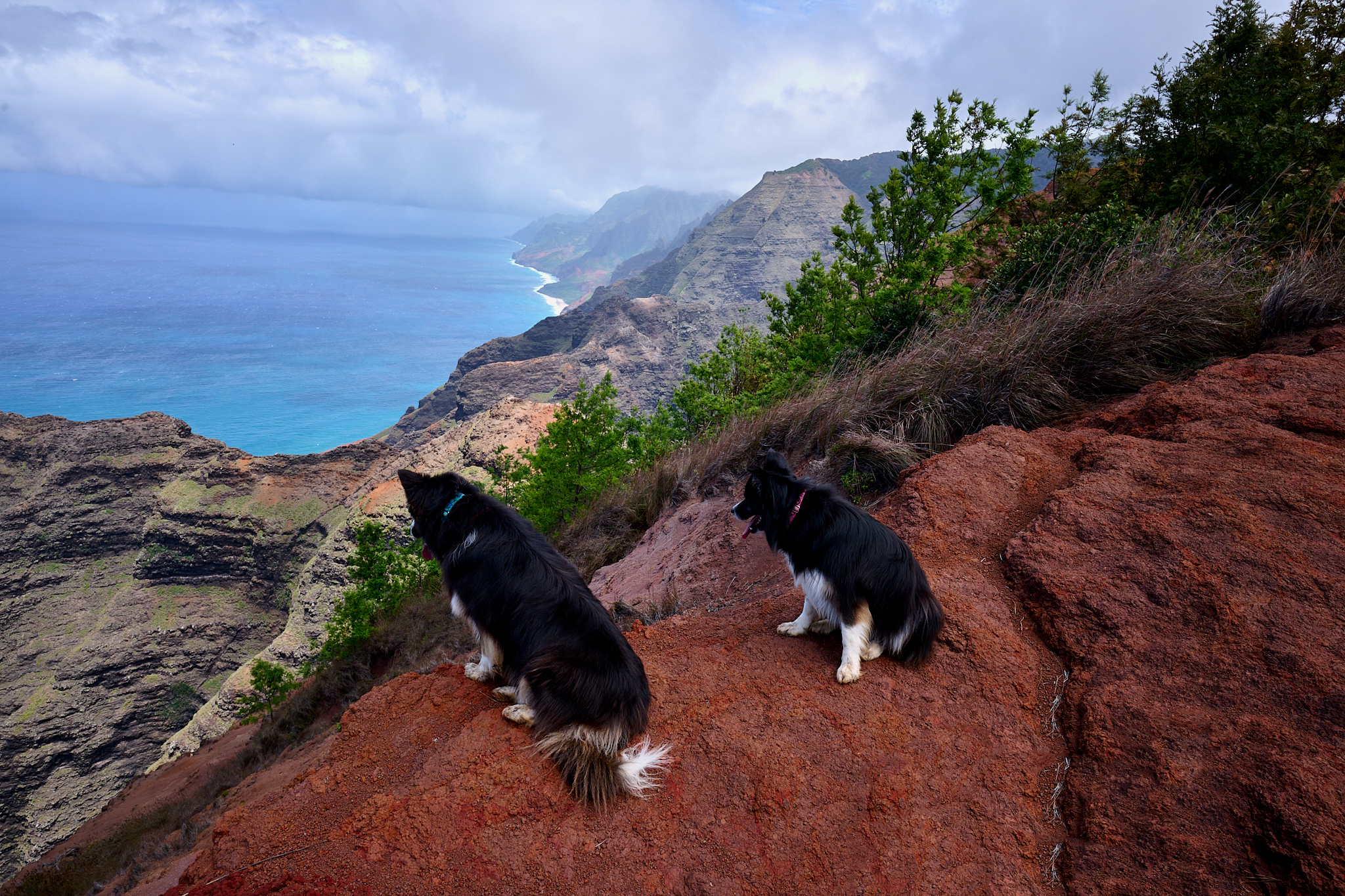
Last week, the highlight of perspective for me is the extraordinary view provided when standing on top of Ni‘ani‘au point (summit). It is located on the Na Pali Coast on the island of Kauai in the state of Hawaii in the United States.  The Post for that story and shoot are [here].

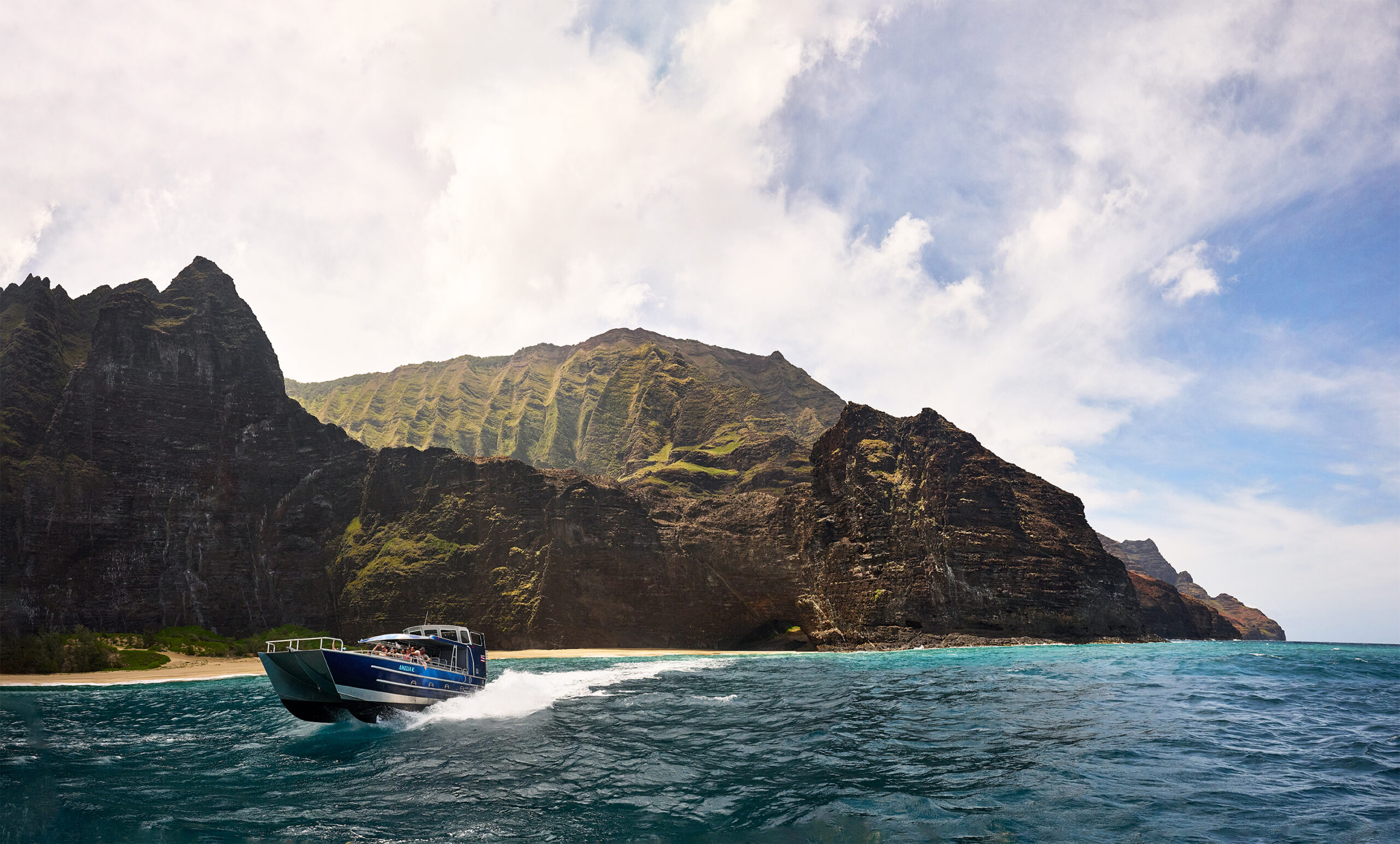
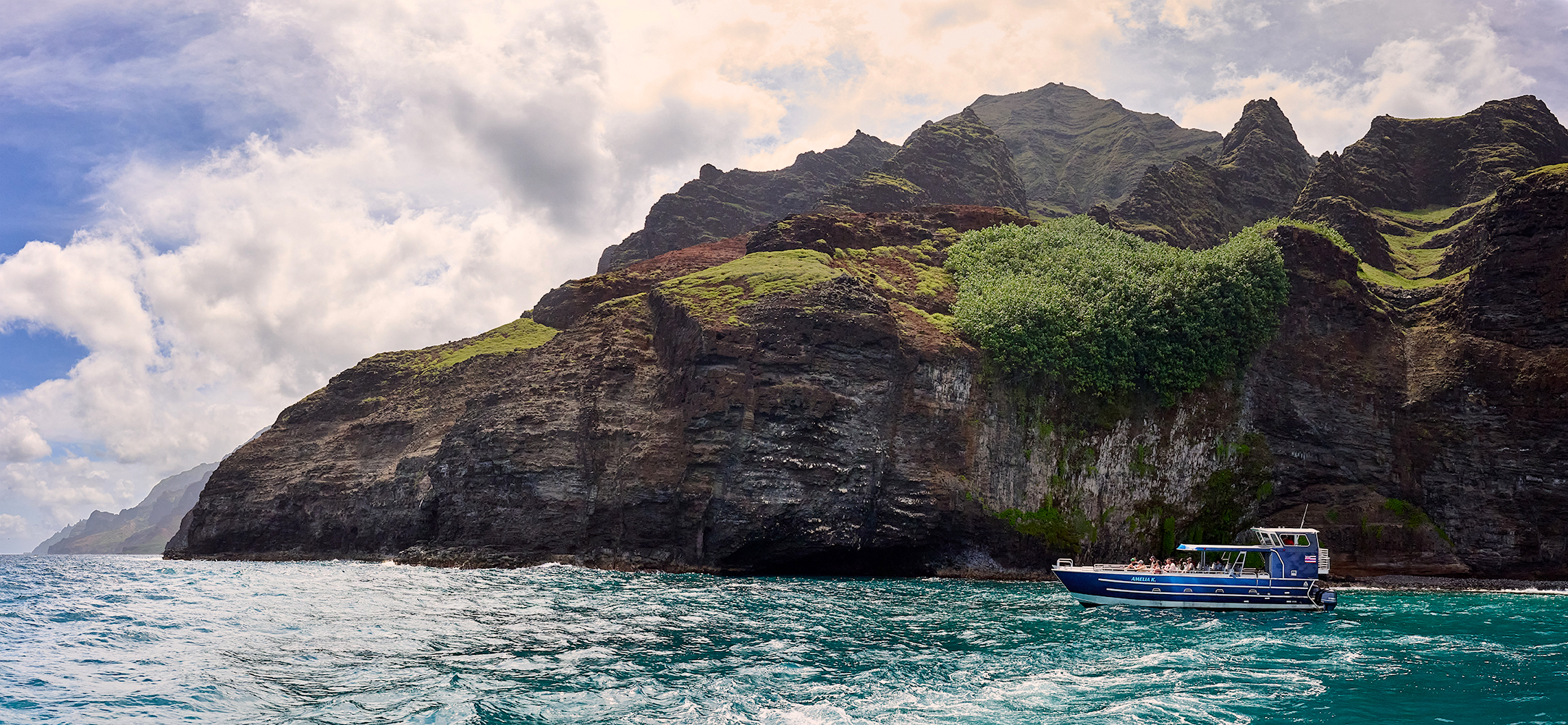
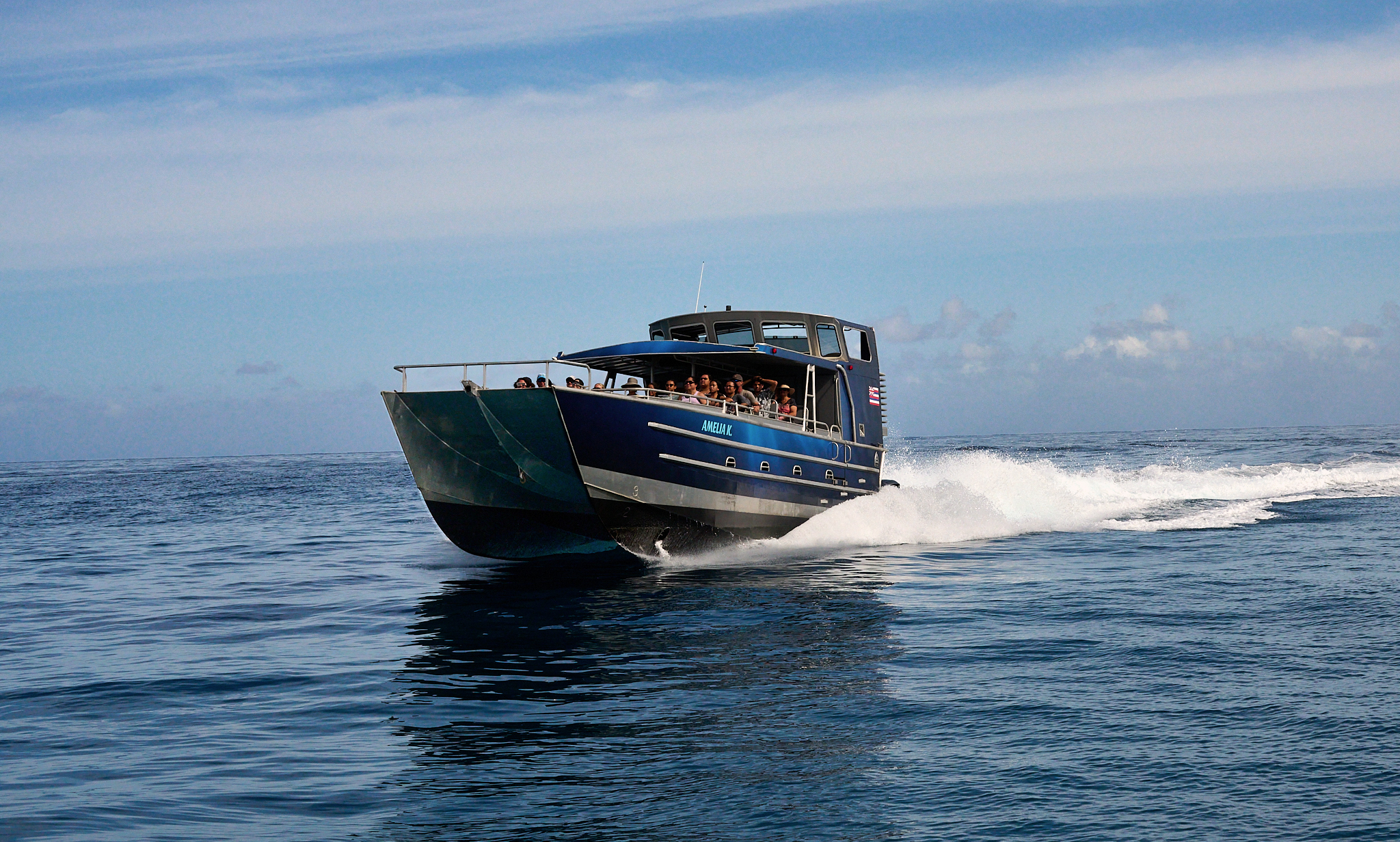
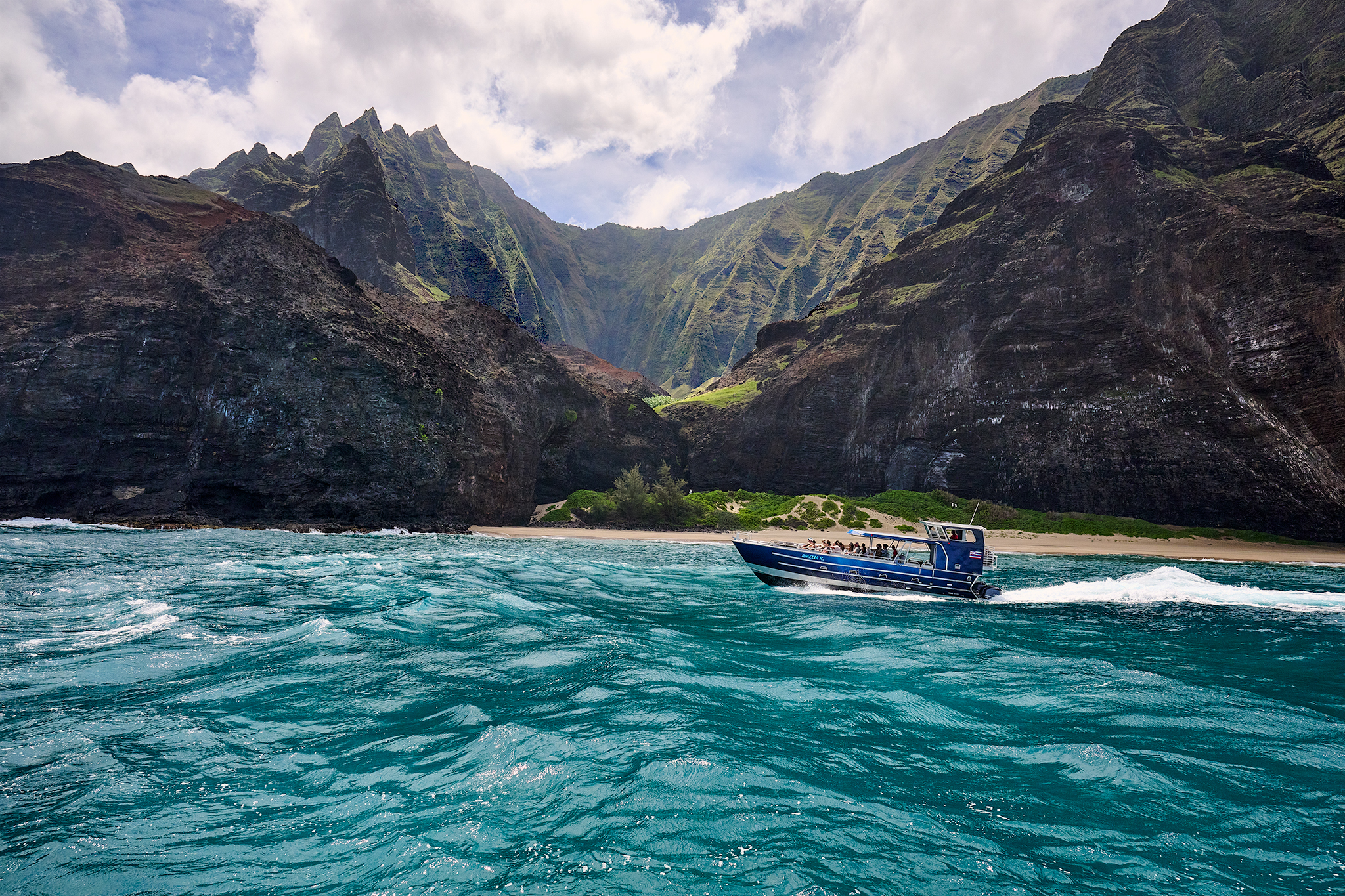
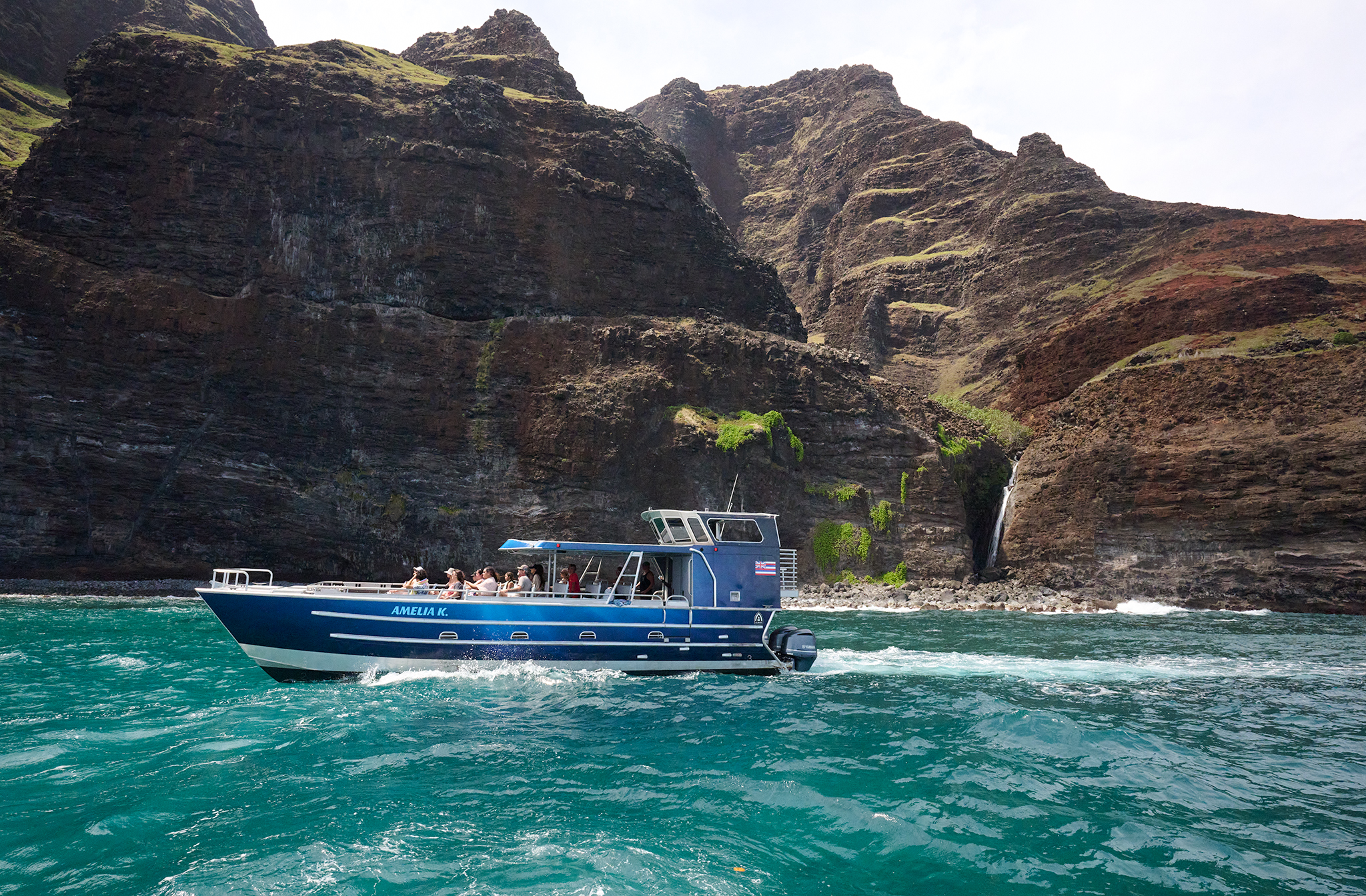
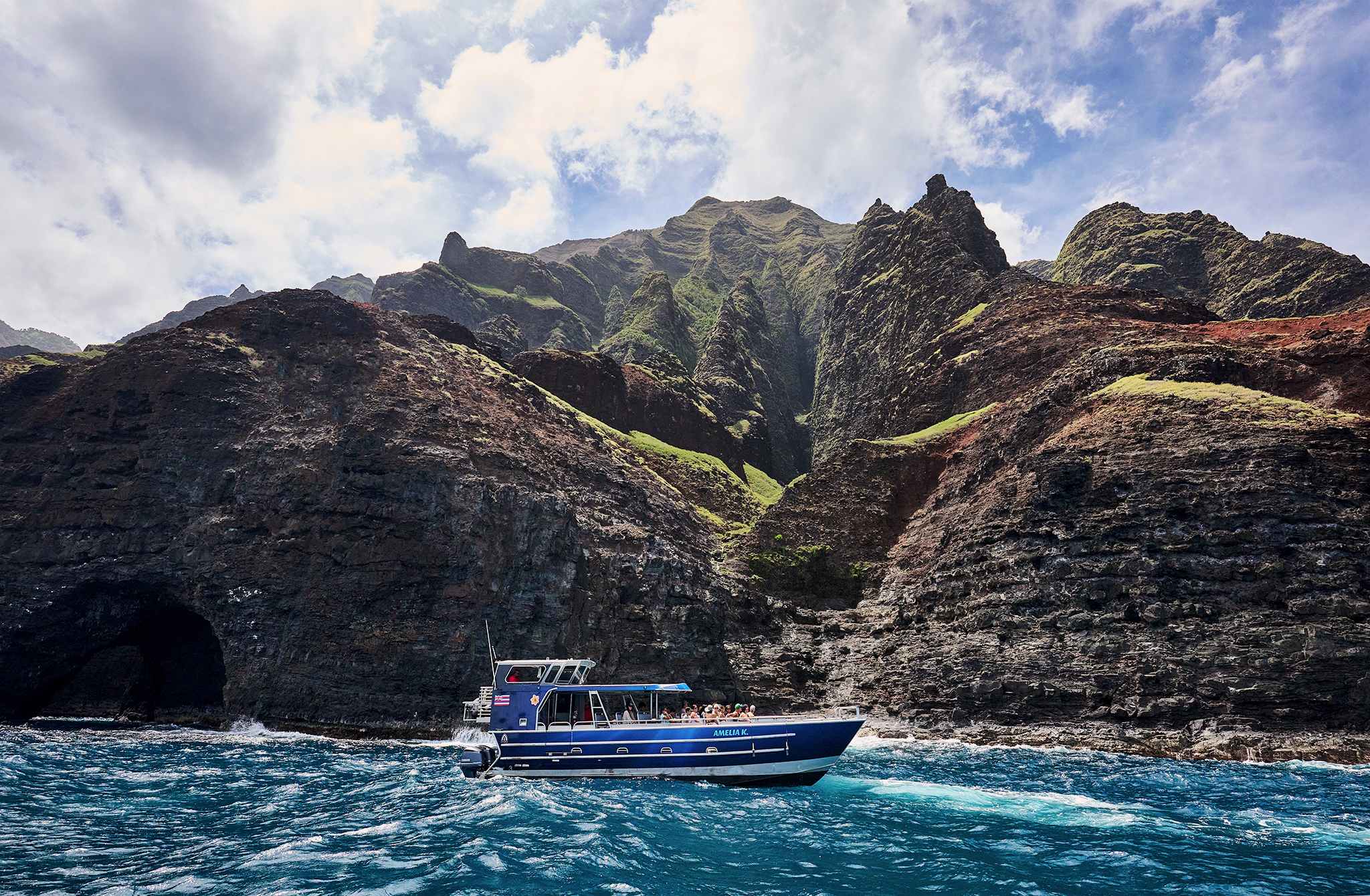
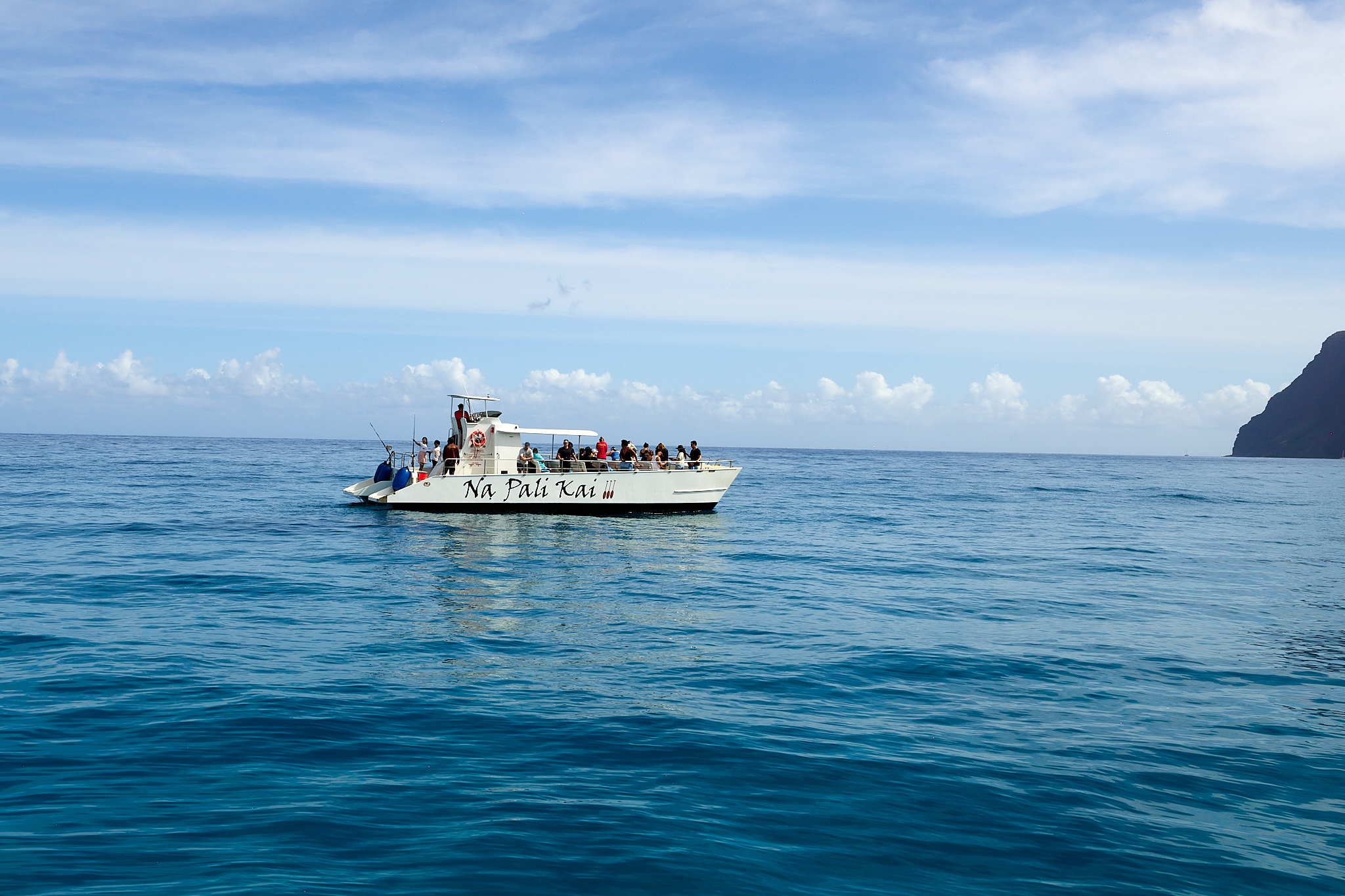
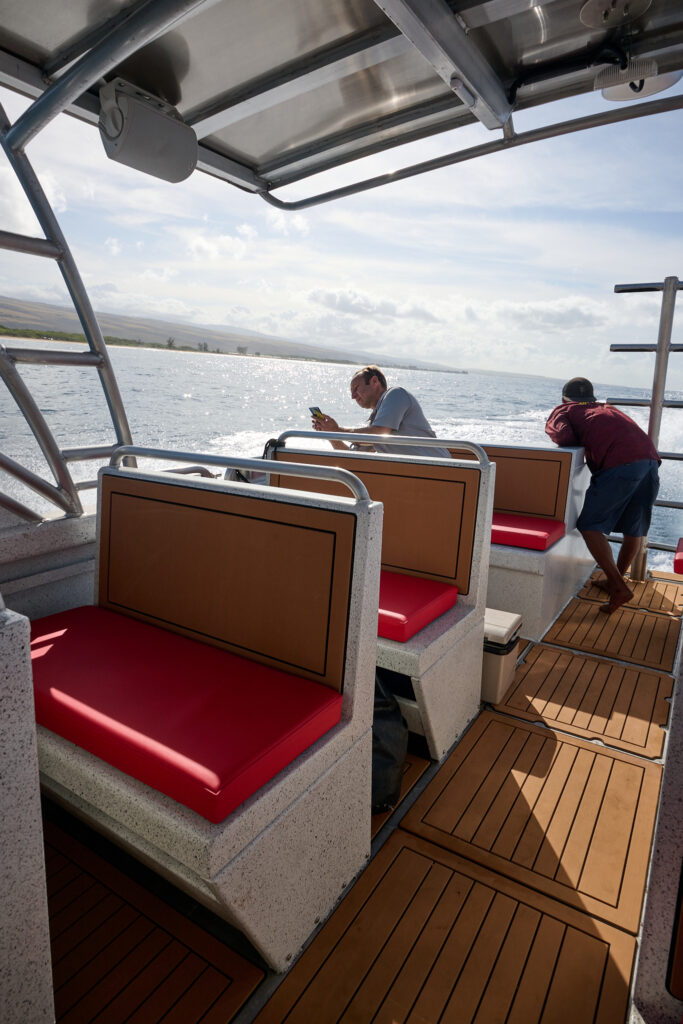
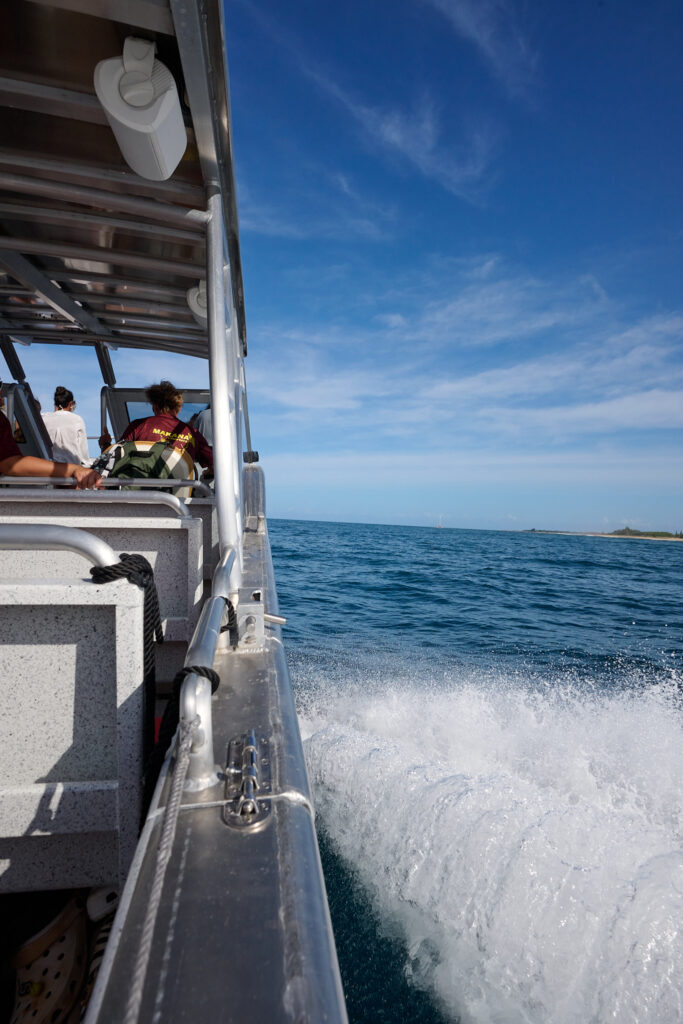
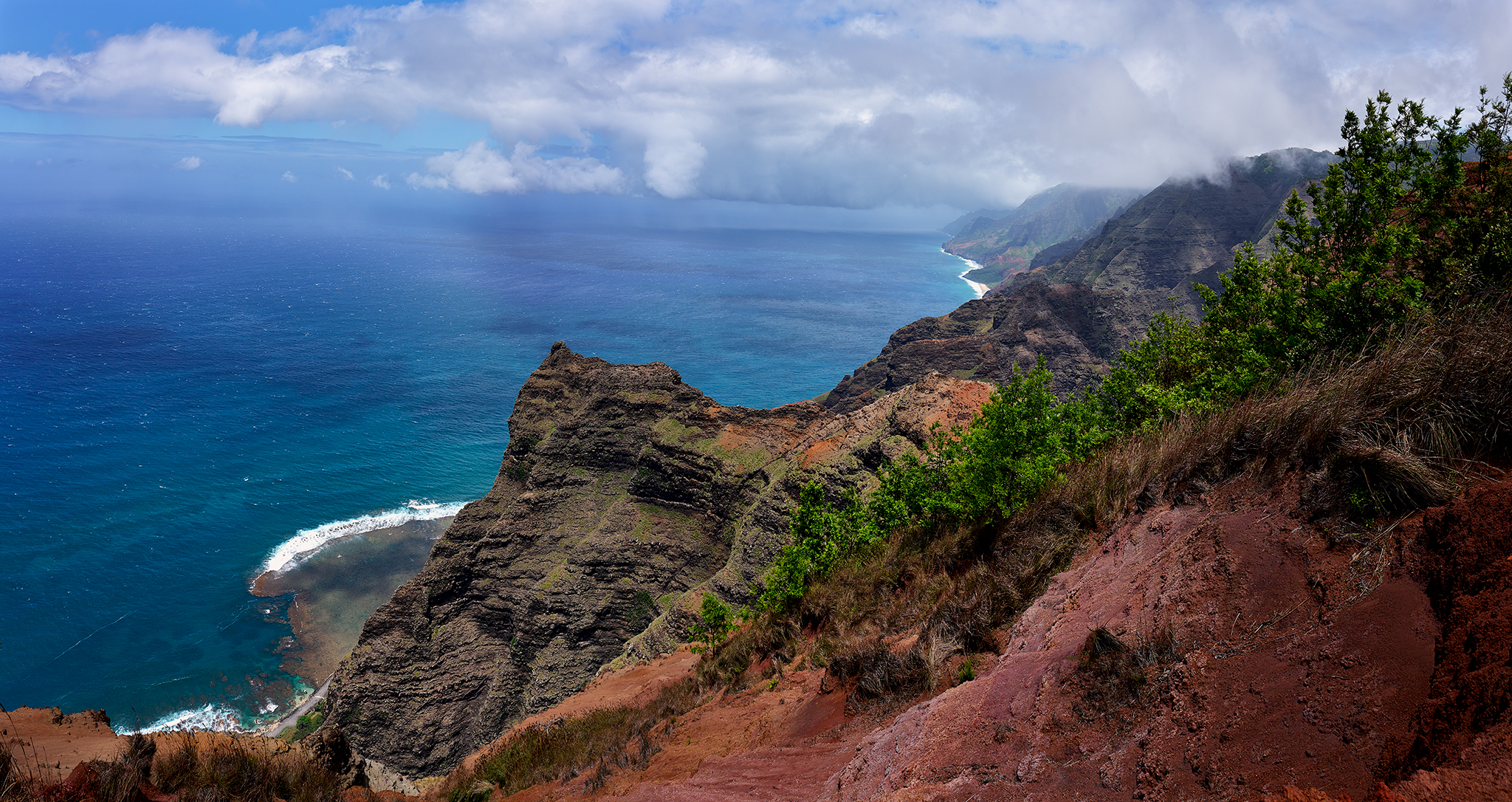
This week, the highlight of perspective for me is observing Ni‘ani‘au point (summit) from the deck of the Na Pali Kai III, a short distance from shore.

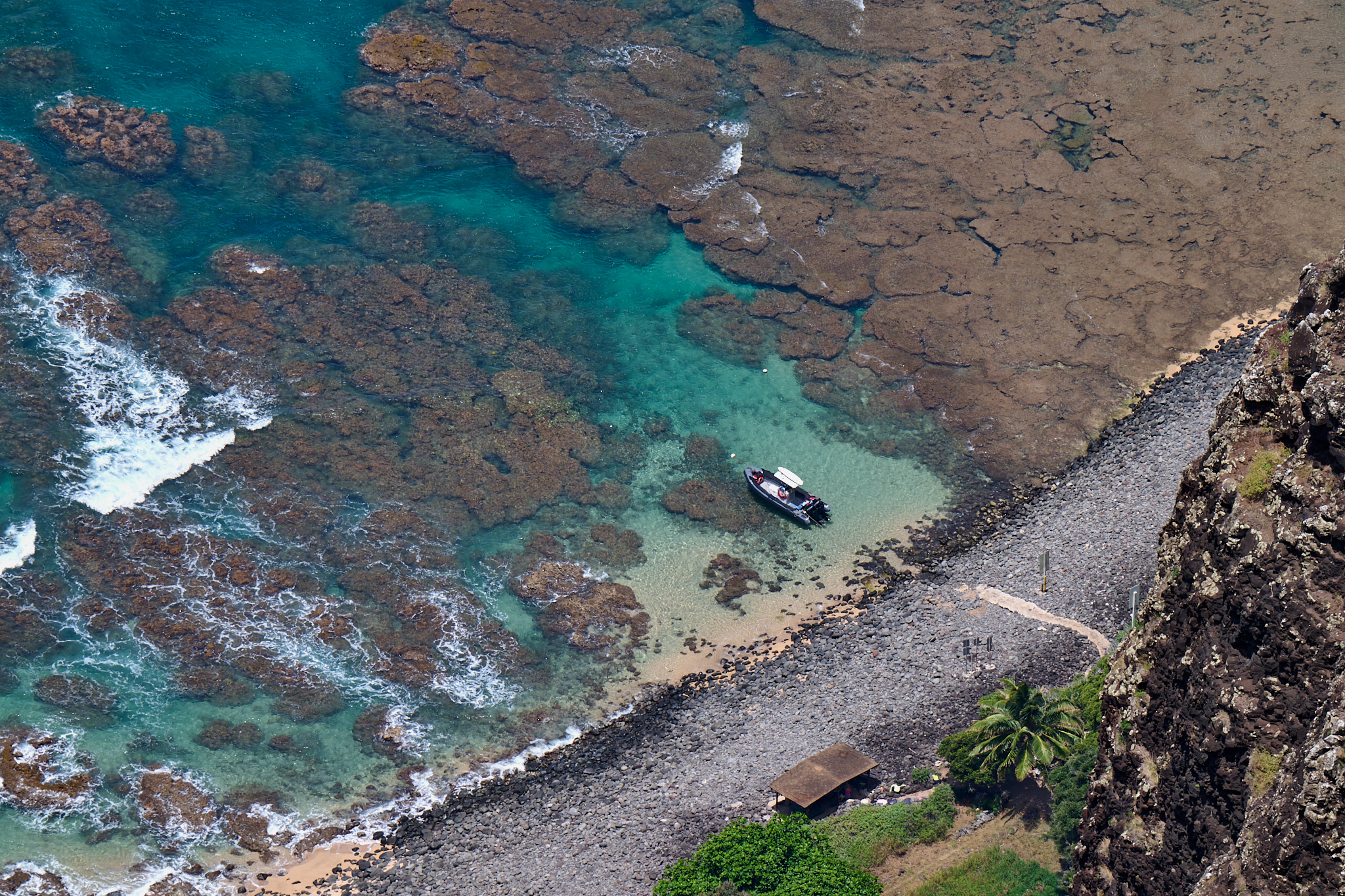
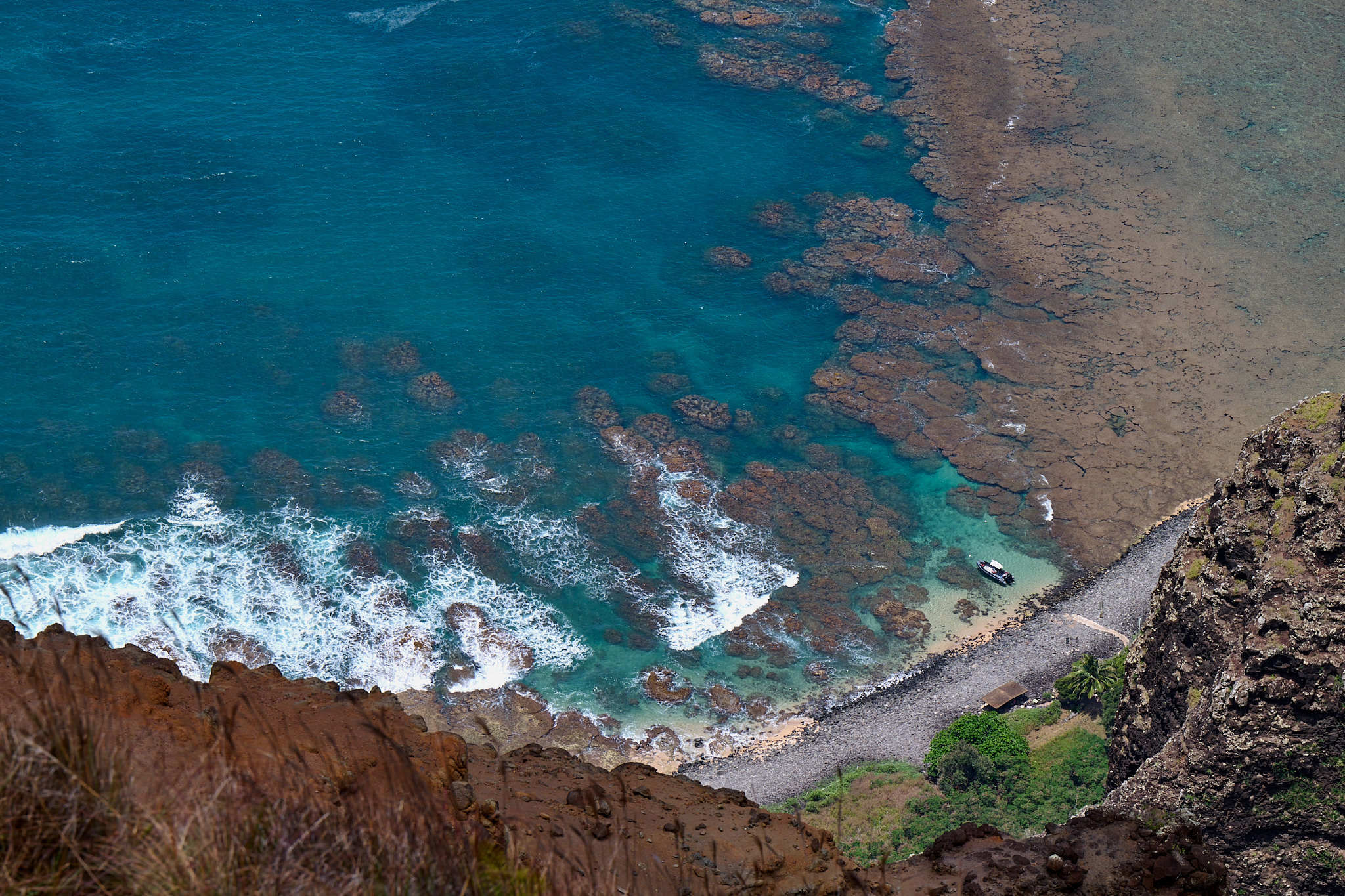
Another highlight of perspective for me is observing Ni‘ani‘au point (summit) from the air.

By Sea.

By Land.

By Air.

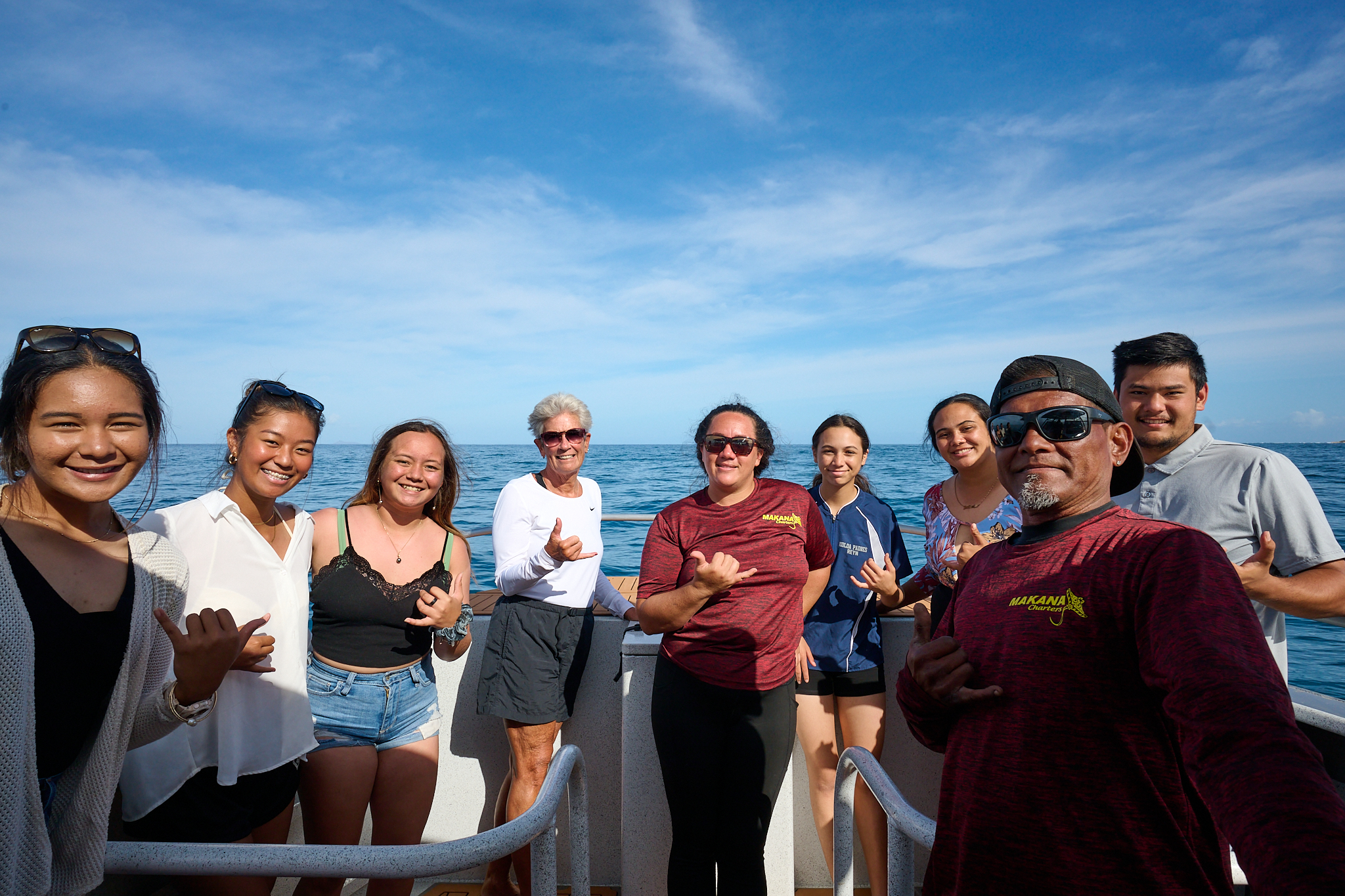
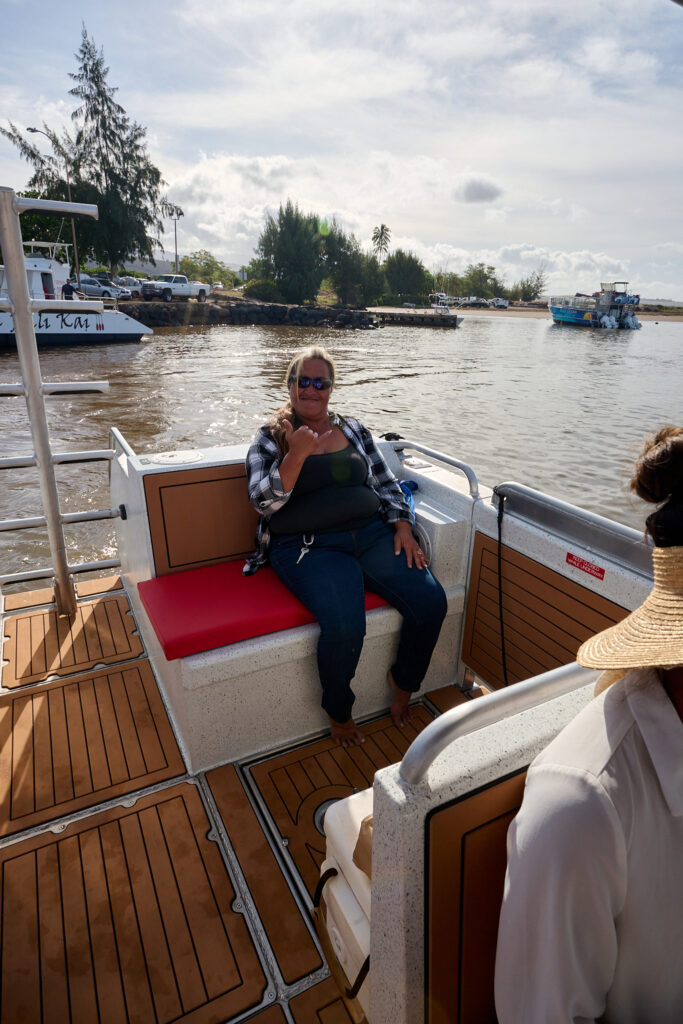
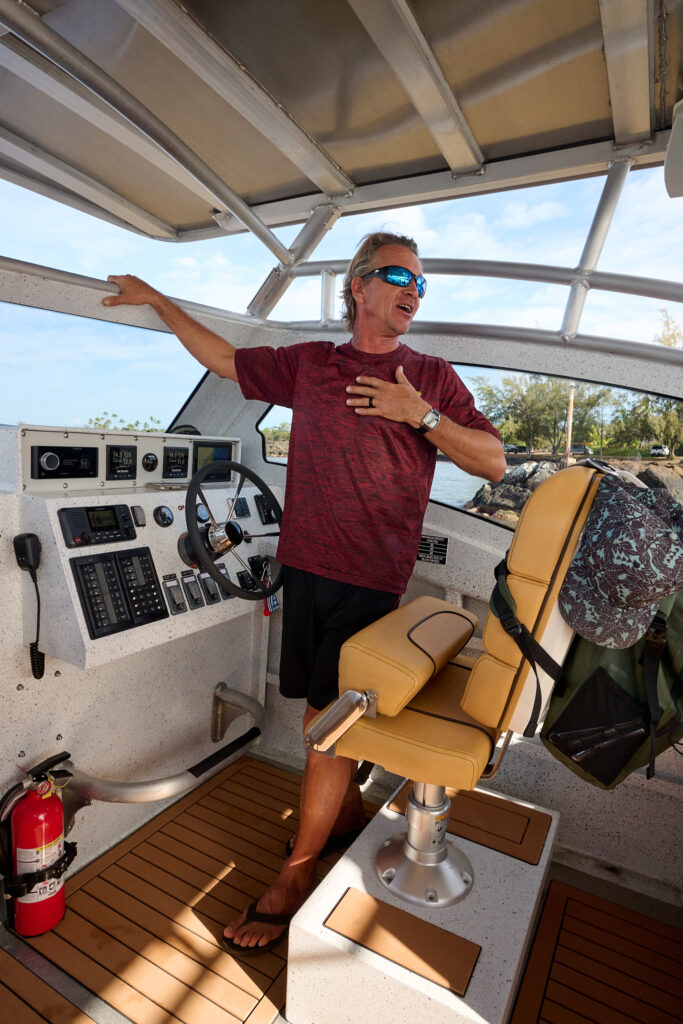
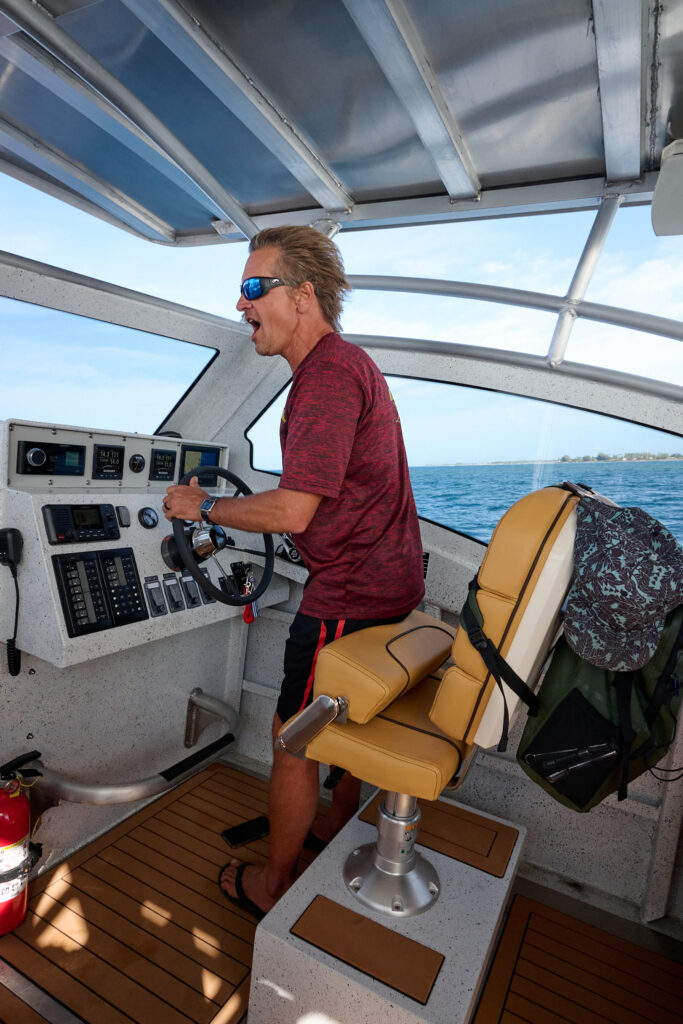
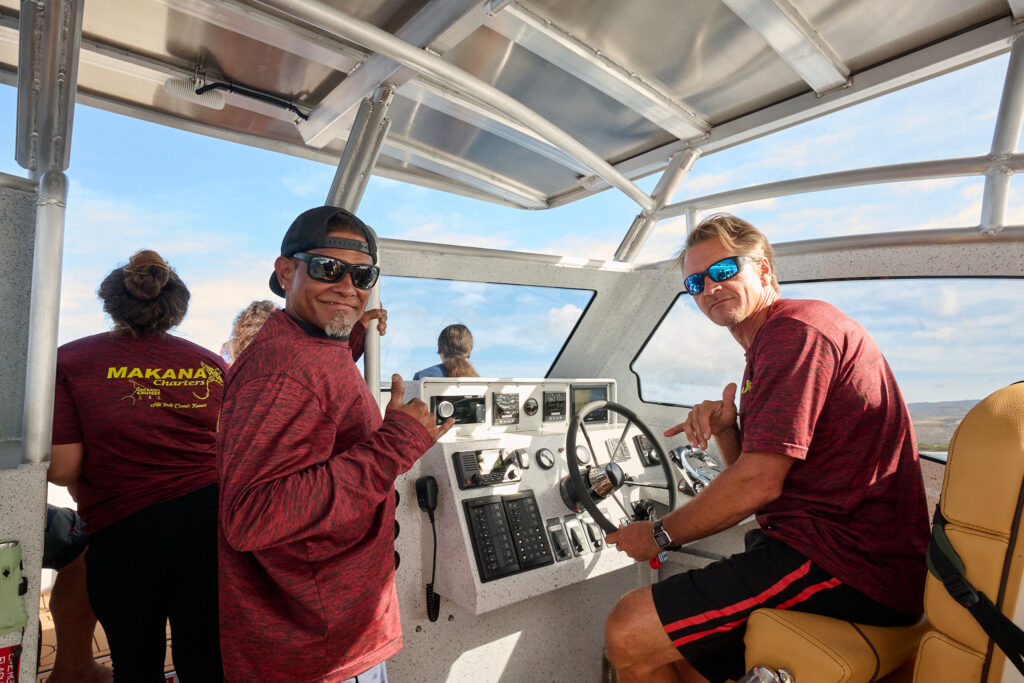
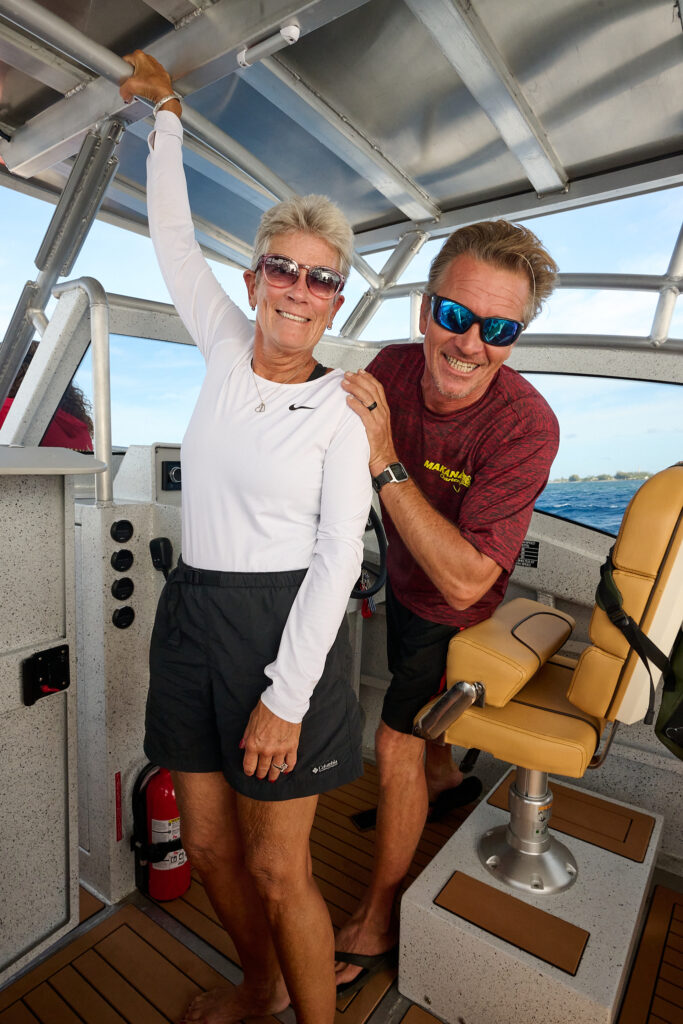
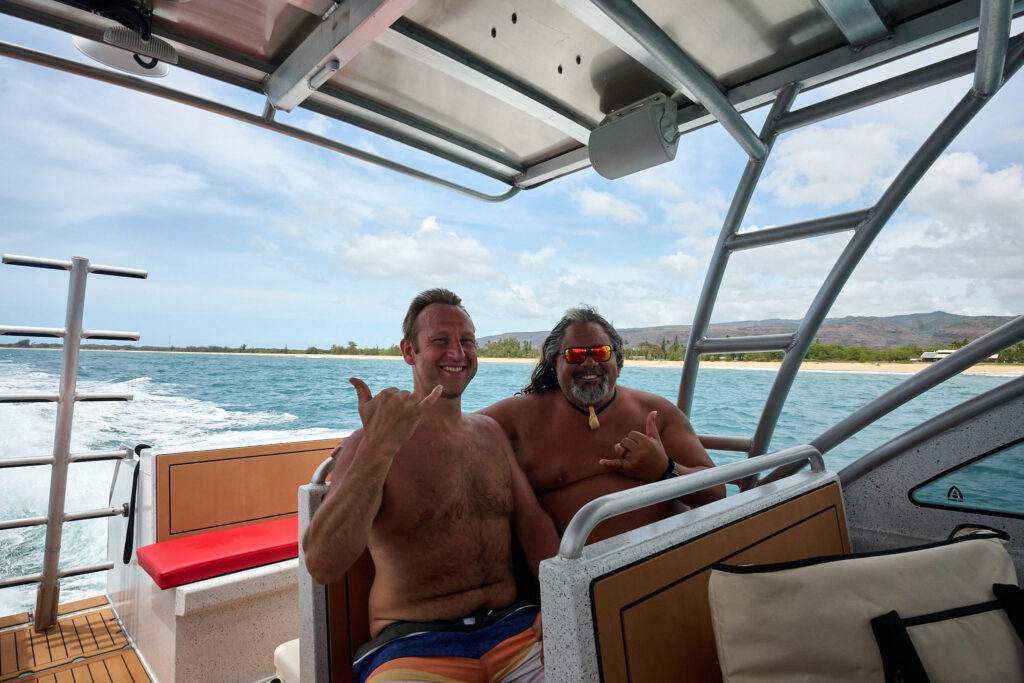
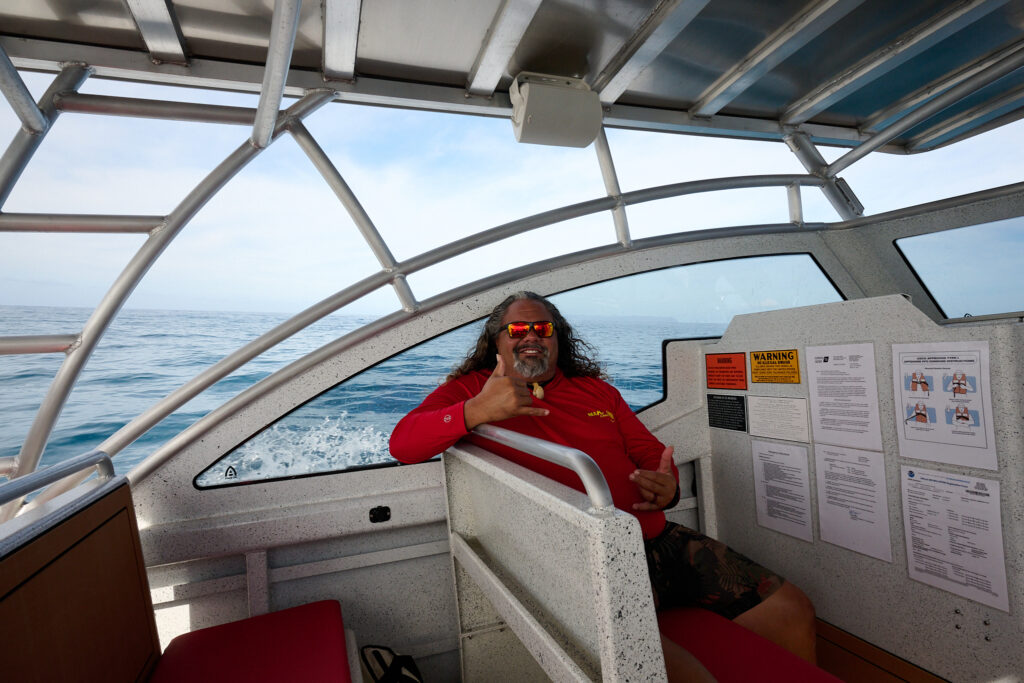
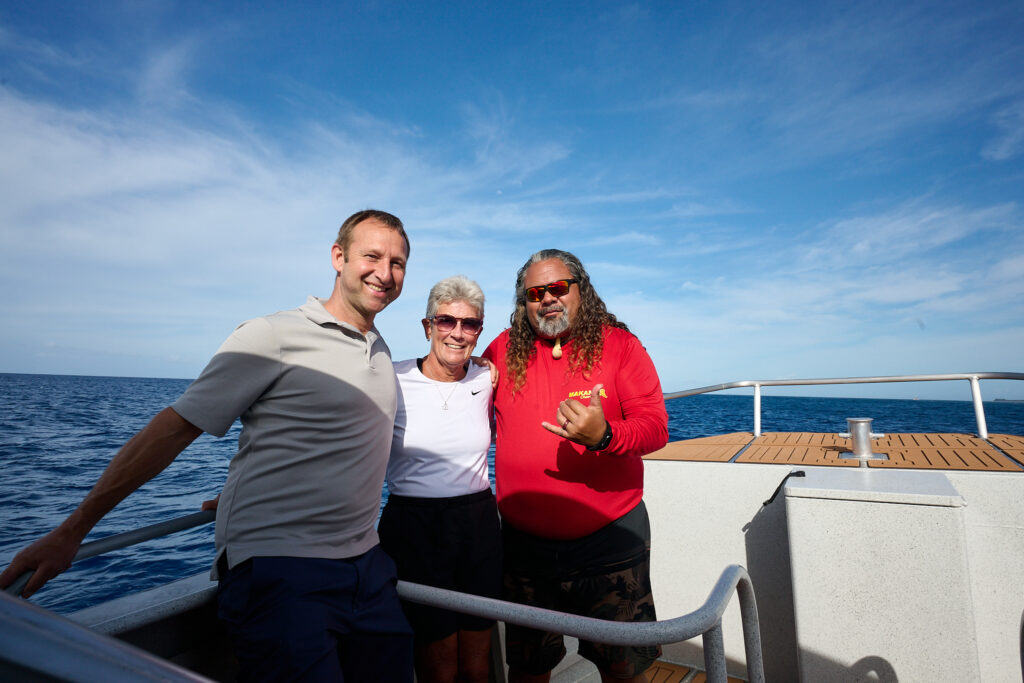
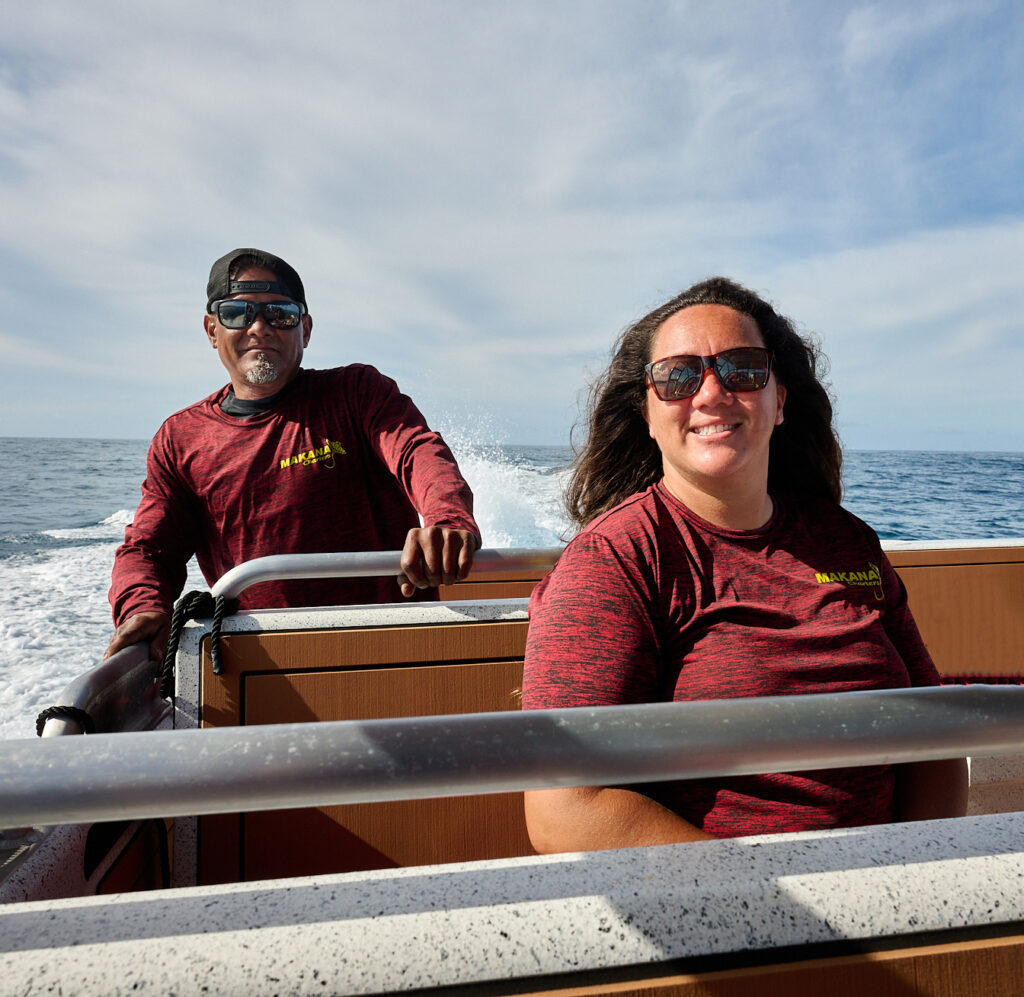
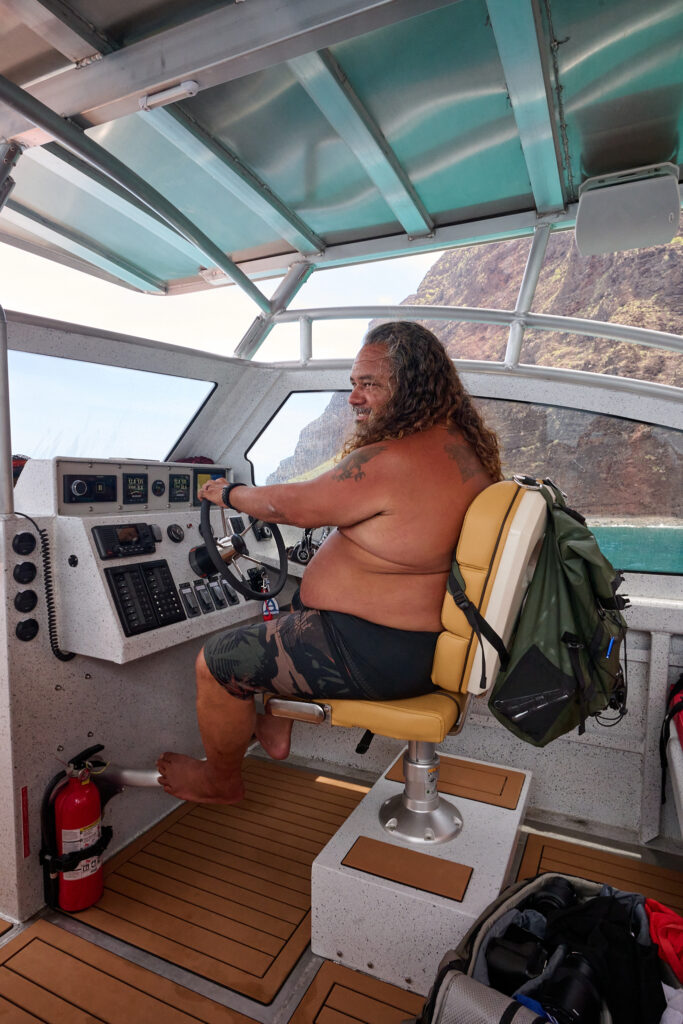
The images captured from the water of The Na Pali Coast contained within this Post only happen because of the graciousness of Captain Dave Asman, and the owners of Makana Charters & Tours.  Dave and Makana are letting me occupy an empty passenger seat (when available) in order for me to start scouting the coast-line for potential photo-shoots.  Once I am ready, I plan on conducting a series of private shoots so I can capture images similar to that of my other works.  For the present, I am a happy traditional passenger.

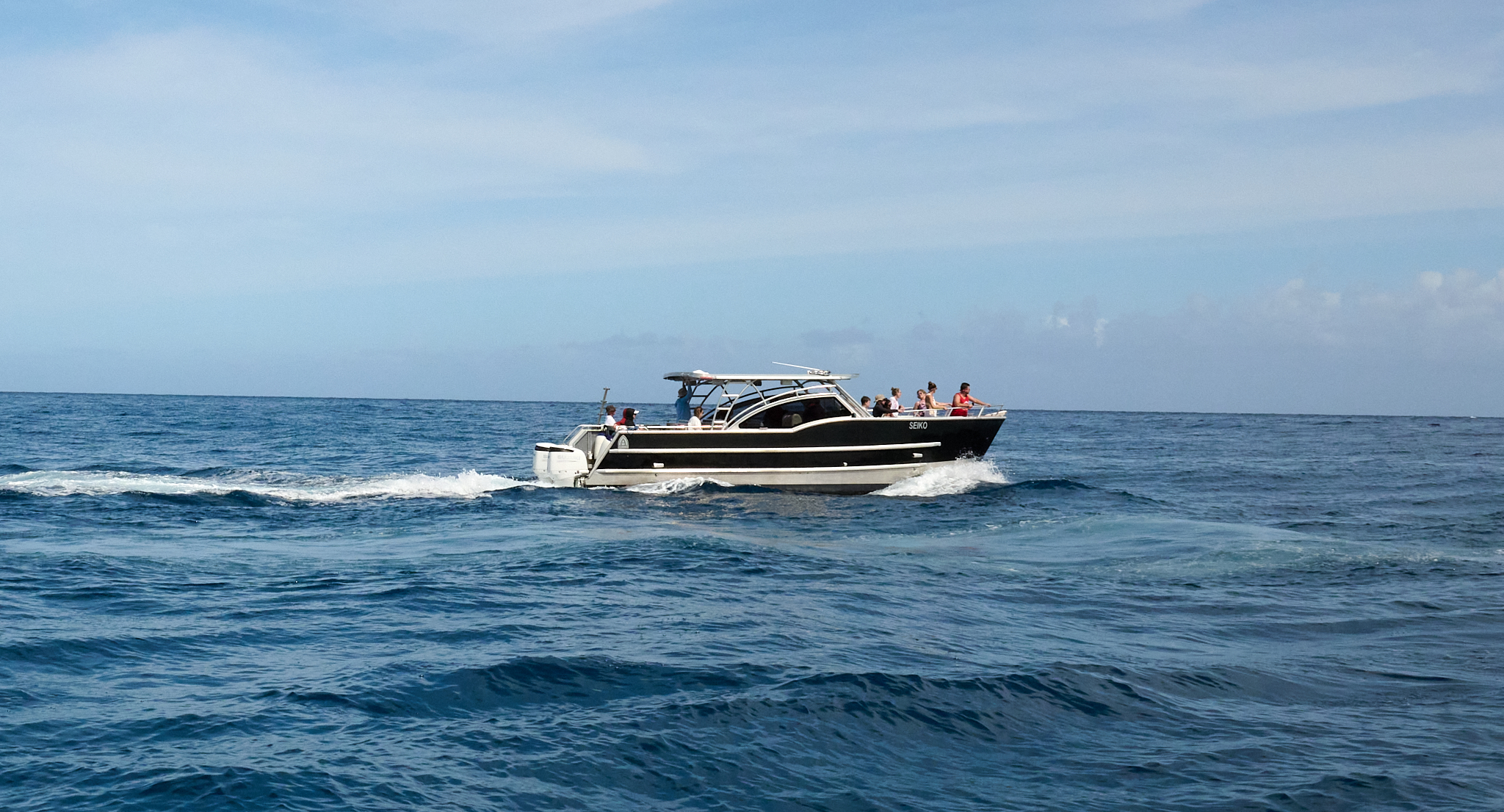
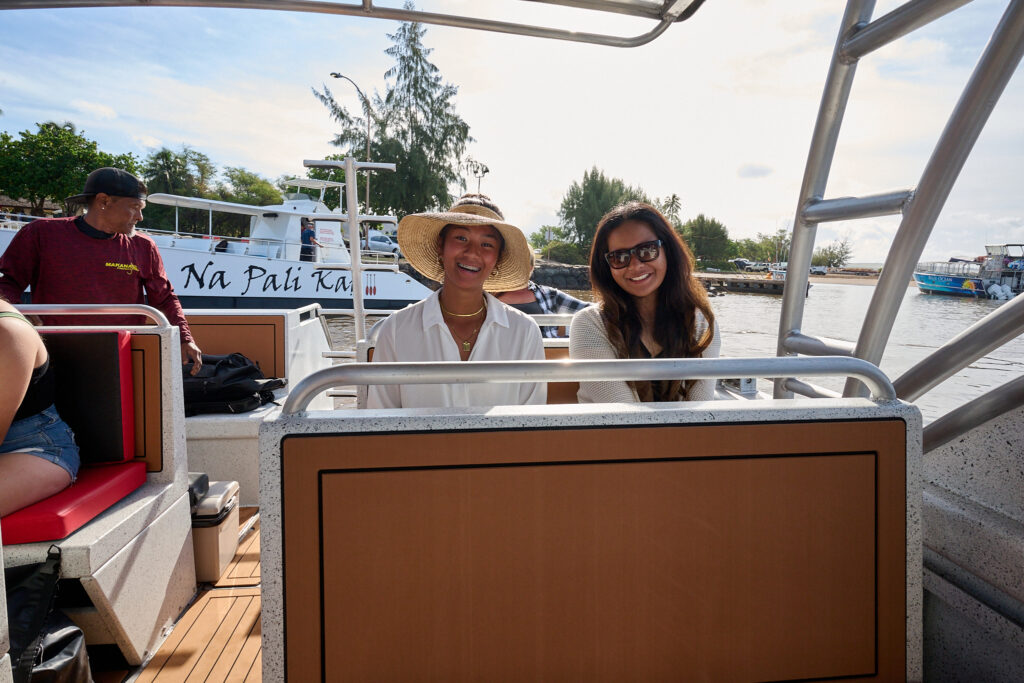
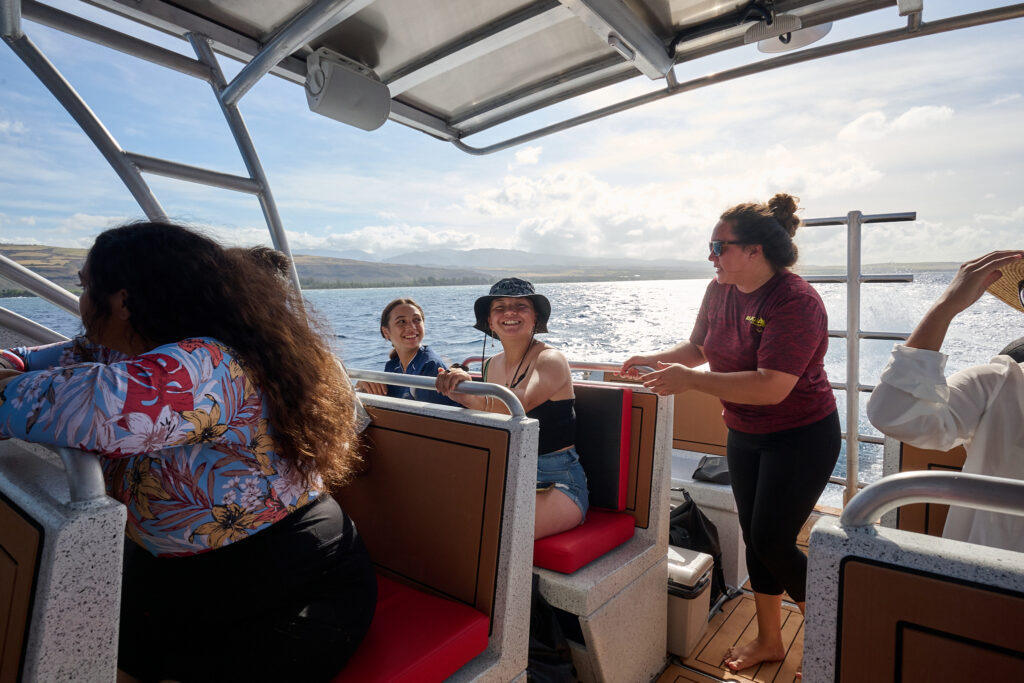
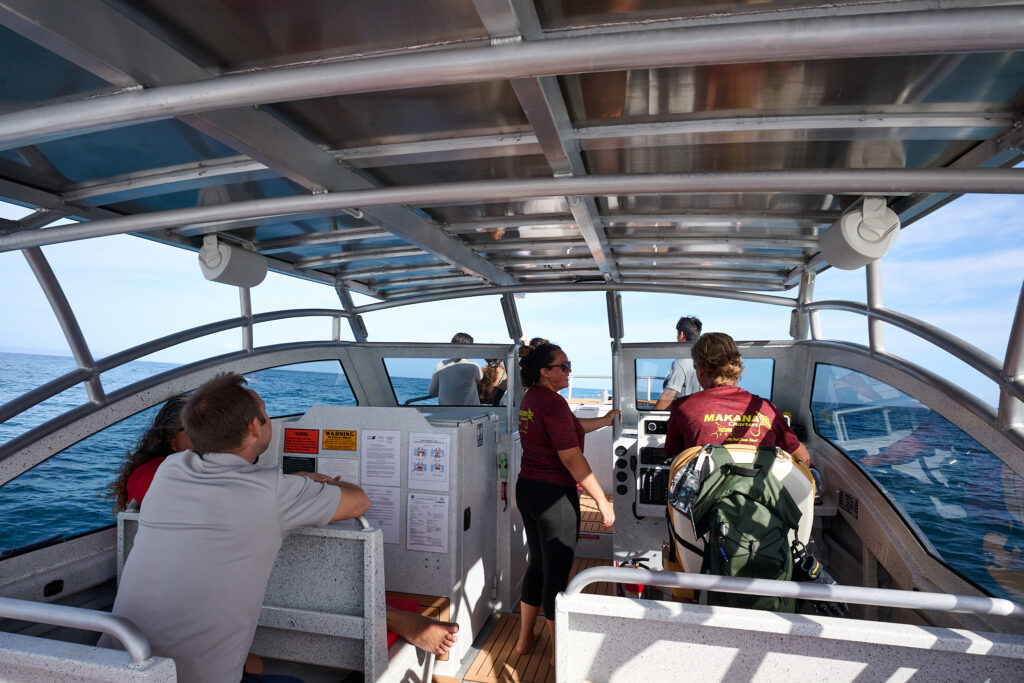
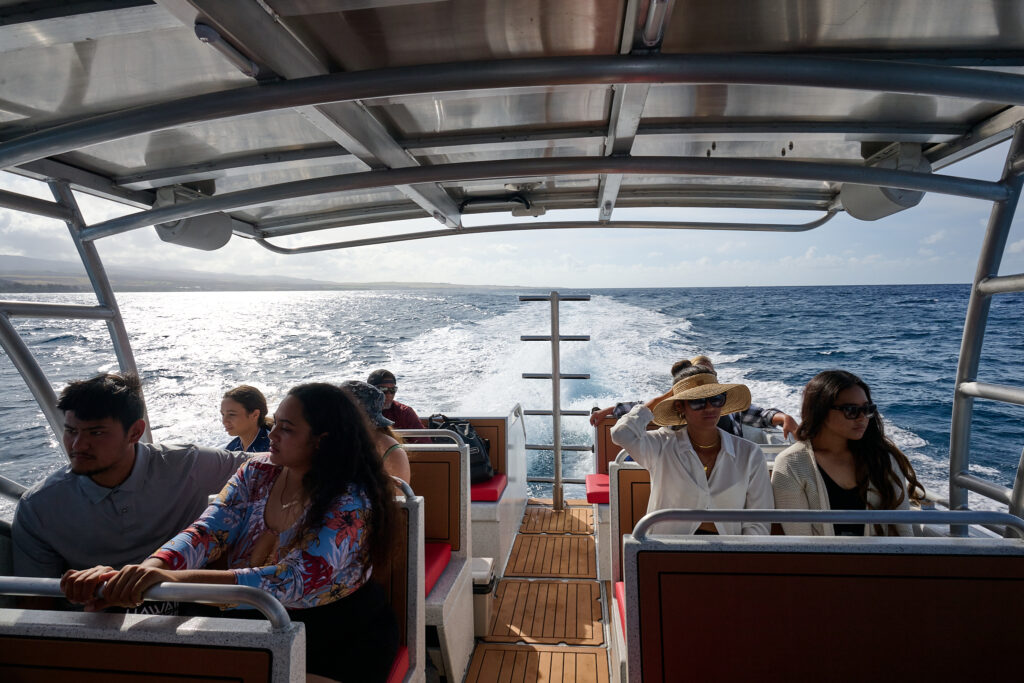
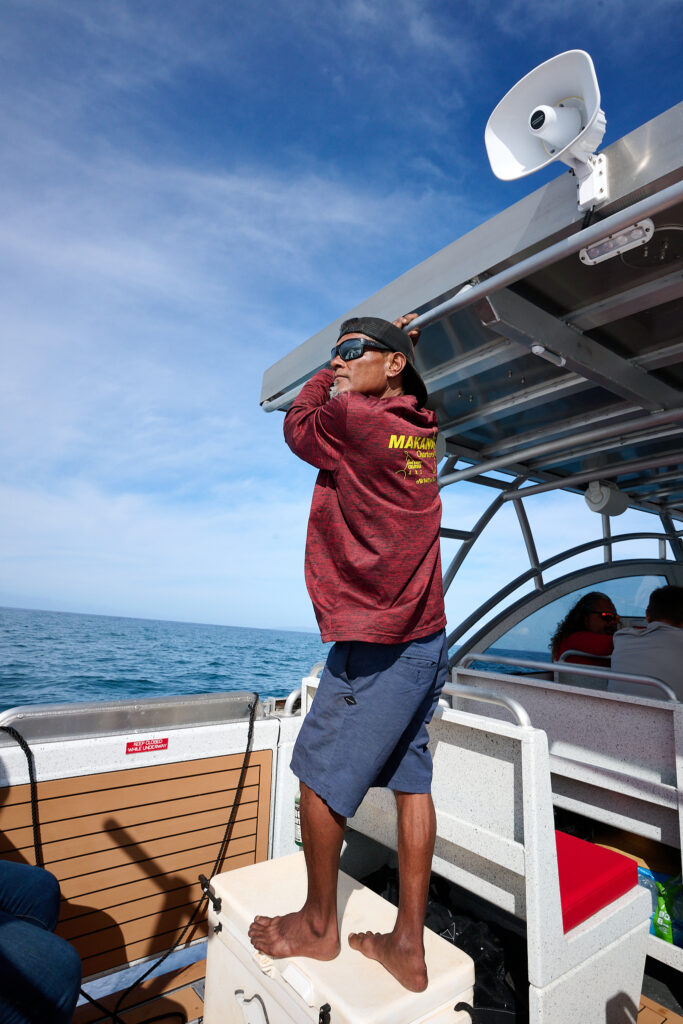
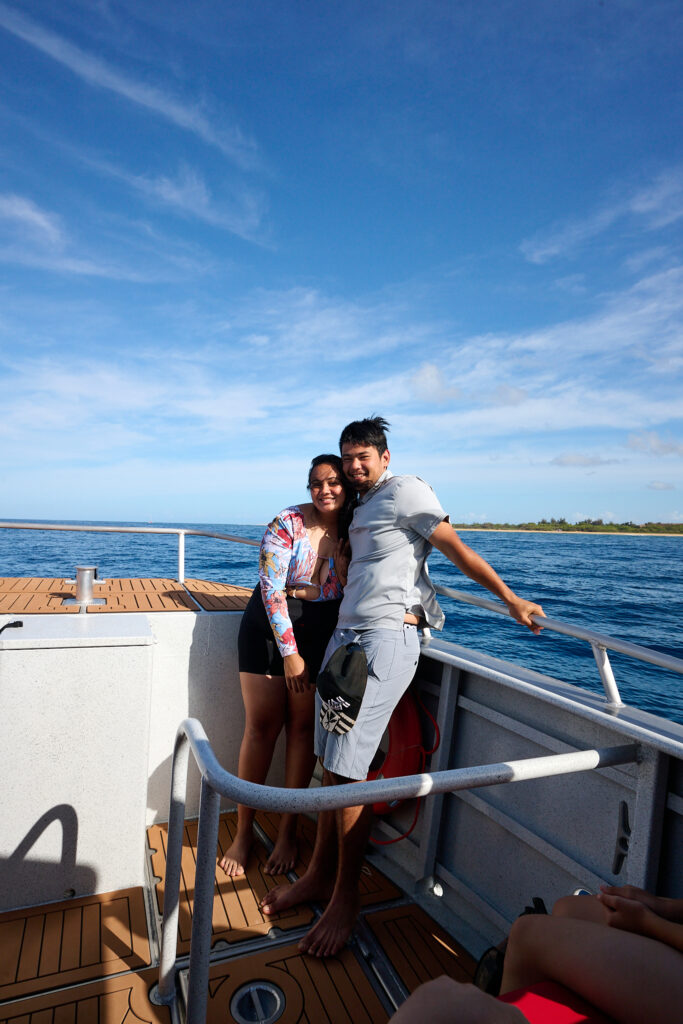
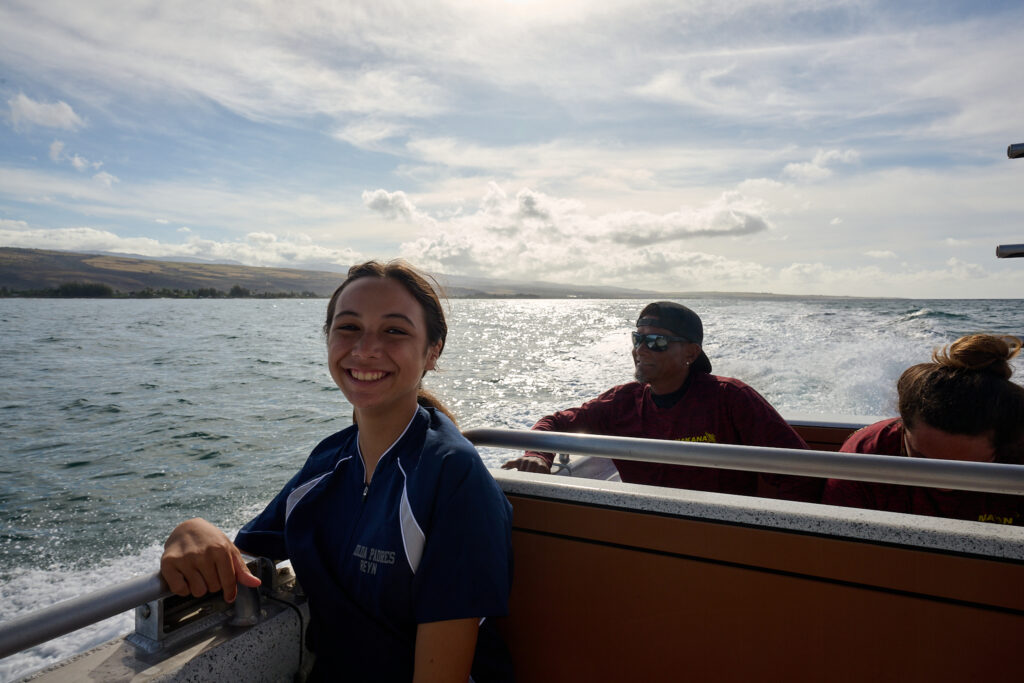
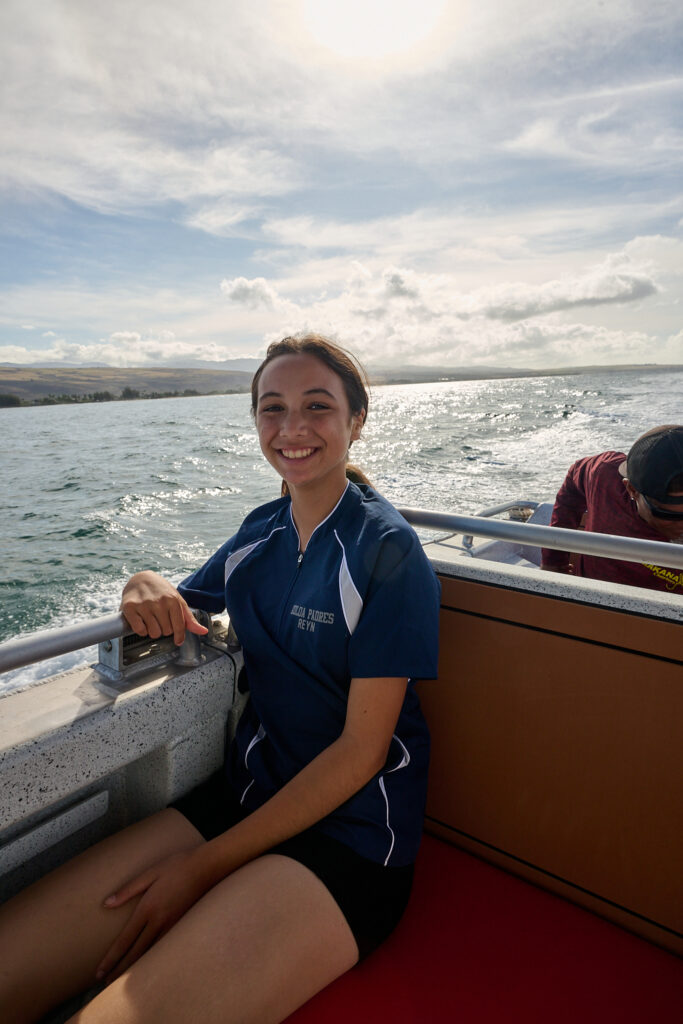
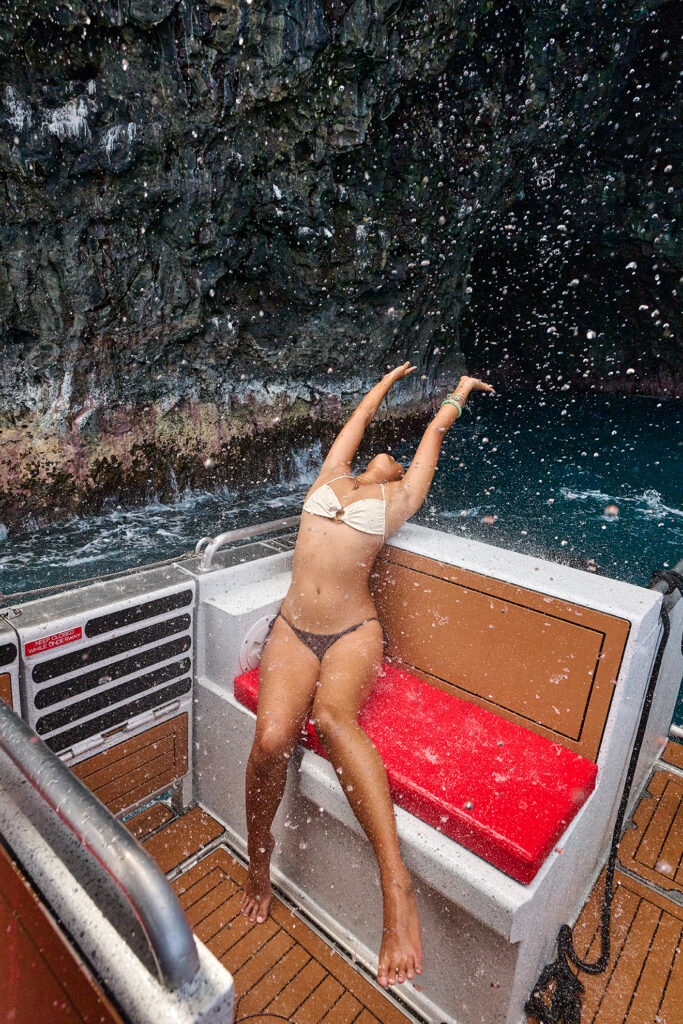
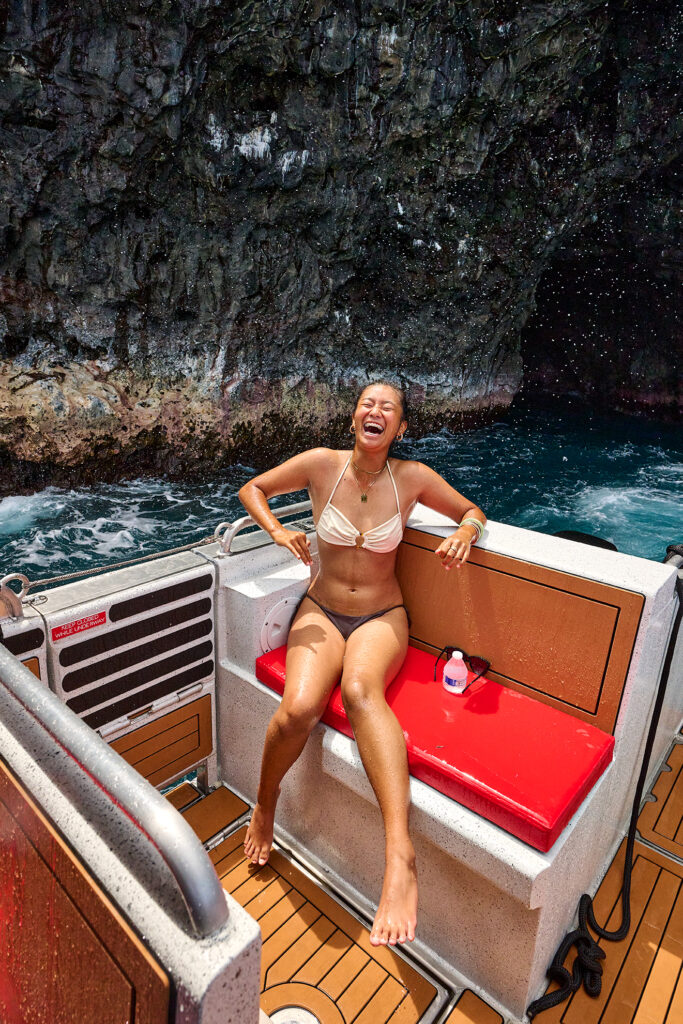
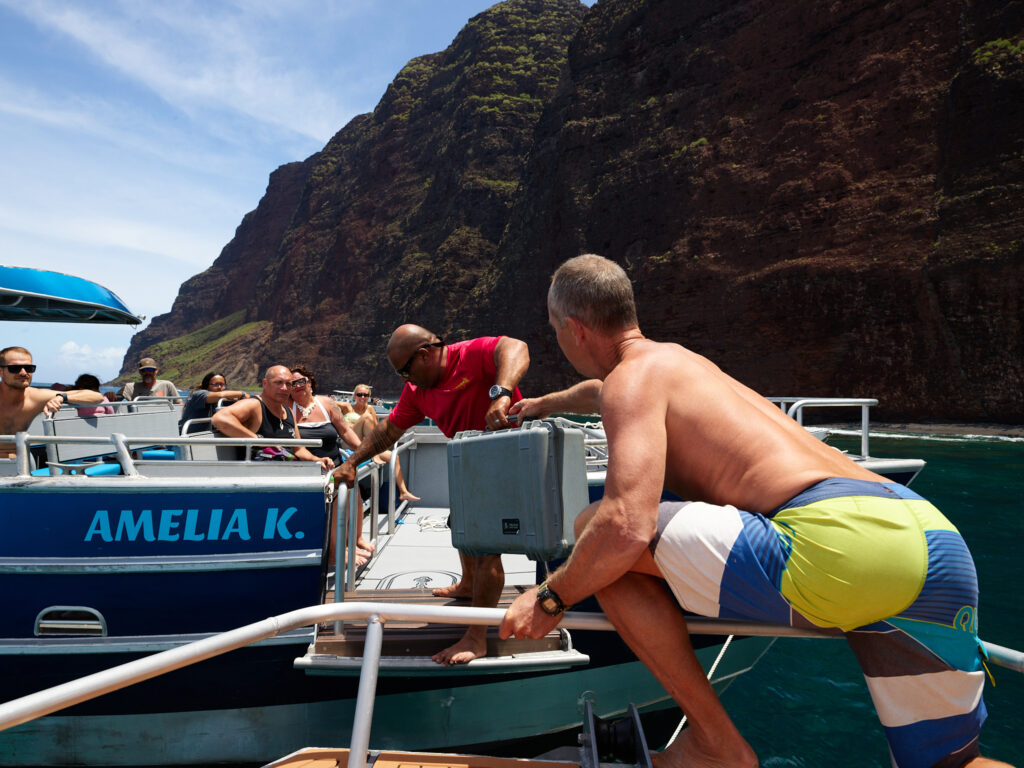
The images below are taken by me operating as an otherwise normal passenger on a Makana Tour. Makana did not have me sit in a special spot, did not adjust the course to my benefit, did not slow down or speed up such that I could capture an image I desired. On this trip I am effectively another tourist with a camera. Therefore, these are the kinds of vantage points you will observe, and shots you could capture while on the Makana Tour.

— Jeff’s Thoughts & Other Worthless Trivia —

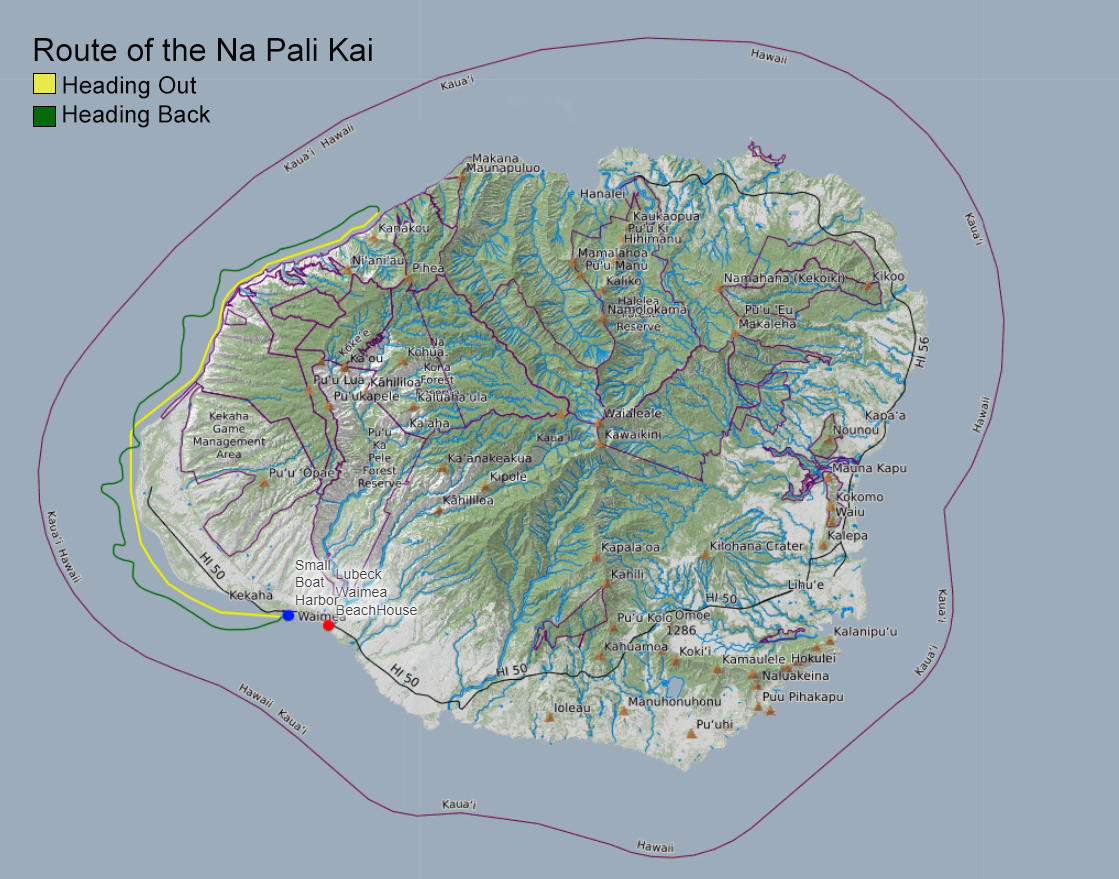
The Trip and Route of the Na Pali Kai III

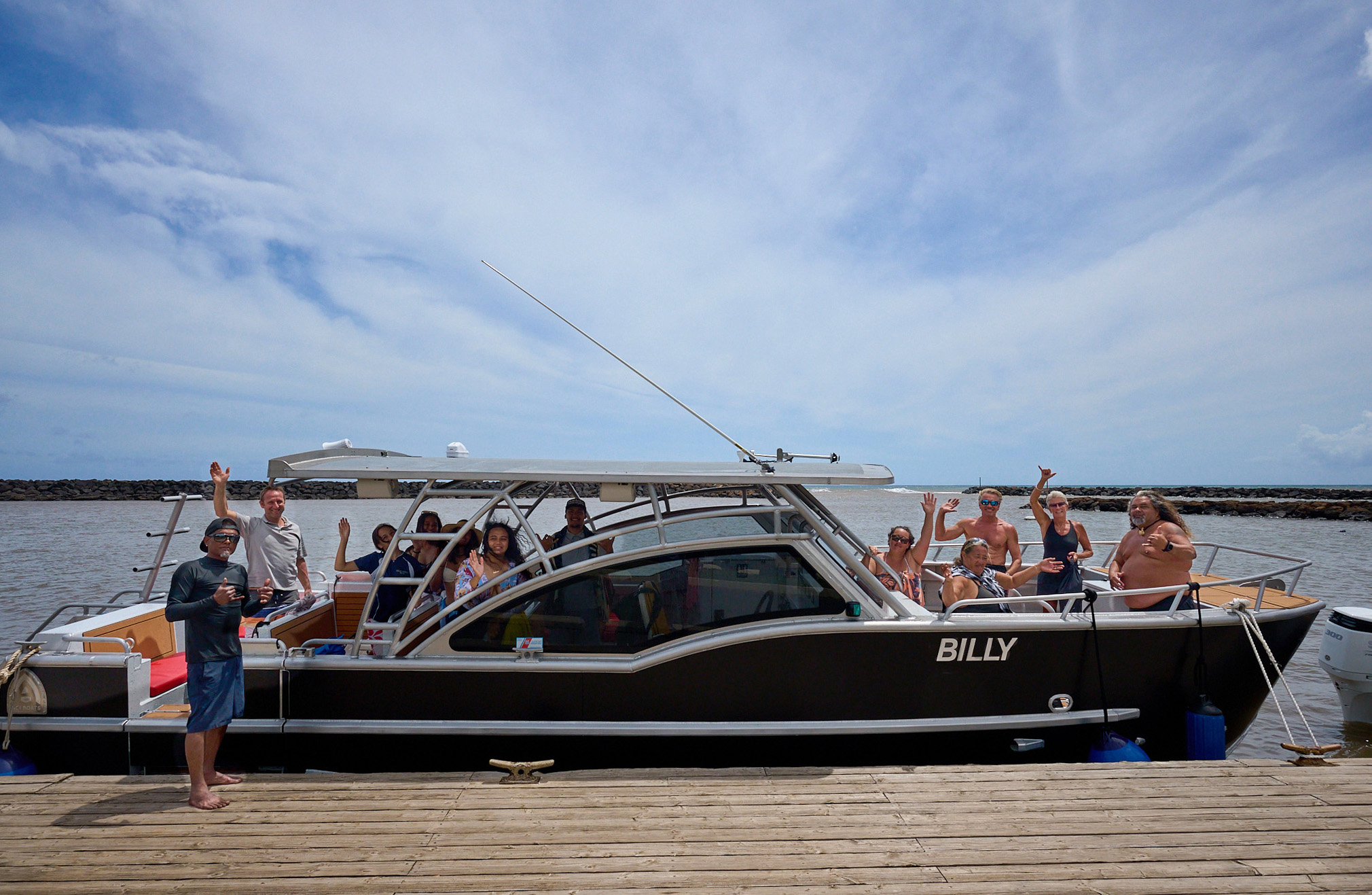
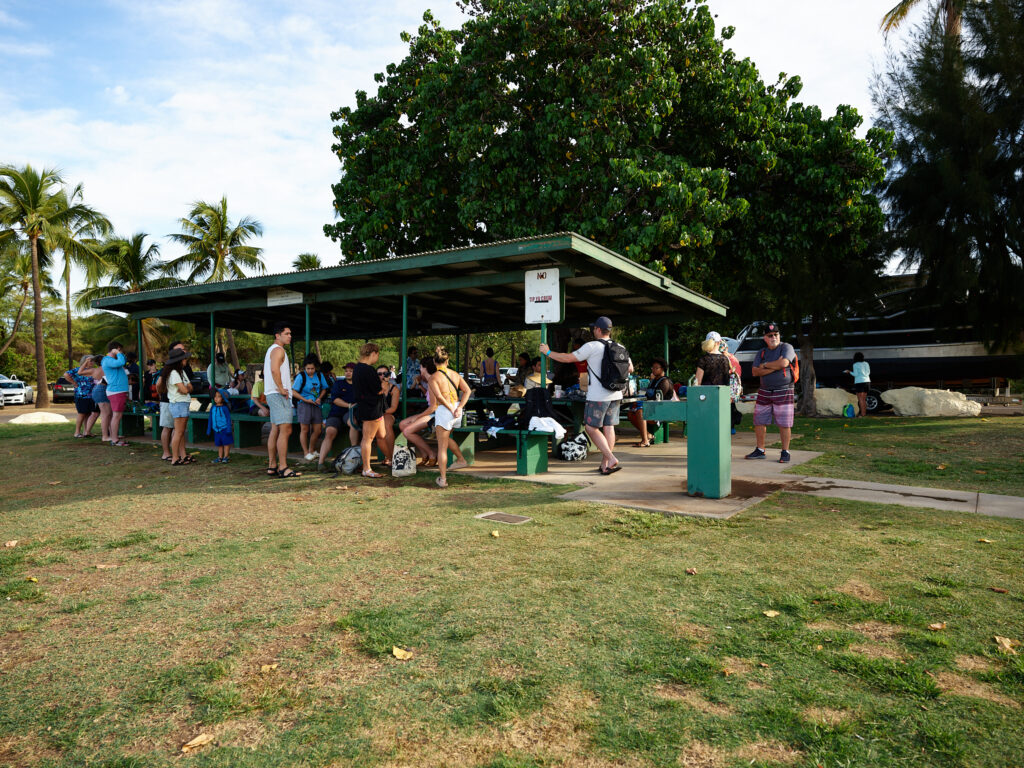
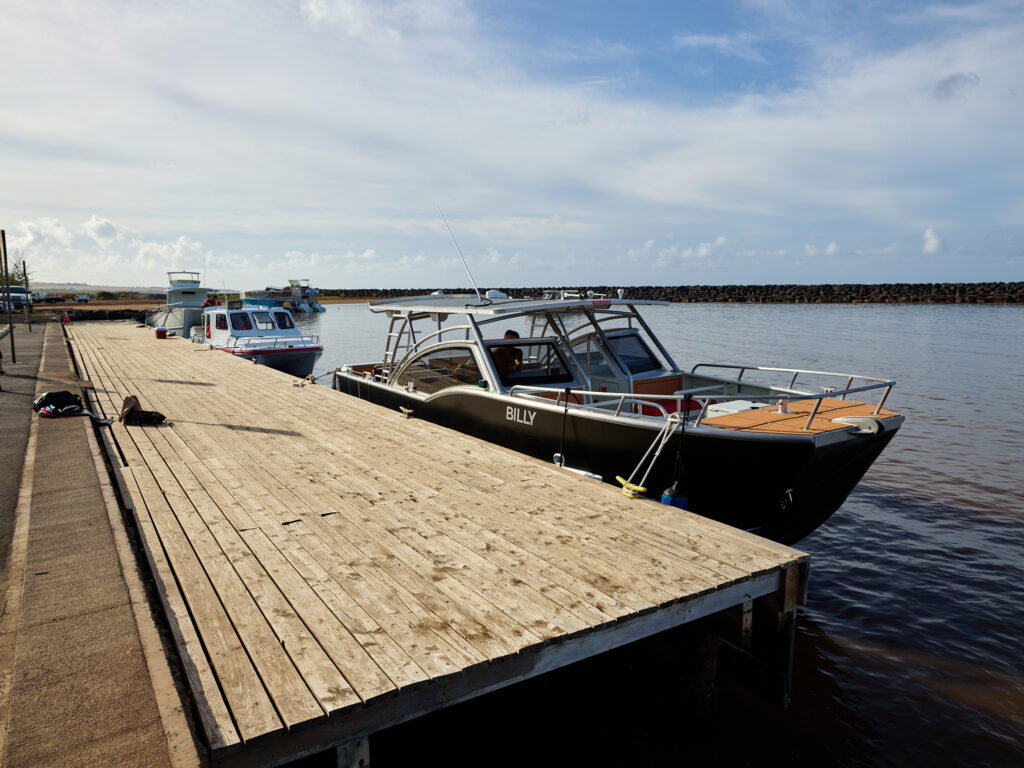
On this day The Na Pali Kai III takes us on a trip of about 50 miles in length (roundtrip).  We leave Kikiaola Small Boat Harbor in Kekaha at 2:00PM and return around 6:45PM.

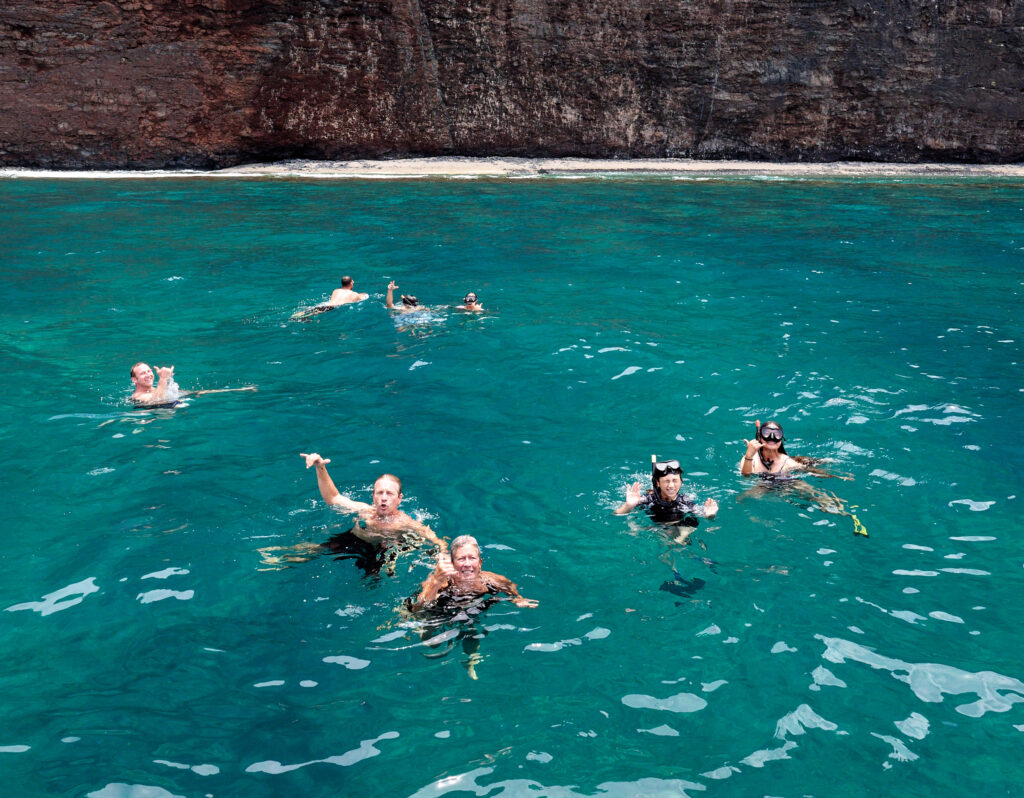
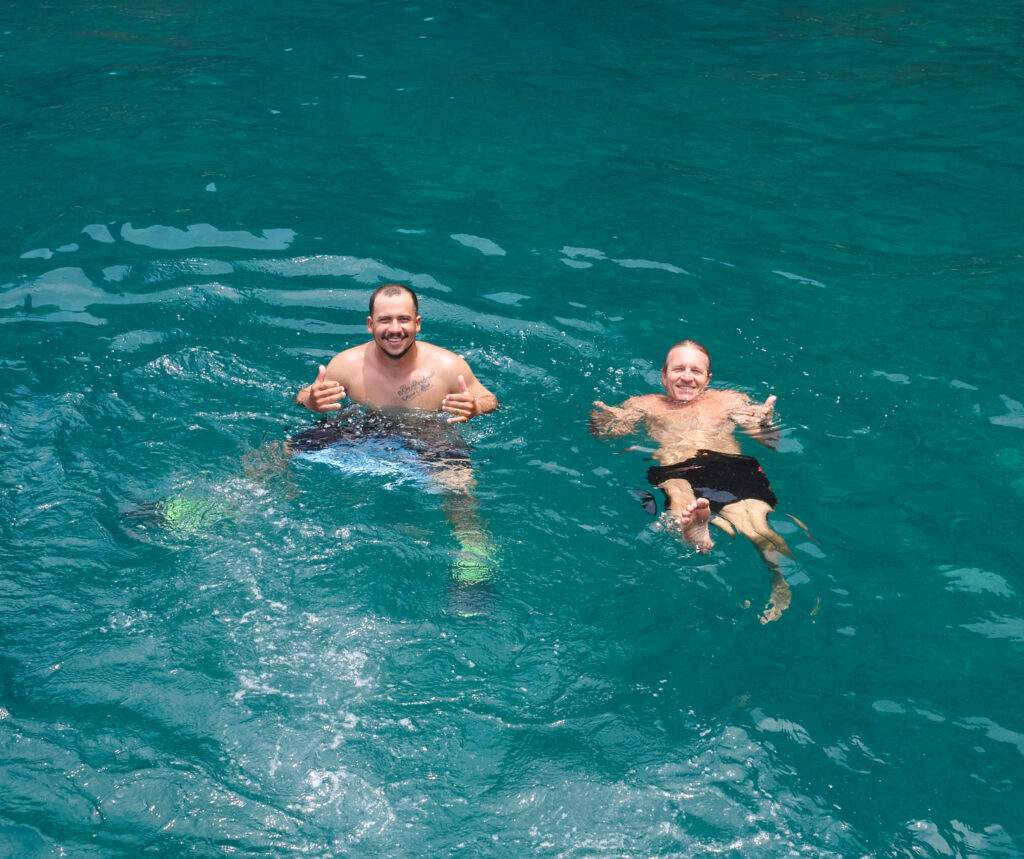
On this day, most of the trip is experienced under cloud cover, threat of rain, light rain, with bursts of sun.  The last few hours of the trip are conducted in sun.  This is a positive development for experiencing the one hour of snorkeling on the coastline.

While conditions are not conducive for professional level photos, the weather allows the patrons to experience the dynamics of travelling the coast – first hand.  This is a great deal for the people who paid good money on the hope of experiencing an exotic trip.
The Na Pali Kai III

Life contains a great deal of irony. One irony – The Na Pali Kai III is close to my heart.  As a new resident of Waimea, I ran (or walked) to the Kikiaola Small Boat Harbor in Kekaha on most days. The advent of COVID-19 had shut down most of Kauai.  Linda and The Border Collies had yet to arrive. So… each day as part of the four mile round-trip, I would greet The Na Pali Kai III, and she me.  I would pat her on the hull not knowing when she would next grace the ocean and Na Pali coastline.

Today with COVID-19 restrictions at a minimum,  A trip to the harbor by Linda, The Border Collies, and Jeff occurs at least once, and often twice a day.  The harbor is active and The Na Pali Kai III is one of our key reference points.  In short, the beach walk, the harbor, and The Na Pali Kai III are part of our life.

The Na Pali Kai during COVID-19 Shutdown.

Makana Charters and Tours

For almost two years, Linda, The Border Collies, and I have ventured to the boat harbor and observed the tour operators.  One way or another we interact with most each day.  The Border Collies are known best.  More often than not, The Border Collies are a Featured Attraction at the Kikiaola Small Boat Harbor.

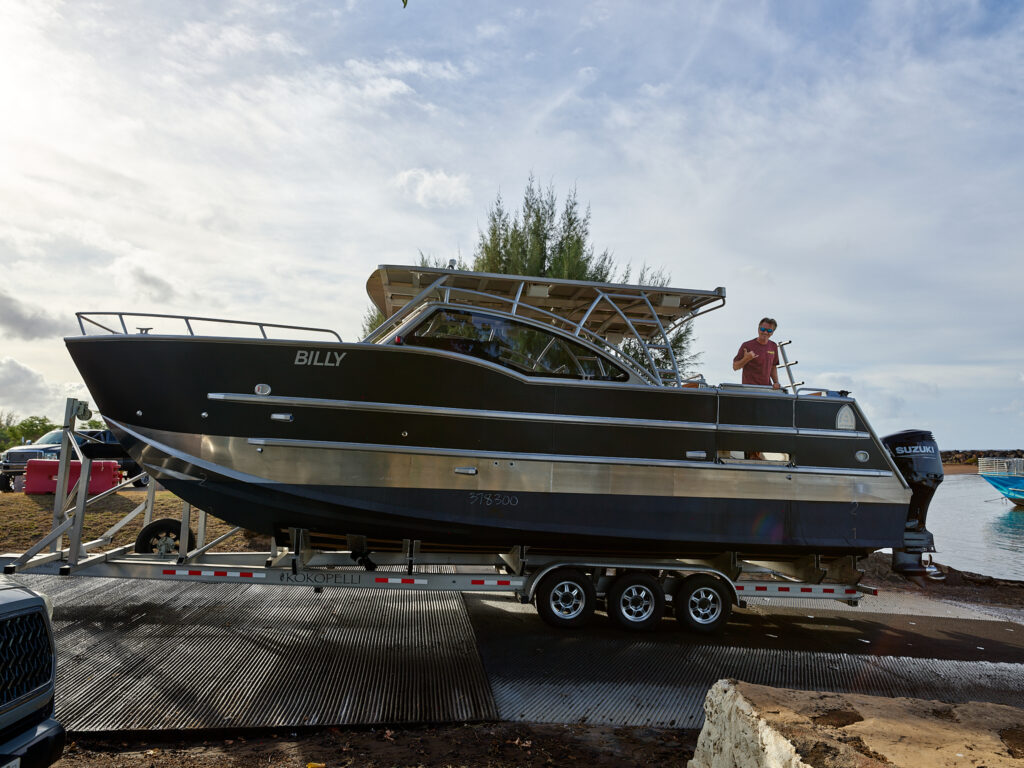
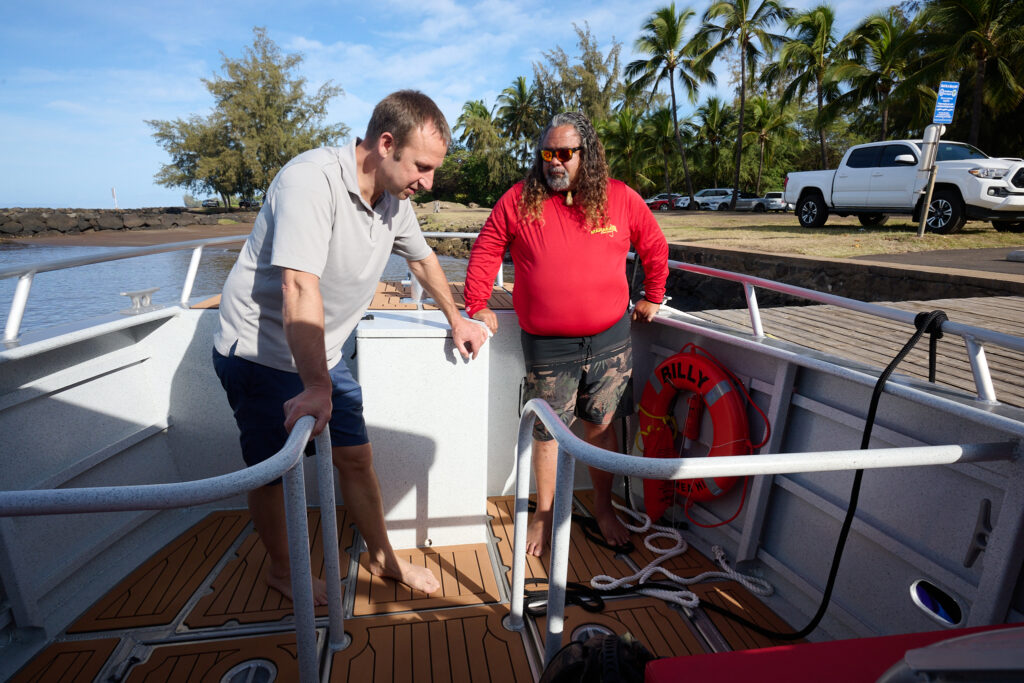
Makana Captain Dave Asman goes out of his way to say hello and greet us. Makana is family owned and operated.  Makana could best be described as efficient, professional, yet casual. Family member Joda, runs the show at the harbor.  It is my understanding that she and her husband now act as the primary operators.  Joda welcomed us to the area early on in our residency.

A link to the Makana Charters and Tours website is [here].

Note: I have not received any financial compensation from Makana. However, they come highly recommended.