Norway is best known as the land of the Viking. Norway is also a land of magnificent natural beauty and natural resources.
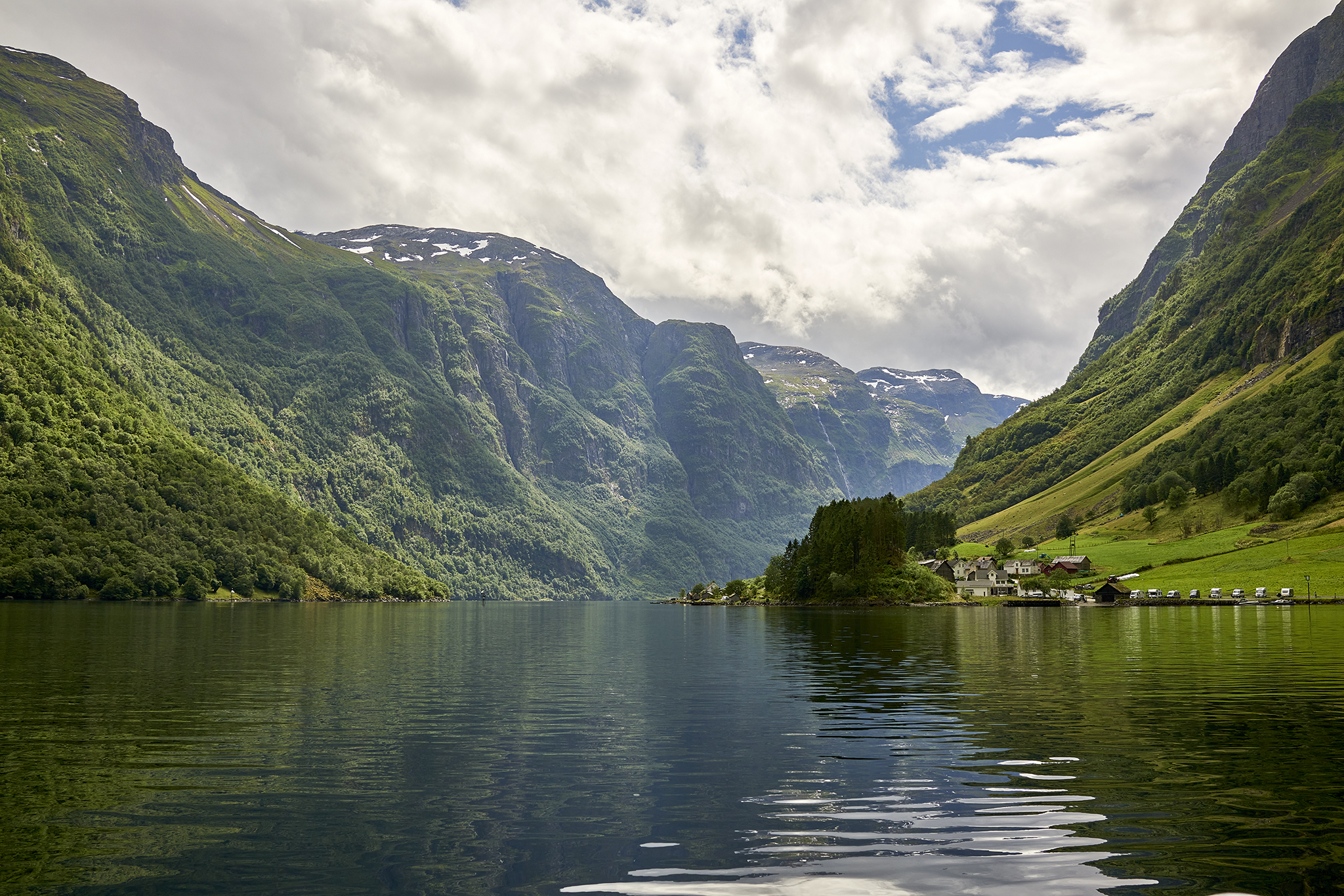
The Nærøy fjord. © Jeffrey H. Lubeck – MESH Art LLC – all rights reserved.
Norway in the 21st Century lines up well when considering balancing modernization, with traditions. This is a country that preserves and celebrates its Viking and maritime past. It also a nation that builds the longest auto tunnel in the world. If you are a student of history, it is well understood that Norwegians are world-leaders when it comes to exploration and engineering. My second visit to the land of the north reconfirmed the status.
The Trip
Our trip is made up of three different adventures. The Oslofjord, The Vestland Fjords, and Oslo City-Center. We have allocated two weeks to cover all three. For the Oslofjord and Olso City-Center adventures we stay at the homes of our friend’s – the Solheim’s.
Note: The Lubeck’s and Solheim’s are members of HomeExchange. Members of HomeExchange (HE) trade residences with each other without cash involved. We have been members since the 1990’s. Each member is vetted. HE confirms each member is a real person, lives where they say they reside, and owns the the residence(s) being listed. HE provides an outstanding platform for members to communicate. The support services from HE are first-rate. The Members of HE have proven to be remarkable people that are exceptionally dependable.
Oslofjord – The Trip Begins
As part of the home exchange with the Solheim’s, Linda and I were able to stay in their home on the Olsofjord. What a treat.
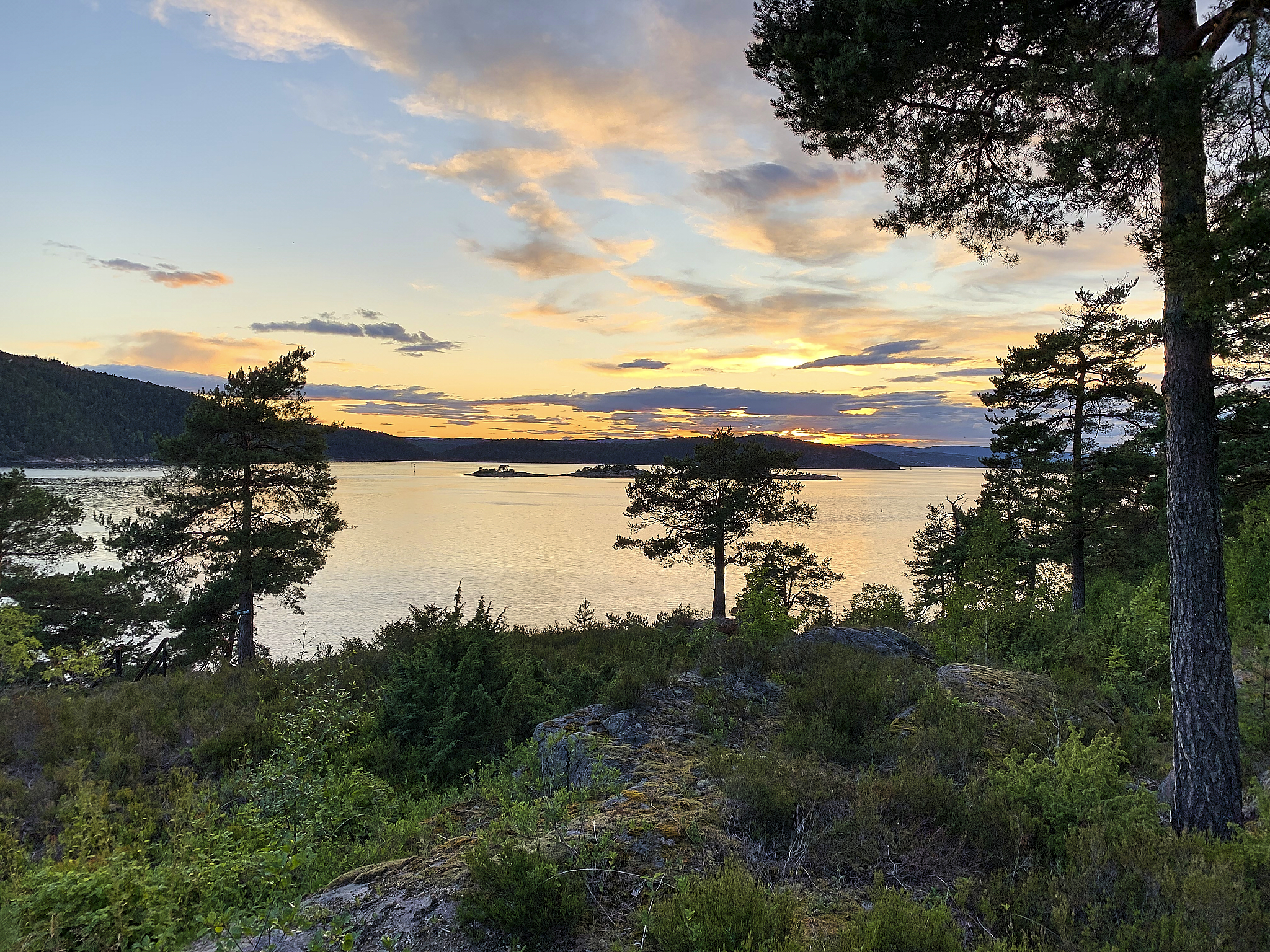
The Oslofjord waterfront at sunset just below the Solheim’s home.
Geologically speaking, the Oslofjord is an inlet and not a glacial fjord. However, the Norwegians have established that any body of water with some expanse is a fjord. I am going with the Norwegian’s on this one.
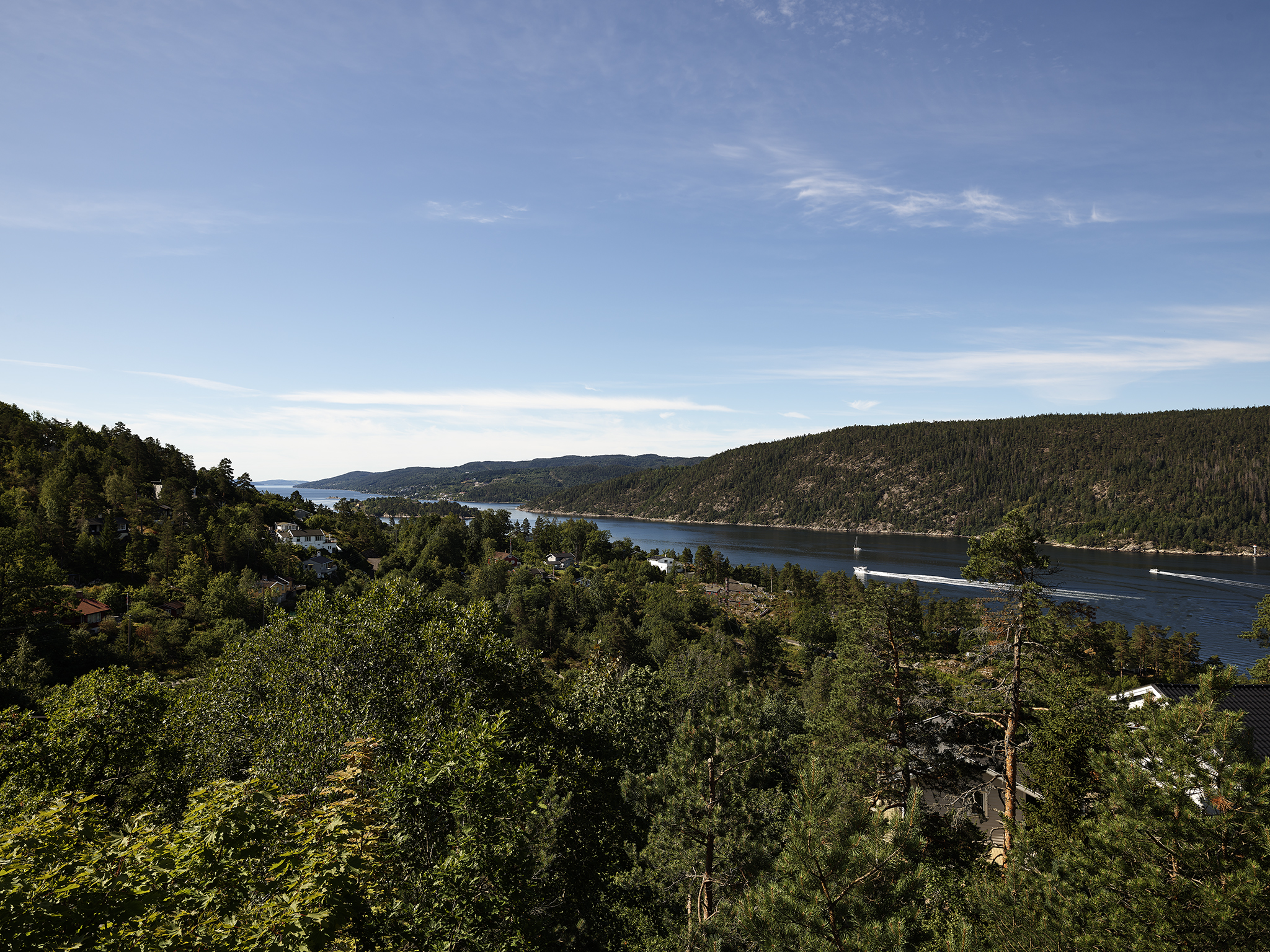
The view of the Oslofjord from the Solheim’s,
Each and every day all kinds of marine traffic pass by the house. However, Linda has established that water skiing on the fjord in front of the Solheim house, could be and should be “A Thing.” Linda says all she needs is the Solheim’s boat, a water ski, and a wetsuit with some gloves.
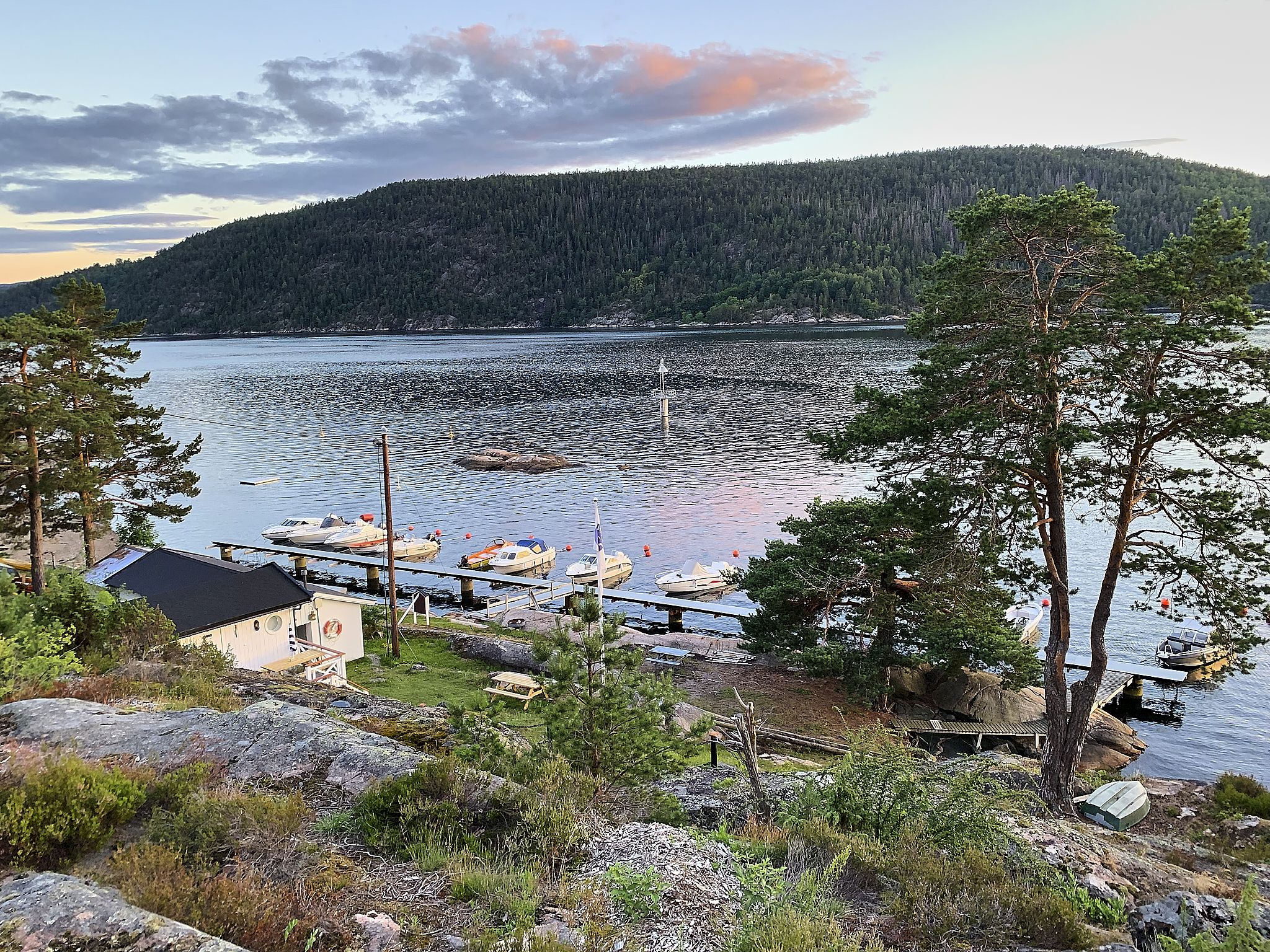
The Solheim’s fjordfront beach.
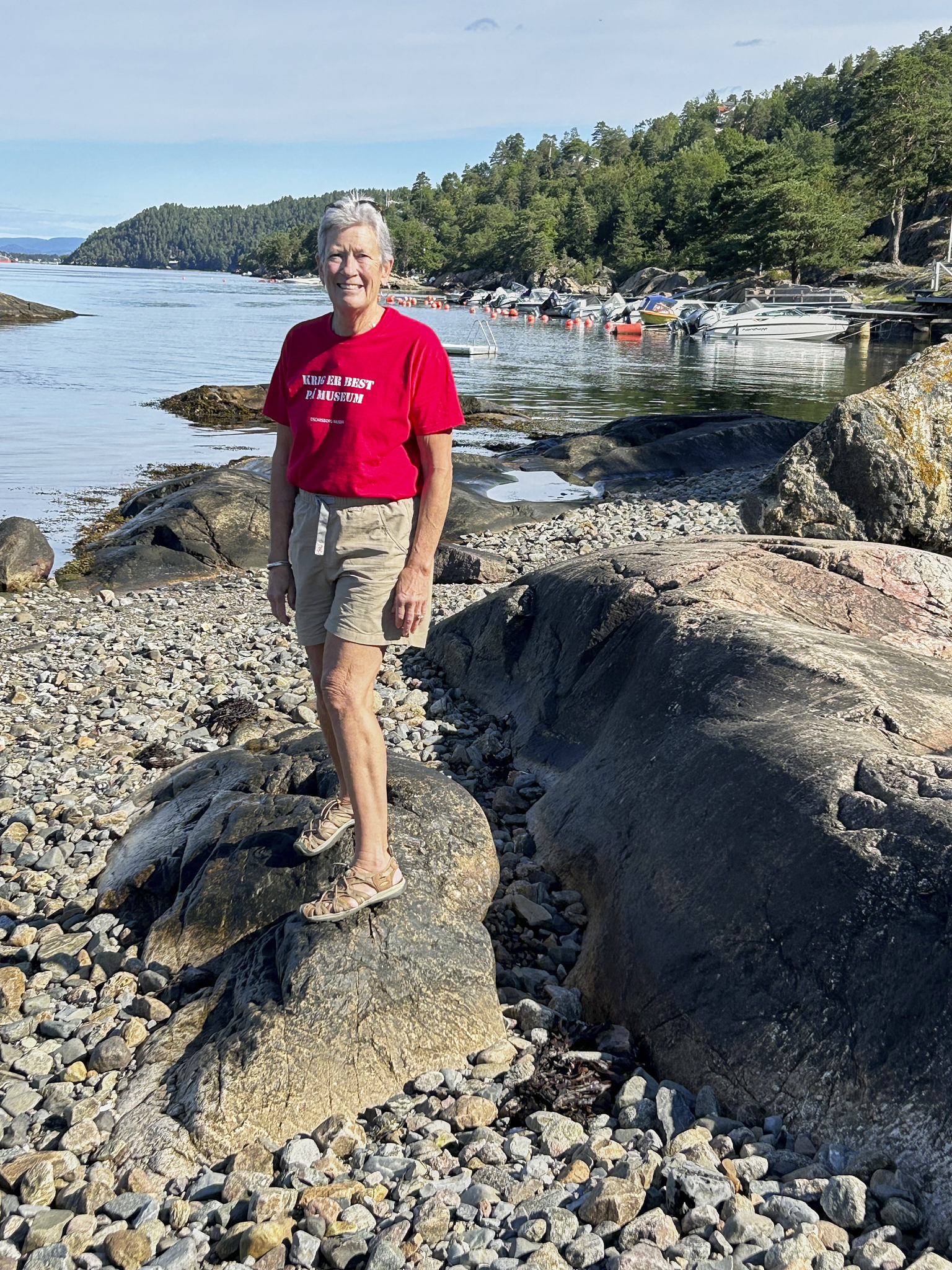
Ski water?
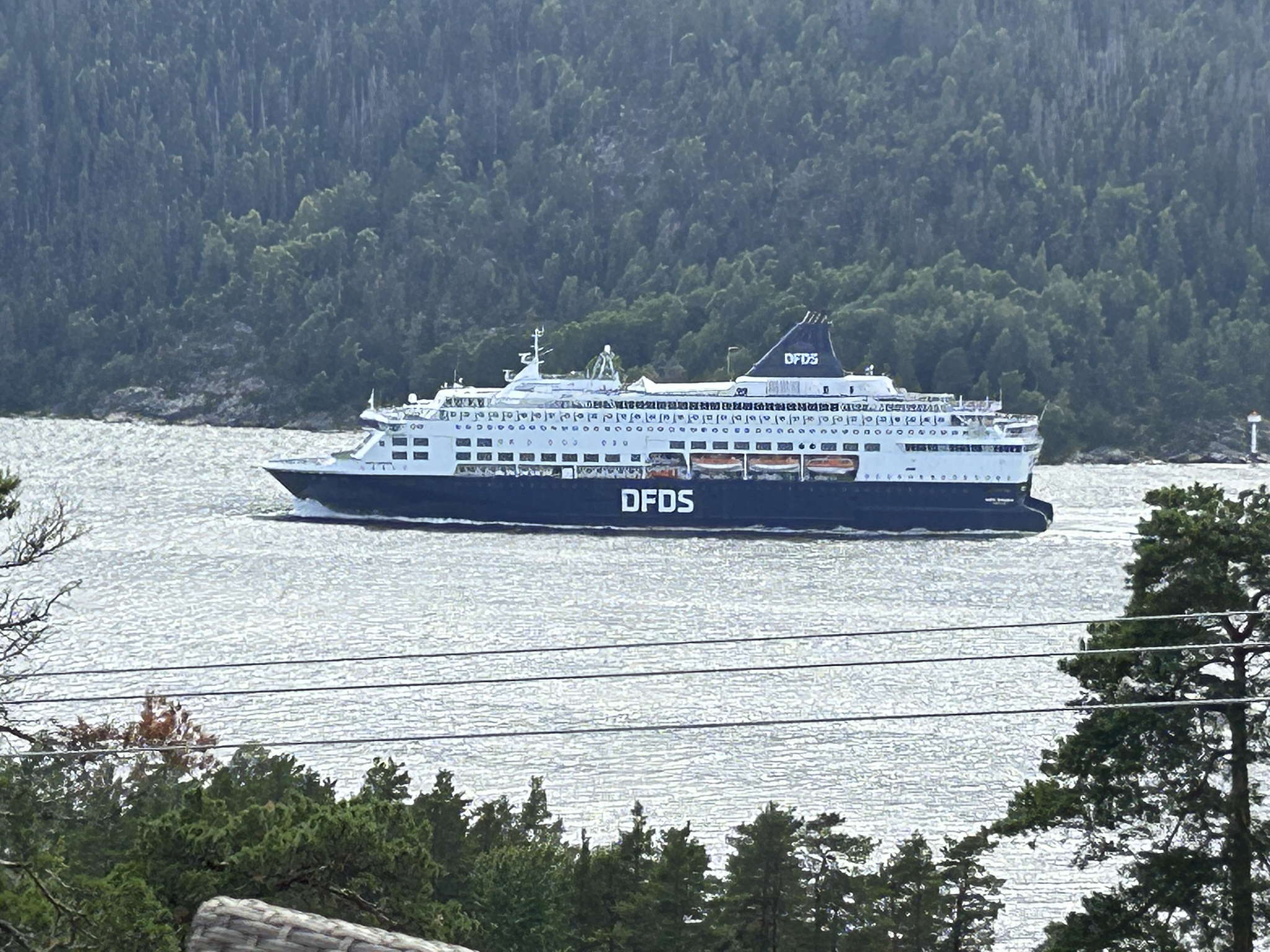
Ships of all kinds.
The Solheim’s have determined previously, the Lubeck’s need a Chaperone during their stay on the Oslofjord. Uno Solheim – the Cat, is a Licensed Chaperone with the Norwegian Government and the city of Drobak. He is on location to monitor our stay.
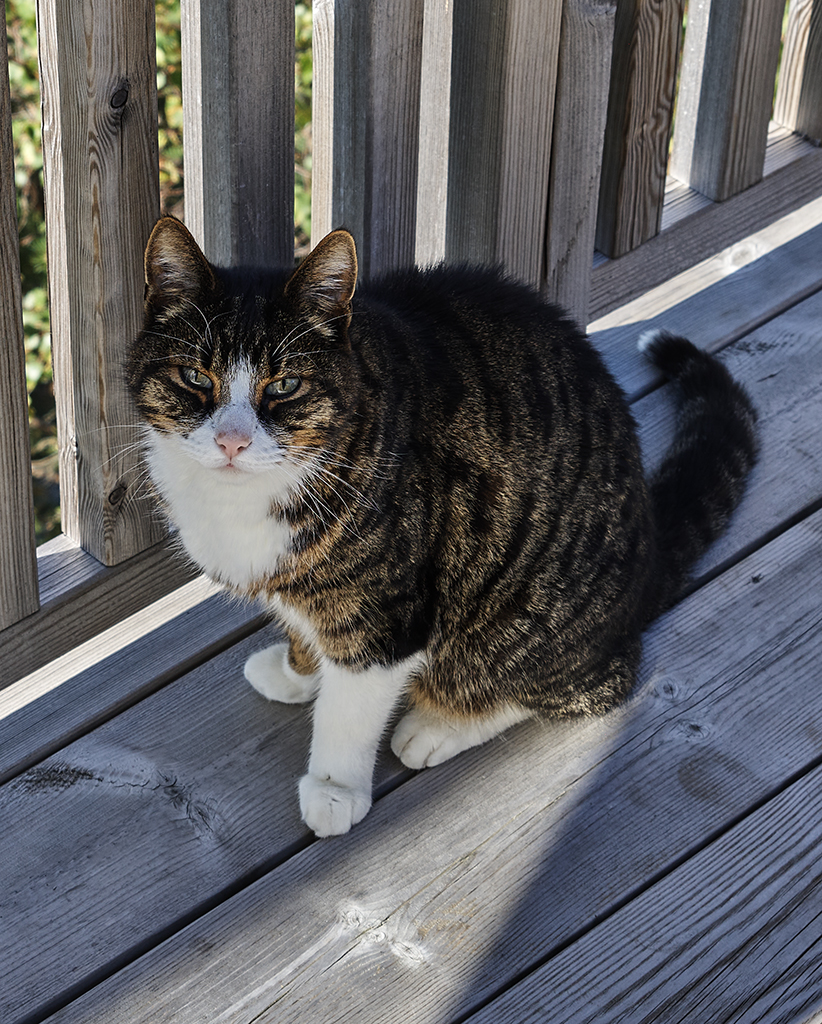
Uno the Chaperone.
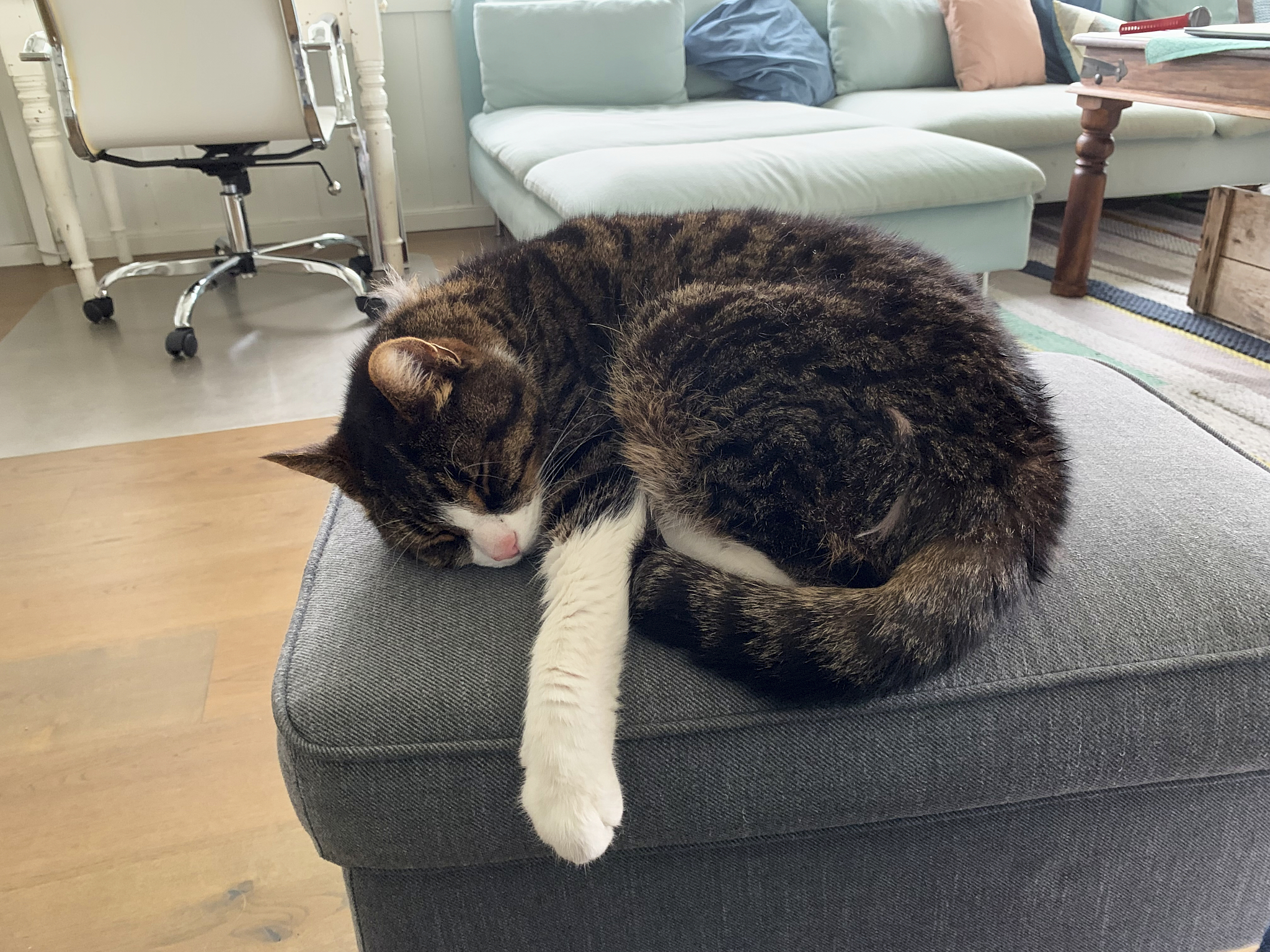
Breaks are taken.

Quality Time.
Some History For Which We Should Not Forget
The Oslofjord and Oscarsborg (island and fortress) play a rather large role in the history of Norway and the modern world.
On April 9th, 1940 Nazi Germany attempted to invade Norway in secrecy. In a (supposedly) surprise attack, the German Navy sent a fleet (and 2,500+ personnel) along with its newly christened flagship (Blücher) up the Oslofjord to land at Oslo. There was one small problem. The attack was not a surprise to the Norwegians. German Intelligence had determined the fortress and island of Oscarsborg was obsolete and should be ignored. This line of thinking was another mistake. While the military operation at Oscarsborg was aging, it was not obsolete. The Norwegians led by Birger Eriksen, had secretly kept its guns in operational order and had installed hidden torpedo operations on the island.
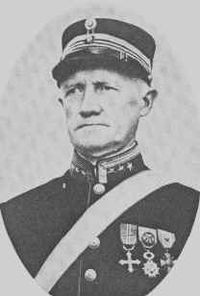
Eriksen
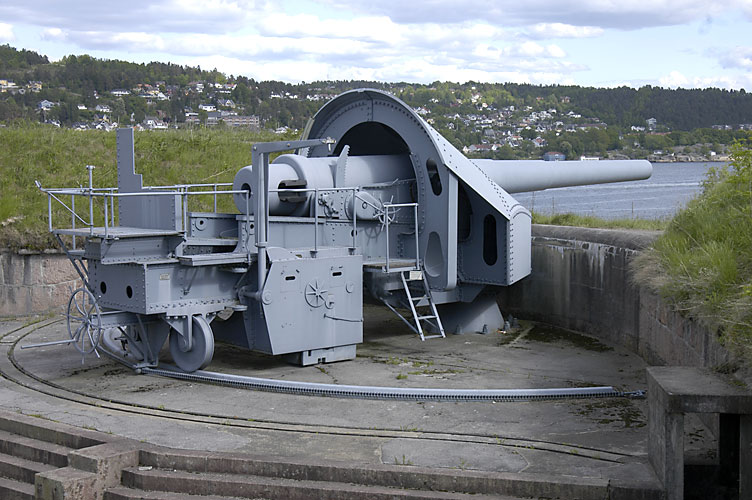
28mm Gun
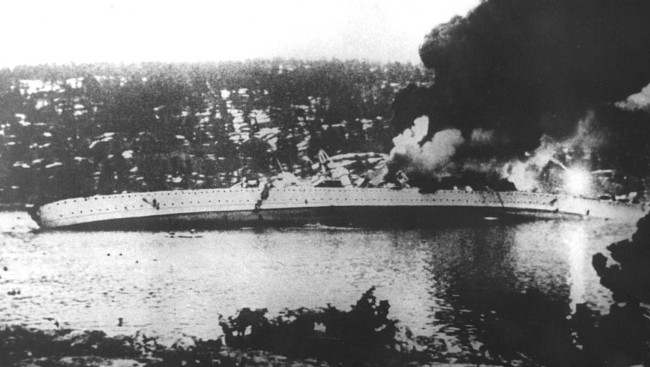
Blücher sinking.
The implication is that the Blücher (all 6,676 feet of it), less than five days into operation was going to go down hard. The Nazi’s would be forced to retreat. While the Nazi’s would go on to occupy Norway for five years, the delay allowed the Norwegian Monarchy, Parliament and its gold supply to escape. The story of the Battle of Drøbak Sound is located [here].
While the above, is not a fun story to tell, and it is full of detail and nuances of which I am not aware, it reminds me that a Bully should be dealt with straight-away and with extreme prejudice. I am willing to sacrifice my small and unimportant life for it.
Oscarsborg (including a fascinating military museum) and the town of Drøbak are wonderful places to visit. The Oslofjord is at its narrowest point in this area. The fjord can be peaceful and calm or active and turbulent.
For some context, the Blücher rests at the bottom of the Oslofjord, 35 fathoms below the surface. It’s location is a just south of the islets in the sunset image displayed earlier in the Post.
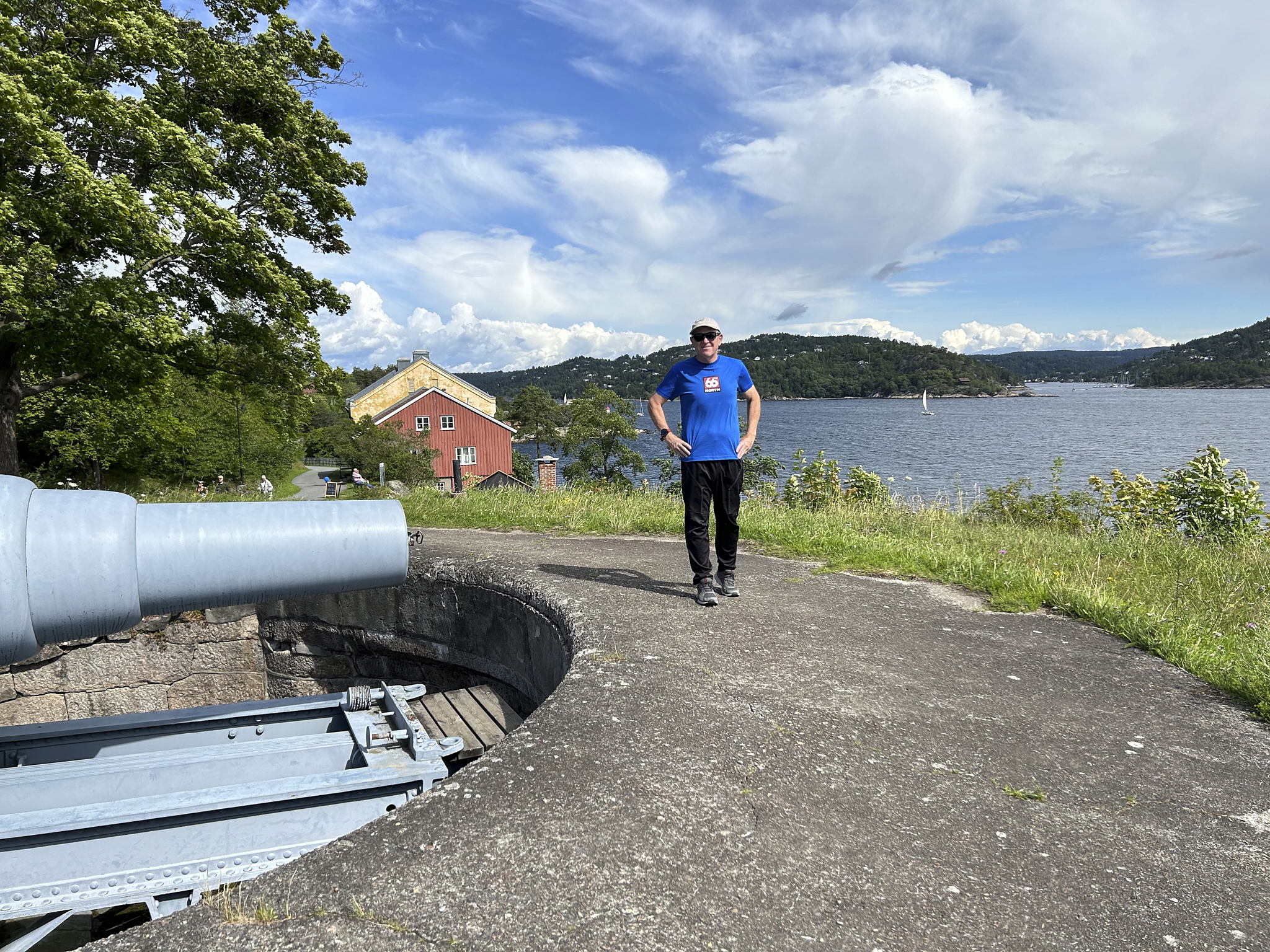
The Guns remain in place.
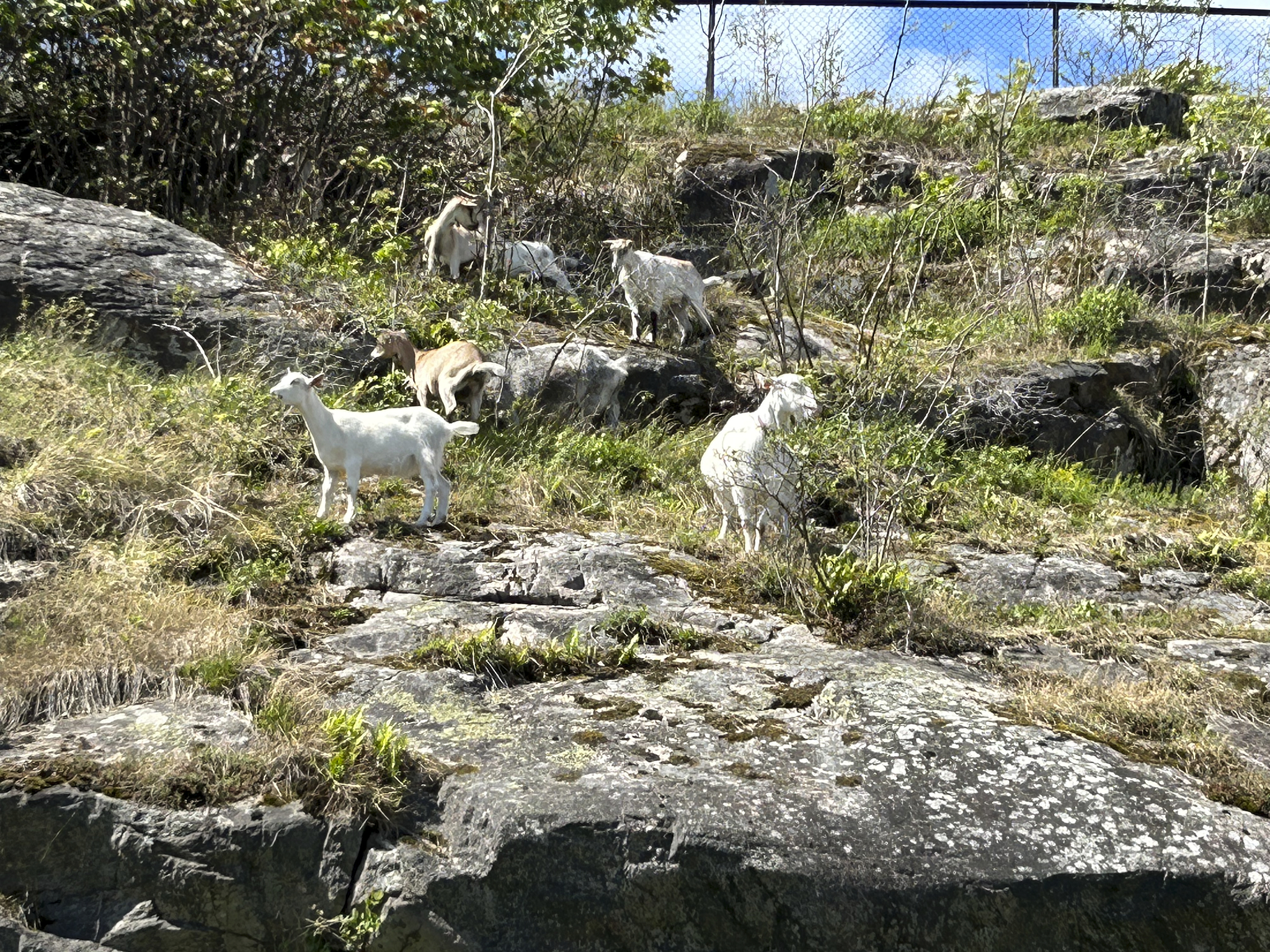
Goats are new Patrol.
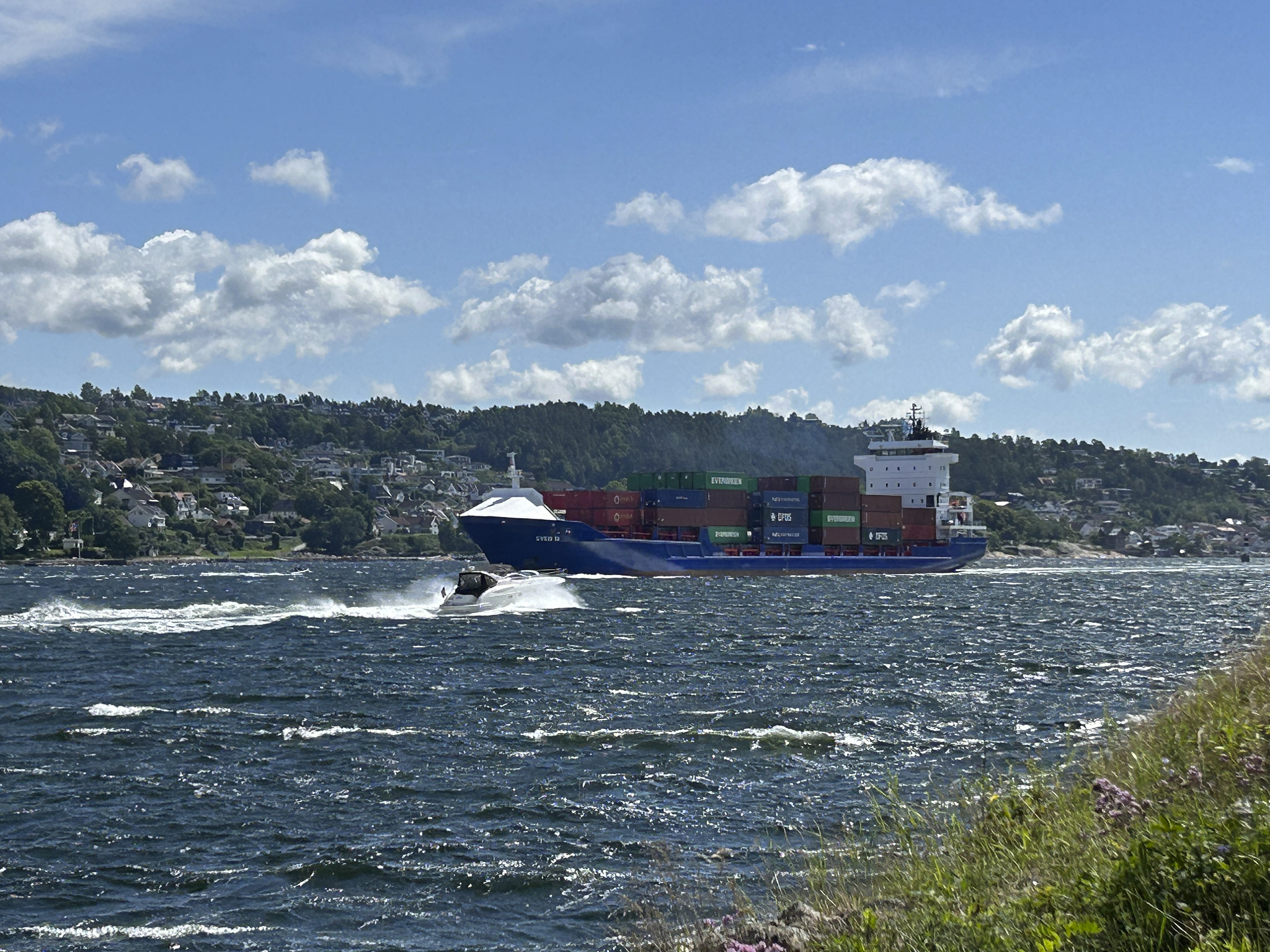
Busy waterway.
Oslo
Oslo, the Capital of Norway has many excellent museums which provide compelling stories and examples of maritime success such as The Fram, The Kon-Ticki, and The Viking.
The Fram and Kon-Tiki
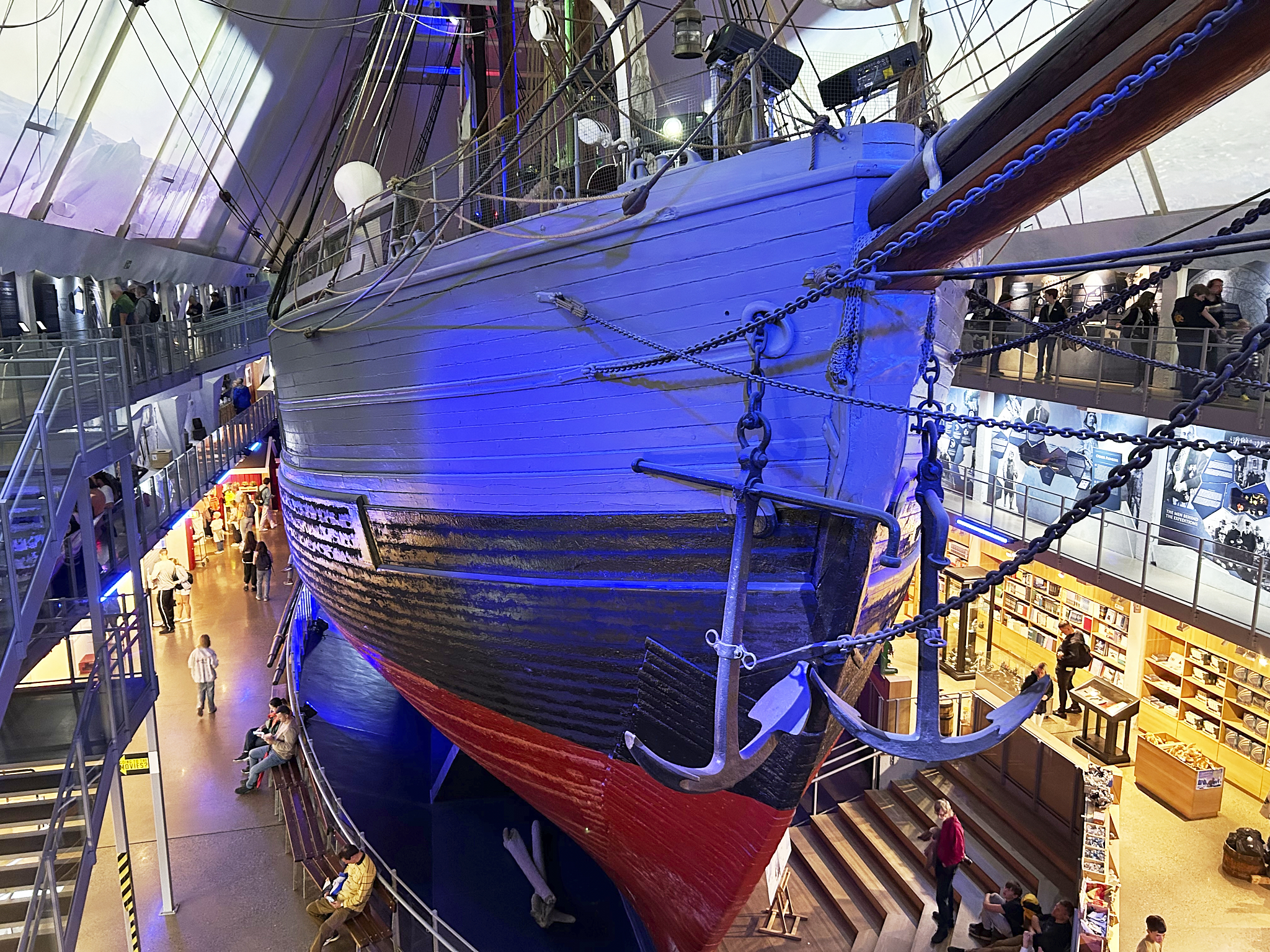
The Fram
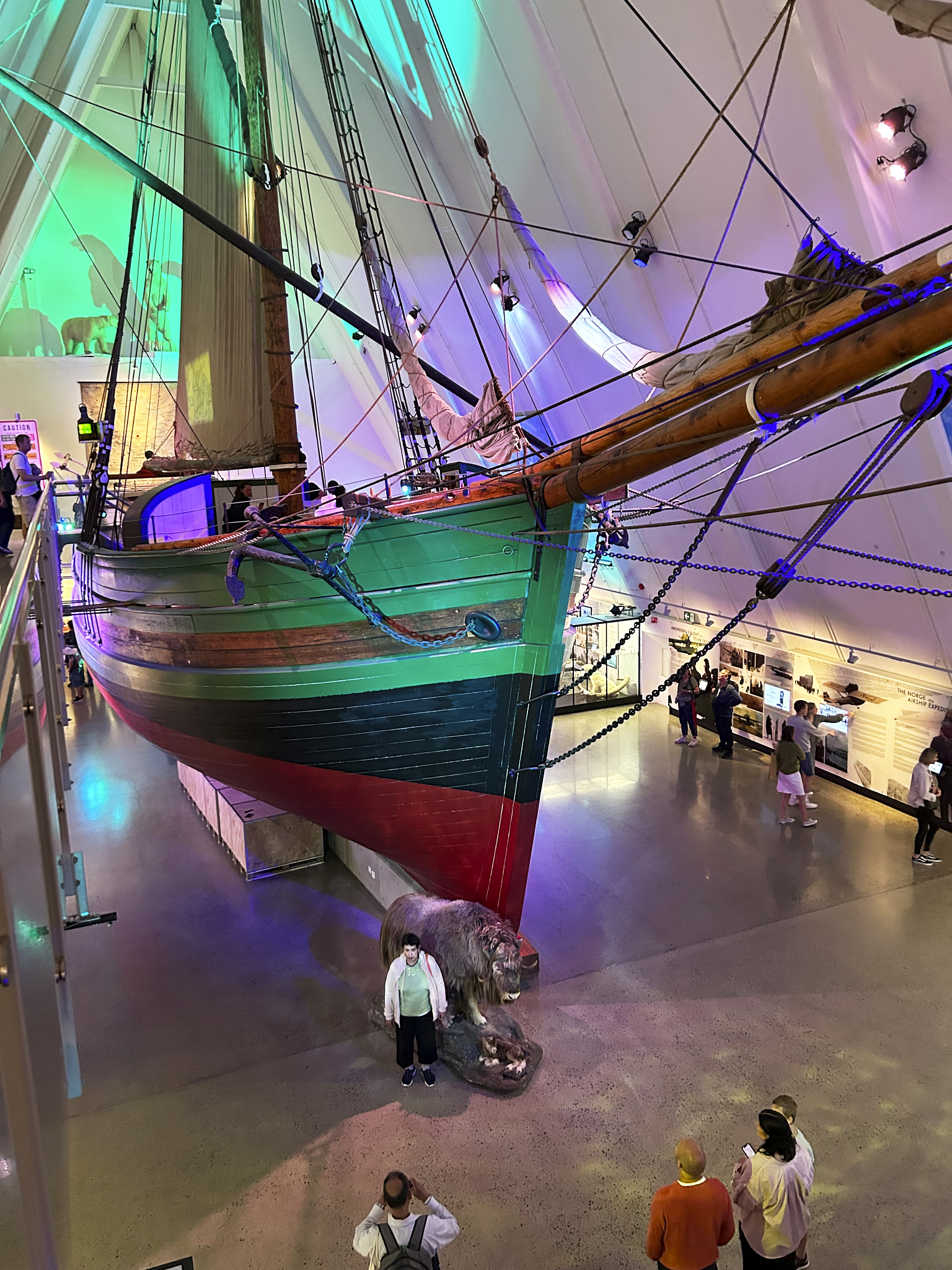
The Gjøa
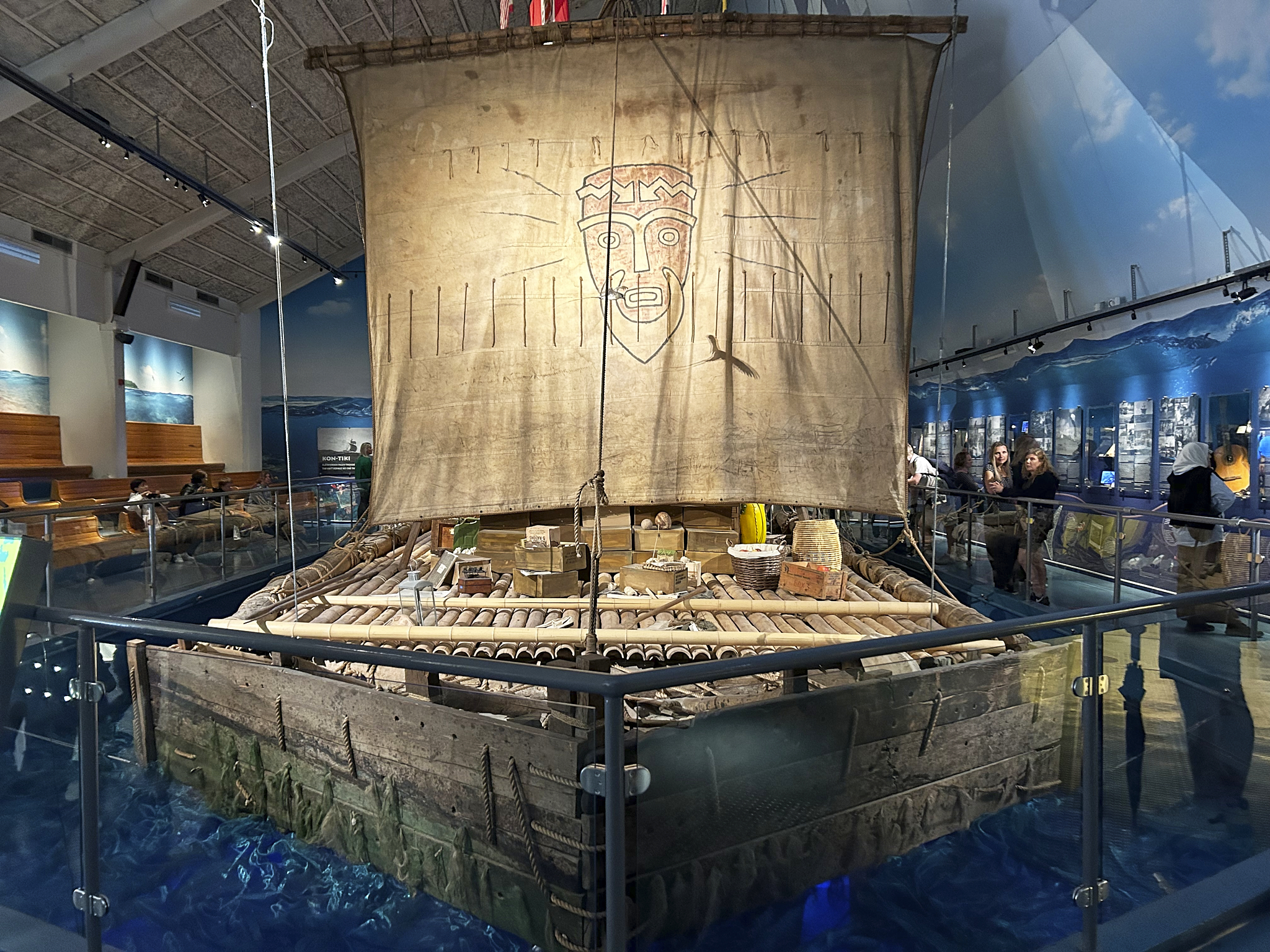
The Kon-Tiki
We were able to visit the Fram Museum and the Kon-Tiki Museum. Both are located in Bygdøy. They are a short distance from the center of Oslo, and across the street from each other.
The Fram is all about Norwegians, and their leadership role in Polar exploration. The exhibits showcasing the expeditions, people, animals, and vessels involved are astounding. For more about the Fram Museum a link is [here].
The Kon-Tiki Museum is centered on the exploits and accomplishments of Norwegian Explorer Thor Heyerdahl. While best known for crossing the Pacific Ocean in raft made of balsawood, Heyerdahl accomplished much more in his life. For more about the Kon-Tiki Museum a link is [here].
On this visit to Oslo we were able to see many other fantastic attractions such as The Vigeland Park and Museum , The National Museum, The Norwegian Folk Museum, and The National Resistance Museum.
Vigeland
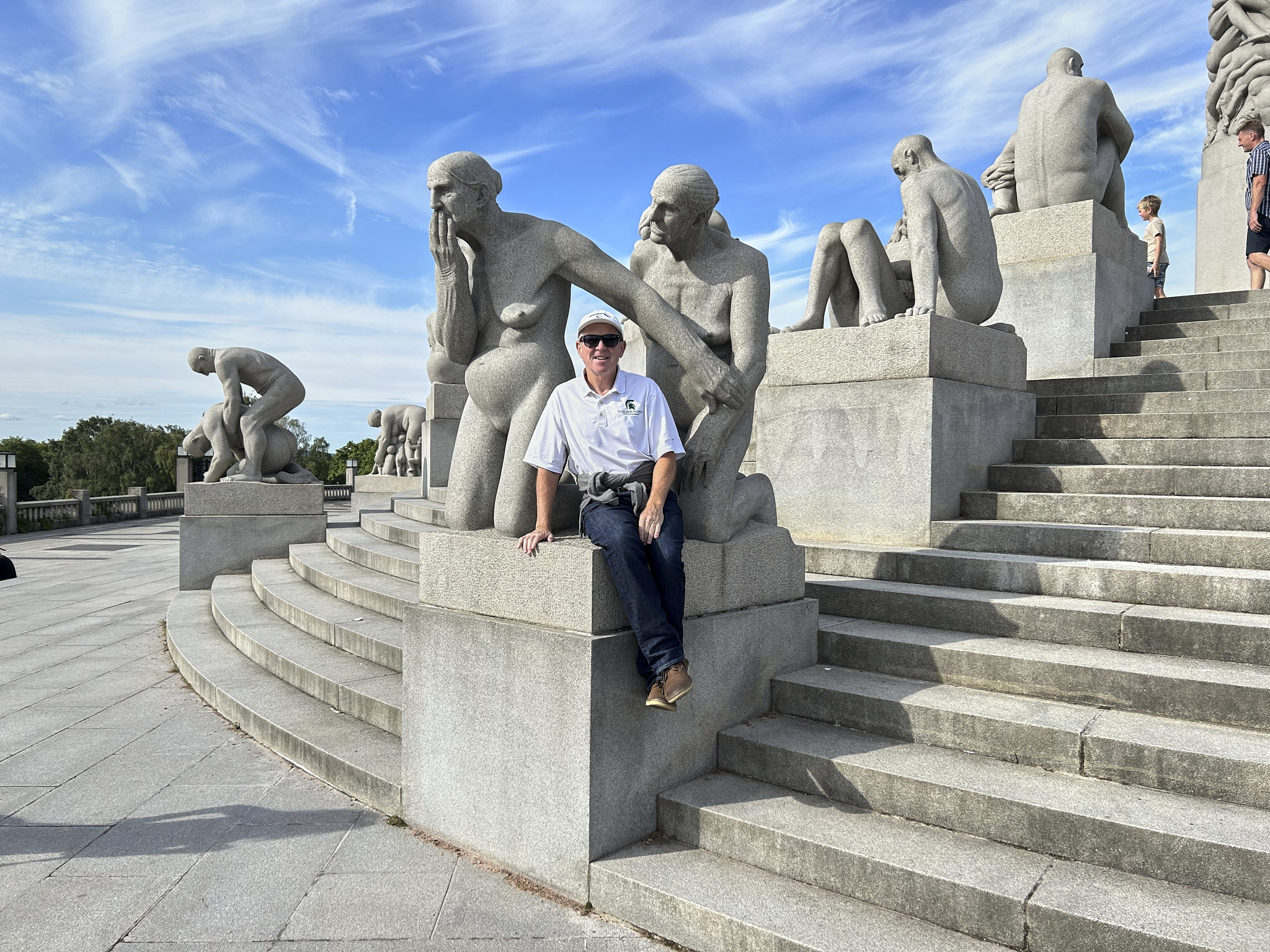
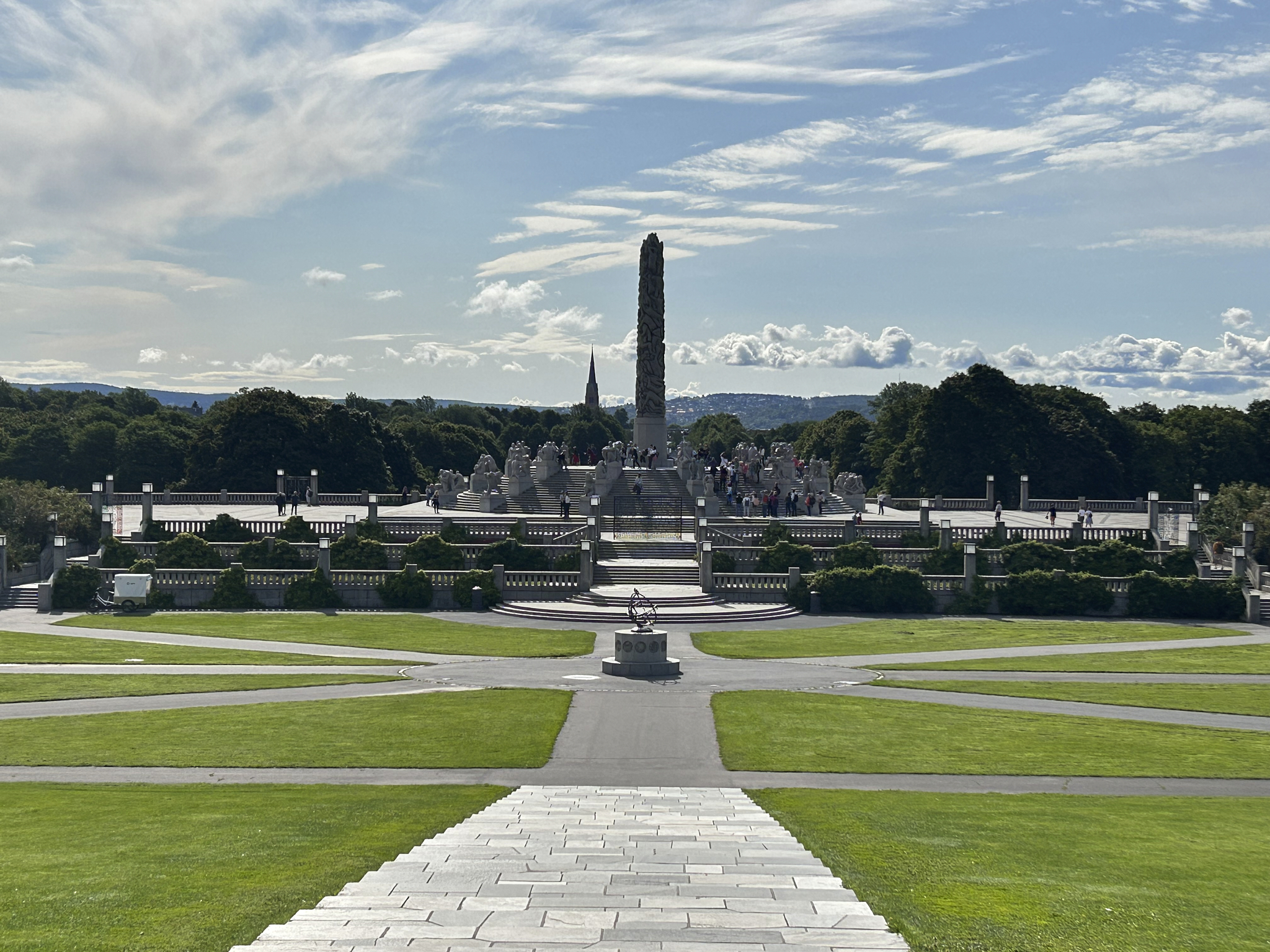
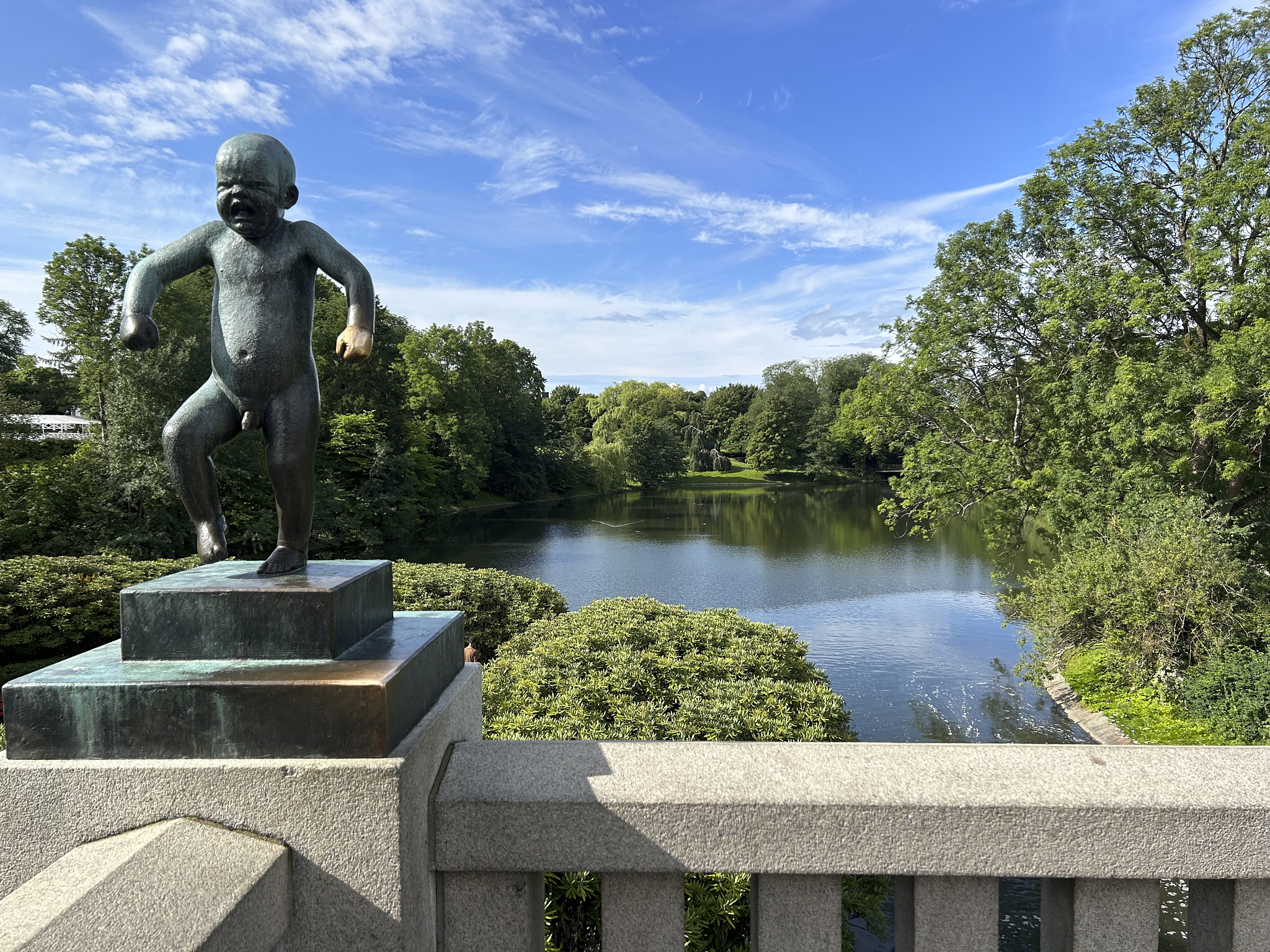
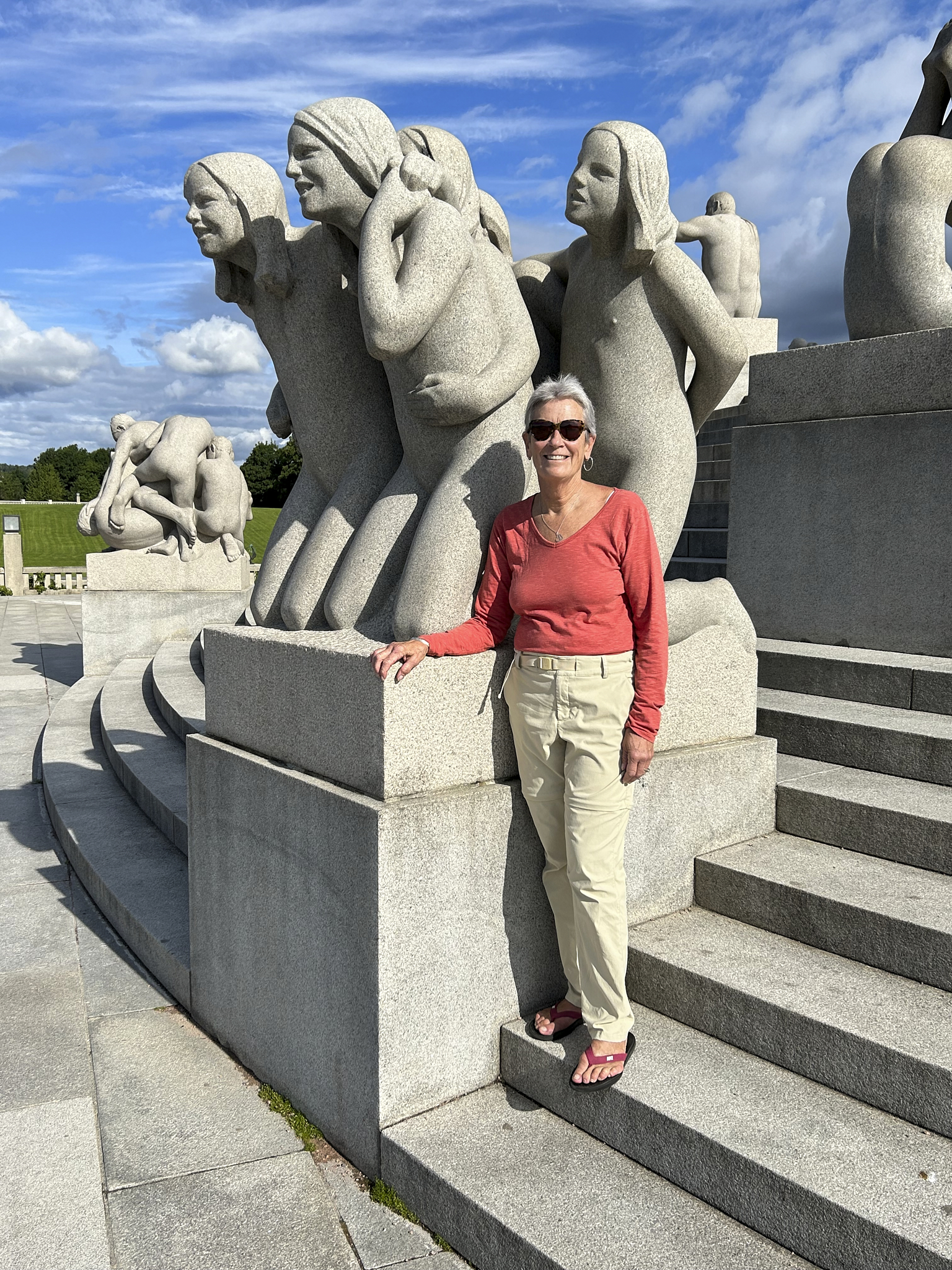
The sculptures and works in the Vigeland park and museum are remarkable. The story behind how the park and museum came about, and lives on is even more remarkable. Make sure to visit each of them. For more information a link is [here].
The National Museum
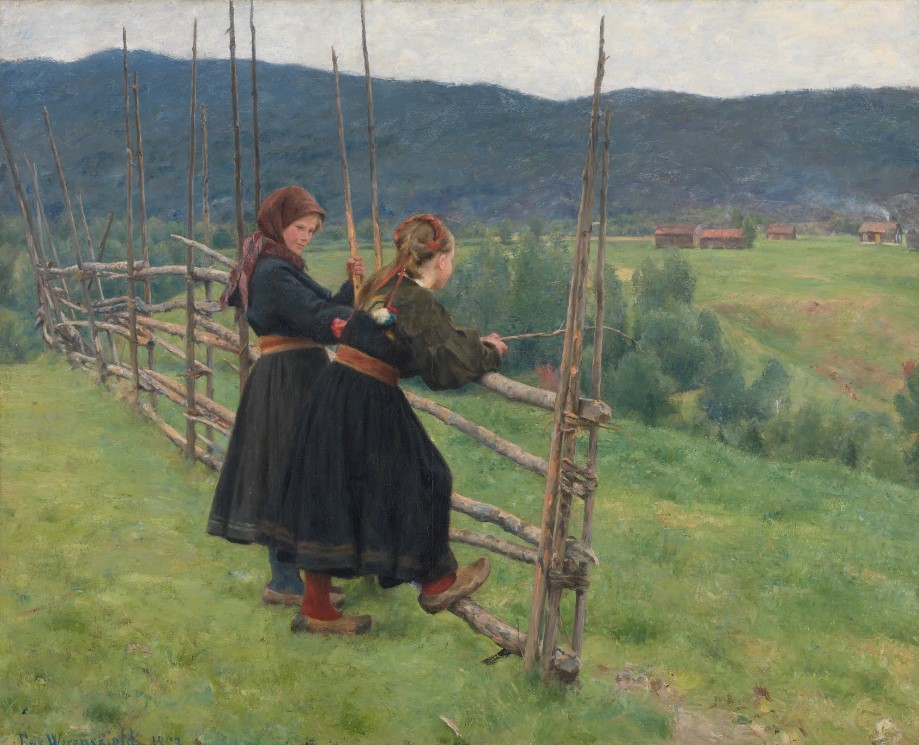
September by Erik Werenskiold
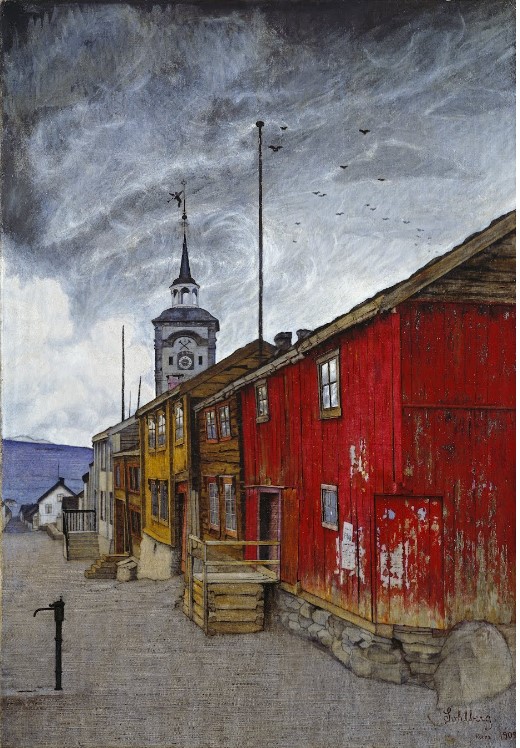
Street in Roros by Harland Sohlberg
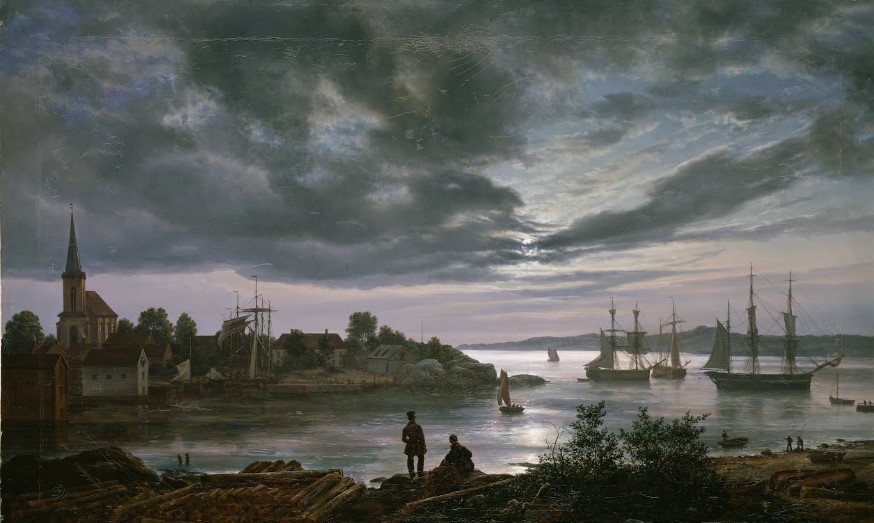
Larvik in Moonlight By Johan Christian Dahl.
The National Museum in its current location opened in 2022. It was created to merge the Museum of Architecture, The Museum of Industrial Art, The Museum of contemporary Art, the Museum of Decorative Arts and Design, the Museum of Contemporary Art, and the National Gallery of Norway into one operation.
Hmm… I can only imagine the challenges of pulling off a merger of museums. The result is there are over 400.000 works in the museum, including the first copy of Edvard Munch’s The Scream from 1893.
The artworks and artifacts in the museum were wonderful. The combination allowed us to see many different aspects of Norway and its culture.
Linda and I purchased a copy of Street in Roros during our visit to Norway in 1992. I have a soft spot for artworks that feel as if a moment in time is captured in a natural state. Werenskiold’s September (1883) does that for me. When I witnessed September in person, I immediately thought of William-Adolphe Bouguereau’s The Nut Gatherers (1882).
For more information on the National Museum a link is [here].
Norwegian Folk Museum.
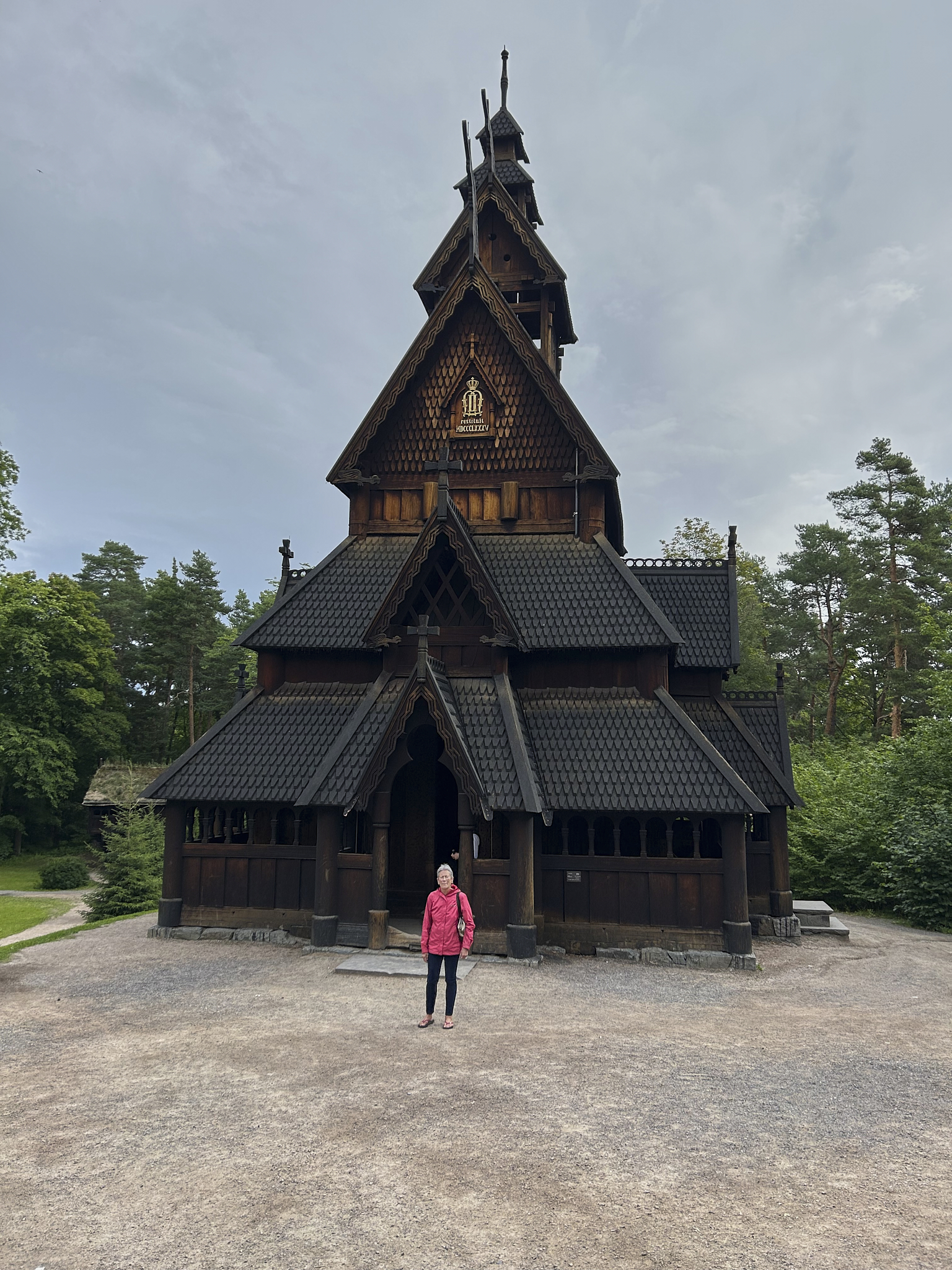
Stave Church
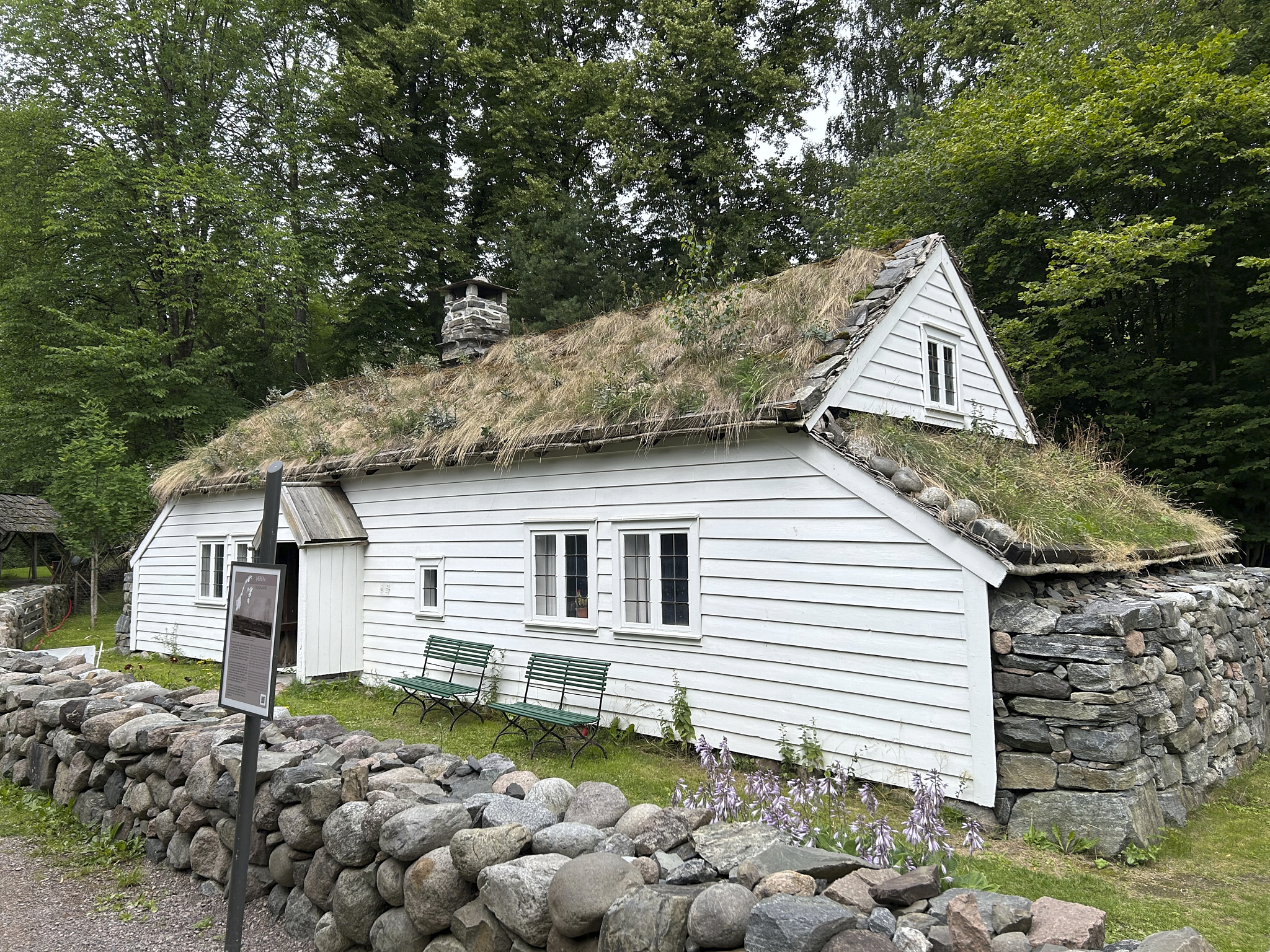
A home.
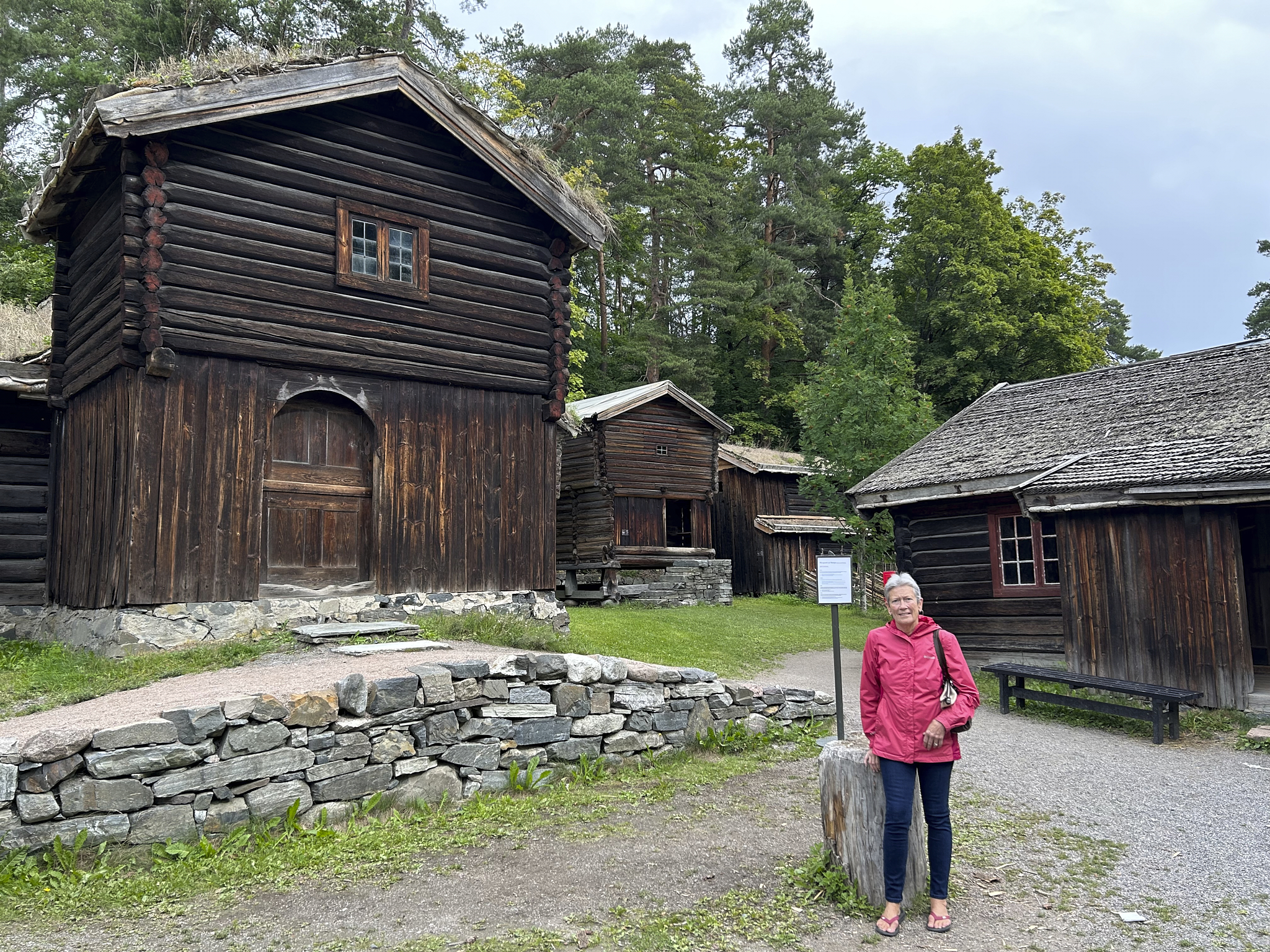
Farm Community near Roros.
Similar to the Vigeland, the Norwegian Folk Museum is an outdoor and indoor operation. The Folk Museum was created to display the lifestyle and living conditions of all of Norway over time. The Folk Museum has done a fantastic job.
The home is from Jaeren in the Rogland region near the west coast of Norway. Four generations of the same family lived in it. Sixteen people were born and raised in the home. The last was born, raised, and died in the home. He died knowing the home would be donated to the Folk Museum at his passing.
Christian Radich
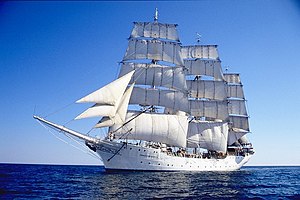
The Christian Radich
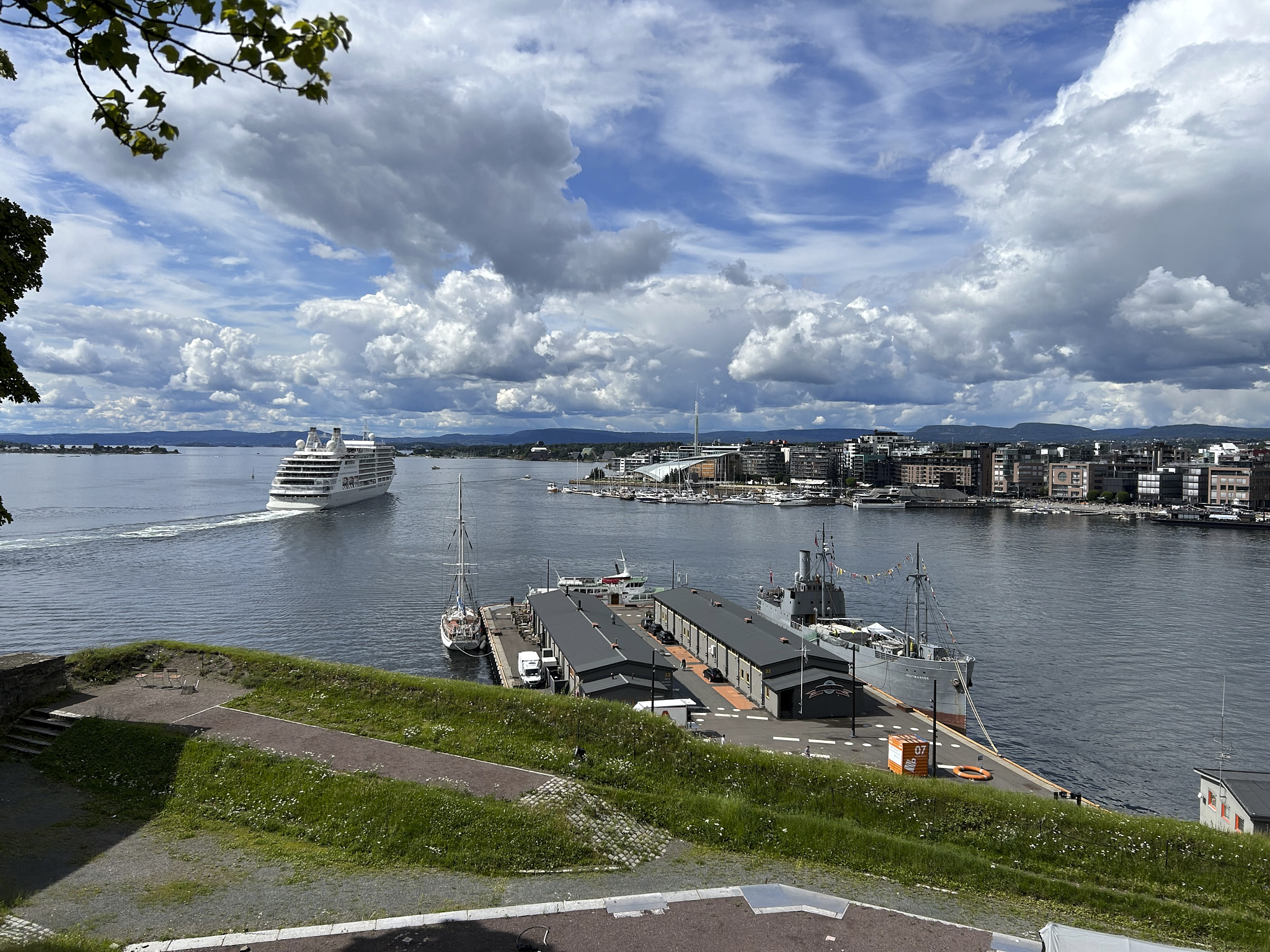
The Oslo Harbor. Another ship in CR’s dock.
I had the honor of sailing on the Christian Radich (CR) in 1976. The Christian Radich was part of the Tall-Ship Exposition of the United States Bi-Centennial Celebration. As part of its voyage, the CR sailed the Great Lakes and established port in Detroit. One evening the Detroit News and Detroit Yacht Club held a party on the CR, welcoming the Norwegian Crew of 88 to the State of Michigan. It was my Dad’s idea to have the event. He was the long-time Managing Editor of the Detroit News (the largest evening newspaper in the U.S. at the time). What a thrill! Unfortunately the CR was not in Oslo for my visit in 2023.
A Stroll Through Town
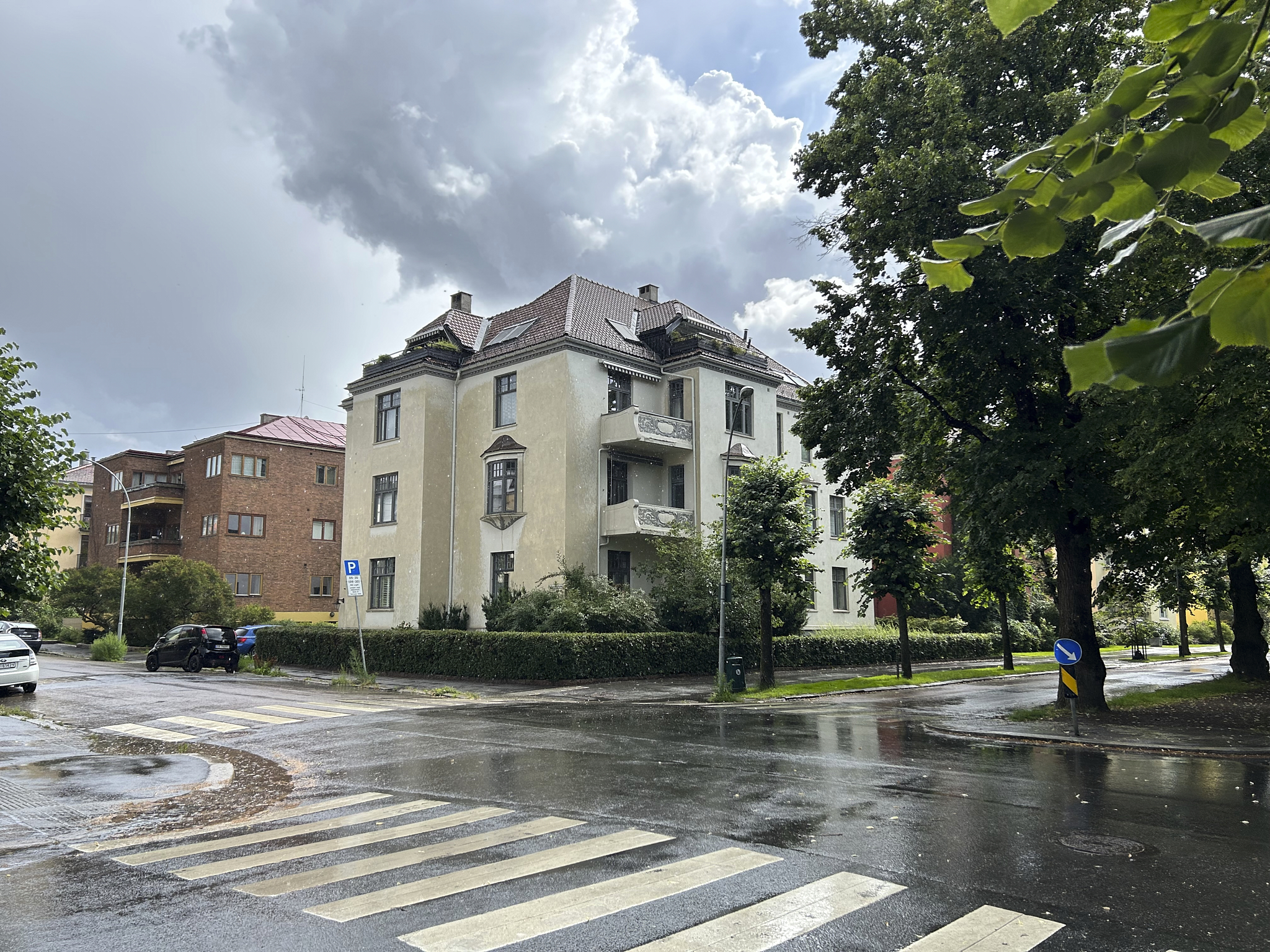
Apartments on Gyldenlaves gate.
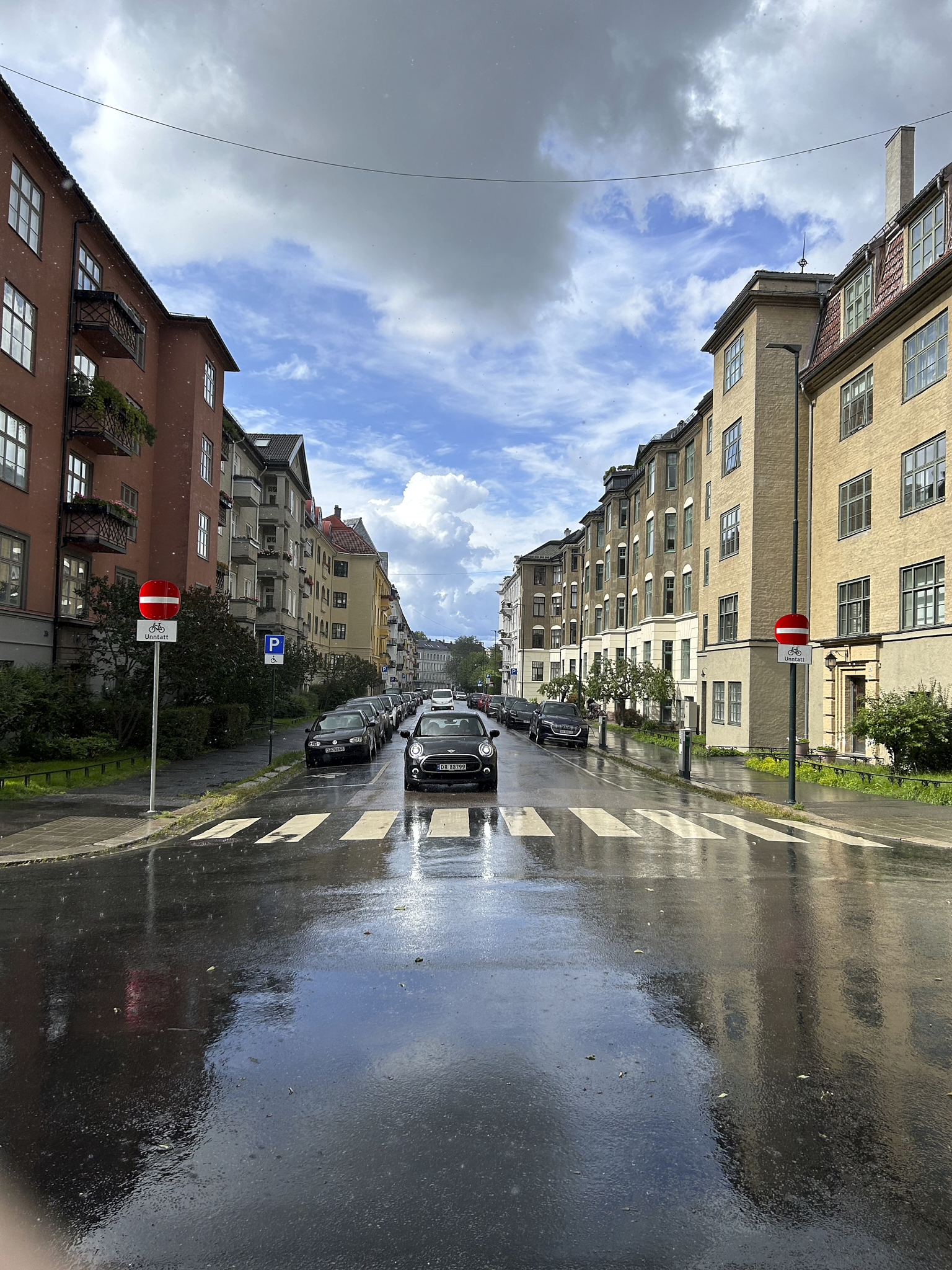
The Frogner neighborhood.
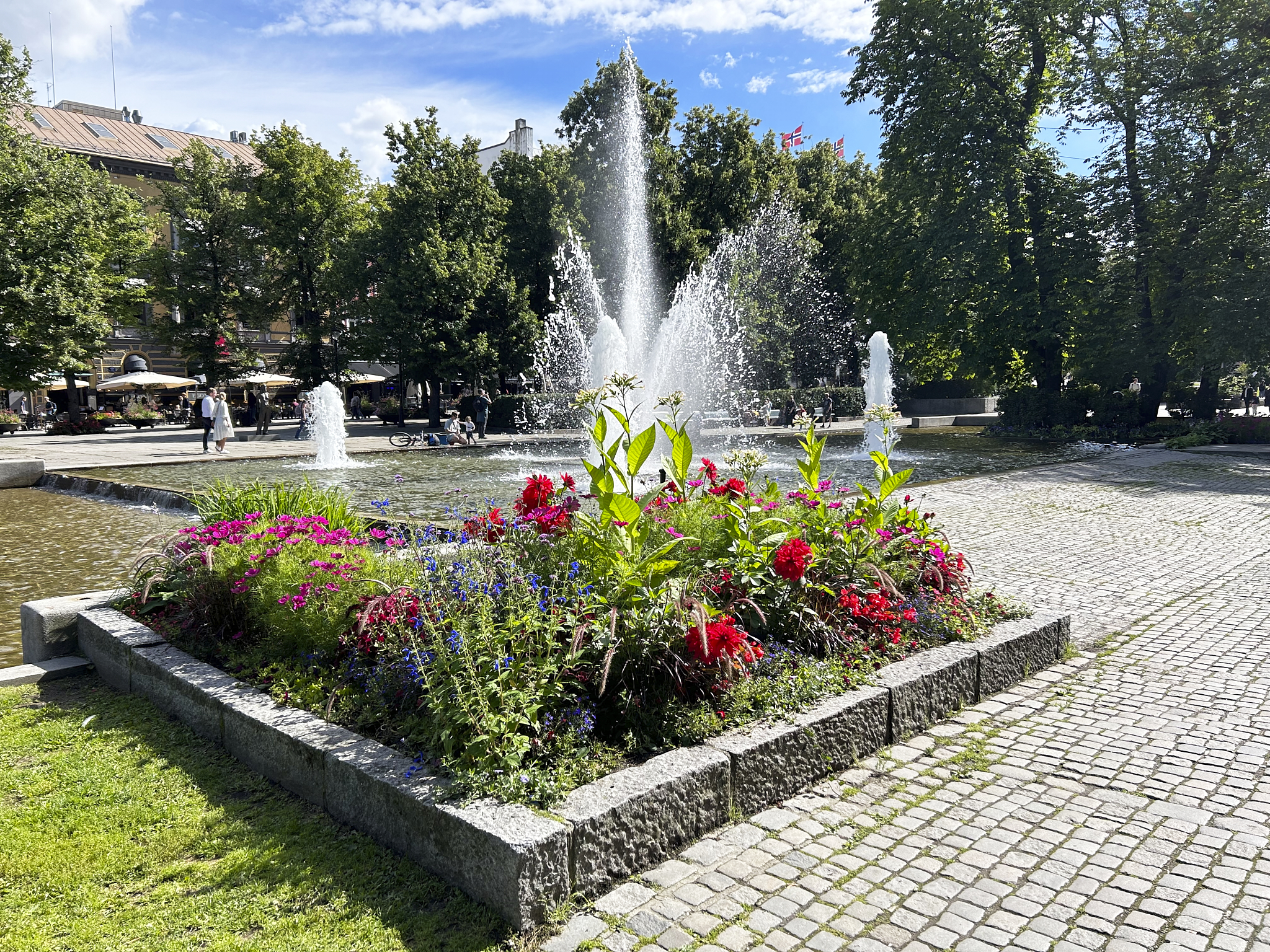
Flowerbed on Karl Johans gate.
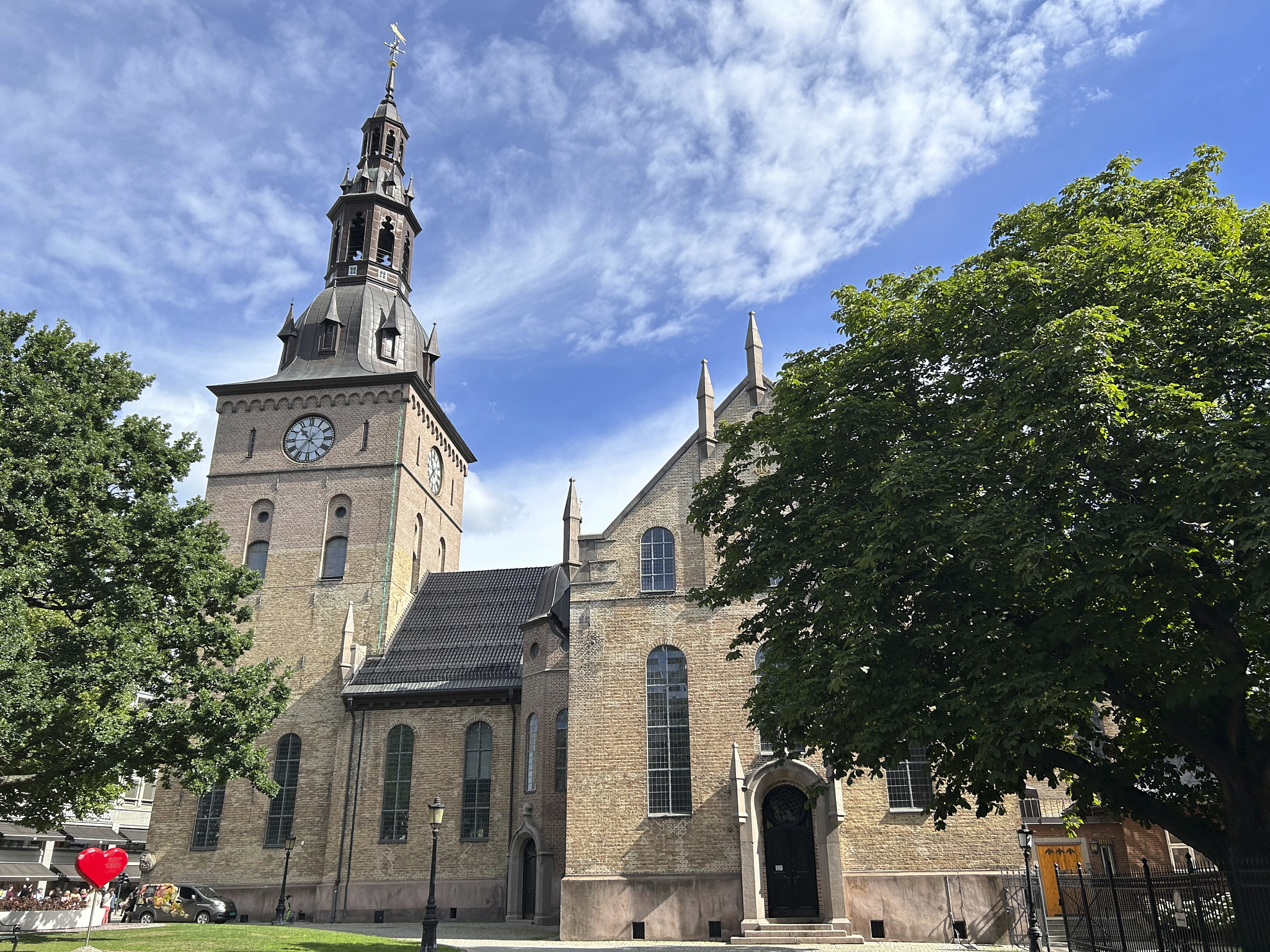
Oslo Cathedral
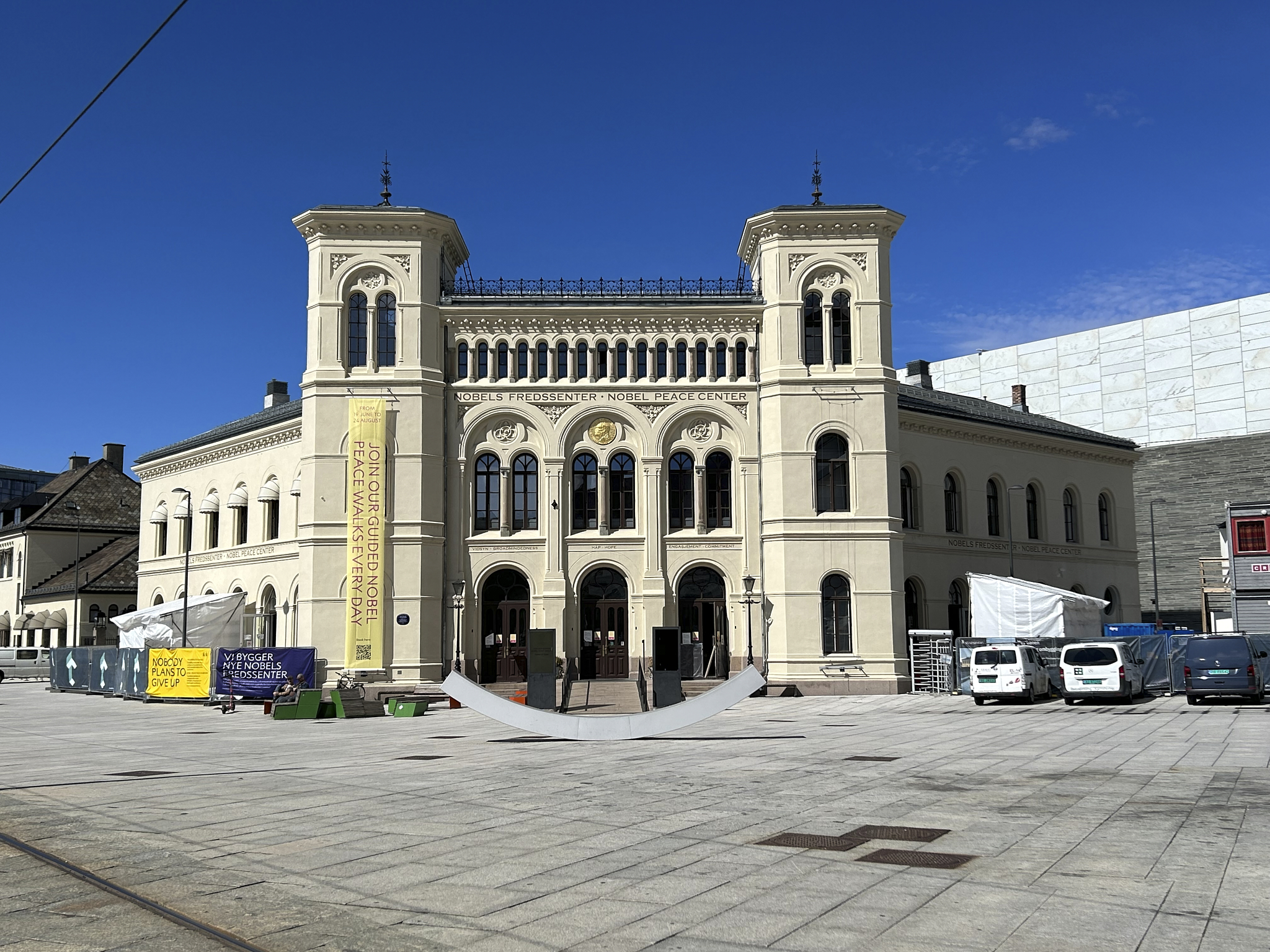
Nobel Society
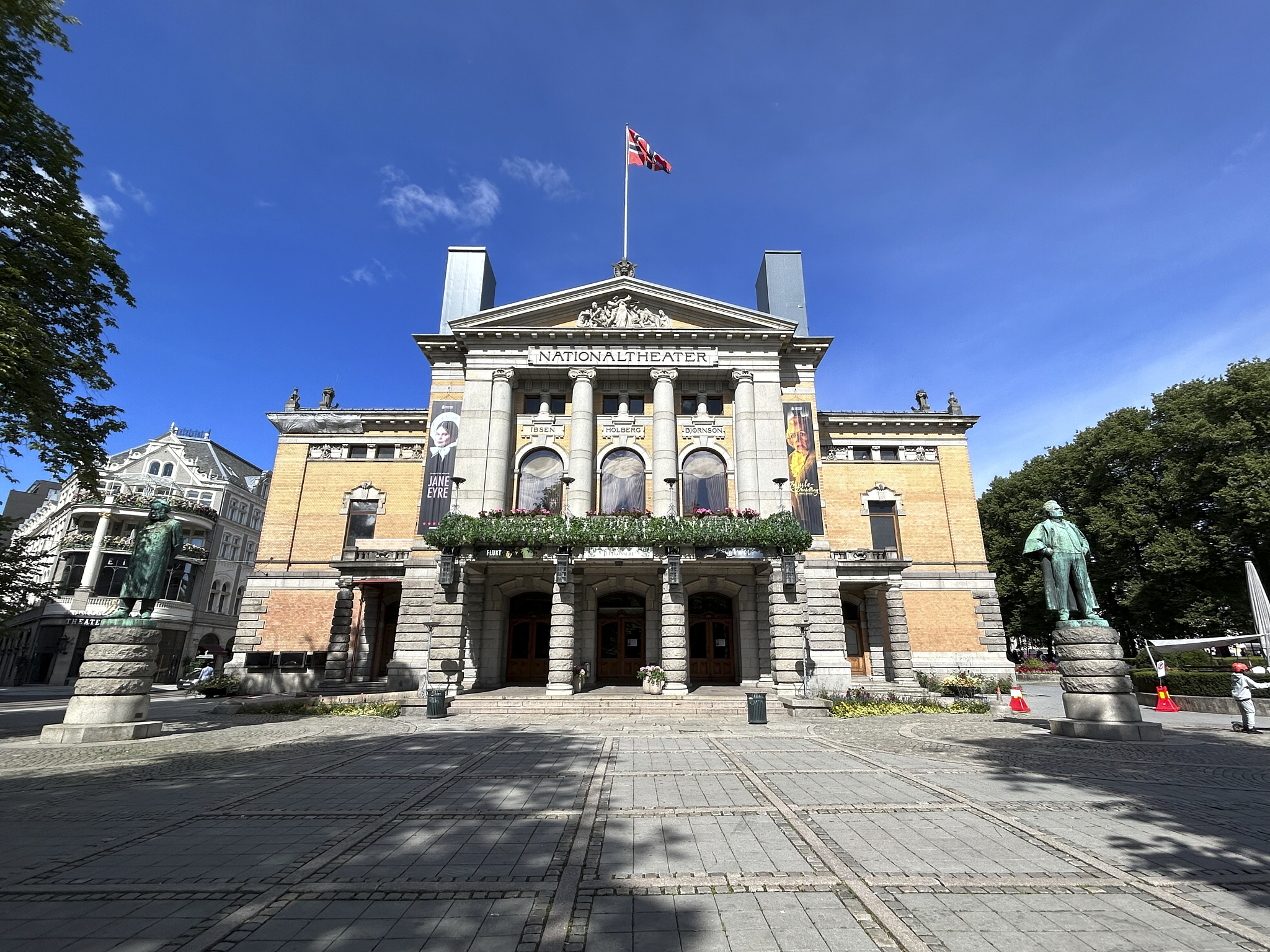
The National Theatre
Oslo has grown to a metro population of 1,086,000 in 2023 from 700,000 when we visited in 1994.
Linda and I are walkers. We walked through much of central Oslo and its immediate surroundings. Similar to other large cities, the neighborhoods presented old and new – in terms of architecture and lifestyles.
The Oslo Trip Map
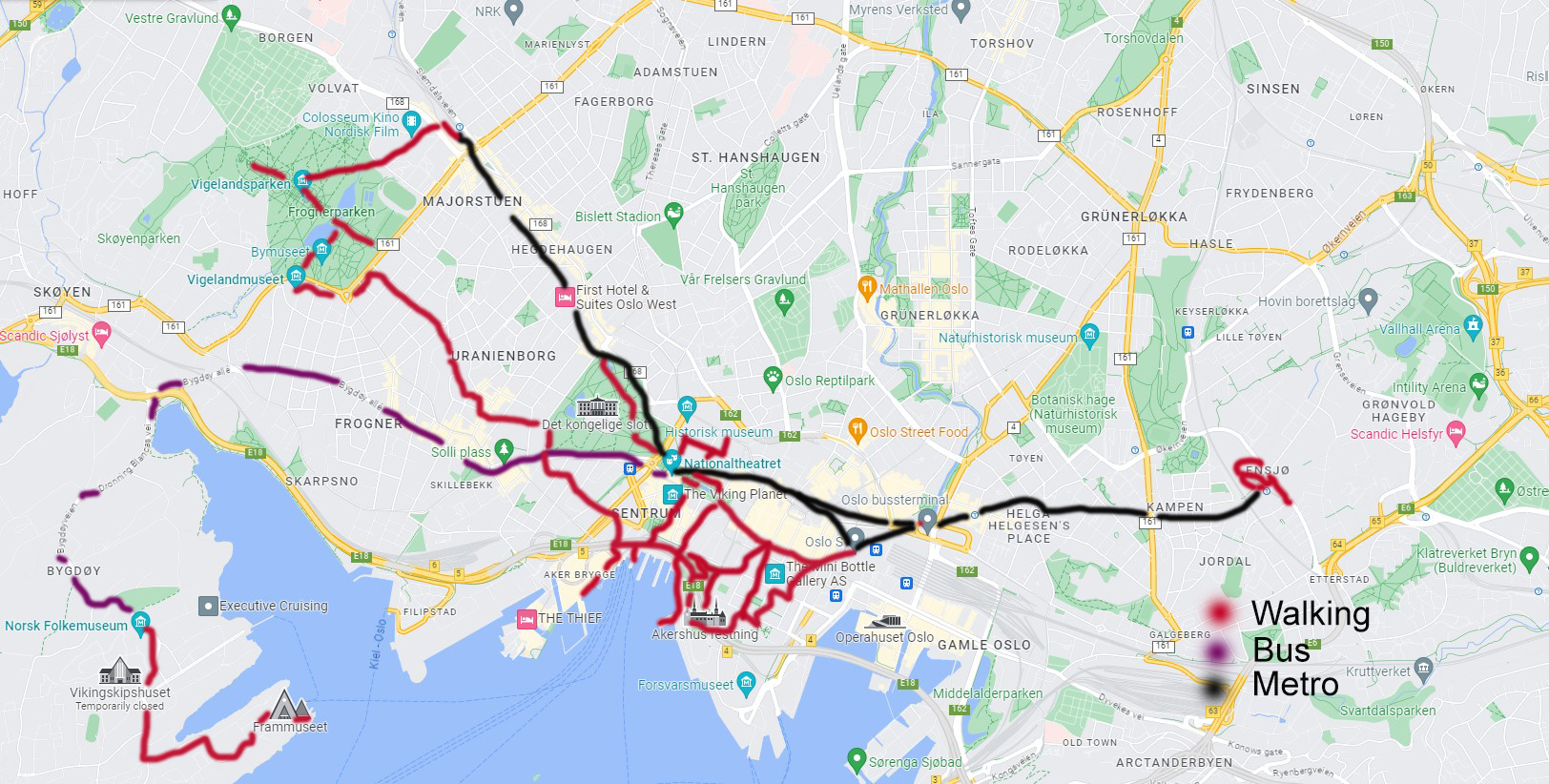
The Soliheim’s home in Oslo is in Ensjo. It located near the city-center. With a quick walk to the Metro Station and three stops, we were in the heart of downtown Olso.
Public Transportation in Oslo is nothing short of superb. The Metro rail/subway, buses, and train to the airport are inexpensive, frequent, safe, and reliable.
The Vestland Fjords
Norway’s fjords need to be seen to be believed. On our previous trip we visited the Vestland fjords around Bergen on a ship, train, and hiking. For this trip, we decided to drive a car, stay in hotels on the waterfront, and hike when the opportunity presented itself.
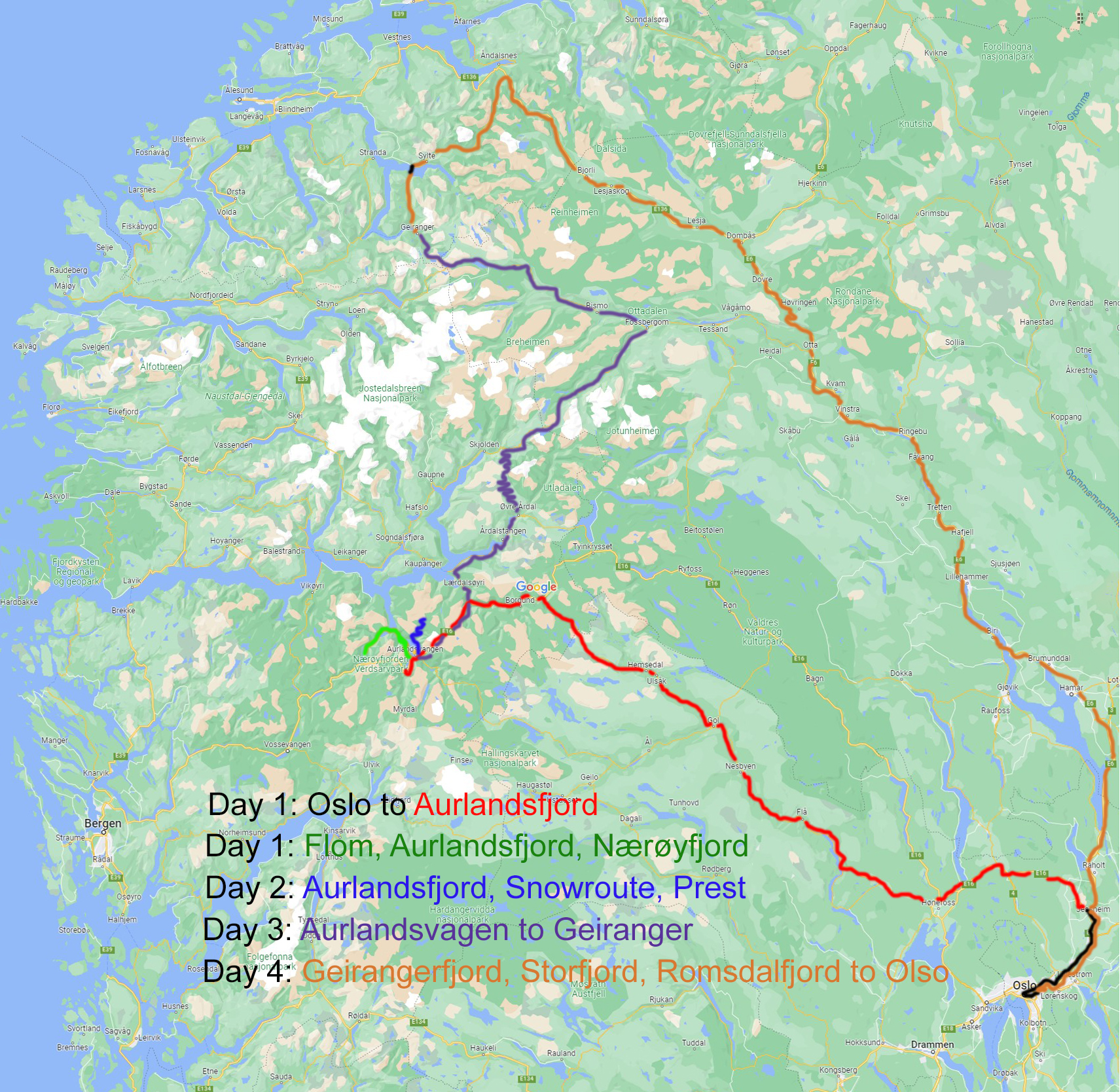
The plan needed some fine tuning right at the start.
Gas, Electric or Hybrid
Do we get a gas, hybrid, or electric powered car for our trip?
According to CleanTechnica, in May of 2023, 91.1% percent of new car sales in Norway are Electric Vehicles (EV). Norway is on schedule to eliminate new sales of gas cars in 2025. There are no gas powered cars for rent within the city limits of Oslo. The only gas or hybrid cars for rent are kept at the airport.
We talked with the rental people at Hertz. Most of their electric vehicles have ranges of 240 – 400 miles. The effective range drops quickly in cold weather, stop and go traffic, towing something, or in the mountains (.i.e., down to 70-100 mile range). As of 2023, Norway has 25,000+ charging stations, with 6,000 of the rapid variety. Norway is also a leader with digital payments. That means each charging station (e.g., Shell, Circle K) has its own dedicated application for my IPhone to re-charge the car. The Solheim’s have a hybrid. The electric motor covers 30 miles (50 kilometers). They have their own charging station at each house. We used the Solheim’s vehicle for the Oslofjord portion of the trip. It worked well. We charged when we parked and used about a 1/4 tank of gas over five days of travel.
The Vestland fjord portion of trip will cover 775 miles (1250 kilometers). It will involve long travel days, mountains, possible cold weather, possible stop and go traffic due to the amount of tourists, and exceptionally remote locations. We conclude we need to play it safe and get a gas or hybrid powered vehicle. We rent a Toyota RAV4 Hybrid. However, we have to take the metro into the city and train 30 miles north east to the airport to pickup the vehicle.
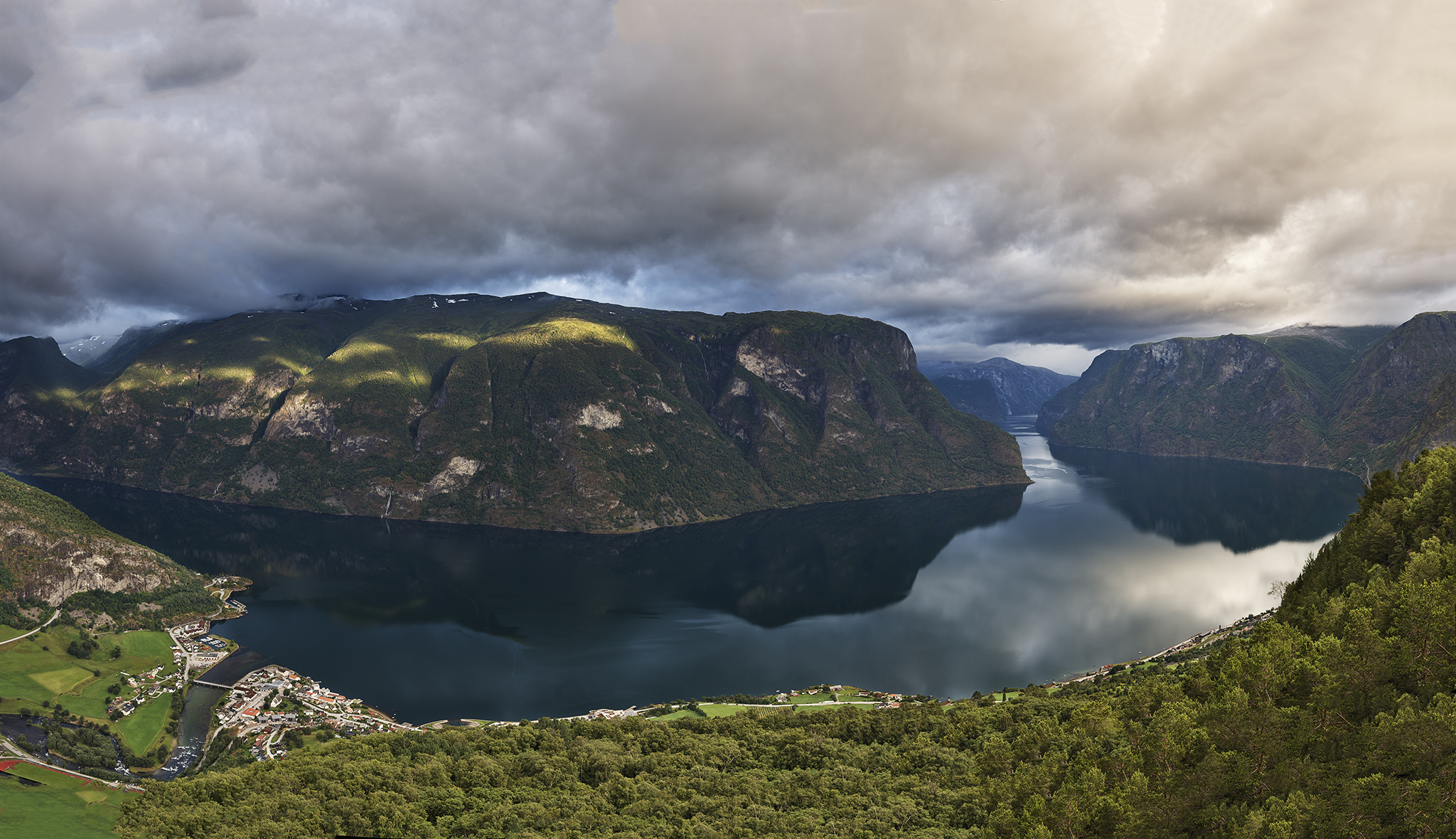
The Aurlandsfjord. © Jeffrey H. Lubeck – MESH Art LLC – all rights reserved.
Vestland Fjords Day One
On day one our goal is to get to Flåm at the end of the Aurlandsfjord from the airport in Oslo. Then spend the night in Aurlandsvangen. Aurlandsfjord, Geirangerfjord, and Nærøyfjord are considered by many to be three of the most beautiful fjords in Norway.
The route to Aurlandsfjord takes us through highly varied scenery.
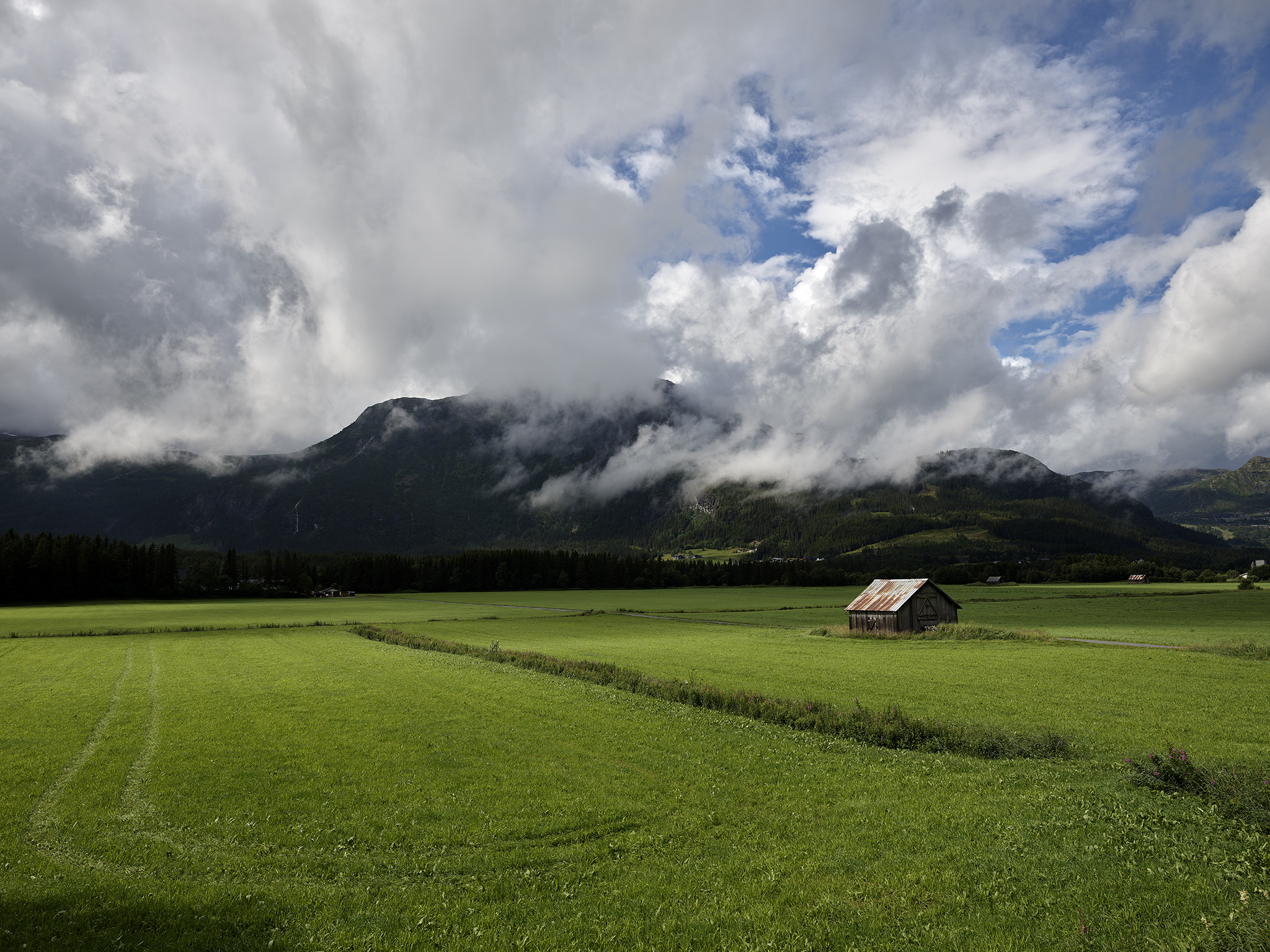
Farmland and mountains as we pass through Hemesdal on the way to Aurlandsfjord.
We arrive in time to take a ribbed water craft out onto the Aurlandsfjord and Nærøyfjord. The two fjords are part of Sognefjord. Sognefjord at 200 kilometers in length is Norway’s largest.
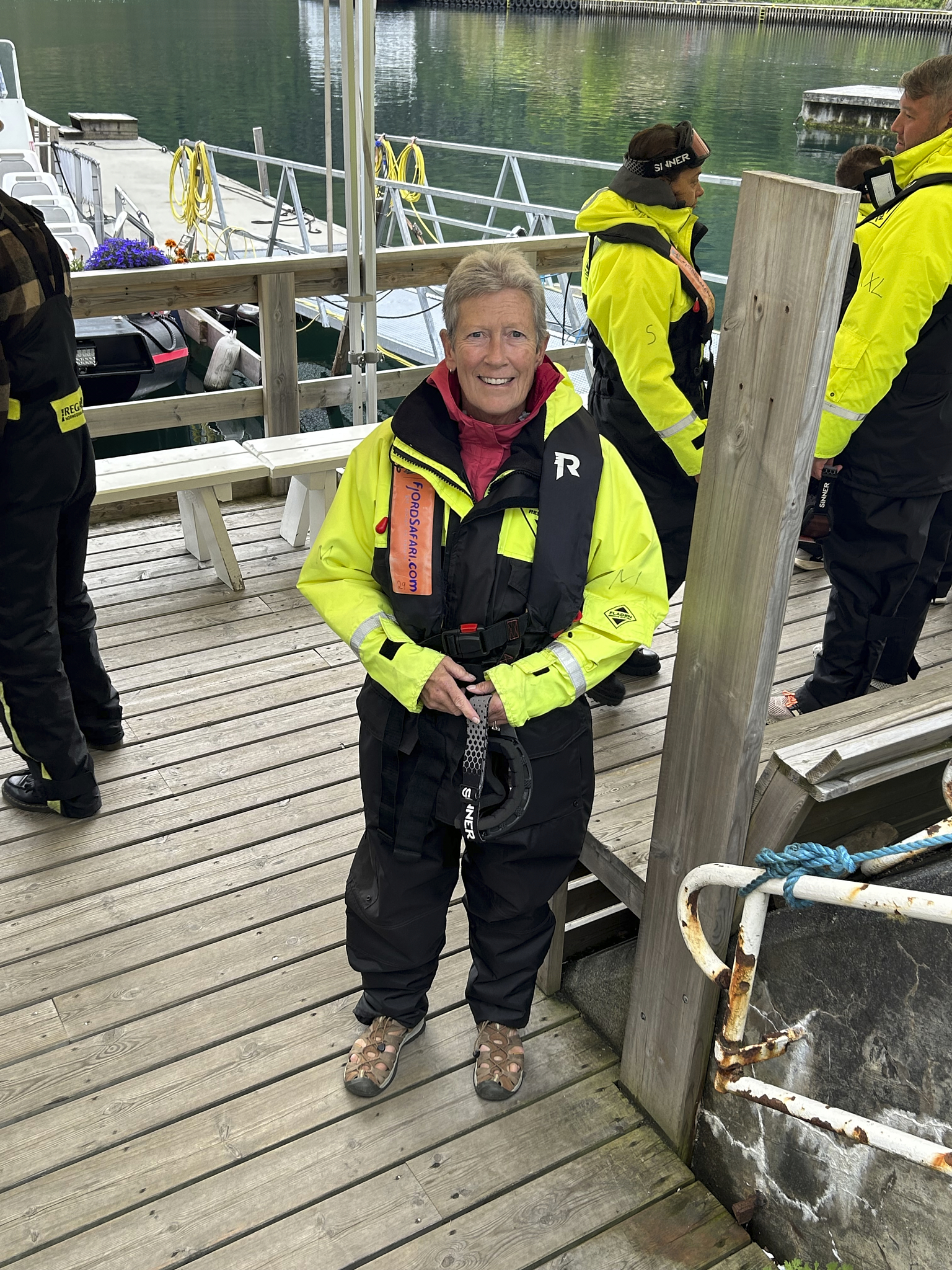
Wetsuit required.
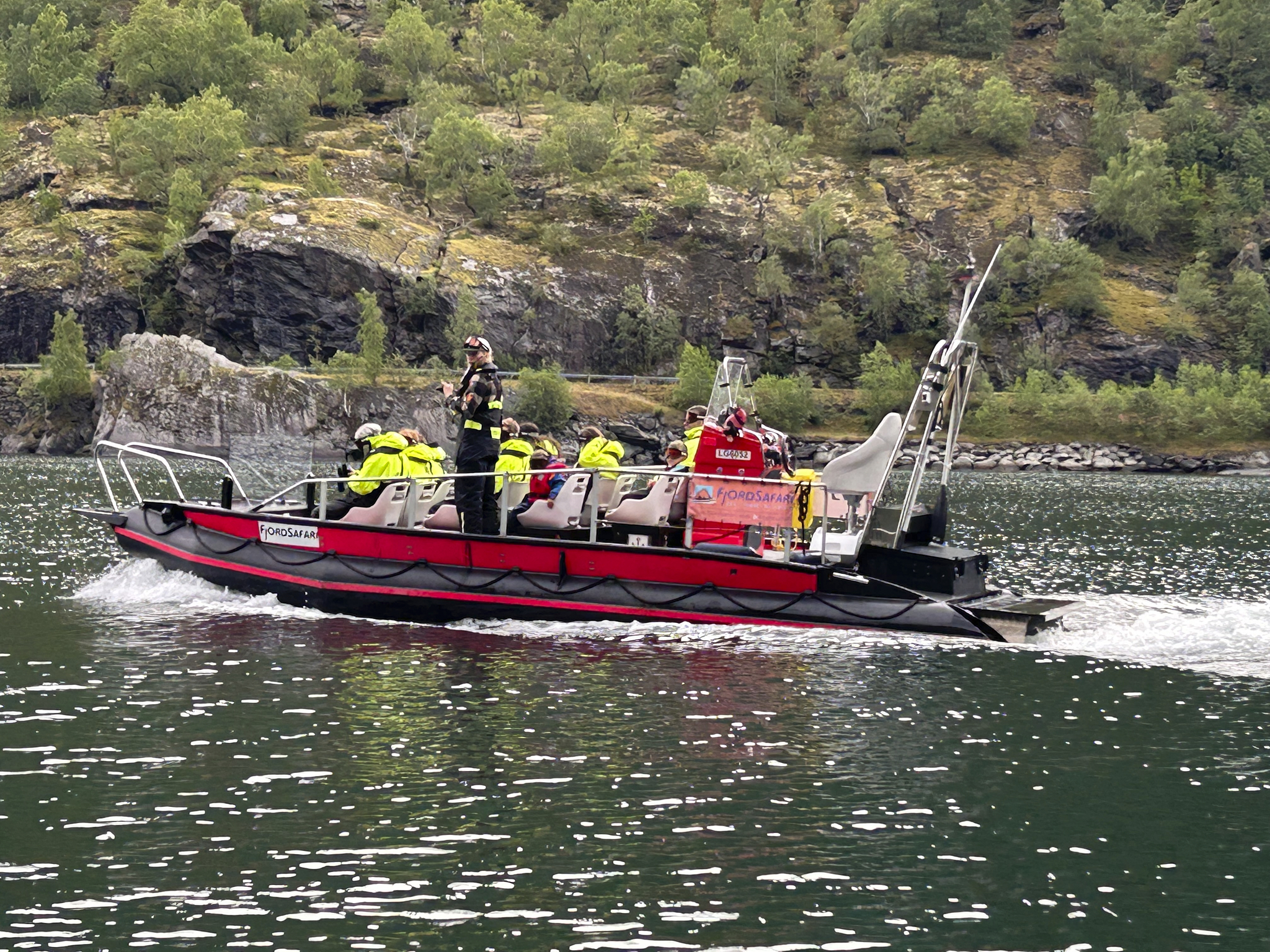
Ribbed watercraft.
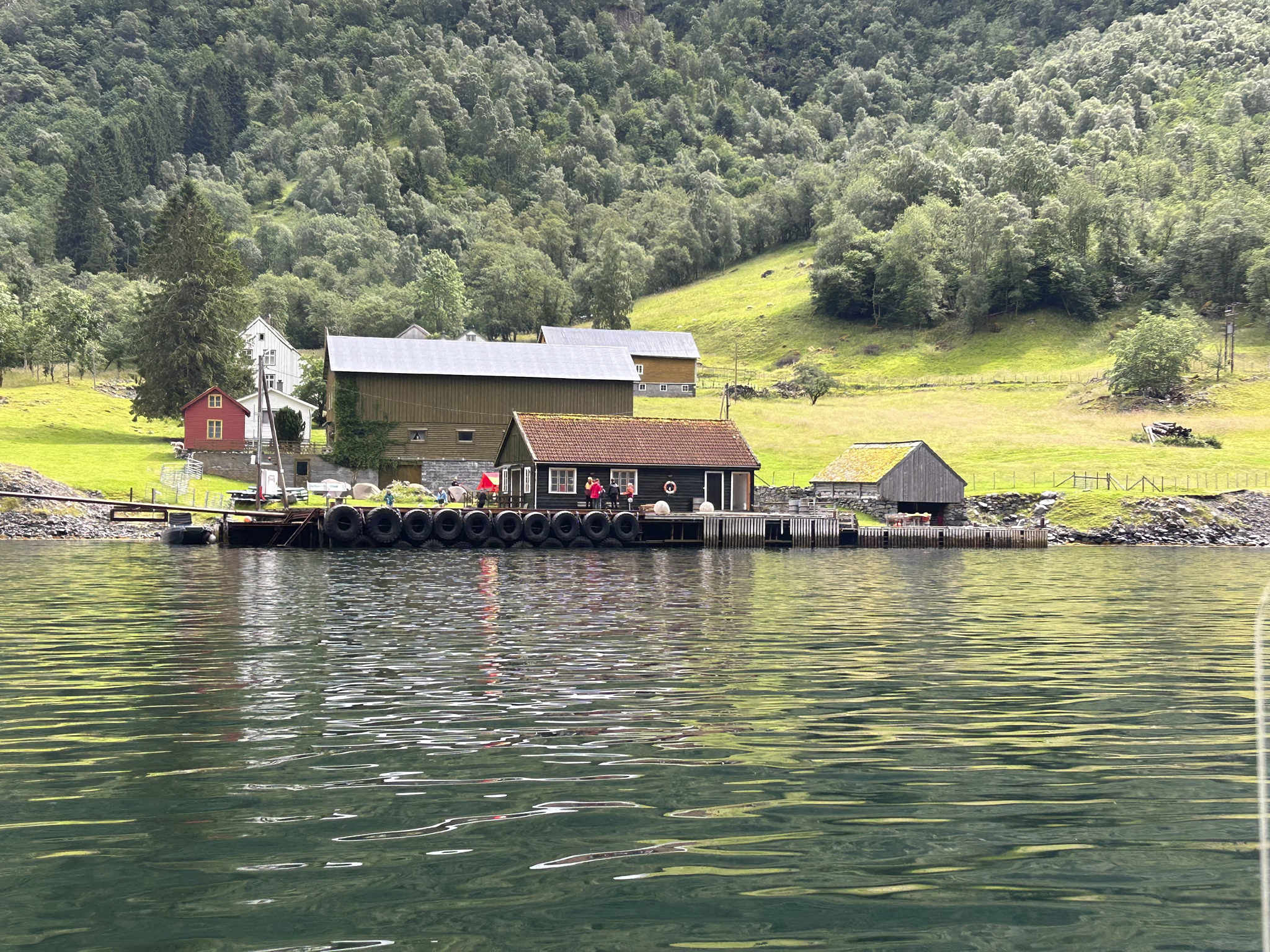
Villages accessible only by boat.
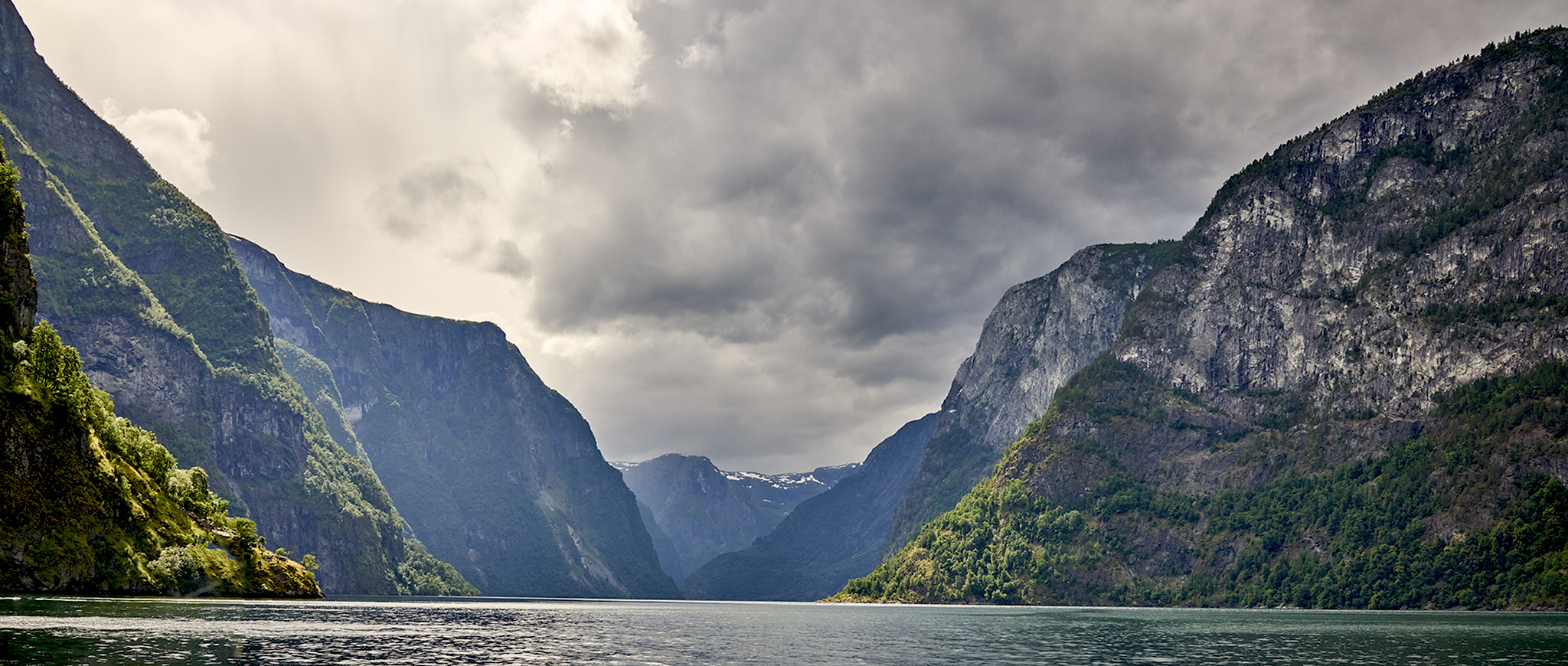
Entering Nærøyfjord. © Jeffrey H. Lubeck – MESH Art LLC – all rights reserved
The Nærøy fjord. © Jeffrey H. Lubeck – MESH Art LLC – all rights reserved
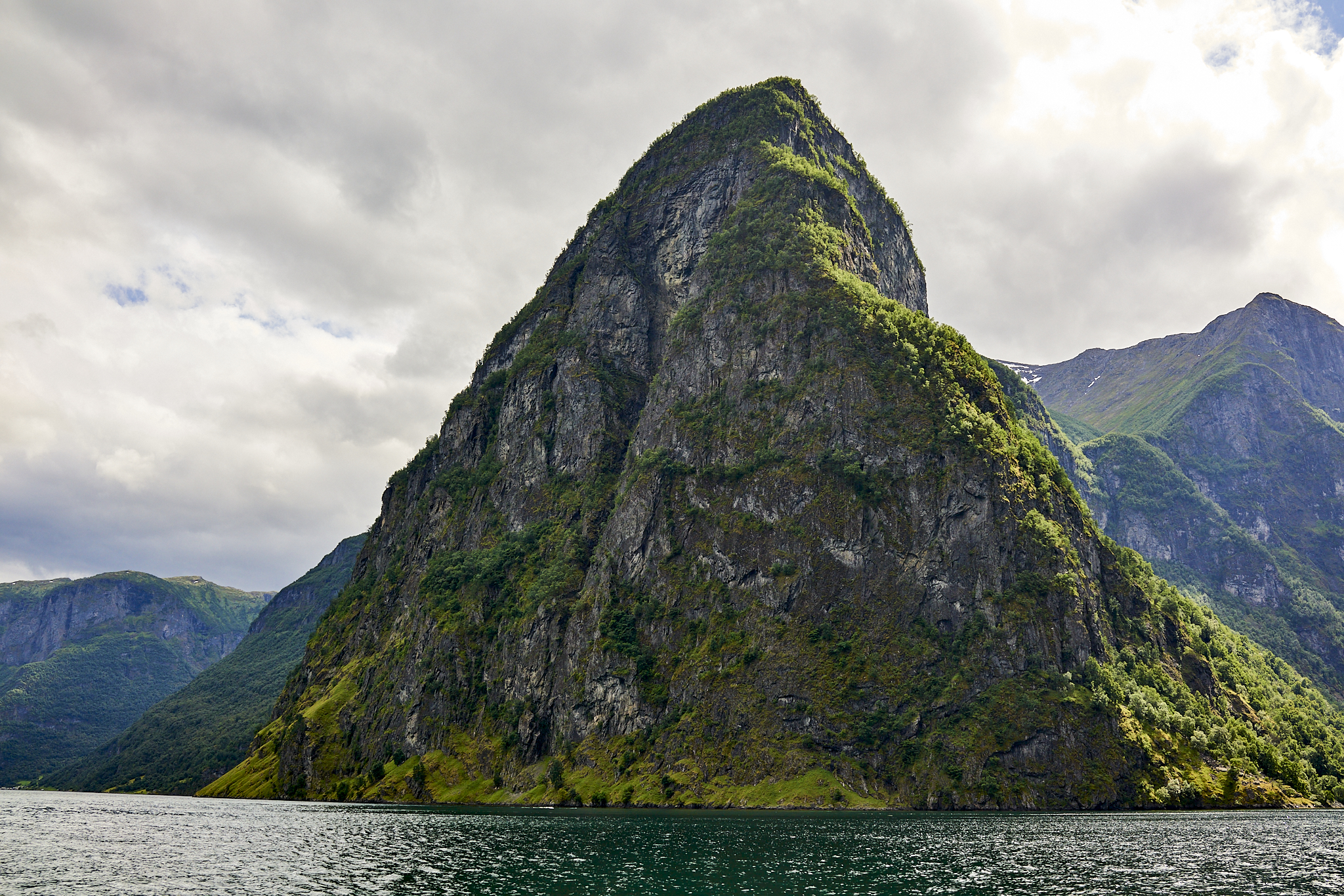
Asen © Jeffrey H. Lubeck – MESH Art LLC – all rights reserved.
Asen is a high peak situated where the Aurlandsfjord and Nærøyfjord meet. Asen is 1,755 feet high (535 meters). The depth of the Aurlandsfjord near this point is 3,156 feet (962 meters).
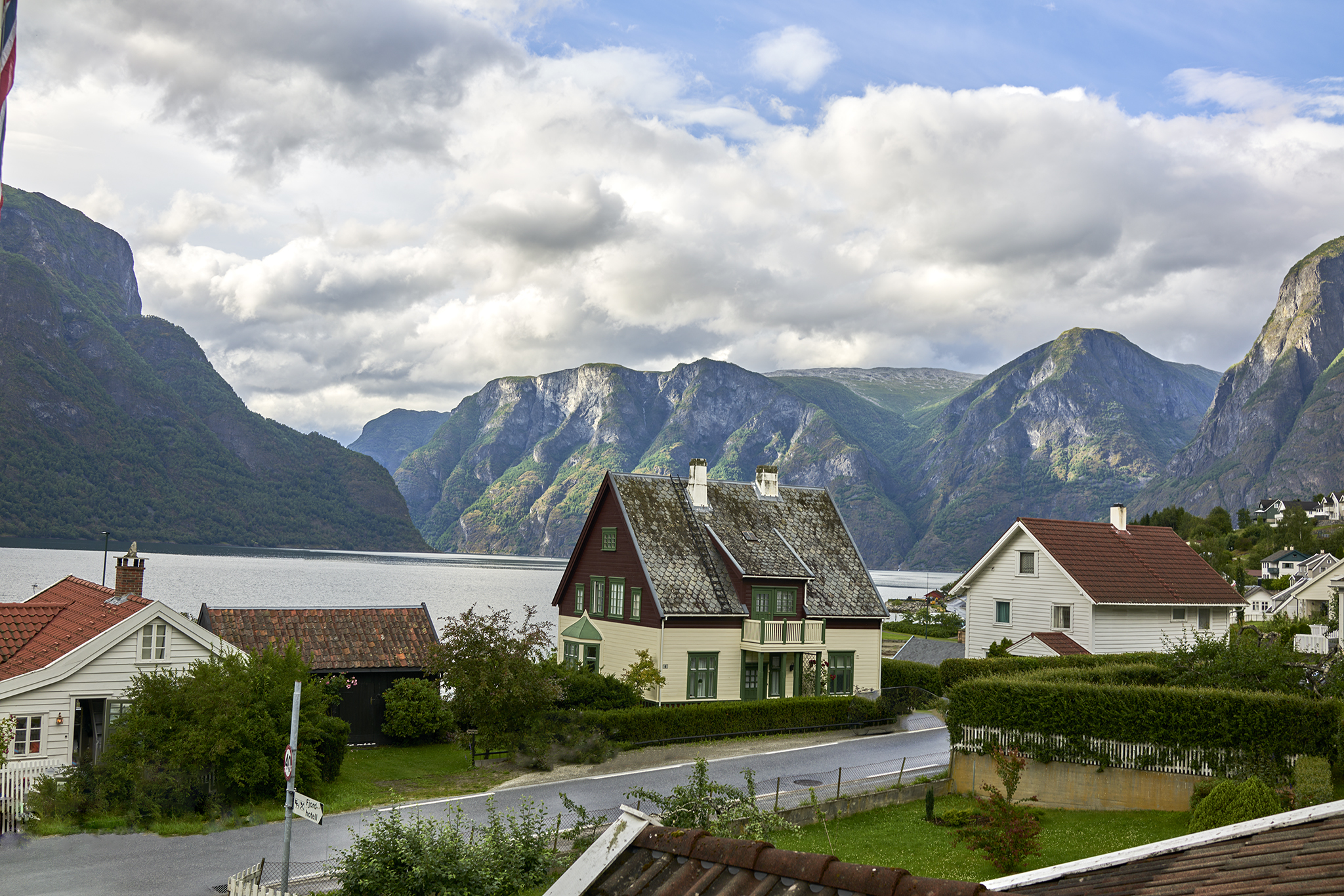
Late Afternoon Aurlandsfjord and Aurlandsvangen. © Jeffrey H. Lubeck – MESH Art LLC – all rights reserved
Flåm and Aurlandsvangen are very small places. They are really more like junction points for tourists trains, buses, and cars. Luckily the Aurlandsfjord Hotel is a nice comfortable place to stay with excellent views of the fjord. As with many European hotels it has an excellent restaurant for both breakfast and dinner.
Vestland Fjords Day Two
On day two our goal is to get in a hike somewhere close to Aurlandsfjord. We determine a hike up to Prest Peak and out to Røyrgrind point (rock cairn) is a solid option. It appears the hike will be challenging and offer great views.
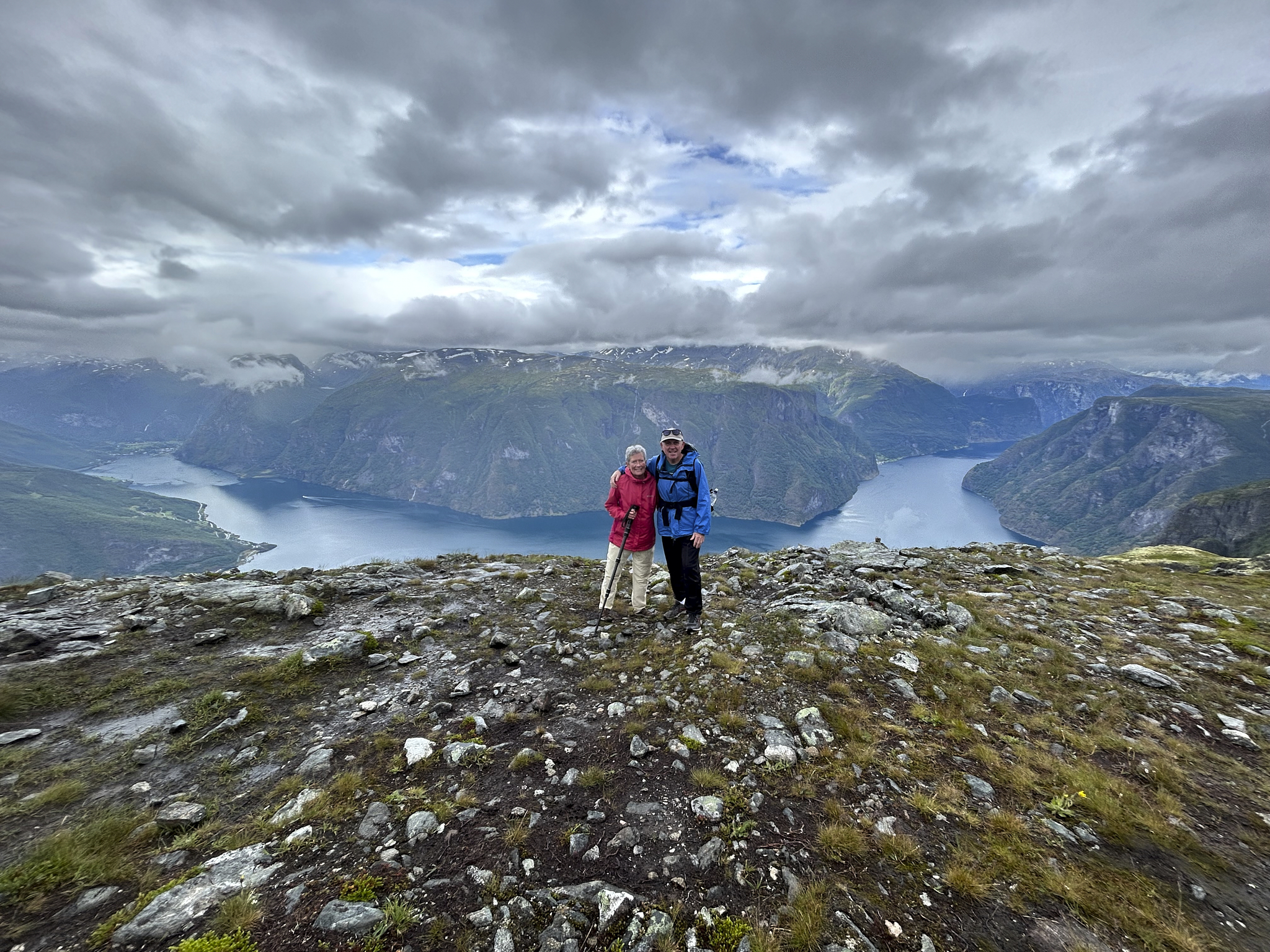
At The Top
The hike is about 1.5 miles and 2,000 vertical feet (one-way). Linda leads the way up and down. In a few spots the ascent is steep and route finding is required. Linda performs the lead on this task as well. Rain and mist add to the challenge.
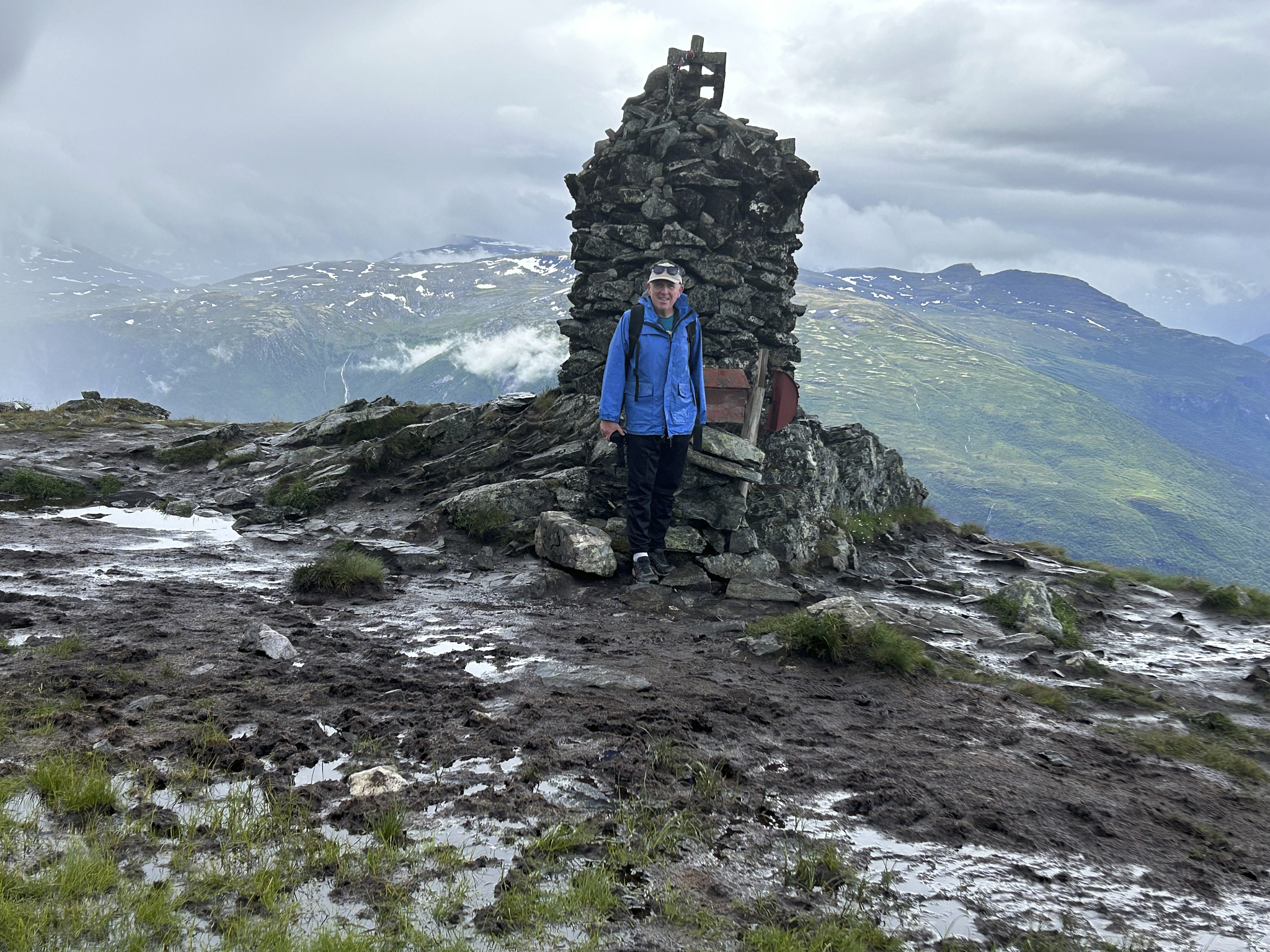
Røyrgrind
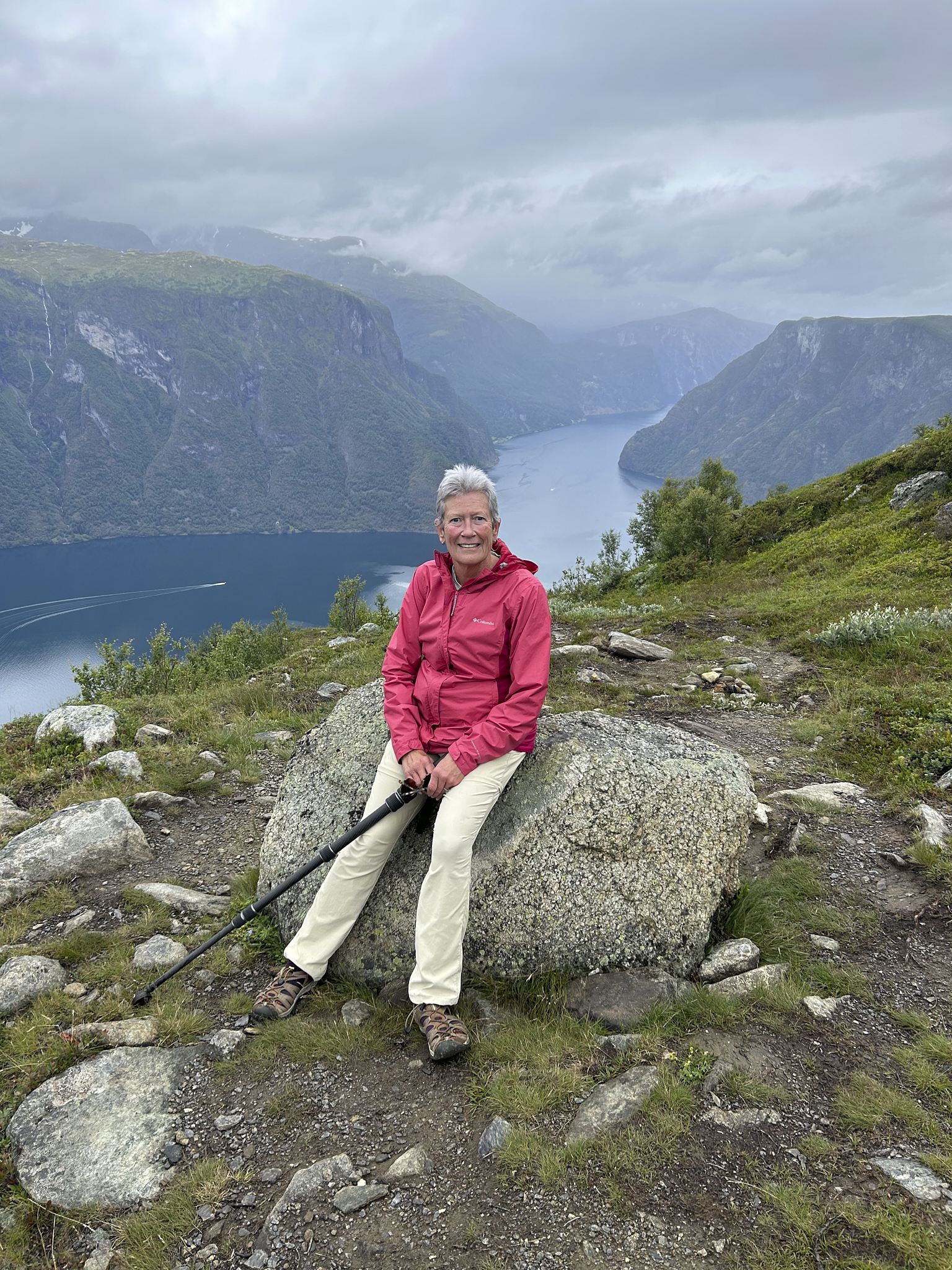
On the way to the top.
Vestland Fjords Day Three
On day three our goal is to travel north and reach the Geirangerfjord.
One thing we have determined is that Norway is very popular with tourists in 2023. We expected crowds, even large ones at times. Yet, the crowds and tour buses are materially larger than expected. The tourist spots, points of interest and roadside lookouts are, at-times, overrun with people and buses. This condition detracts greatly from the joy of witnessing such beauty. The shoreline of Nærøyfjord was overrun with people and their equipment and vehicles.
So, I decide to spend sunrise going back up the Snow Road to take in the fjords without the crowds. The plan works, I am alone for-the-most-part. The worlds longest tunnel was built to effectively replace the Snow Road from Aurlanvangen to Laerdal. The Snow Road is very cool and fun to drive. It is especially enjoyable to drive when no other cars or endless lines of large buses are on the road. The Snow Road is mostly single lane with pullouts rising out of the fjord.
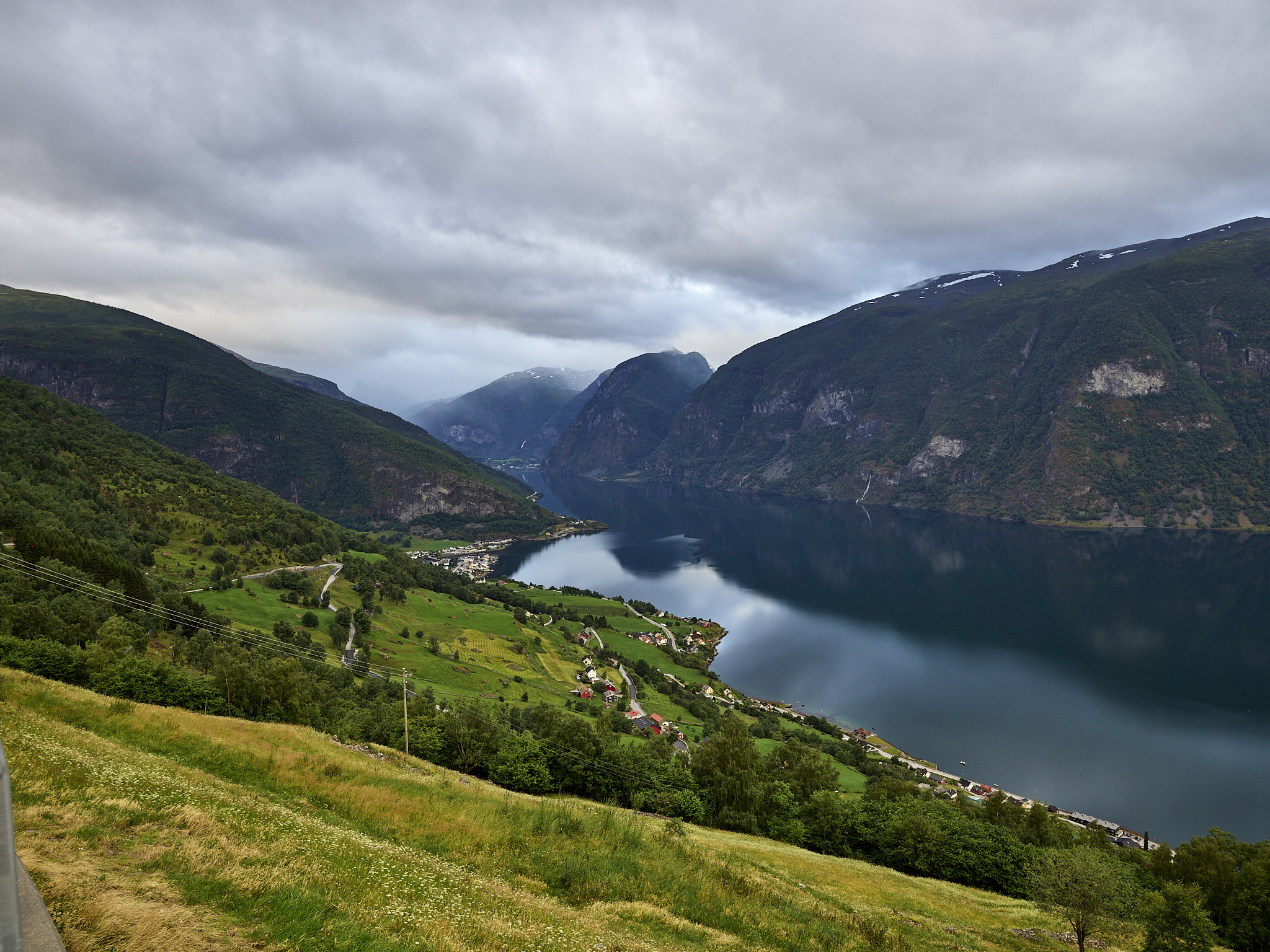
Looking back towards Flam.
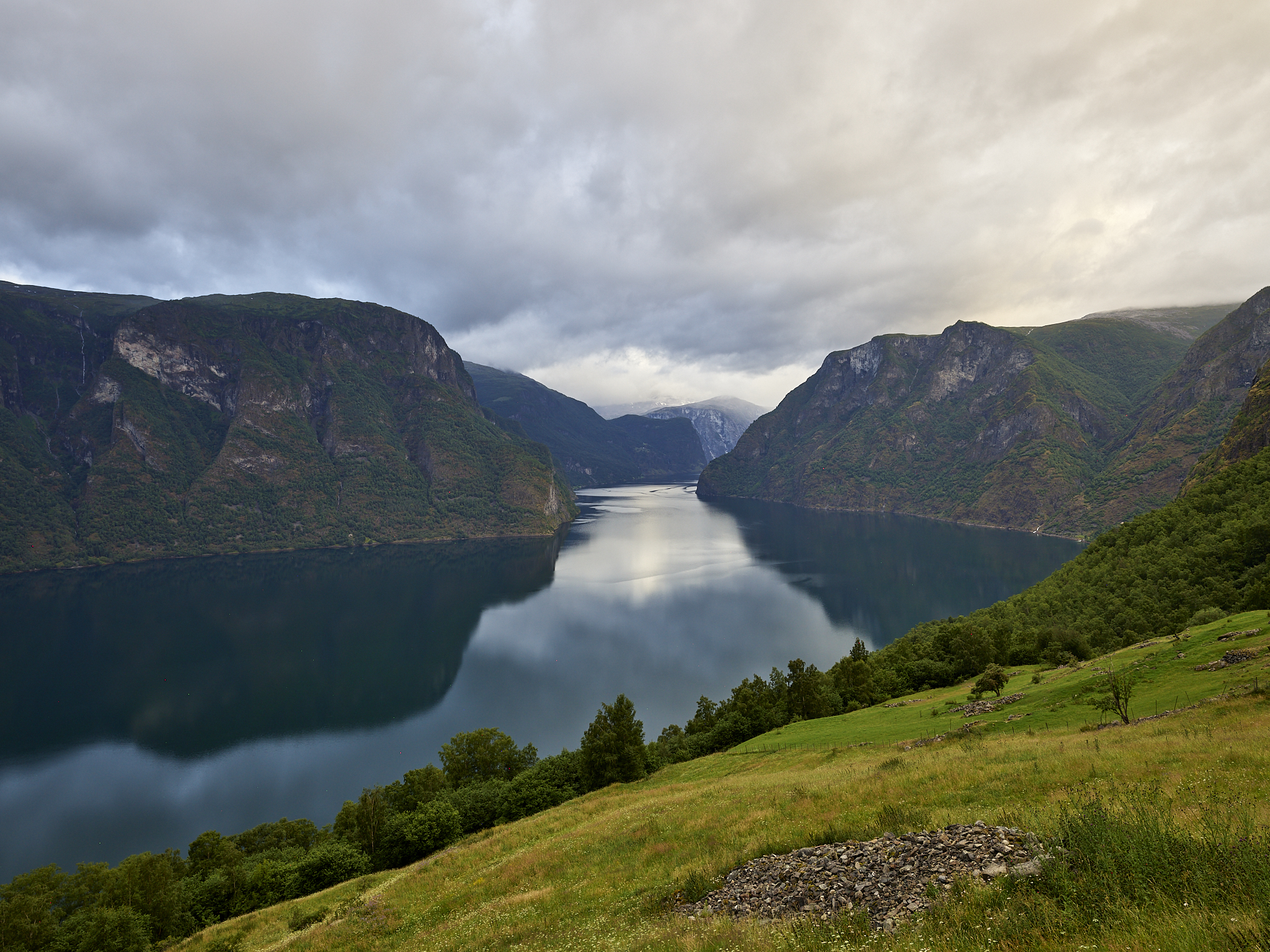
Looking up the fjord
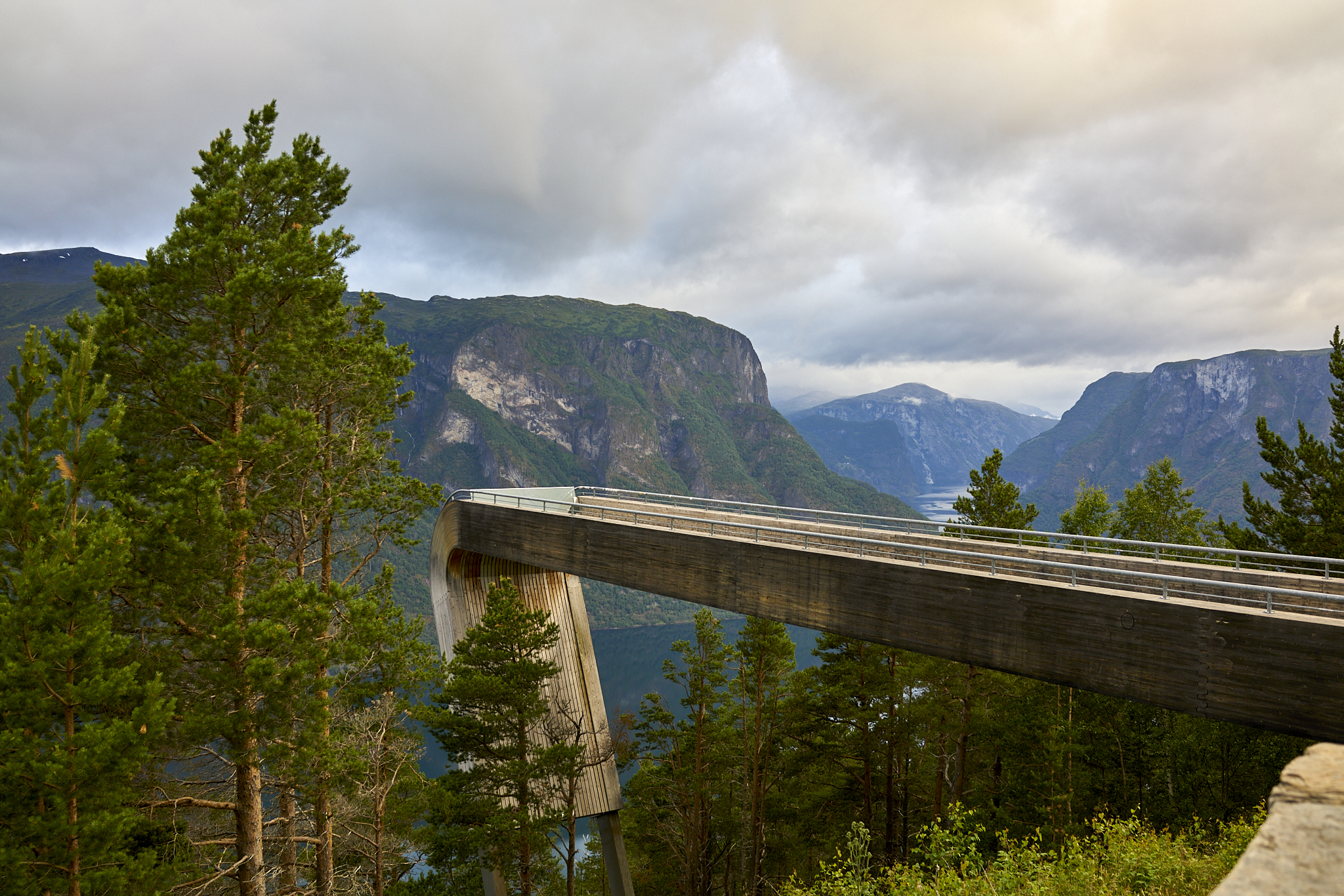
The famous Stegastein overlook.
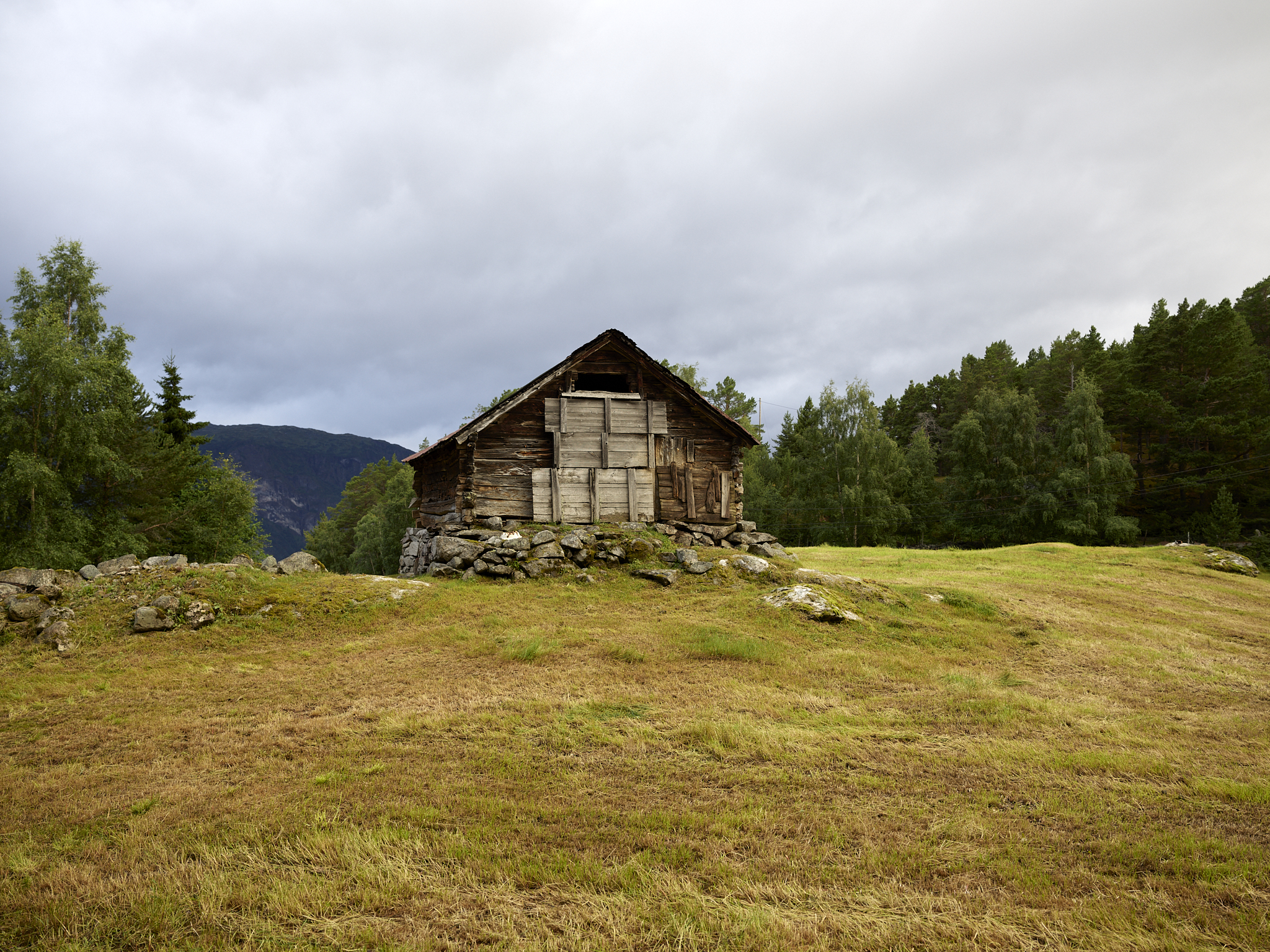
Building next to Stegastein.
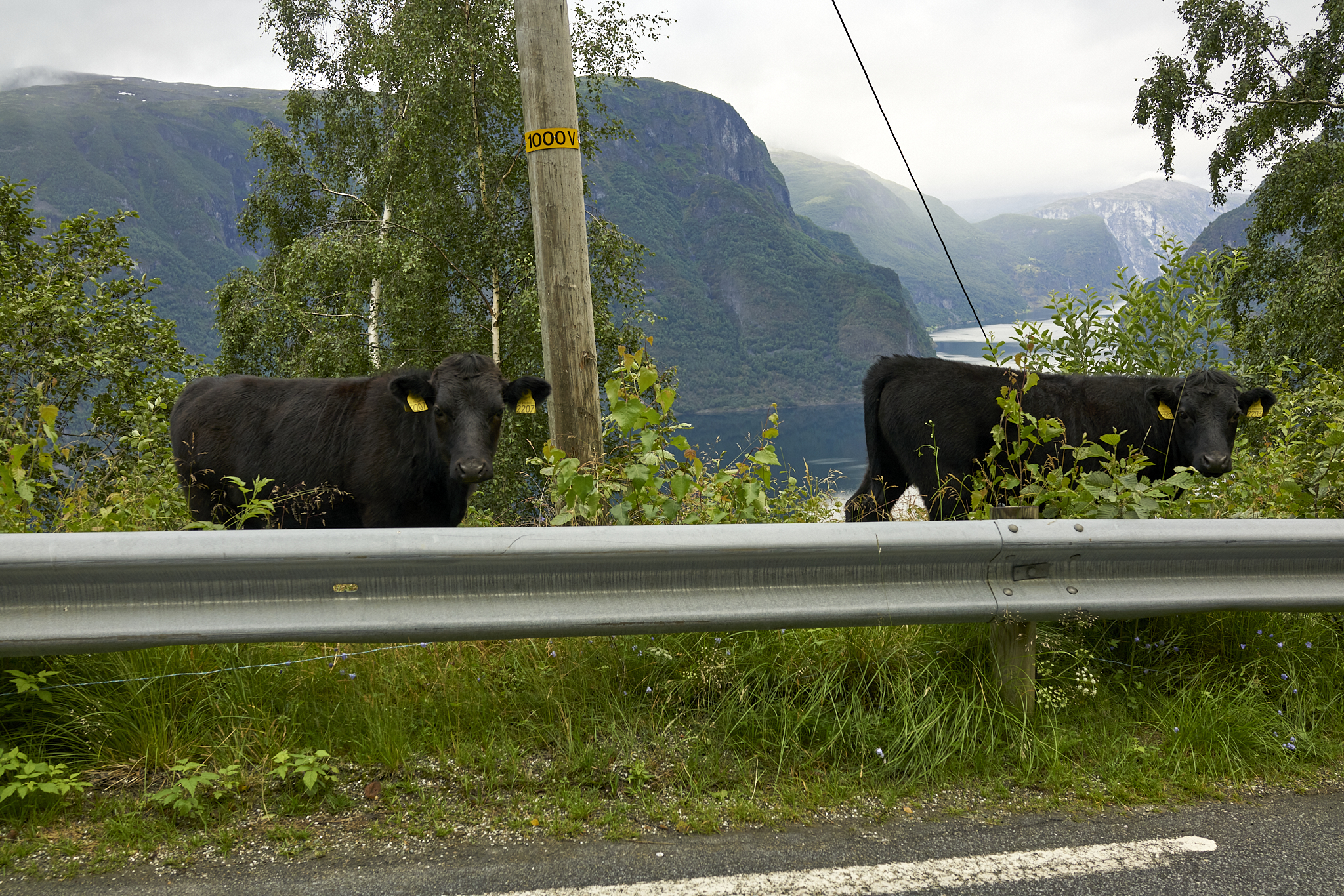
Cattle on the steep hillside.
The route to Geiranger encompasses five hours in the car. The worlds longest tunnel will be revisited. We will straddle the upper reaches of the Songnefjord. We will experience crossing an isolated mountain pass at what appears to be the end of the earth. However, at the end of the earth, there is a toll booth with credit card only payment.
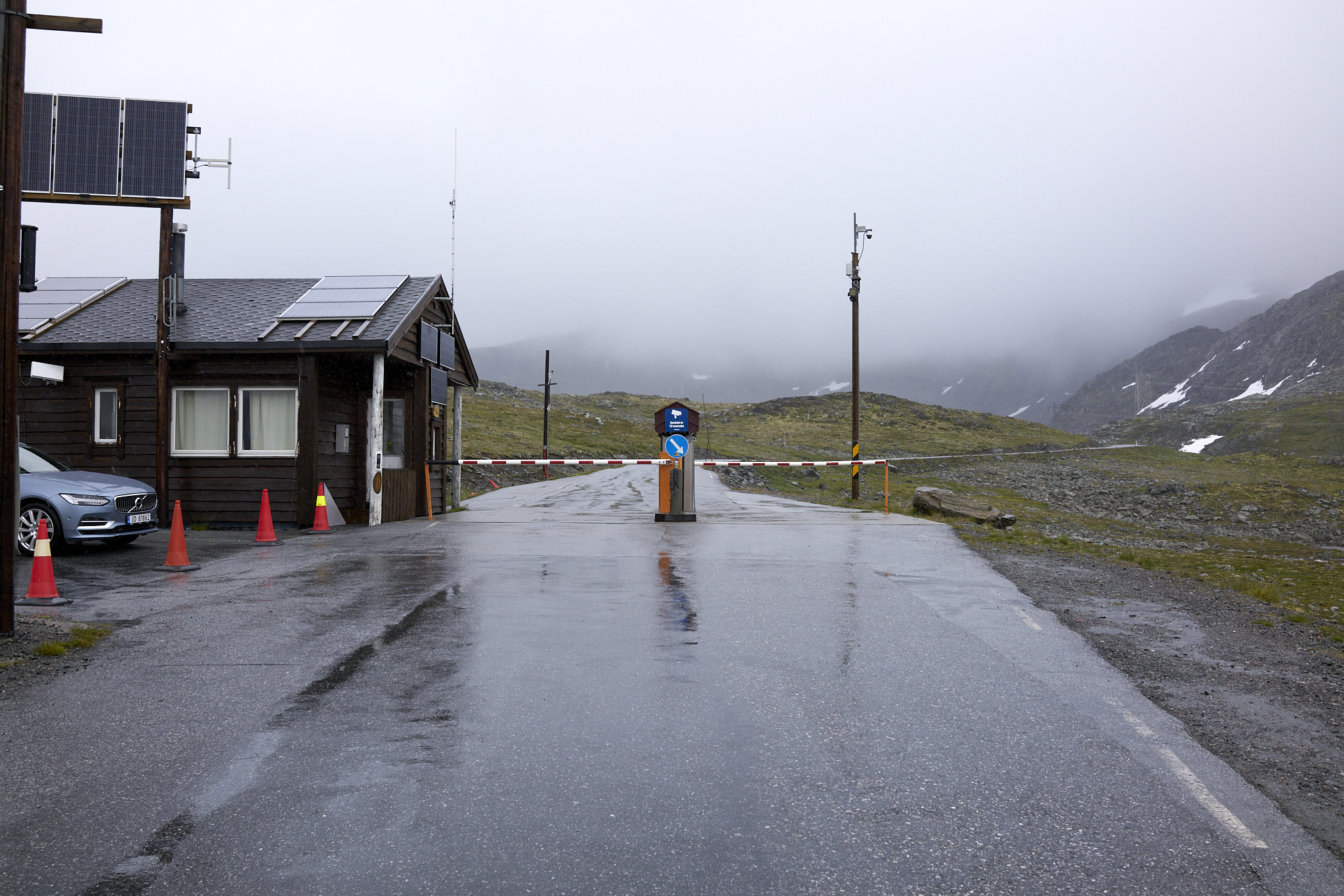
Toll Booth.
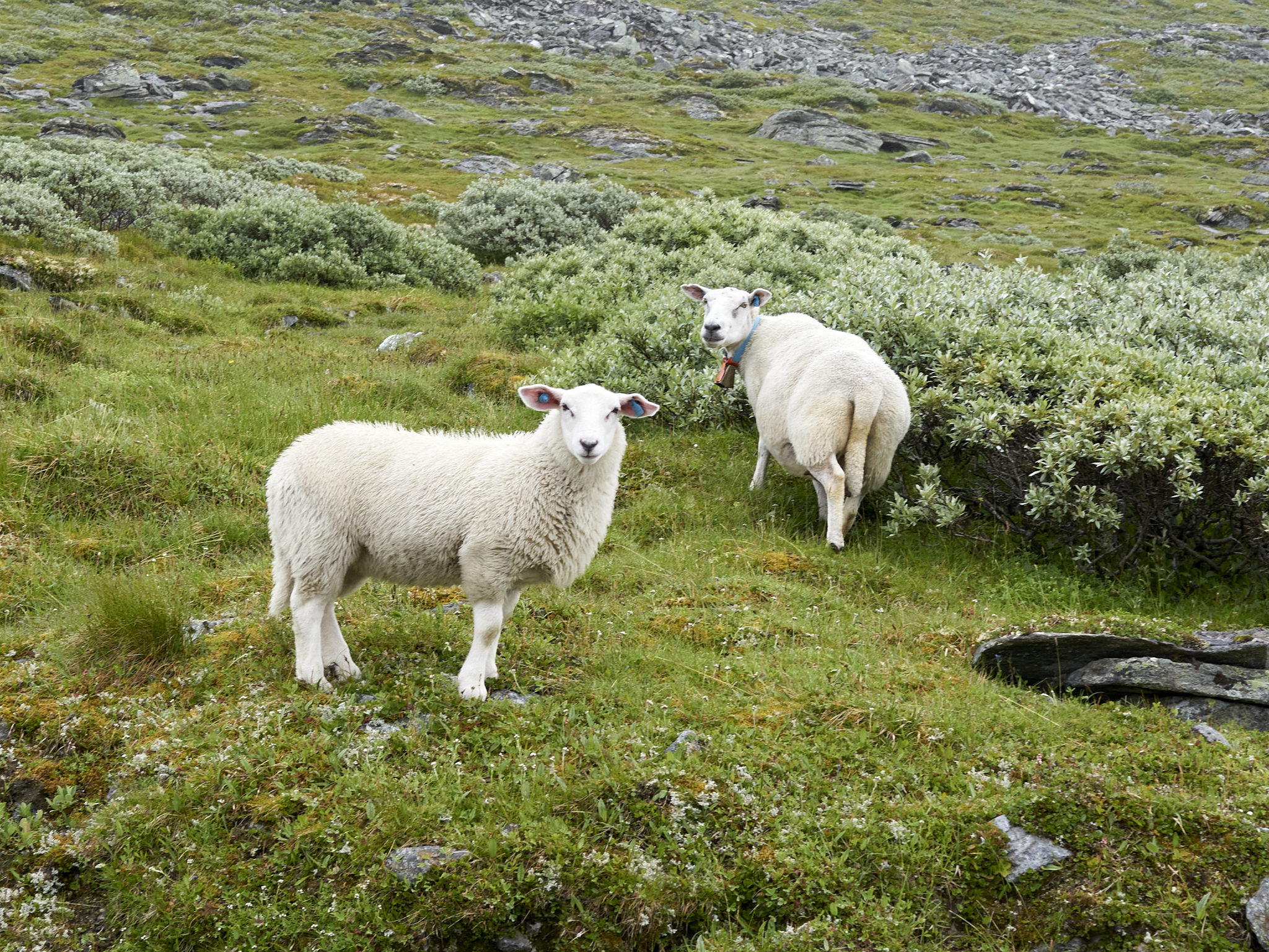
We have to pay and the booth is in our living room.
Store
After paying the toll we will navigate through what many consider to be Scandinavia’s most dramatic mountain range (Hurrungane) and 3rd tallest mountain (Store or Skagasølstind) all of which is located within the Jotunheimen National Park . However, it is raining and foggy the entire time.
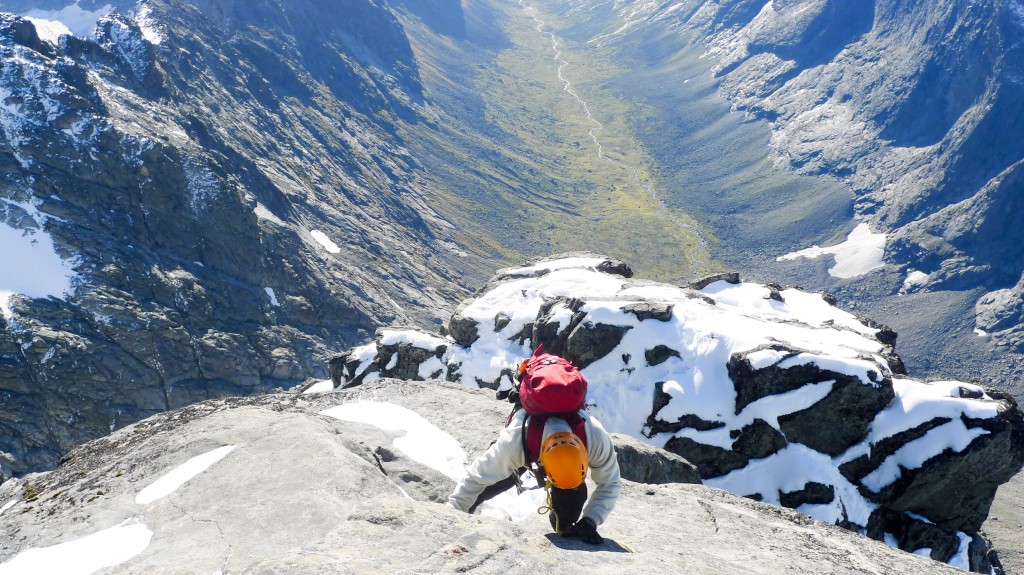
Store 1st climbed in 1876.
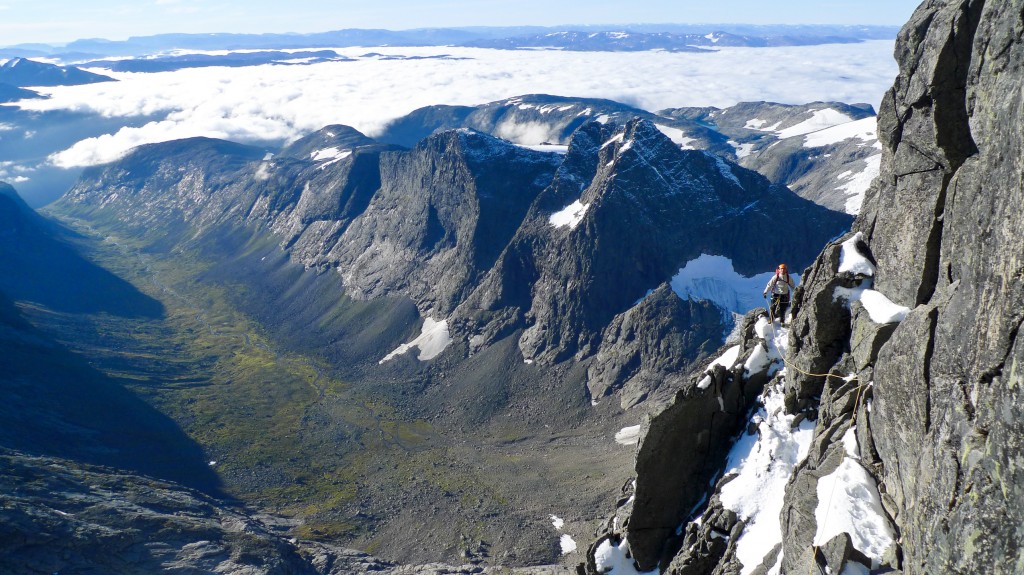
There is a hut called Bandet.
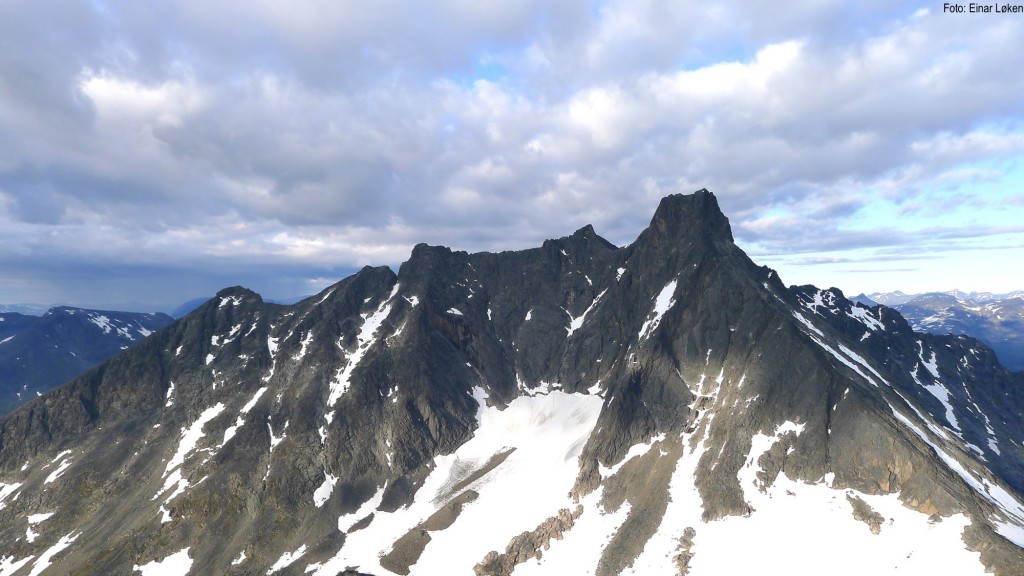
Original route: Slingsby’s 5.1 on Yosemite Scale.
The driving route has us heading northeast and descending to Lom. While rainy and overcast things become green again quickly. At Lom we eat at a bakery which had been suggested by Pol Solheim. After a bite to eat we head west.
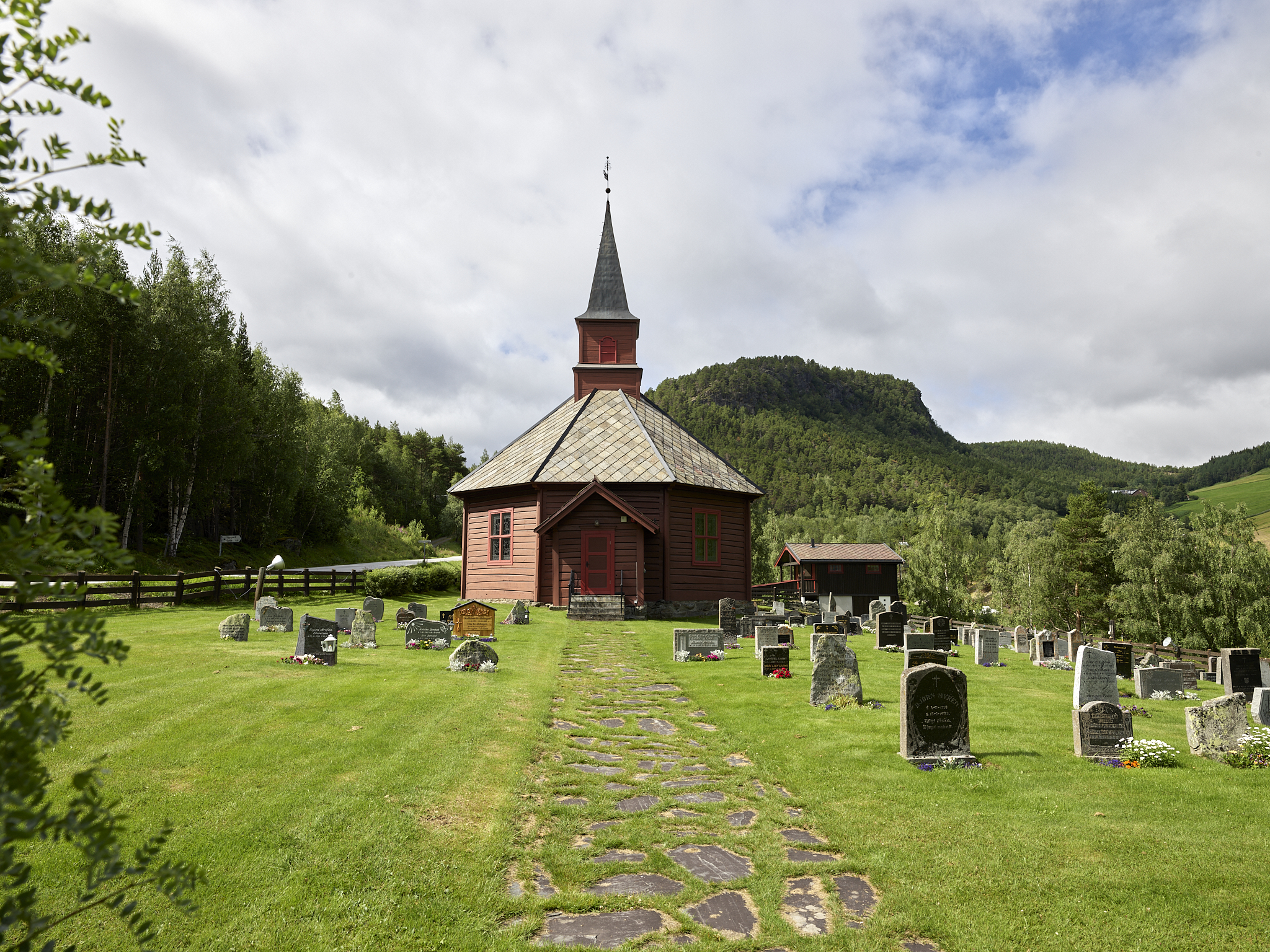
Lom Stave Church in Strind gard.
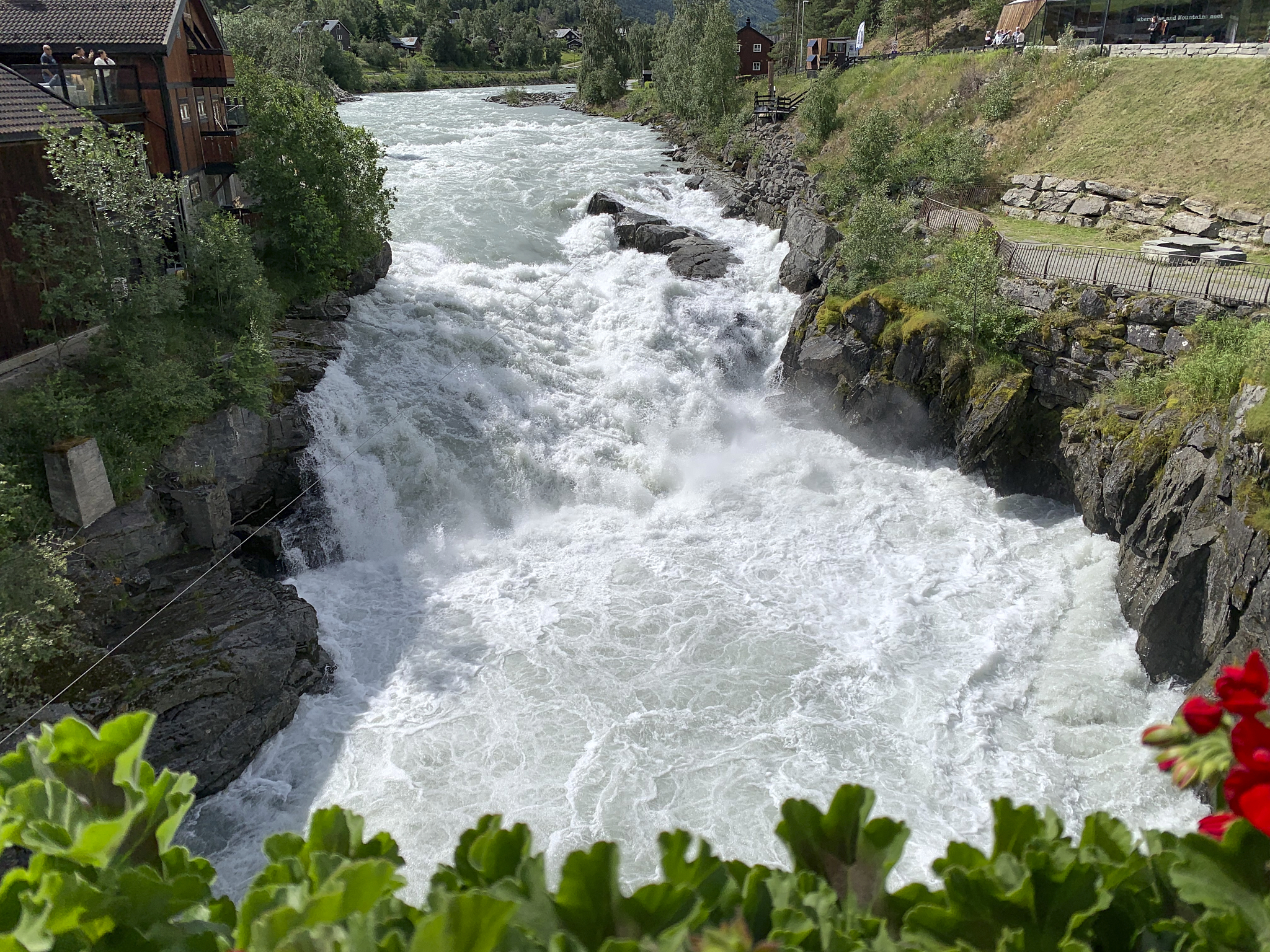
The falls at Lom.
The highway follows the Otta River west toward the Geirangerfjord. As we travel west on on highway 15 the change in the landscape is dramatic. At Lake Langvatnet the landscape is barren of trees. We head west on highway 63 and the landscape is even more barren. However, it is stunning. Lake Djupvatnet and Mount Djupvassegga. At 3,500 feet elevation (1,100 meters) lake and surrounding peaks are covered by glaciers.
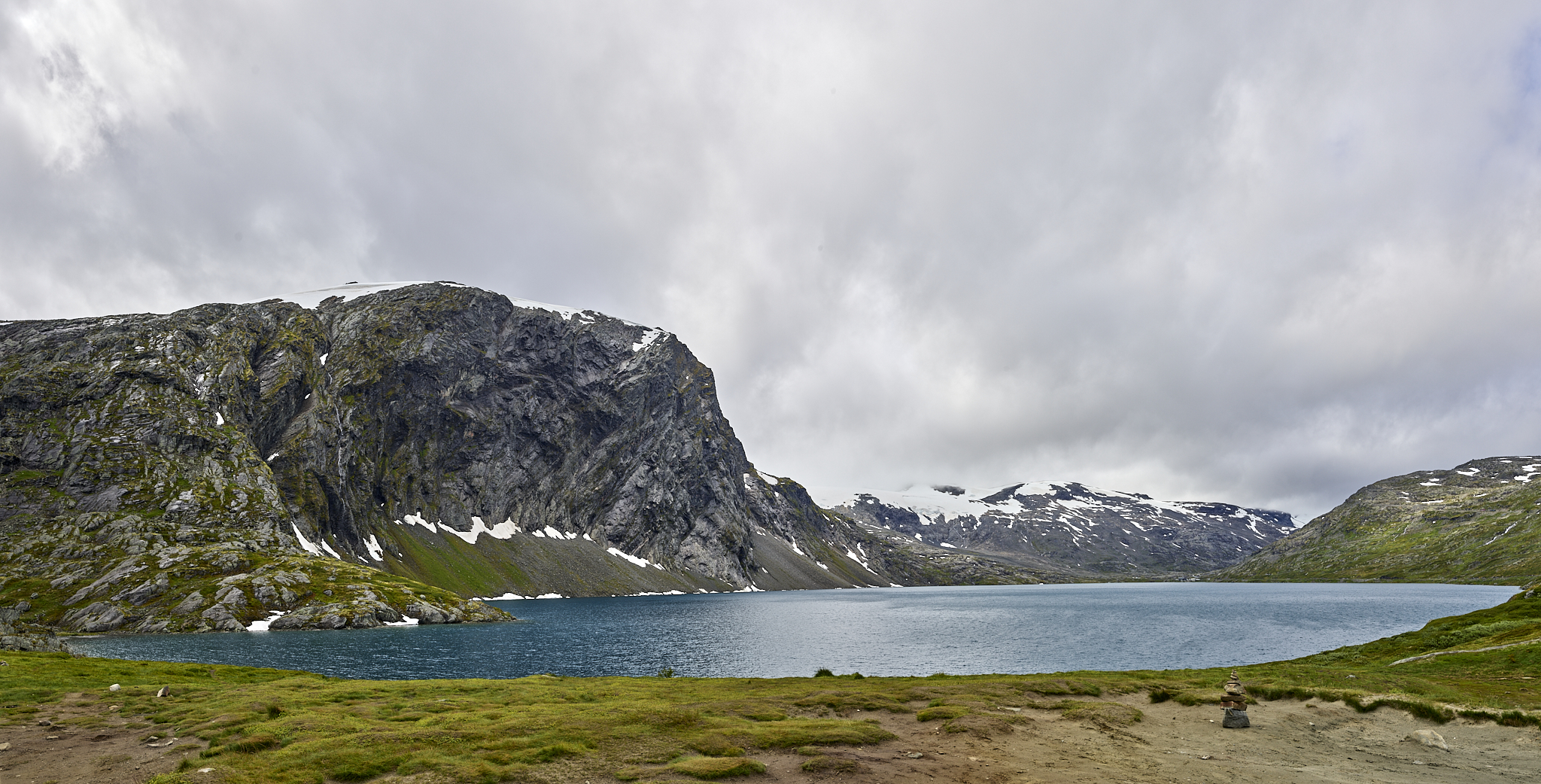
Lake Djupvatnet and Mount Djupvassegga. © Jeffrey H. Lubeck – MEST Art LLC – all rights reserved.
Once past the lake, highway 63 begins a steep descent down toward Geirangerfjord. The drop is fast and the curves are many. The roadbed is excellent, but it is mostly single lane with pullouts. The challenge for Linda and I, or any driver, is that the amount of traffic is as heavy as any I have experienced in a mountain setting. Large oversized buses and vehicles of all kinds are jockeying for the following:
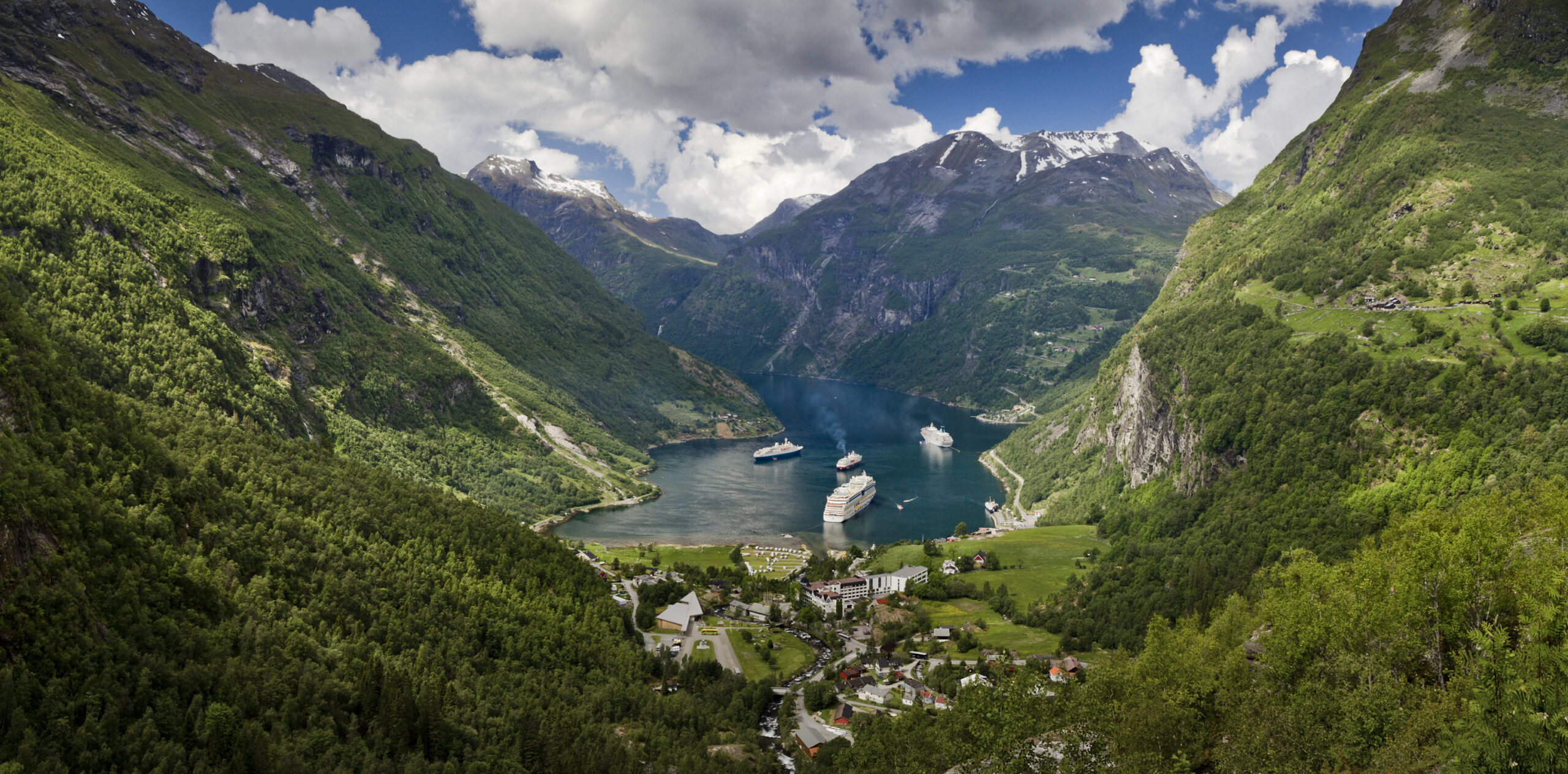
Descending to Geirangerfjord on highway 63. Courtesy, Simo Räsänen.
- Getting out of the valley
- Slowing down to a see a view.
- Pulling over to park for a view.
- Getting to the waterfront of the fjord.
Exacerbating the situation is that two of the largest cruise ships in the world (the Iona with room for 6,600 passengers and MSC Euriba with room for 6,300 passengers) are in port. Passengers have left the ships and are leaving the valley, and other passengers are heading down the valley to board the ship – almost all in oversized buses. It should be noted that Geirangerfjord handles about 180-200 ships in a summer season. It is the 3rd busiest port in Norway. The setting is best described as one of chaos or anarchy. People are scrambling to get on or off buses. One mother leading three children on foot, and at full speed (apparently attempting to beat a surging crowd of others) run out onto the road, into traffic and directly in front our our car without looking. I honestly do not know how we did not hit them. Luckily we were travelling at about 20 KPH.
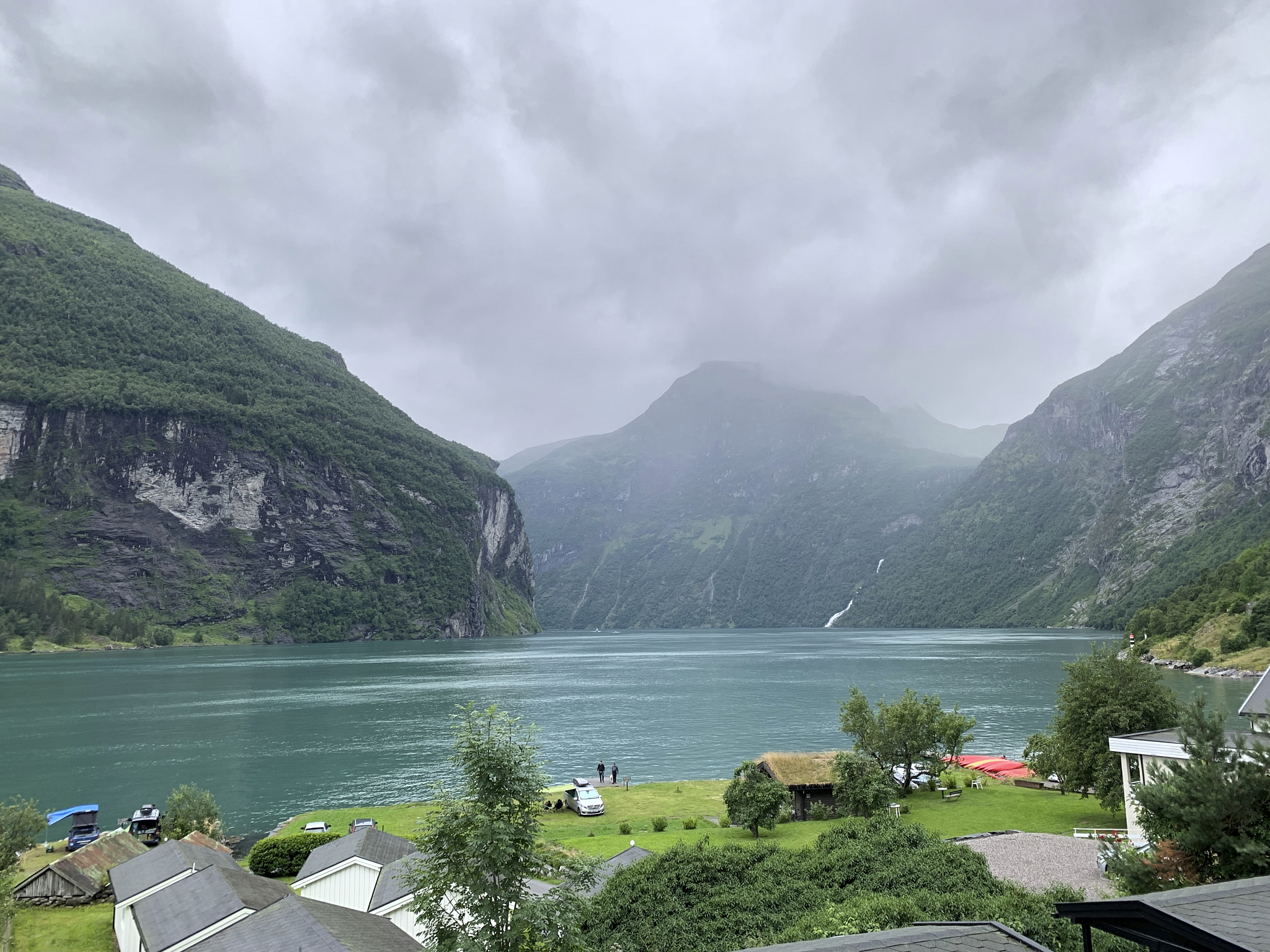
The Geirangerfjord from our hotel room (403) at the Grand Fjord Hotel.
Ironically, in a few hours, the ships will have departed and the Geriangerfjord is practically empty and peaceful. The sun moves behind the mountains and the setting is nothing short of stunning.
Similar to the Aurlandsfjord, there are essentially no night spots or real restaurants in the harbor at Geirangerfjord. The restaurant at the hotel proves to be superb.
Another Great Hike
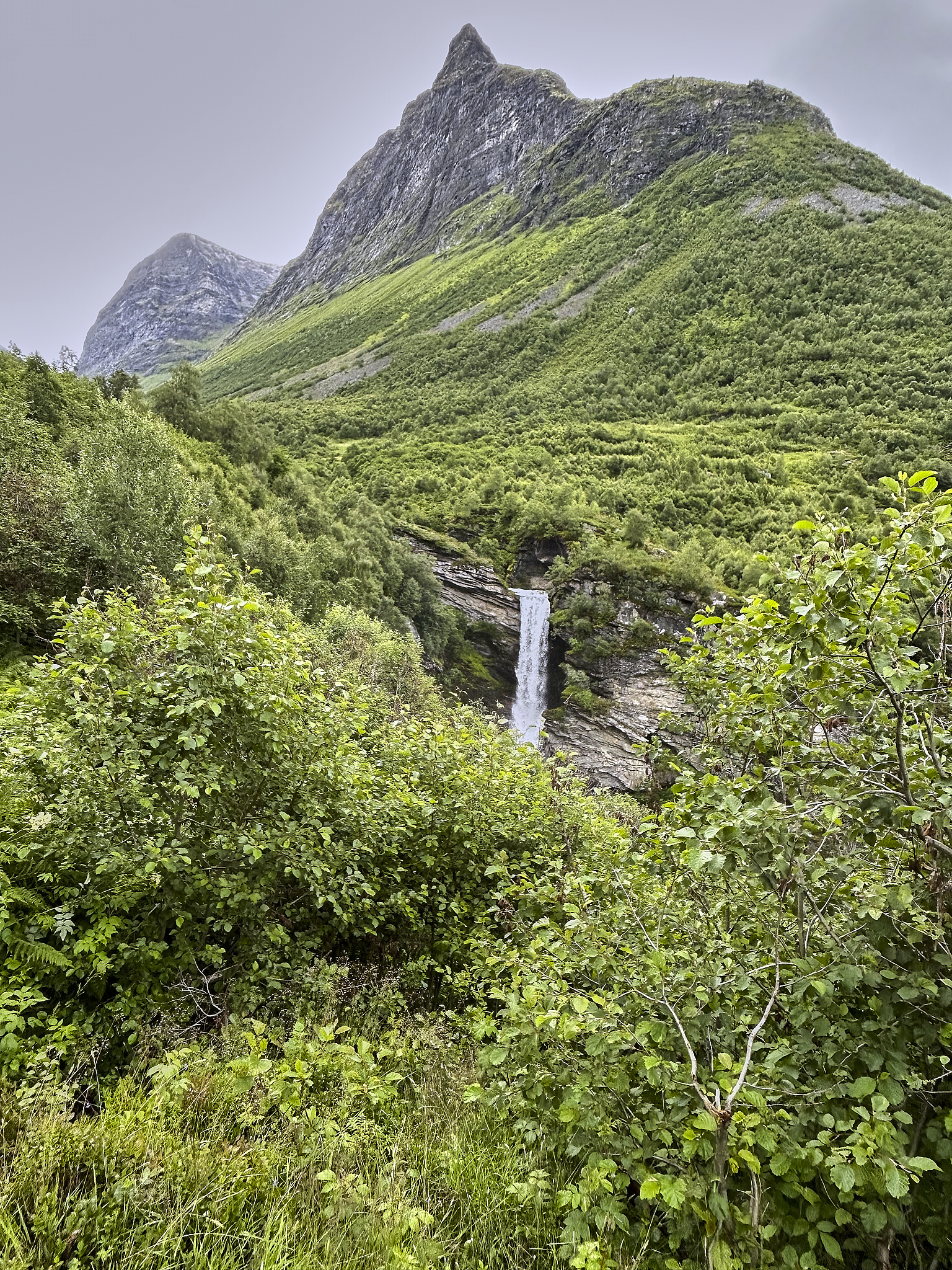
Storsæterfossen
Linda and I rise early so that we can get in a great hike and avoid crowds. We establish that a hike to Storsæterfossen is our best bet. While relatively steep, the views are wonderful. We climb to the falls and mountain peak and return to our car without seeing another soul. Technically, we encounter two women starting the hike as we approach our car.
The Best Laid Plans…
Our plan is to have some breakfast and head back to Oslo retracing some of our drive from the previous day. During breakfast we are encouraged by our waitress (from dinner last night and breakfast this morning) to drive up to the overlook at Ørnesvingen before heading back. the ascent starts at our hotel. We follow her advice and head to the overlook after checking out of the hotel. The view is remarkable.
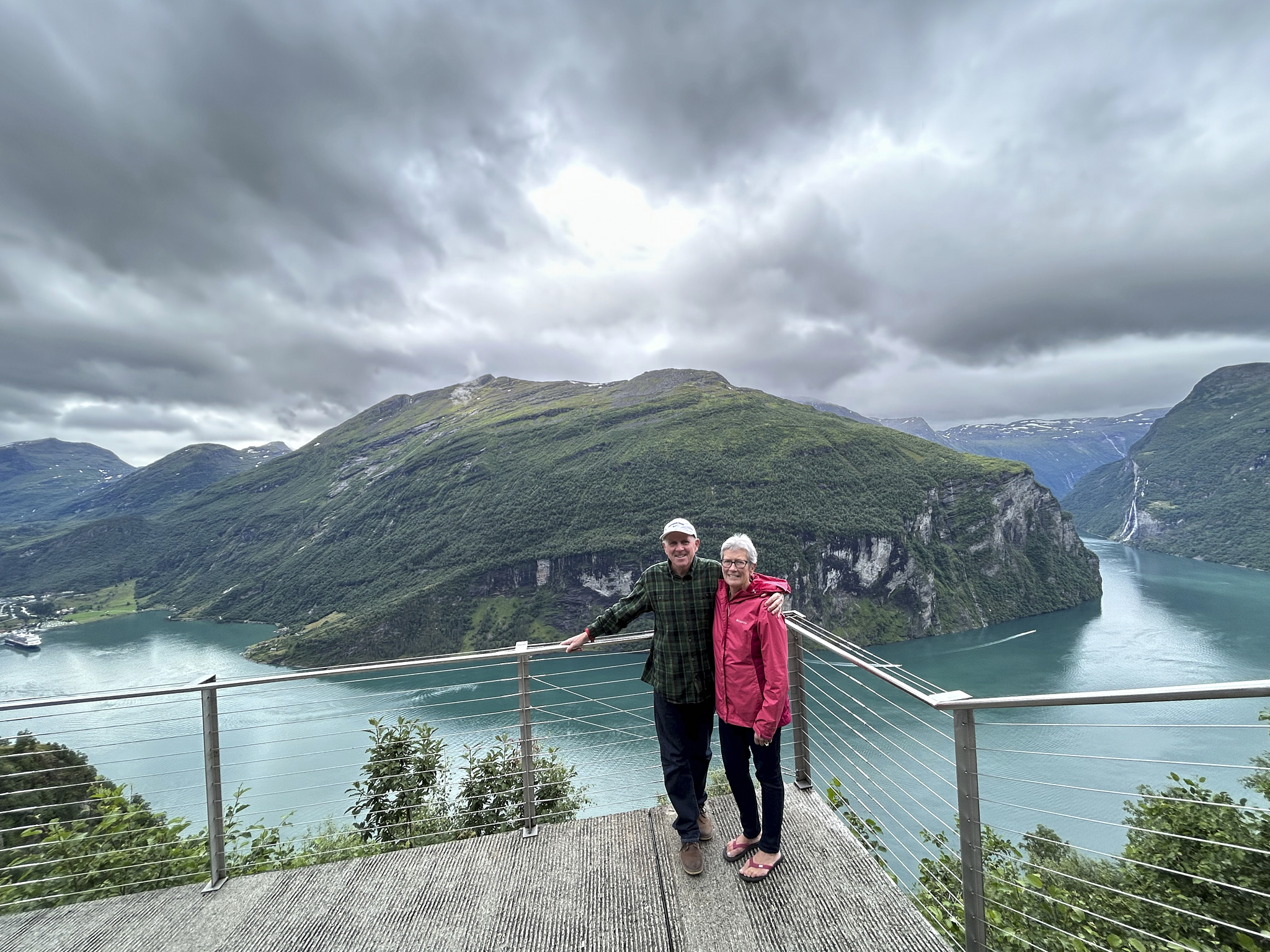
The overlook at Ørnesvingen.
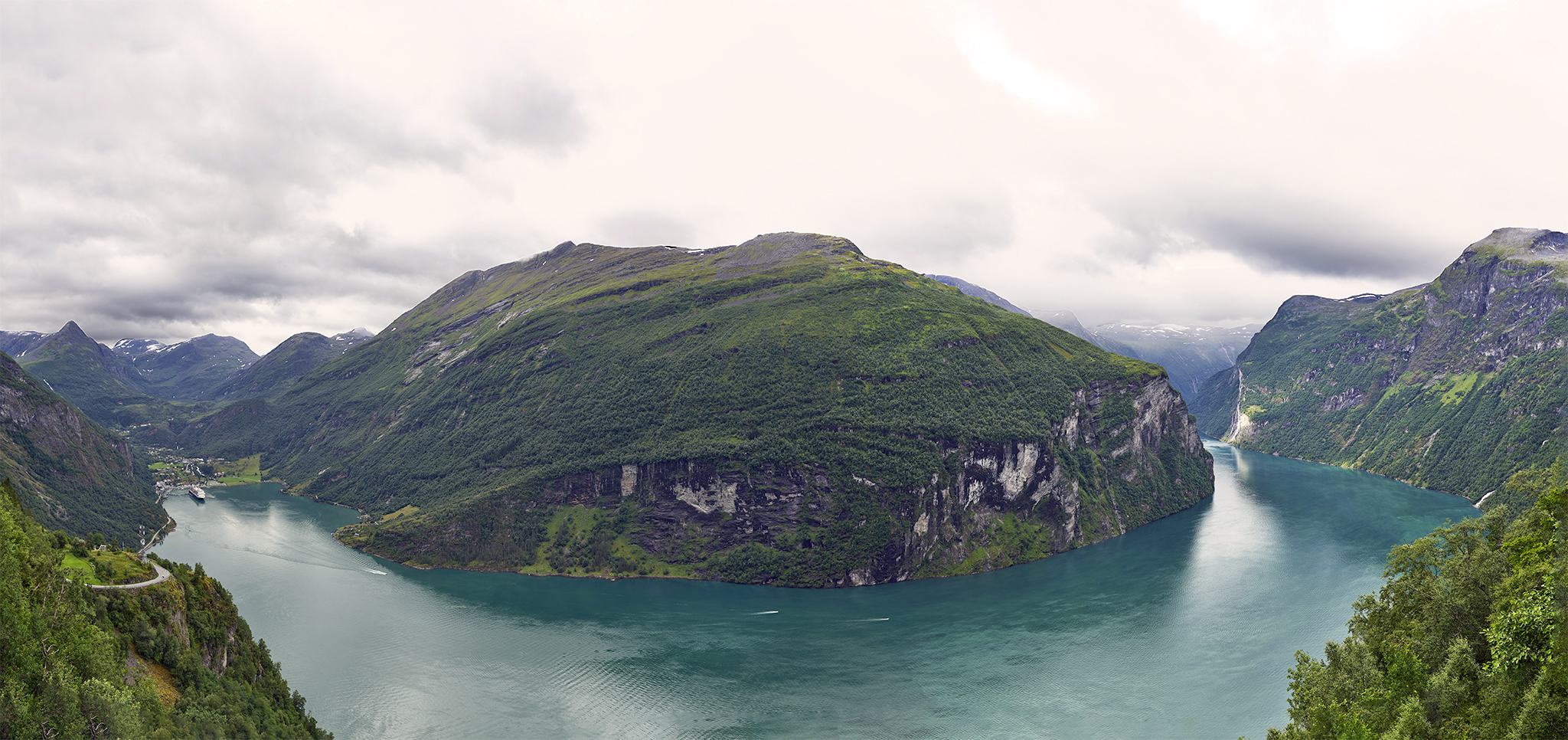
The Geirangerfjord from Ørnesvingen. © Jeffrey H. Lubeck – MESH Art LLC – all rights reserved.
While at the overlook, we take the time to read all of the information signs provided for tourists to consume. We also learn Ørnesvingen is part of “The Eagle Road” down the other side to Eidsdal. We also learn that the route is part of the 104 kilometer long Geiranger-Trollstigen National Tourist Route. The Norwegians claim this is the “most beautiful route in all of the country and perhaps the world.” Who are we to argue?
If we change our plans we will add the most difficult part of “The Eagle Road”, a ferry ride, new mountain ranges, fjords and about 200 kilometers to our day. It also means we will get back to the Solheim house at 7:30PM instead of 3:30PM. We decide to go-for-it.
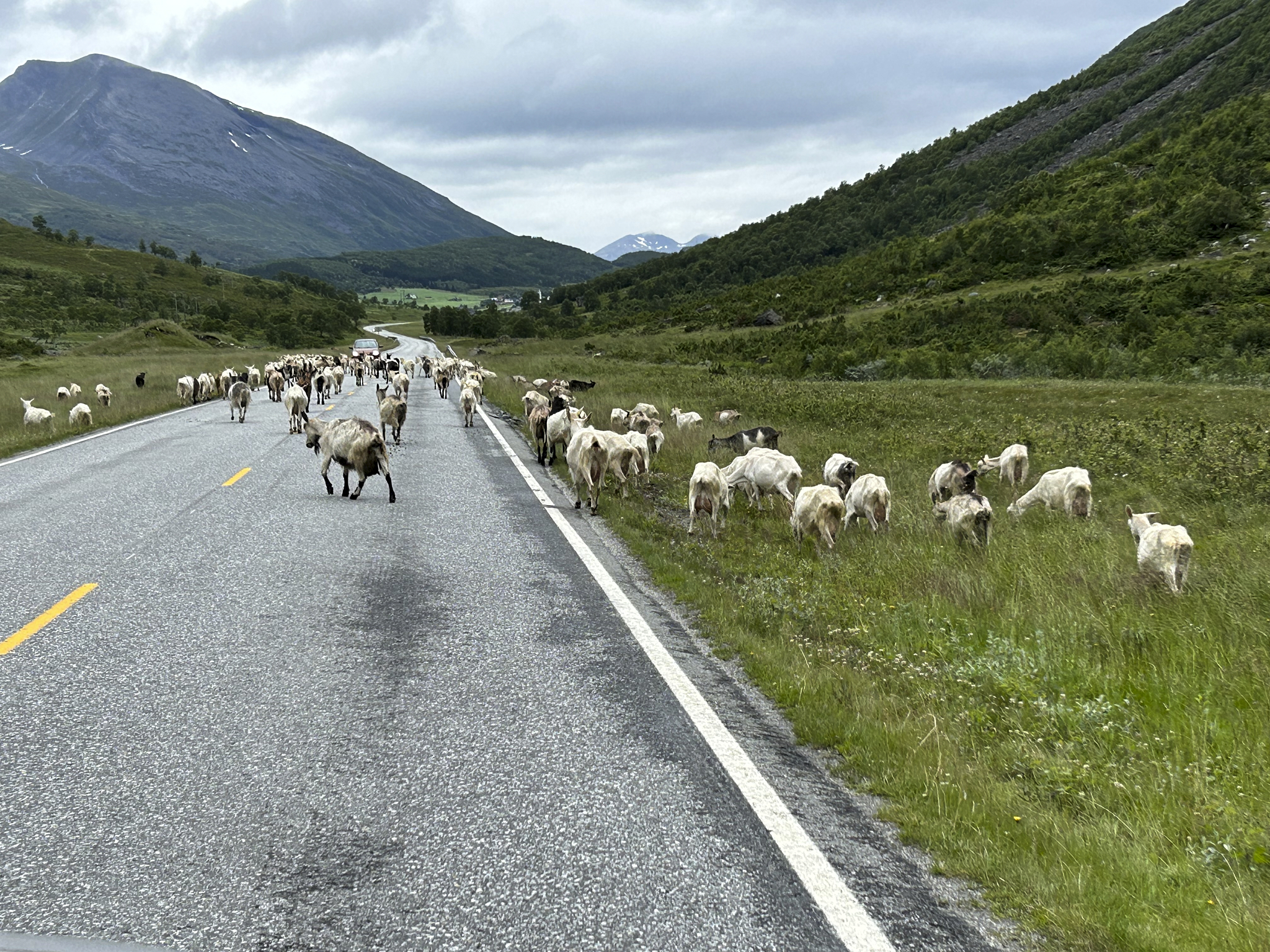
Goats on the road.
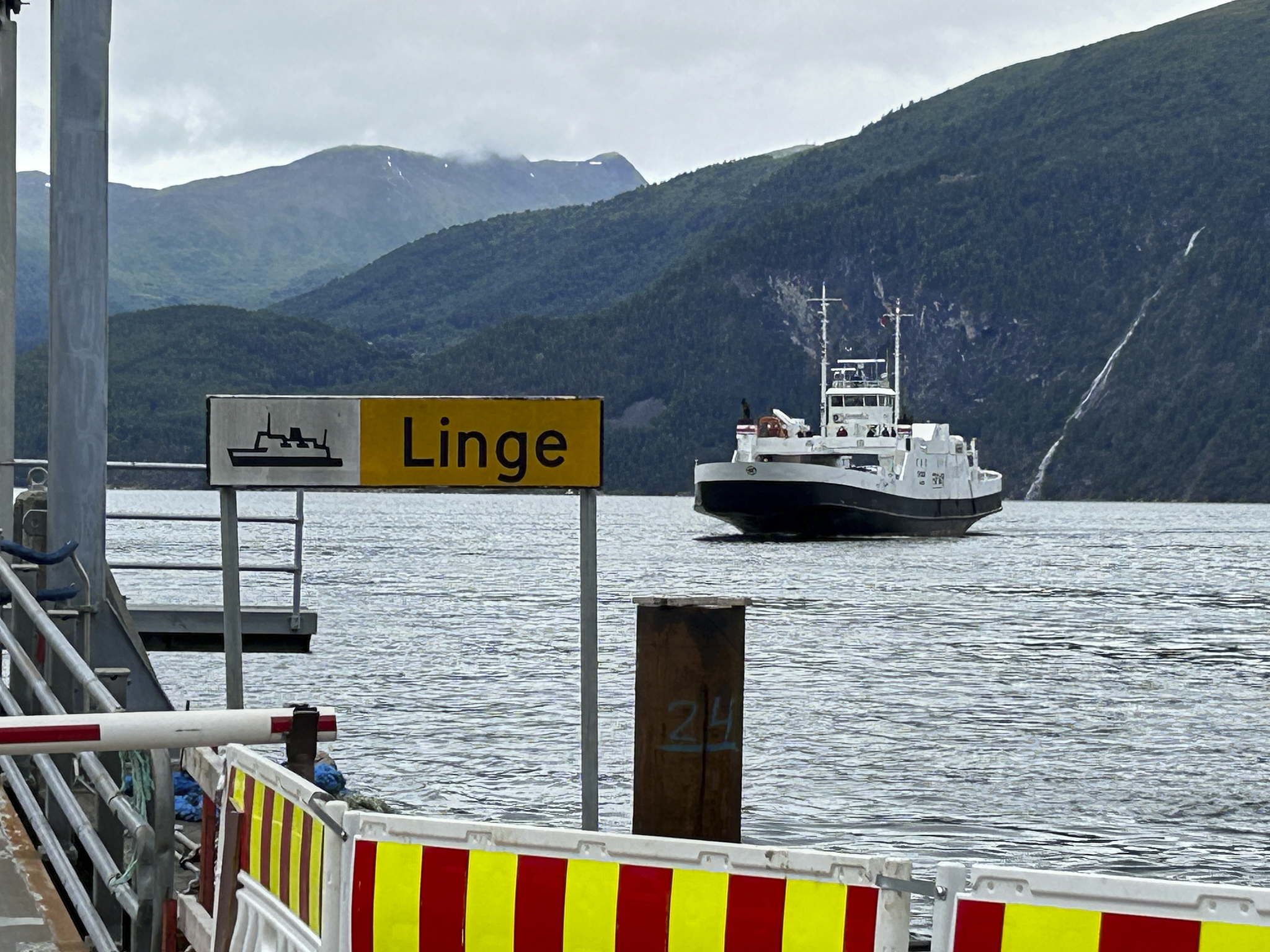
A ferry ride.
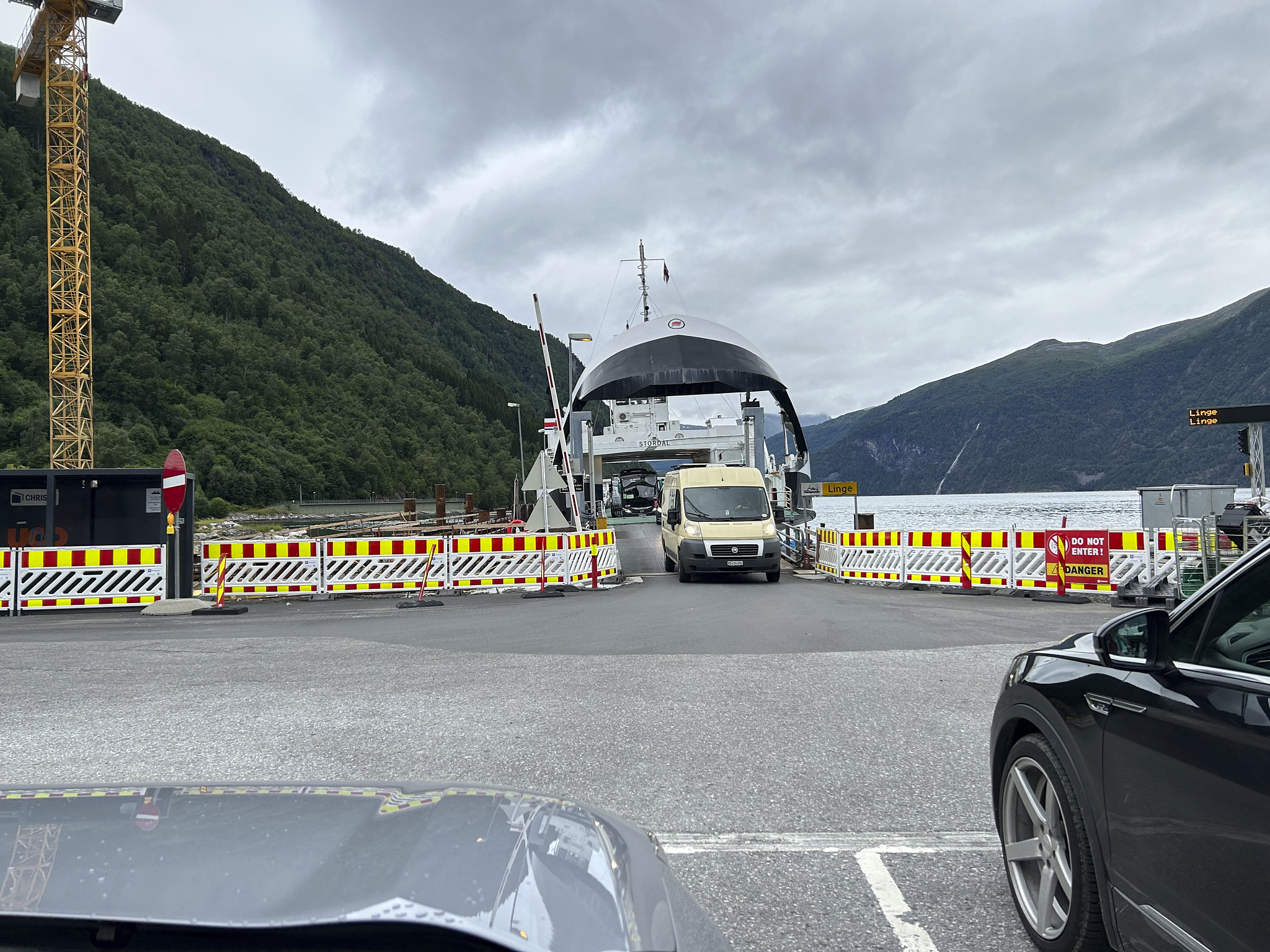
About to board.
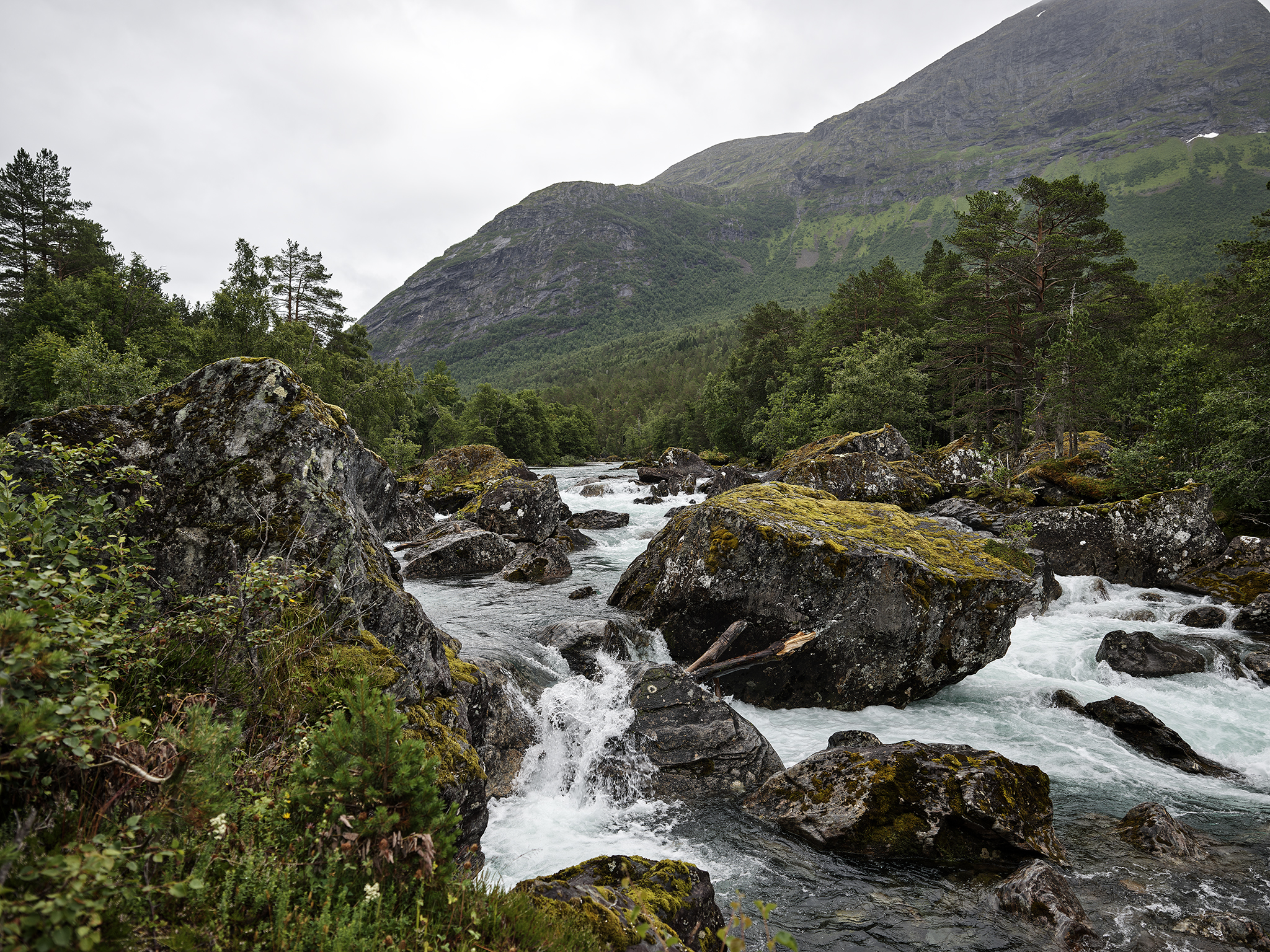
Stream, rivers, falls at every turn
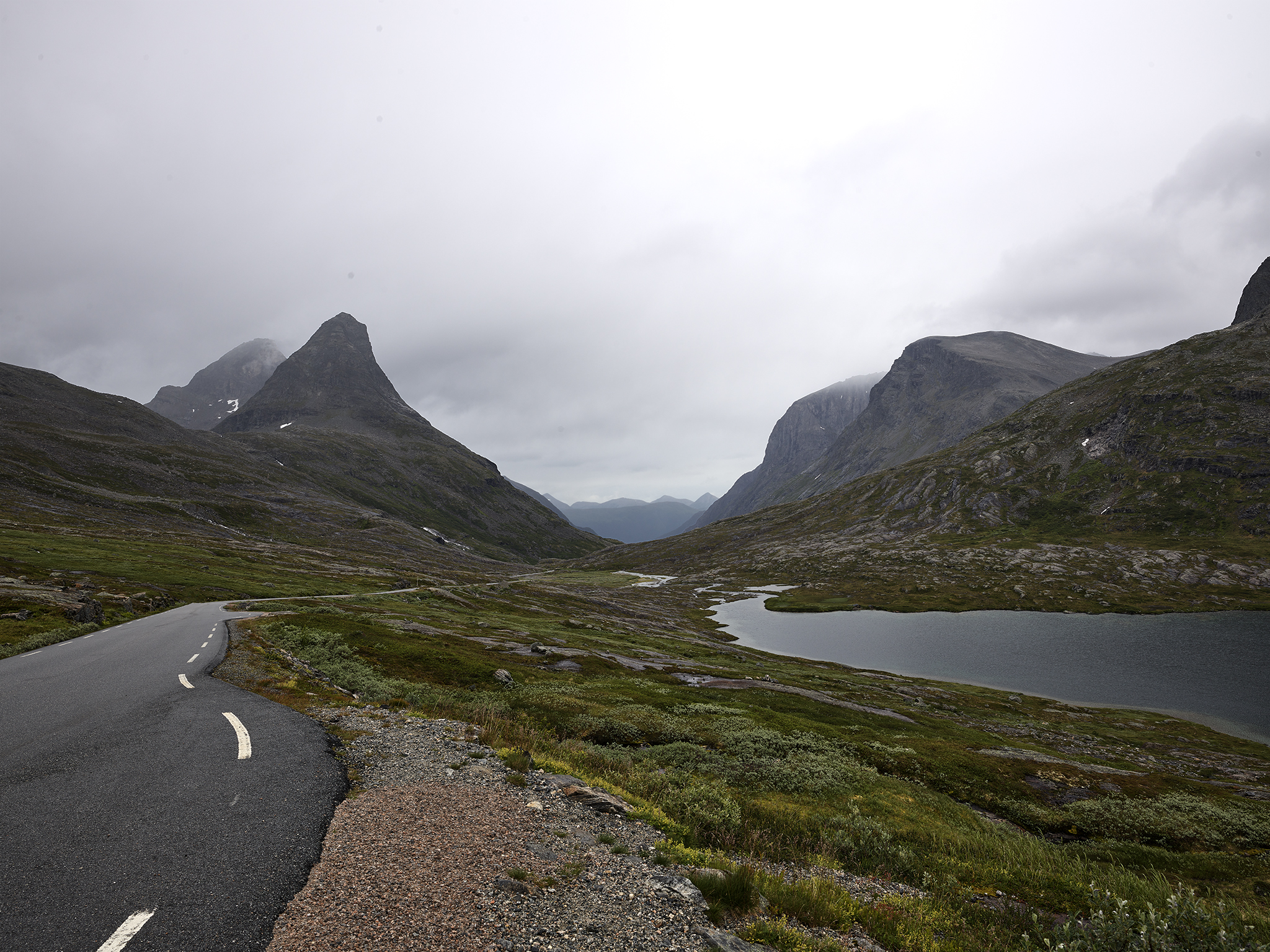
Endless ups and downs with terrain such as this in the foreground.
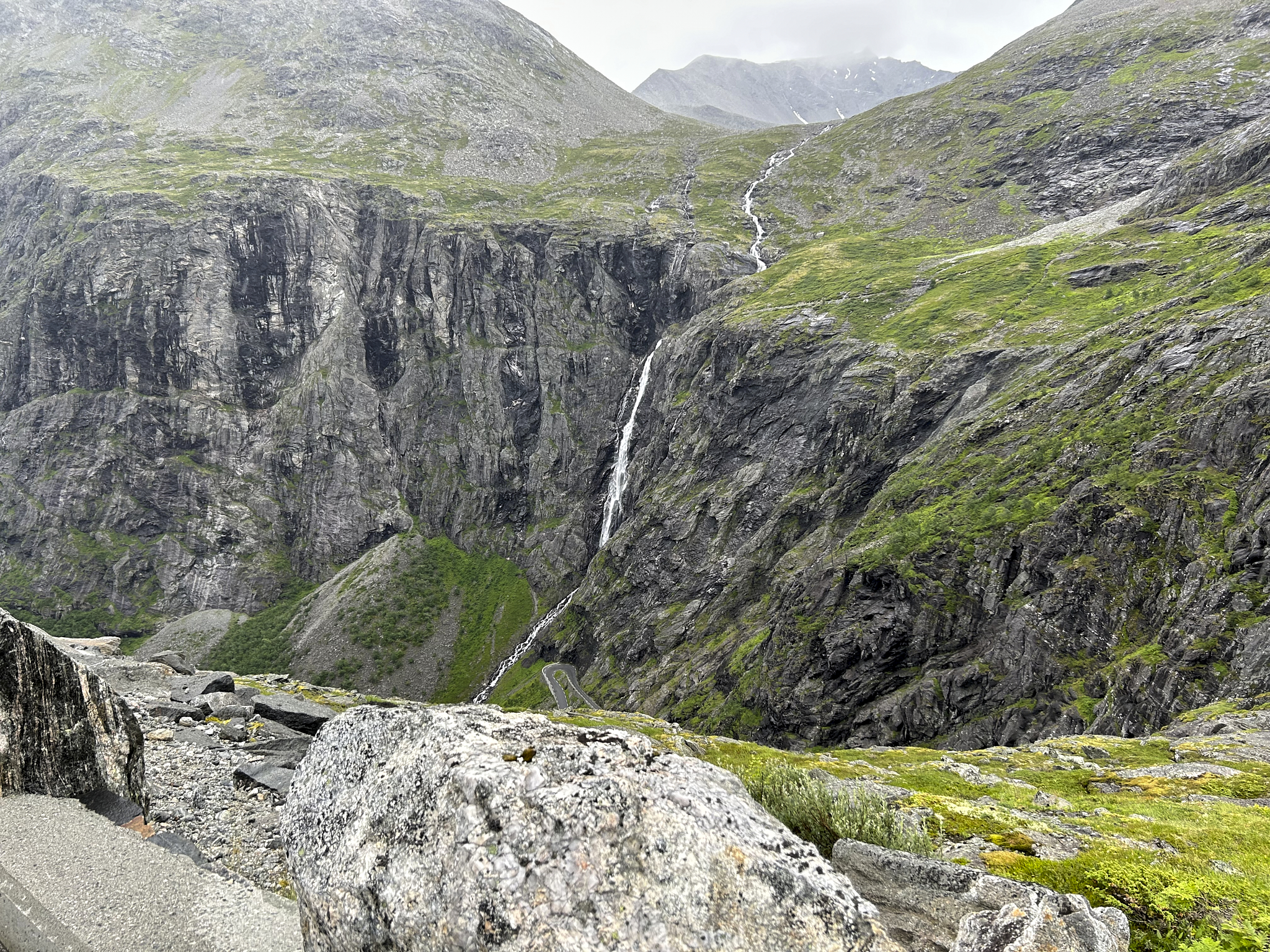
Forbidding terrain.
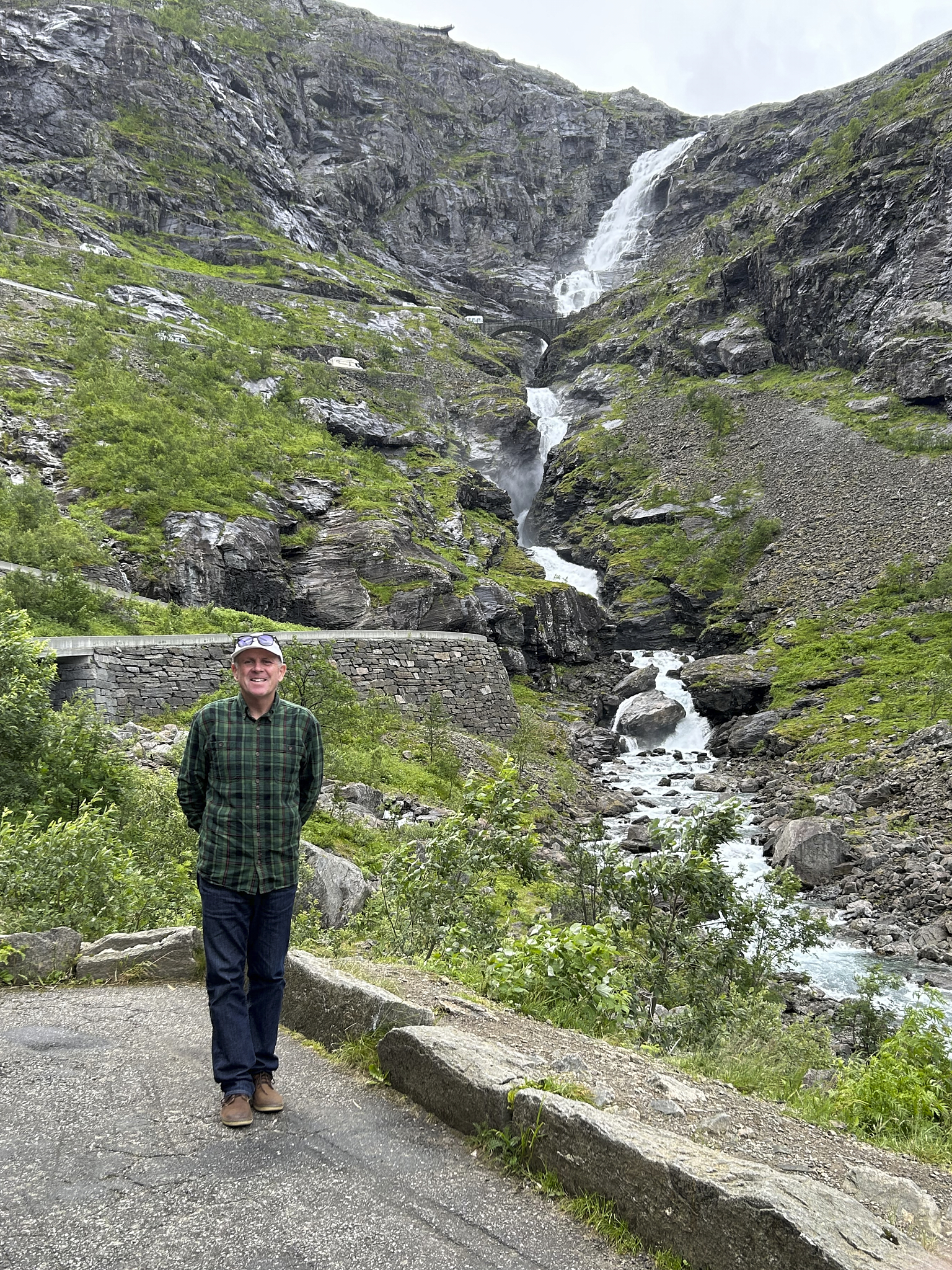
Looking back at what we just drove down.
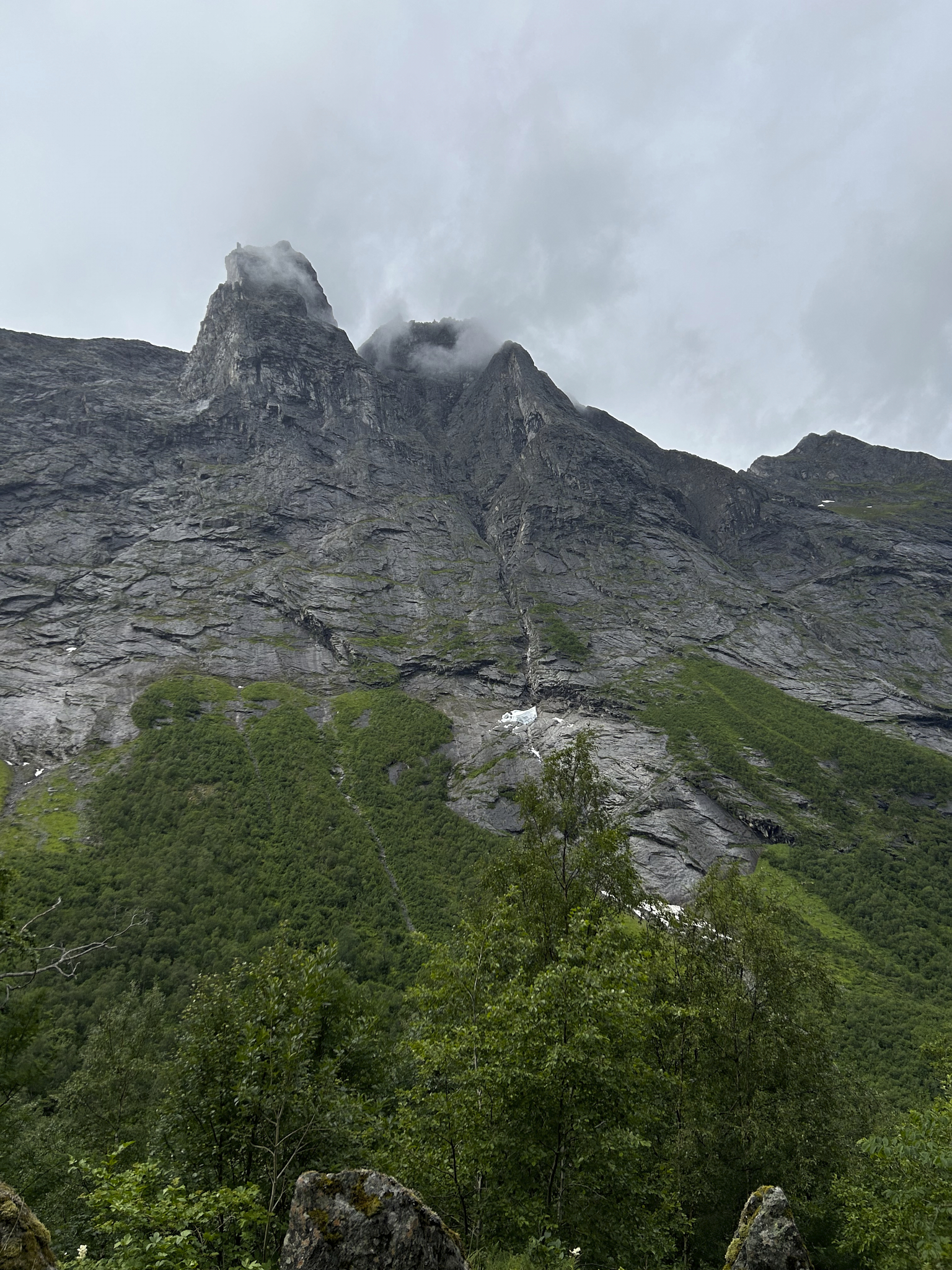
The views of the peaks of Bispen, Kongen, and Dronninga are breathtaking.
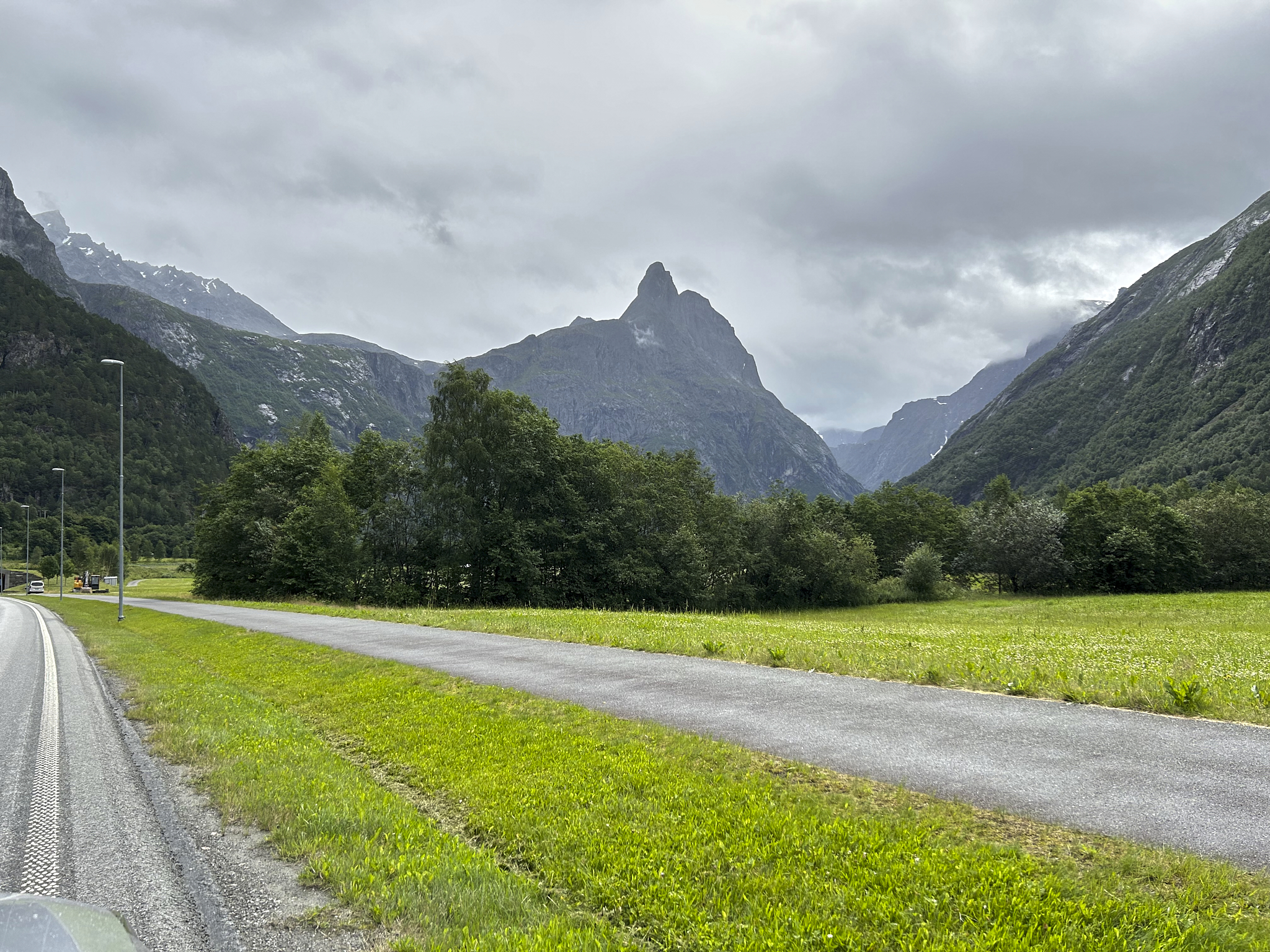
We begin our return to Oslo at Andalsnes. The peak before us is Romsdalshornet.
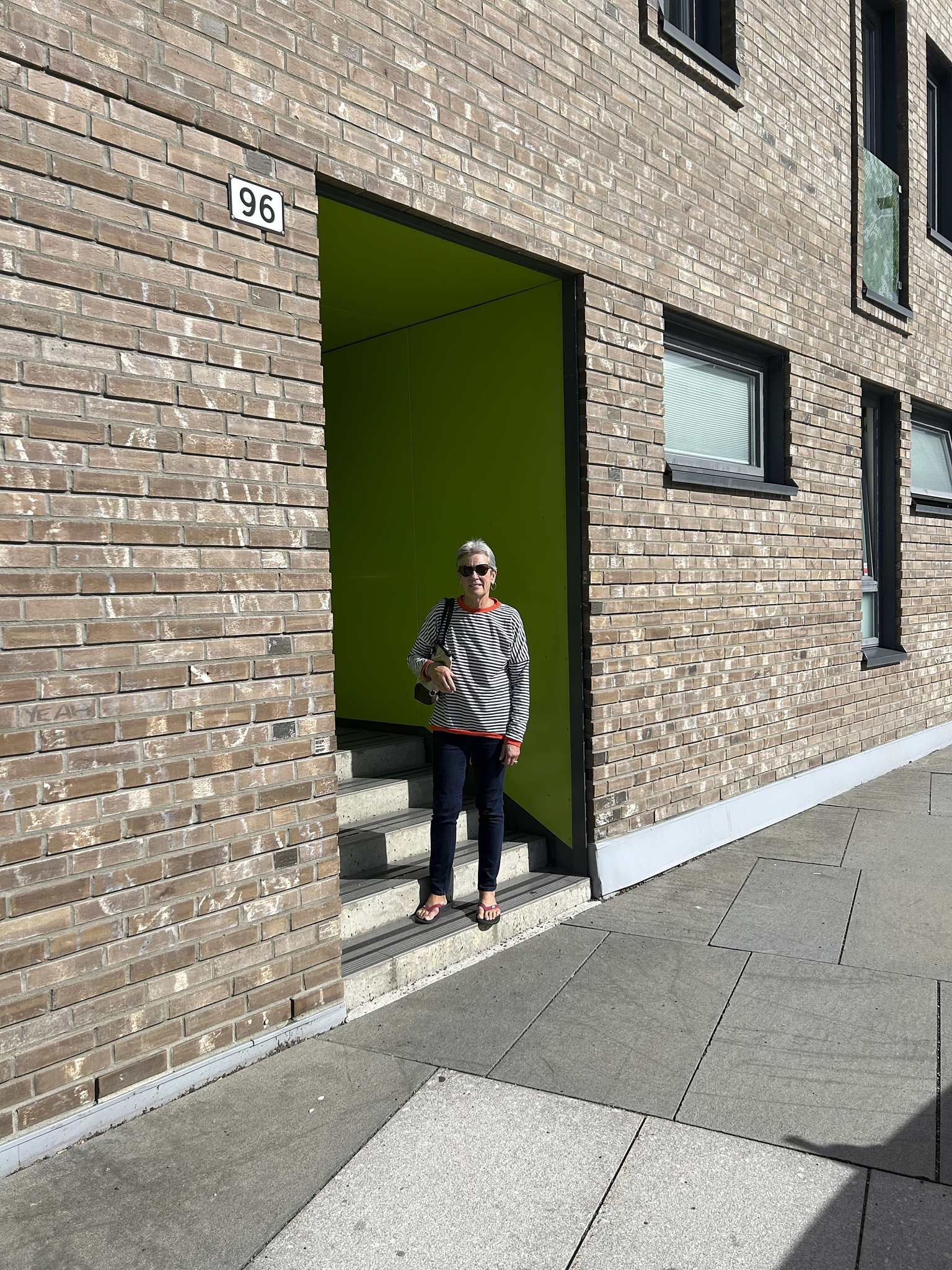
We make it back to Oslo and the Solheims.
*** Jeff’s Worthless Trivia and Other Thoughts ***
Norway is a wonderful place to visit. It is likely a wonderful place to live. I felt this way after our visit in 1994 and feel the same in 2023. I know Linda feels the same.
Since our last visit, it feels as if Norway has taken great strides to improve the country’s infrastructure while not at a huge expense to the country’s heritage or identity. I could easily be wrong.
Linda and I were able to combine the trip to Norway with a trip to Iceland. The Post about the trip to Iceland is [here].
The Solheim’s are terrific people, and we are fortunate to have spent time in their homes. Travelling as a member of HomeExchange is an enormous advantage and benefit.
My biggest challenge on trips such as this, is that the photography presented in this Post comes from me operating as a tourist. I accepted – long ago – that none of the images captured would be from a professional at-work. The upside is that I have a fantastic time travelling with my best girl, with memories to share for a lifetime.
We remain in contact with Uno – the Cat. Uno says, that while nightlife on the Oslofjord is interesting, he would like to expand his world-view. Uno says he would like to encounter new dimensions in life. He thinks meeting up with “ground-guys” in the Rocky Mountains of Idaho, and Gecko’s on the Island of Kauai would be logical next steps. Uno says he has talked separately, through different channels, with the Lubeck Border Collies. He says all agree a period of Detente’ between dogs and cats should occur in 2024.