February 2026
M T W T F S S
 1
2345678
9101112131415
16171819202122
232425262728  

Capturing The Valley: Pronghorn on the Salmon

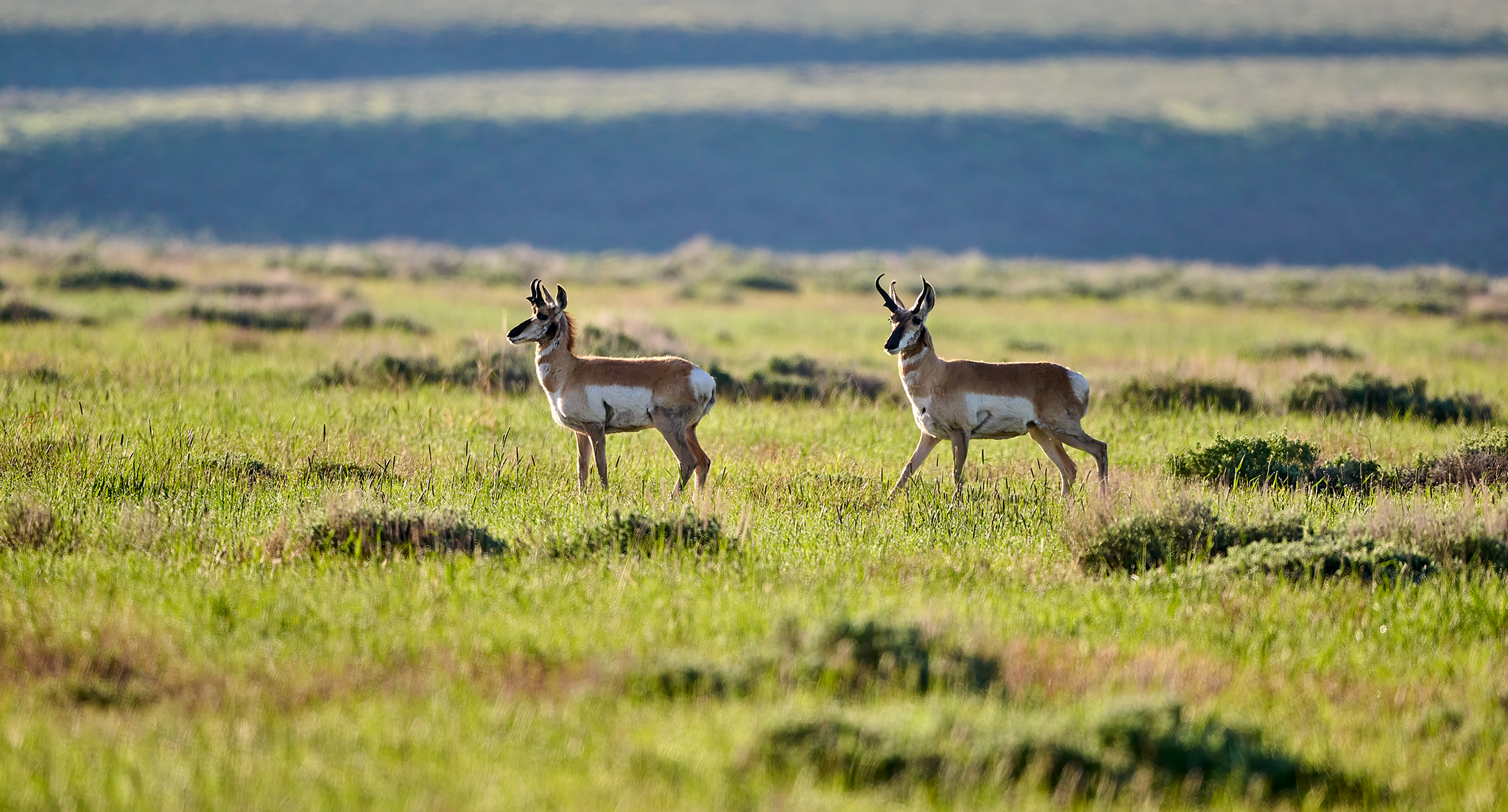
Pronghorn are a prominent feature of the open prairies and ranges of the Western United States.  The Pronghorn is not an Antelope.  Its closest living relative is the Giraffe. 

The Pronghorn travels at speeds between 55-60 MPH. Therefore, it is the fastest land animal in the western hemisphere.  While the African Cheetah can reach a top speed of 65MPH, the Pronghorn can run at top speed for a far longer period.

Pronghorn on the Salmon River.

Pronghorn have an extensive presence in Idaho.  There is a large population of them on the rangeland of the Salmon River from its headwaters at Galena to the town of Stanley.  A group of them frequently show up on and nearby our property.

Written observation about the Pronghorn in the U.S. first occurred with the Lewis & Clark Expedition (1804-1806).  The Pronghorn neared extinction in the U.S. in the 1920’s.  A conservation effort was made by a joint public and private effort in the 1930’s and 1940’s.  The result is the Pronghorn thrives (for the most part) today with an estimated population of 1M+

There are not many animal migration corridors that remain in the U.S.  However, there is one the involves the Pronghorn and Idaho.    There is a 160 mile migration corridor the Pronghorn travel from the foothills of the Pioneer Mountains through the Craters of the Moon National Monument to the Continental divide.

Capturing The Valley: Sharing Residency


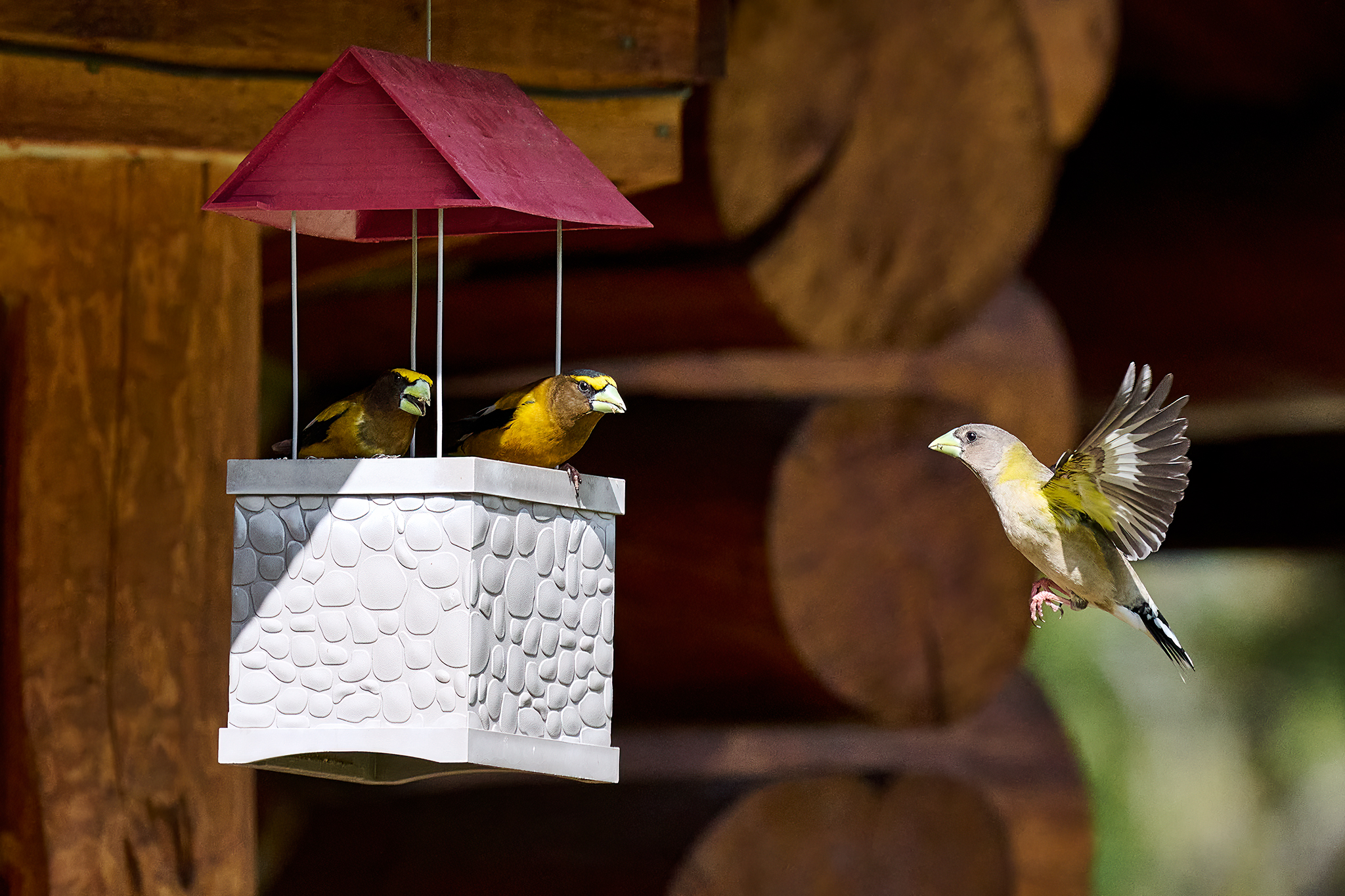
This week, the Grosbeak’s decided to move in at our home in Stanley, Idaho.  They are new residents.

A New Bird in Town

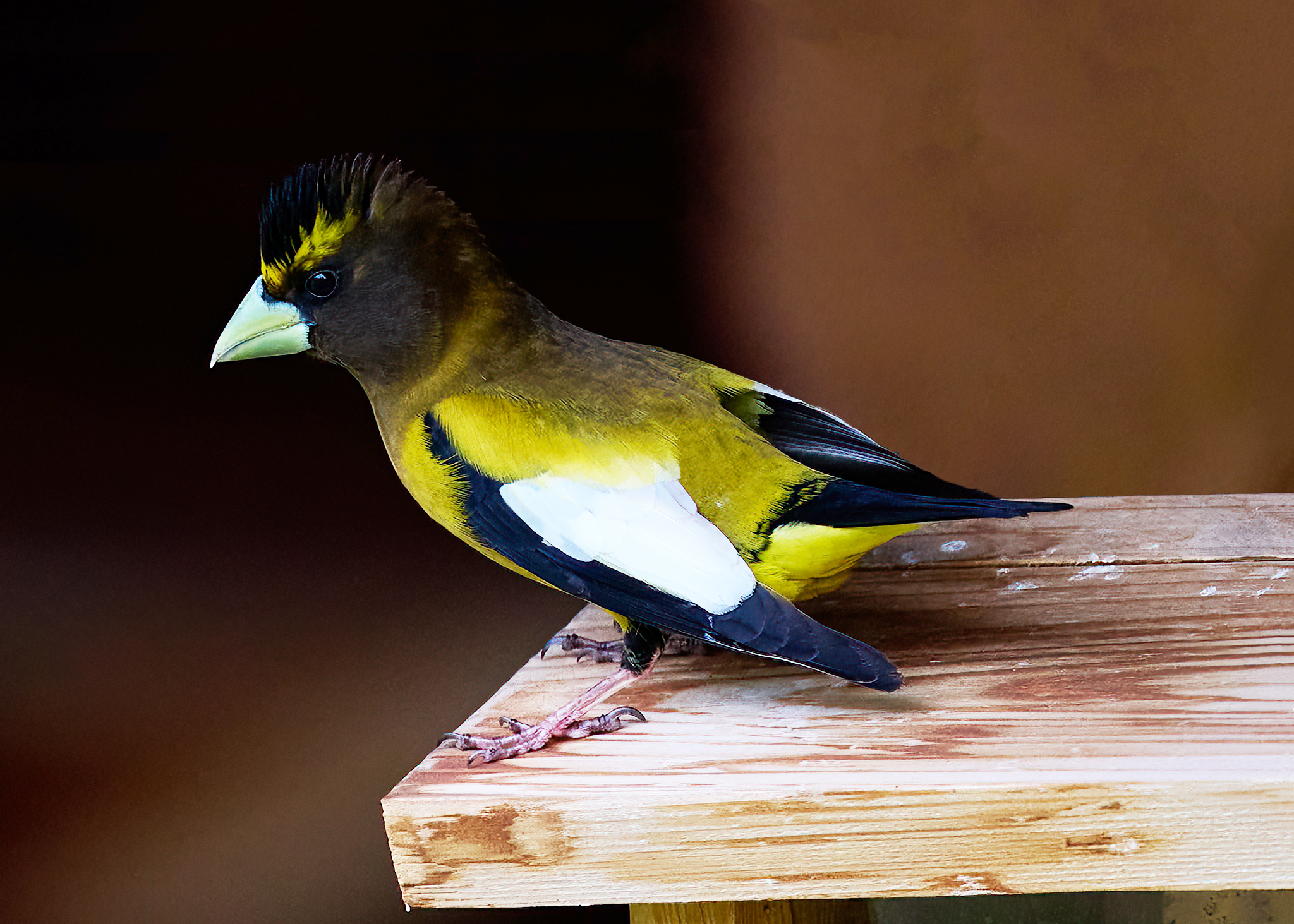
The Evening Grosbeak is an eye-catching kenspeckle bird.  It travels in flocks looking for food sources.  In addition, if the flock likes the food source and it proves to be reliable, they set up shop.

Below are images of birds captured in the past few days.

Young Man With a Crew Cut at the Bird Feeder. © Jeffrey H. Lubeck – MESH Art LLC – all rights reserved.
The Bird Feeders at 75 Goat Creek in Stanley Idaho, are essentially a two-story walk up.  Birds from all over the area have lived at our place for years.  The Evening Grosbeak however, is a bird new to our feeders.

Joining the Regulars

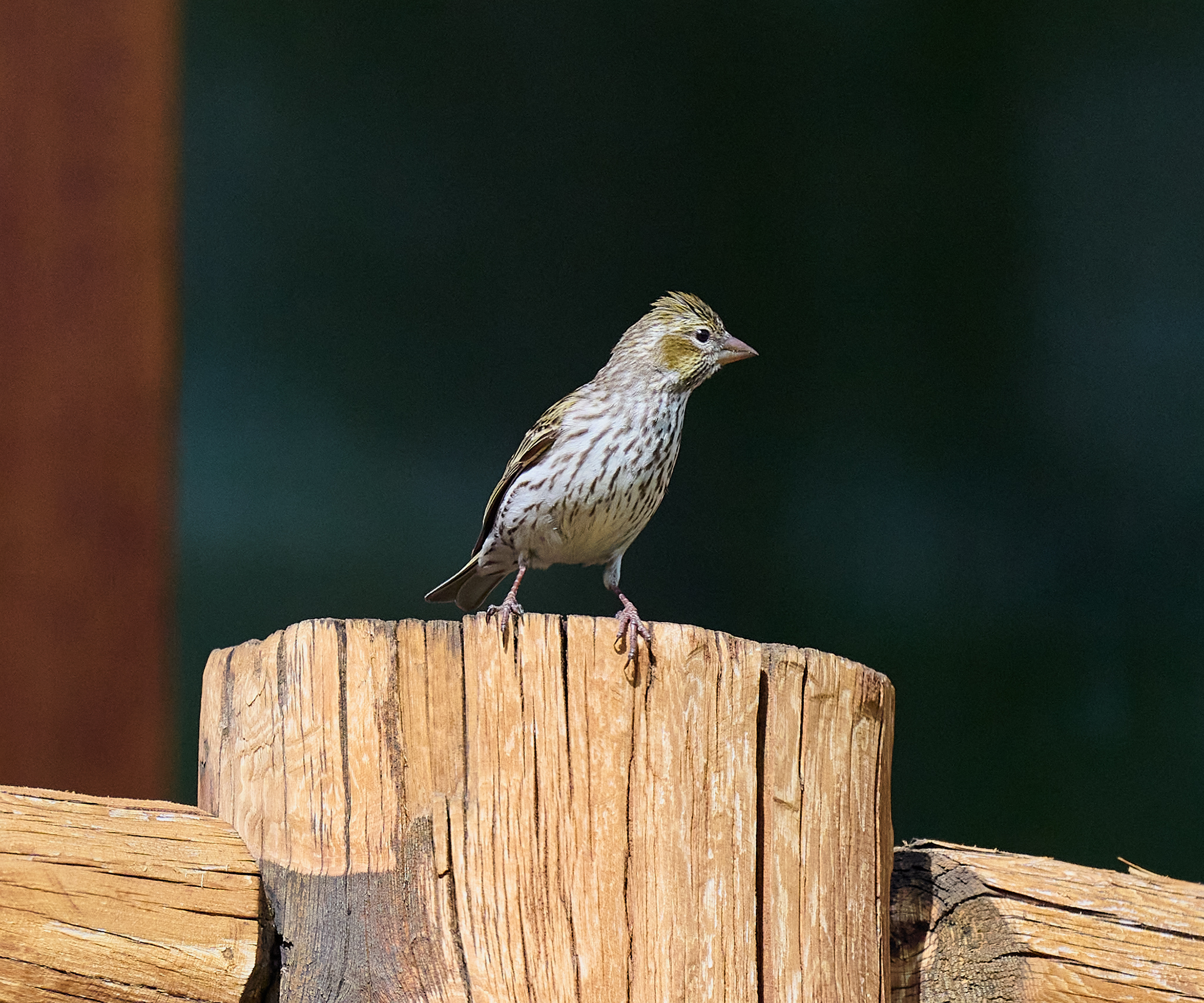
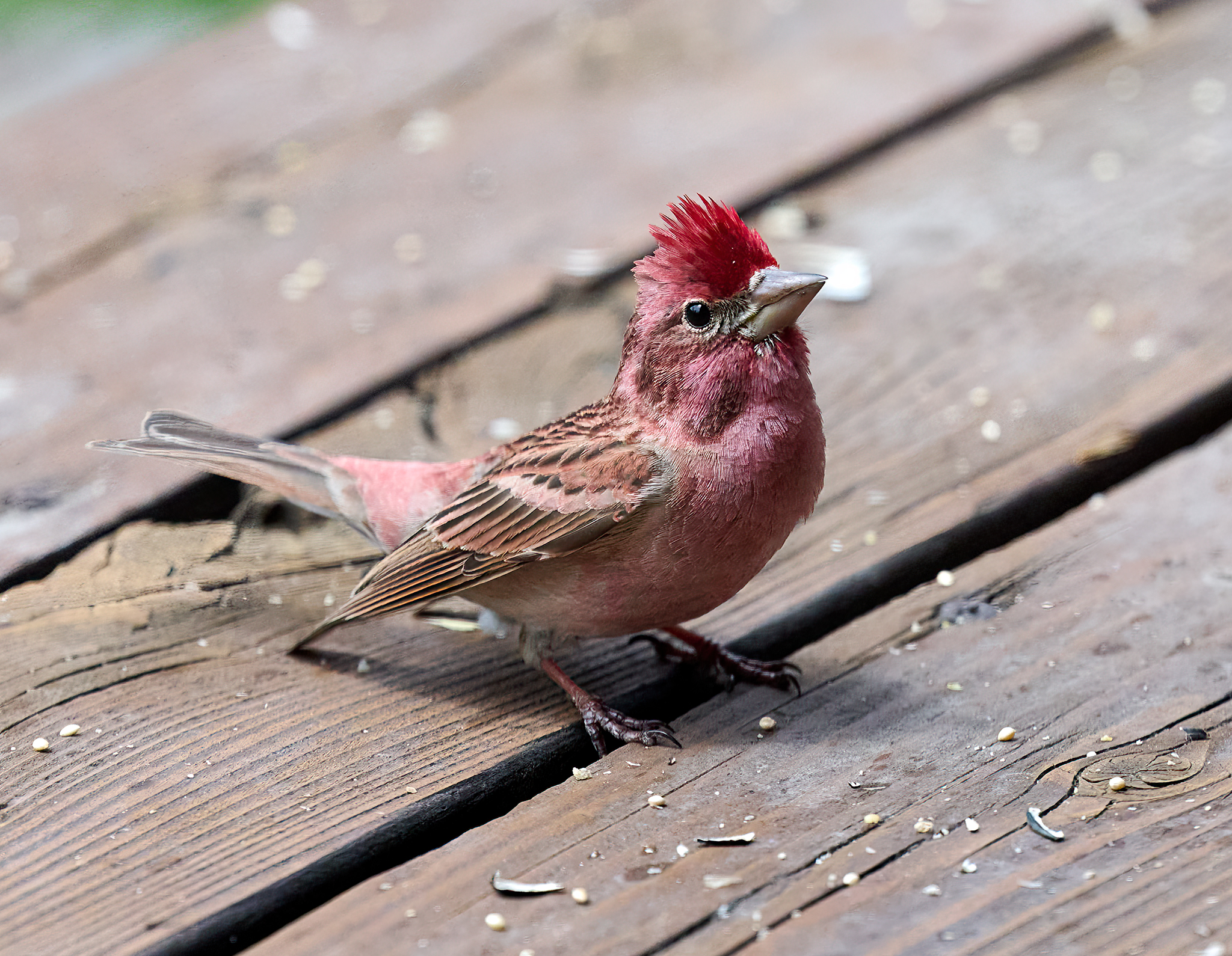
There are a number of birds that are regular visitors to our feeders.  They consist of the Stellar Jay, House Finch, Cassin’s Finch, House Sparrow, Western Tanager, Brewers Blackbird, Yellow Headed Blackbird, Redwing Blackbird, Brown-headed Cowbird, Mourning Dove, and Western Meadowlark.  What’s more, the Broad-tailed Hummingbird come to special feeders provided by my brother Roger and sister-in-law Lynette.

For example, a link to my Post about the hummingbird at the house is [here]

The Female House Finch on the 2nd story railing of the cabin. © Jeffrey H. Lubeck – MESH Art LLC – all rights reserved.
The Male House Finch on the 1st floor deck of the cabin. © Jeffrey H. Lubeck – MESH Art LLC – all rights reserved.
It appears, The Grosbeak Flock that have found our house totals about be 10 birds.

None Shall Pass. Unless of course you bring shrubbery! © Jeffrey H. Lubeck – MESH Art LLC – all rights reserved.
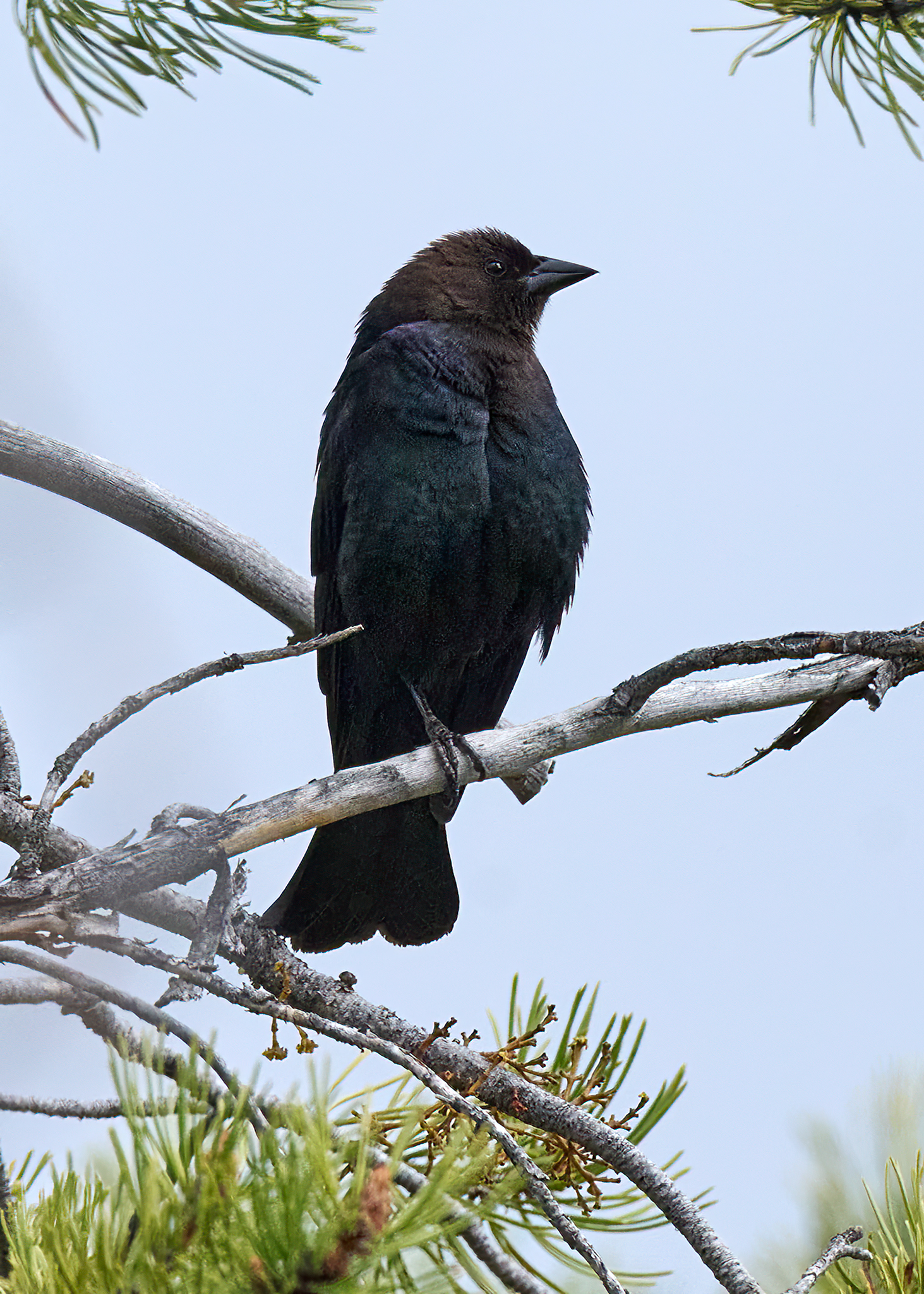
In addition, a bird has appeared at the Feeder’s and in the trees that I cannot make out.  I captured an image of this in the trees on our property.  I hope to figure out who is this visitor to our home.

I cannot identify this bird.

Wildflowers Return as Well

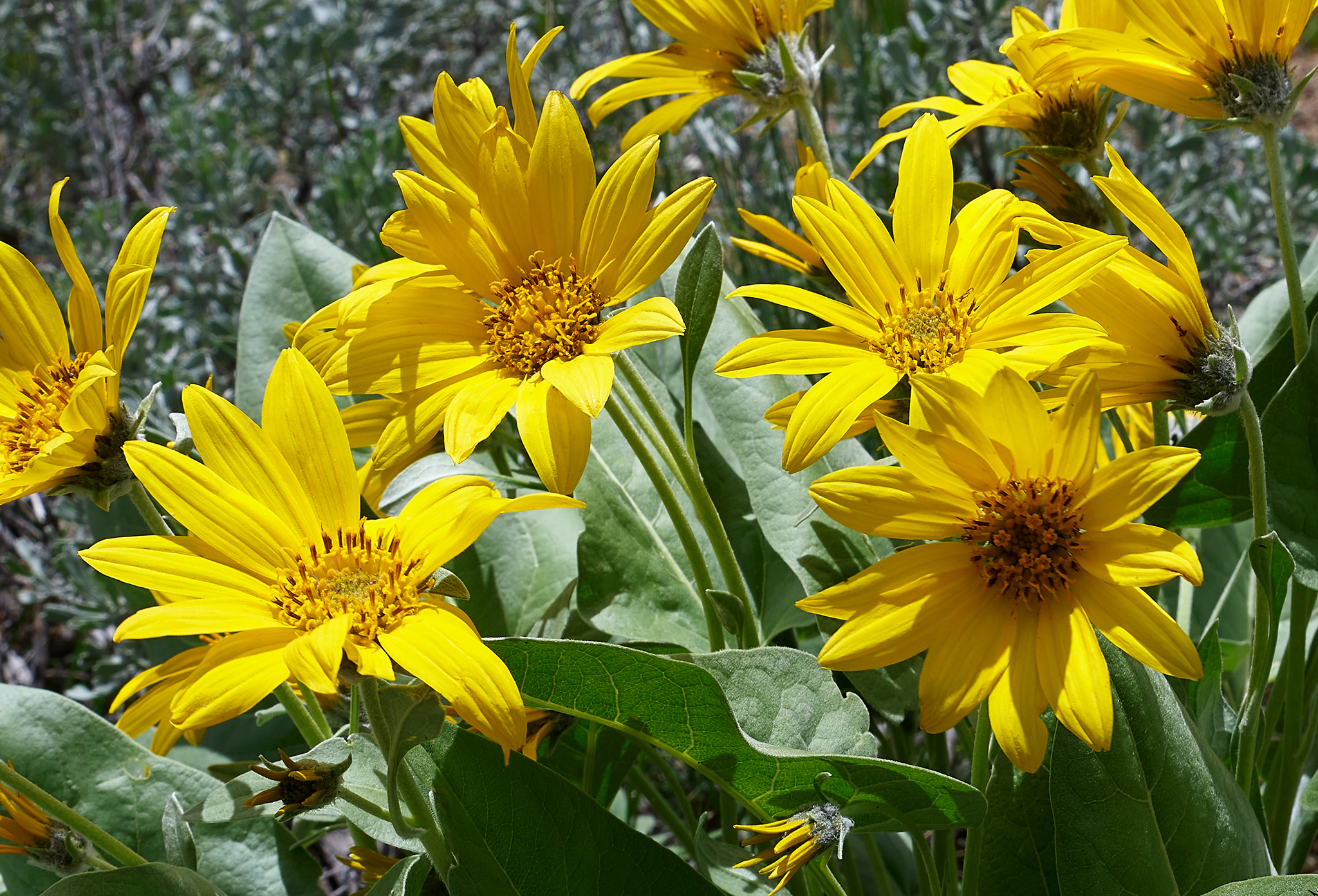
The return of the birds also signals the return of wildflowers.  The Columbine is one of the first at the cabin.  I captured this image of Columbine amongst the Purple Sage Brush at High Noon.  Its location is on a sidehill on Goat Creek next to the cabin.  Equally important, to me at least, is it includes 300-400 vertical feet. I ski this sidehill often. In early March, I skied over these flowers covered in 6 feet of snow.

Columbine at the Cabin on the Way to the T.

*** Jeff’s Worthless Trivia and Other Thoughts ***

I captured all of the bird images above photographing hand-held in manual configuration with the Nikon Z9 Camera and either the Z 400MM S F2.8, Z 560MM S F4.0 or Z800MM S 6.3 Prime Lens’.

I captured the image of the Columbine photographing hand-held in manual configuration using the PhaseOne IQ4 151 Digital Back with the PhaseOne XF Body and Schneider PhaseOne 35MM F3.5 lens.

Capturing The Valley: El’ Capitan Encounter

El’ Capitan is one of the Iconic peaks of Rocky Mountains and the state of Idaho.  On this day I am hiking and scrambling off-trail in the backcountry to find new views and perspectives of the mountain.

El’ Capitan from the upper ridgeline of Pettit Creek Drainage.

I decide to get off trail and scramble up to and traverse the northern ridgeline of the Pettit Creek Drainage in the Sawtooth Wilderness.

Dawn winter time. El’ Capitan (lower left center), Snowyside Peak (upper right center) and Packrat Peak (far right) from the summit of Mc Donald Peak.

The Pettit Creek basin with Pettit Lake in the foreground.

Pettit Lake sits in the Sawtooth Recreation Area (SNRA).  The western edge of the lake represents the start of the Sawtooth Wilderness.  The Pettit Creek basin leads up to Alice Lake and Twin Lakes area. On the south side are McDonald Peak (10,068) and El’ Capitan (9,901).  On the north are Parks Peak (10,208) and Peak 10,052.  On the western end of the basin is Snowyside Peak (10,651).  I have the privilege of climbing McDonald and Snowyside.

The Pettit Lake Trailhead represents the start (or finish) of the 19 mile Alice – Toxaway Lakes Loop.  Writer’s for Backpacker and Outside Magazine call it the best loop trail in the United States. The Loop involves 2,985′ of vertical.  I often used the loop when training for ultra-marathon racing.  I would not disagree with the writer’s evaluation.

As I started to drop down from the top of the ridgeline, I capture an image of an interesting wildflower

Wildflower amongst rocks on side-slope.

I decide to wonder up and down the north side of the Pettit Creek Drainage.  The west end of the lake is the border for the Sawtooth National Recreation Area and Sawtooth National Wilderness. I capture a video of Pettit Lake from the Wilderness border.  In the video, across the valley is Horton Peak in the White Cloud Mountain Range.

Click Here: Pettit Lake from Sawtooth Wilderness Border

The Sawtooths from Horton Peak. Left to Right: Alturas Lake, Pettit Lake, and Yellowbelly Lake.

After scrambling up and down the side slopes, I descend to the trail and head back to the trailhead.

The Pettit Lake trail in early spring. Some big timber did not make it through the winter season standing.

*** Jeff’s Thoughts and Other Worthless Trivia ***

The Trail to Alice and Twin Lakes was the first hike in the Sawtooth’s for my Best Girl and Wife 40 years ago (1983) on Memorial day weekend.  Linda hiked in blue shorts with white trim.

Memory Lane!