The coastline, shoreline, and beaches of the Island of Kauai are world renown. Many of the beaches look to be in pristine condition and surrounded by wilderness. There are many things that challenge the condition. Many talk the talk about protecting the area so that all can enjoy. Some actually walk the walk and back up their talk with actions. I am always intrigued to learn about the Net Net of such talk and action.
One challenge, is commercial fishing nets washing up on shore. According to the Nature Conservancy more than 100 million pounds of pollution from lost or abandoned industrial fishing gear enters the ocean each year. This gear is considered one of the most harmful things to marine animals and habitats.
Recently a large storm system hit Kauai from the southwest. The storm lasted a number of days. It deposited a large tangle of debris on the beach about a mile west of my home. The debris consisted of multiple commercial fishing nets that had gathered together in the ocean over time.
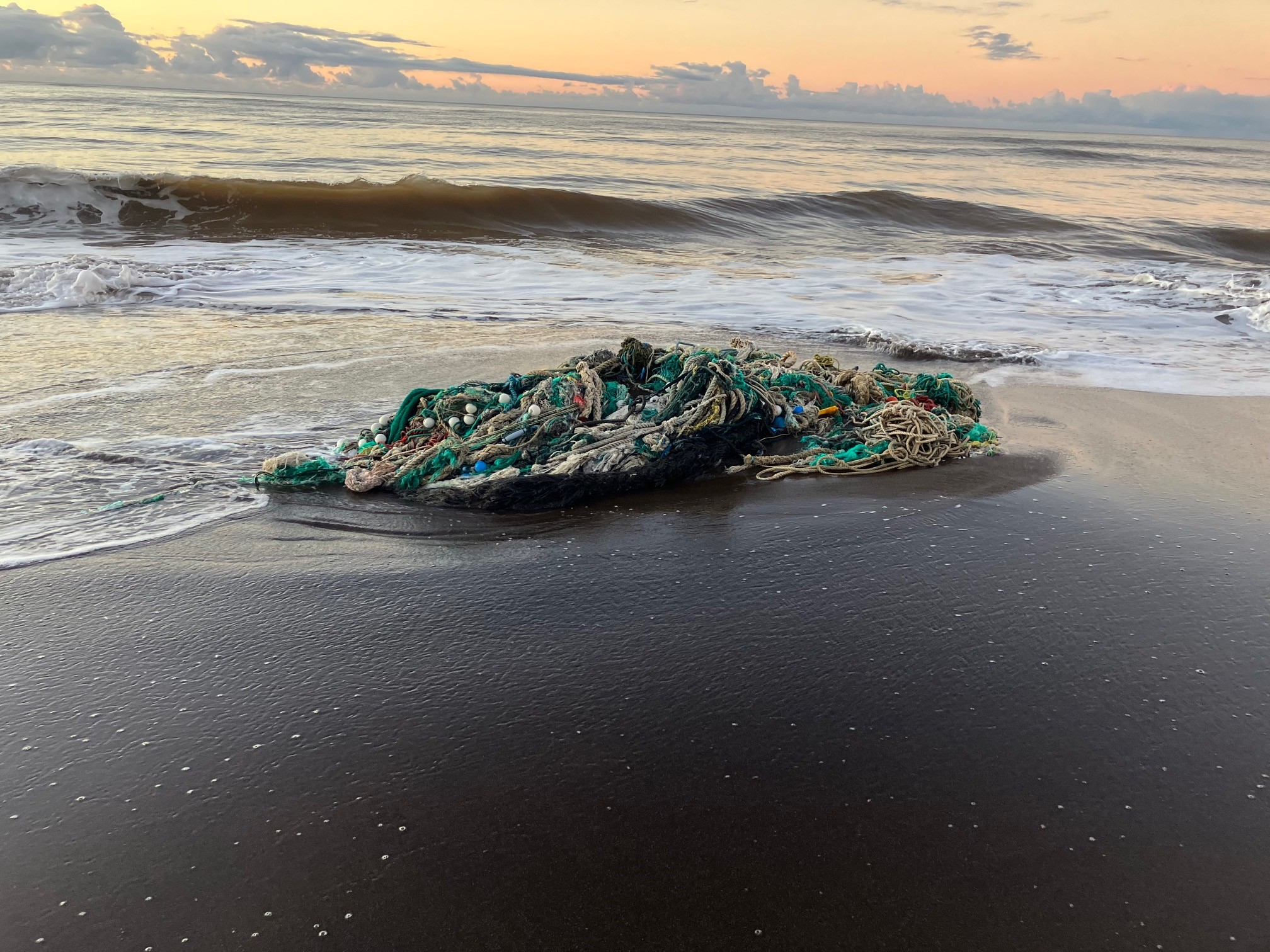
The debris. It is about 12 feet in length and 5 feet wide. It is buried to a depth of about 2-3 feet of sand.
Kauai approaches dealing with these situations through a combination of effort from regular citizens, government agencies, and a volunteer network. While not perfect, positive outcomes occur more often than not.
- There is a surprising amount of education made available to the general public, about what to do if debris is found.
- For the most part, the residents of the Island of Kauai pay attention to and are good stewards of the natural resources.
- The Harbor Division of Department of Land and Natural Resources (DLNR) for Kauai has a large container (specifically for debris) located at the boat ramp of the Kikiaola Small Boat Harbor. Citizens are encouraged to place the debris and or to report it by calling a phone number listed next to and on the container: (808) 635-2593.
- The Kauai Chapter of the non-profit Surfrider Foundation takes the calls and attempts to assemble a NET Patrol team to deal with the debris. The Surfrider Foundation has placed container in the Boat Harbor with approval from the DLNR.
Dealing with this large pile of debris occurred fairly fast. So how did it happen in this instance?
Linda and I walk or run to Kikiaola Small Boat Harbor and back (4 miles) on the beach almost every day.
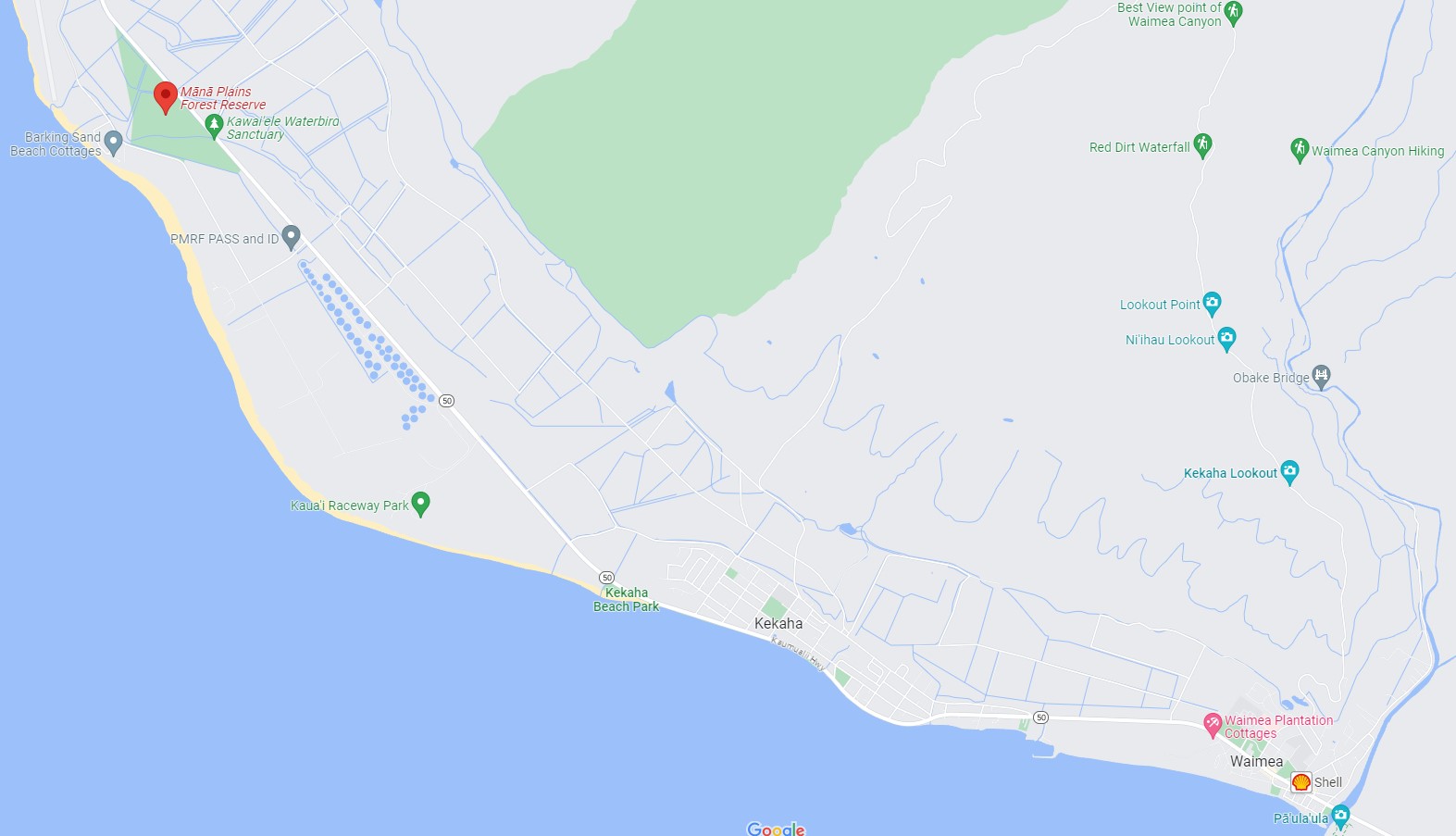
We notice the debris on a walk during the storm. I take a picture. Linda contacts Barbara at Surfriders. Linda sends a picture and coordinates of the debris. The debris is located one mile west of the Waimea Public Pier and 1/2 mile east of Kikiaola Small Boat Harbor.
Barbara says she will attempt to put together a team of volunteers. One issue Barbara raises is that the West Side of the island is sparsely populated and most of the Surfrider NET Patrol volunteers live on the east side of the island. The implication – some members will have to travel 30-45 miles to reach the debris.
Linda and Barbara communicate a 2nd time to confirm the location of the debris.
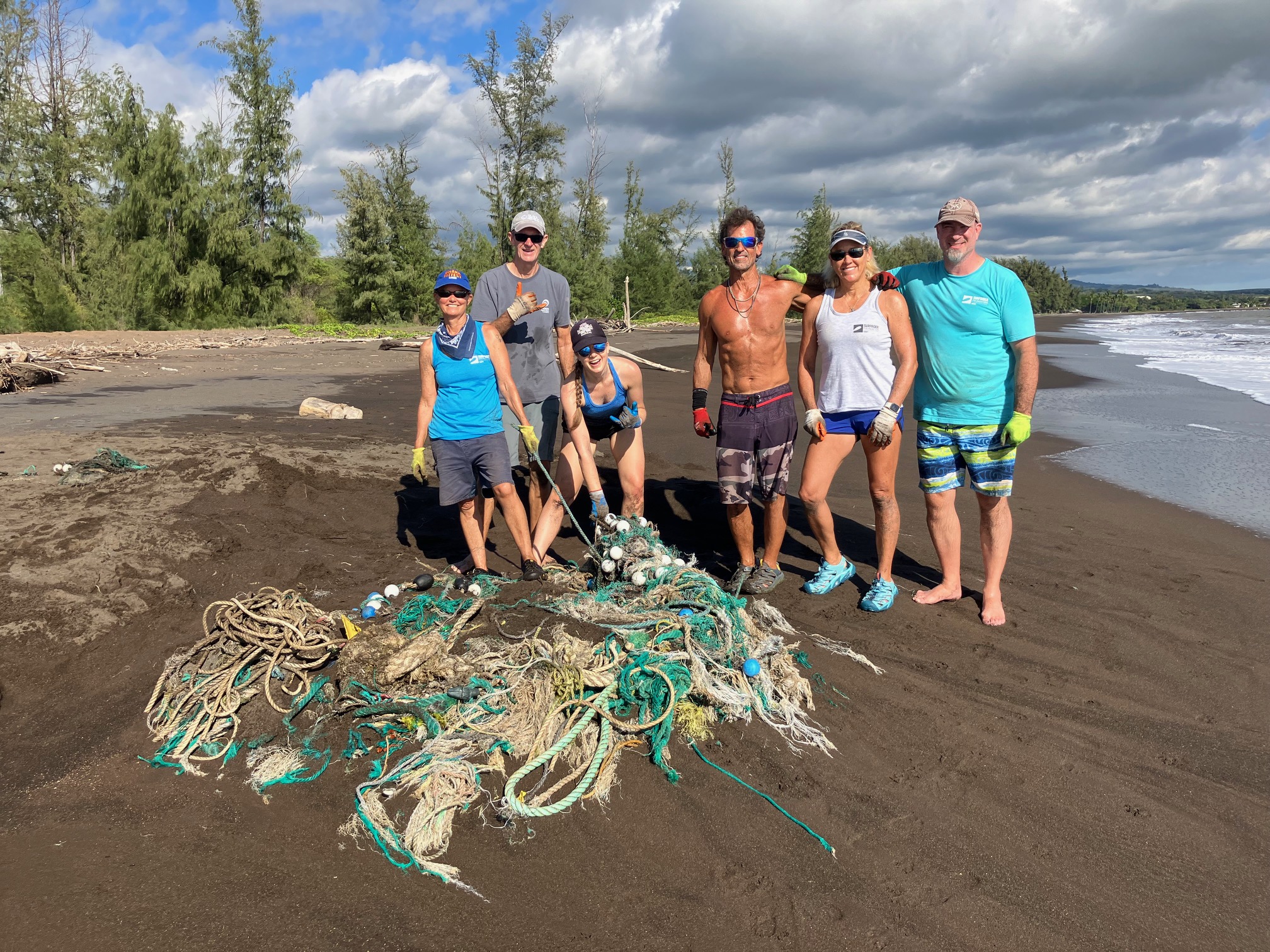
The Surfrider NET Patrol team: (from left to right) Lisa, Kurt, Indvik, Claire, Greg, Kim, and Dan.
Low and behold, I encounter a Surfrider NET Patrol Team dealing with the debris during my late afternoon run to the Boat Harbor. The debris is heavy and tangled to no end. Wet sand makes the effort to remove the debris from the beach materially more difficult.
A video of the Net Patrol team in action provided to me by Kim, is located [HERE].
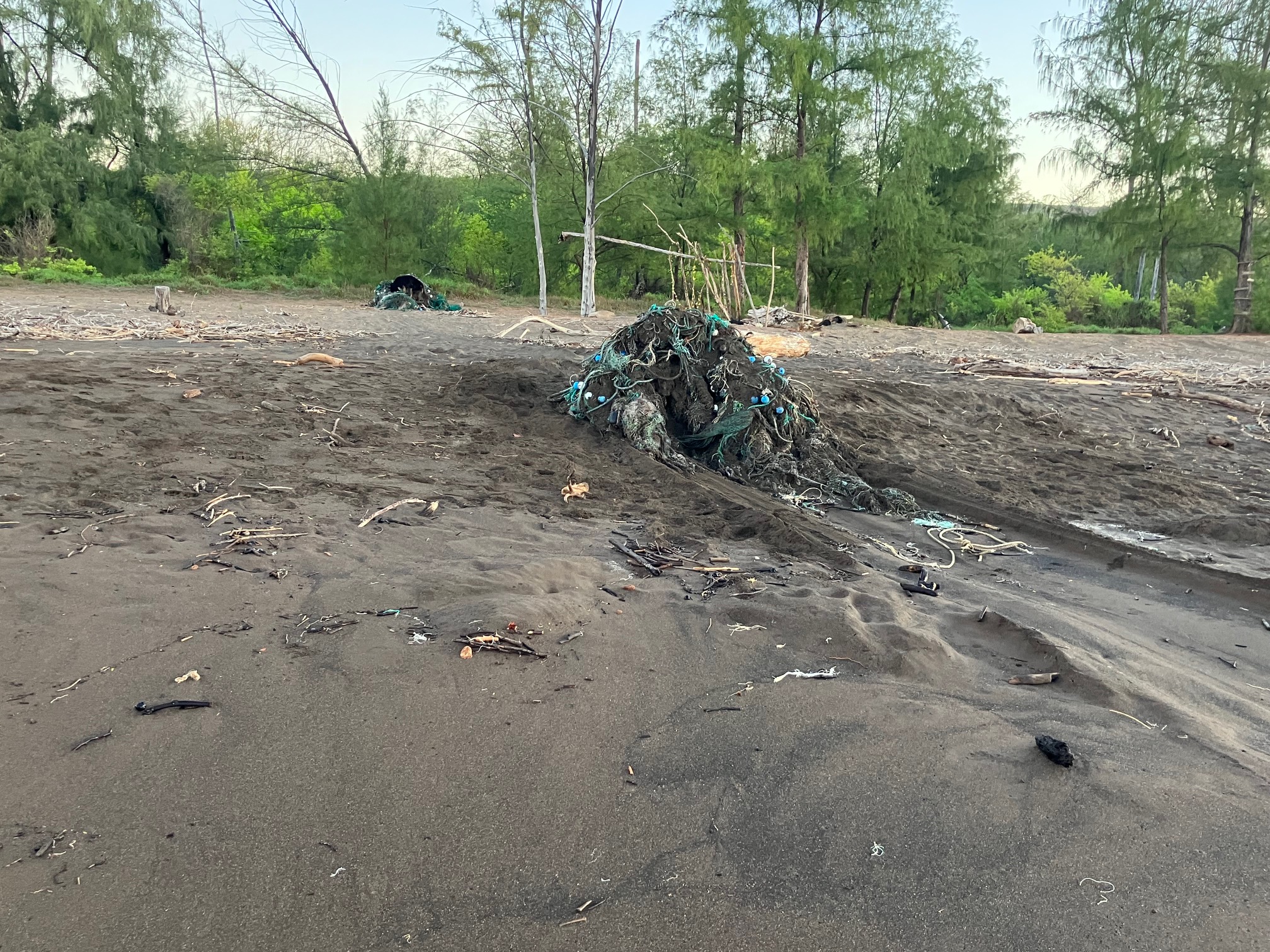
One half of the debris is winched up from the water. See the video (link above) to observe the work in action.
Another challenge is the location of the debris. The beach at this spot is located next to state owned land that offers no direct access. In Hawaii, (technically) vehicles are prohibited and no one is allowed to camp overnight on the beach – unless otherwise posted. Alison, the District Land Agent and DLNR staff work diligently to keep this section of the beach in as natural a state as possible.
The NET Patrol team has walked the beach to reach the debris. To get the debris off the beach and into the container, the NET Patrol team will obtain permission from DLNR to have a pick-up enter the beach. Jeremiah, the District Manager of the Kauai Division of Boating and Ocean Recreation (DOBOR) of DLNR responds quickly to a request from the NET Patrol team and opens a gate to enter the beach.
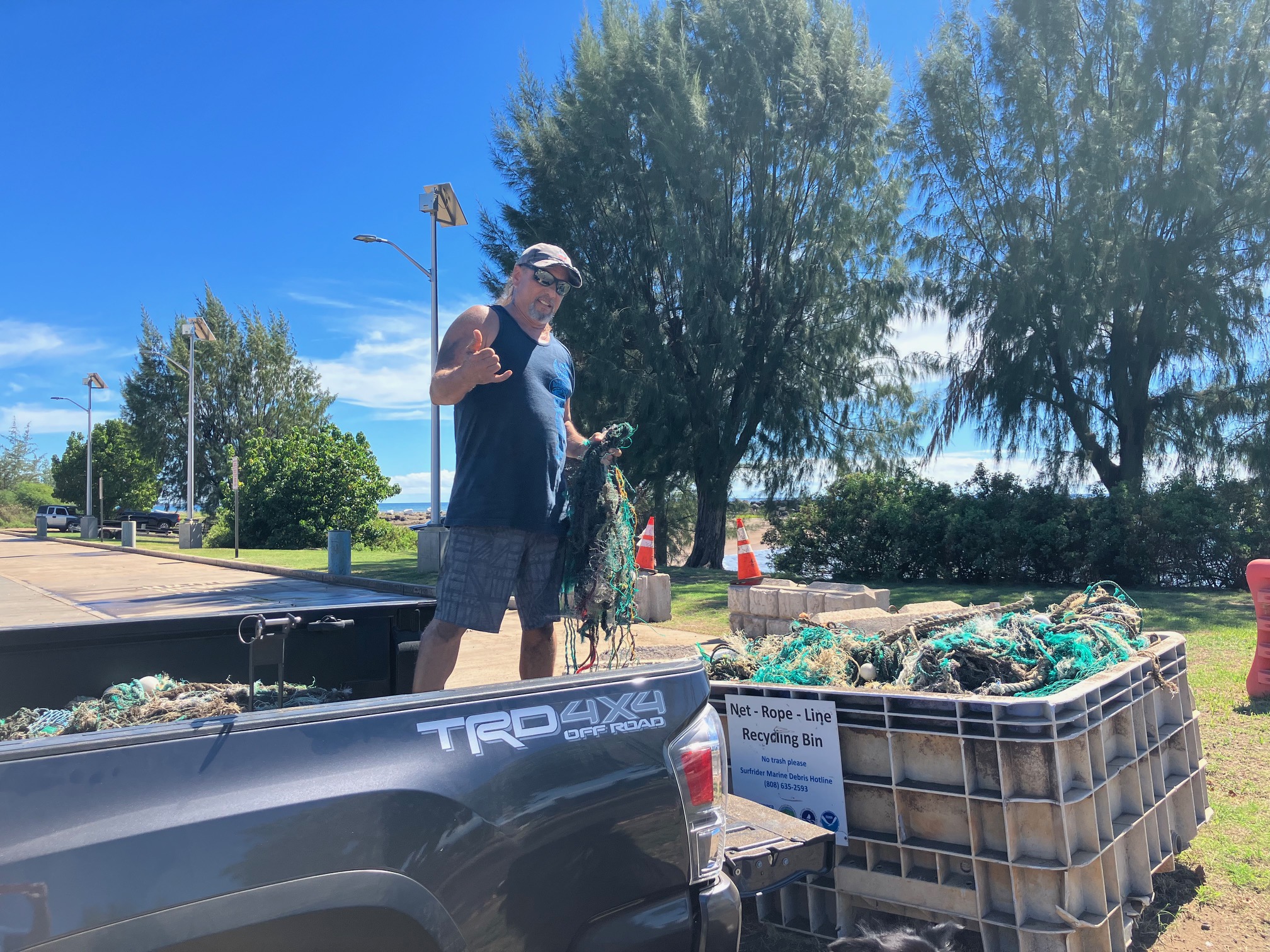
Dave removing the debris from his truck bet and into the bin.
The following day (on my run) I notice a man in the harbor removing large chunks of the debris from the beach from his pickup and placing it in the container. The man, Dave, is a native of Kauai and ex-Navy. Dave (and his wife and kids) returned to Kauai from San Diego California in 2007. Dave is a supervising engineer for Kauai Island Utility Cooperative (KIUC). Dave is a volunteer for the Surfriders.
It should be noted that the container is not a trash bin. In fact it is quite the opposite. Kim informed me the debris is sent to a research organization for analysis.
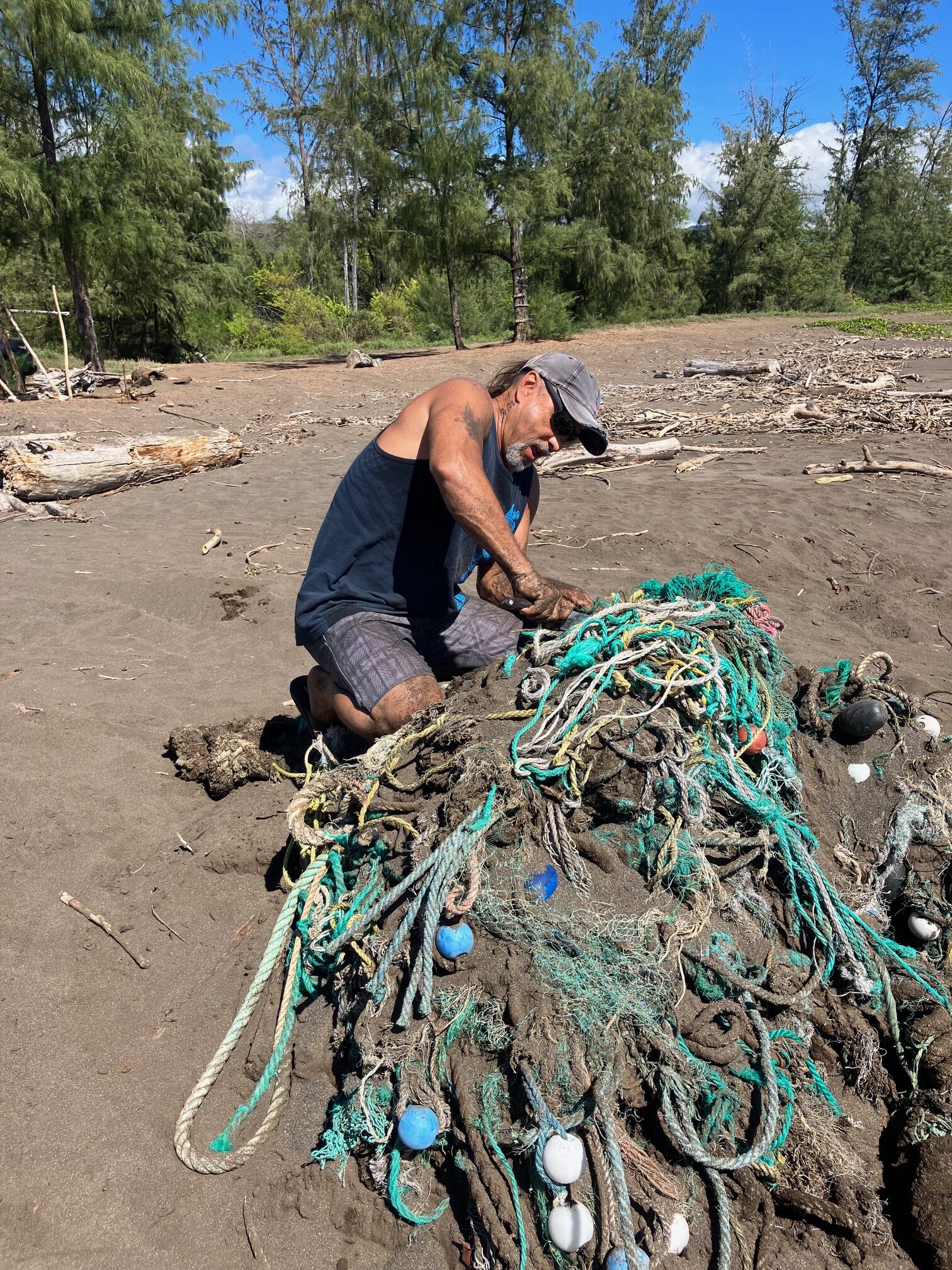
Dave cuts and I carry.
As I run back home on the beach, Dave returns to the debris area with his truck. I decide to join Dave and remove more debris from the beach. The removal process involves using a serrated knife to cut sections of the tangled web into pieces that can be carried to the truck bed.
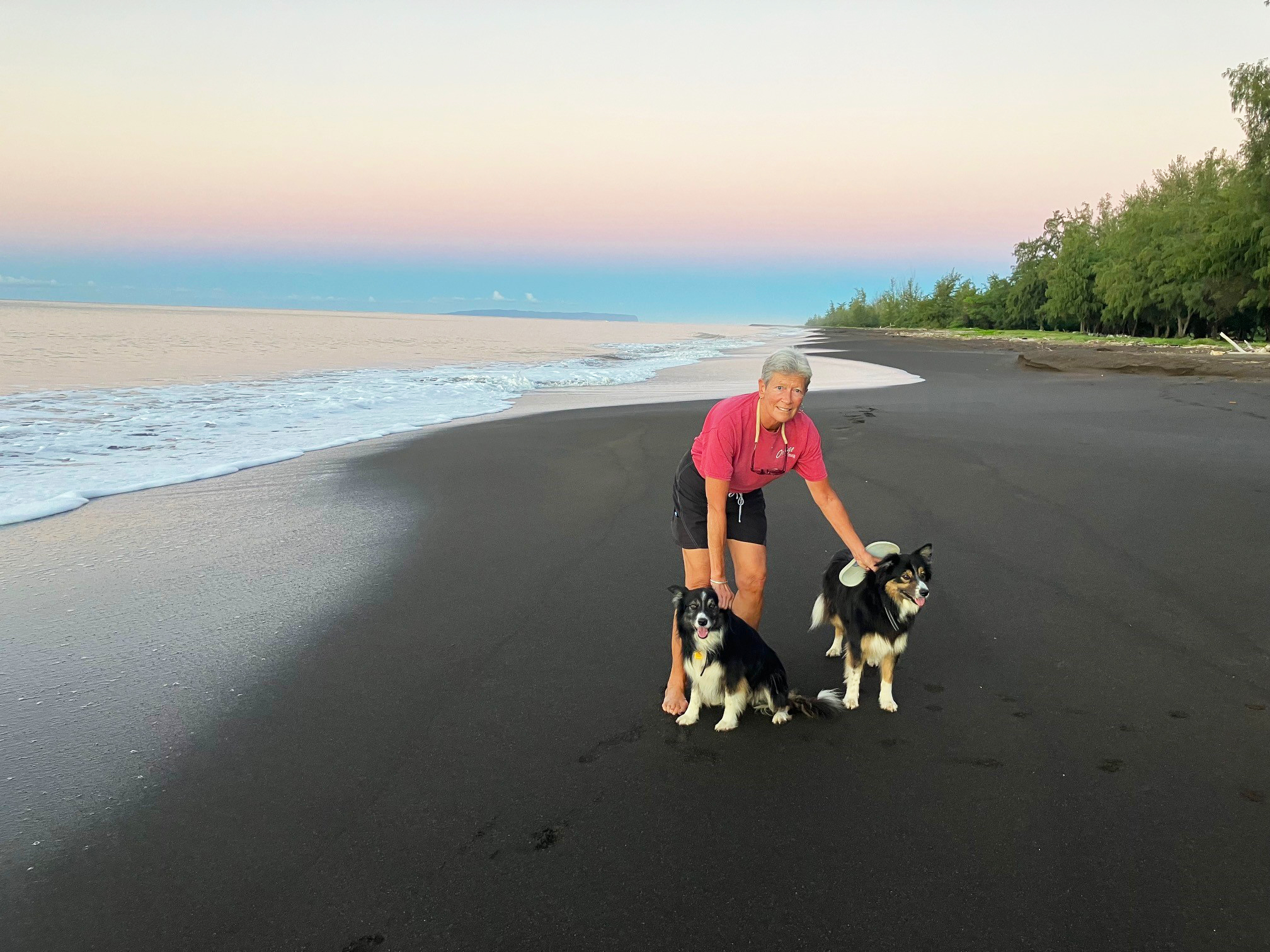
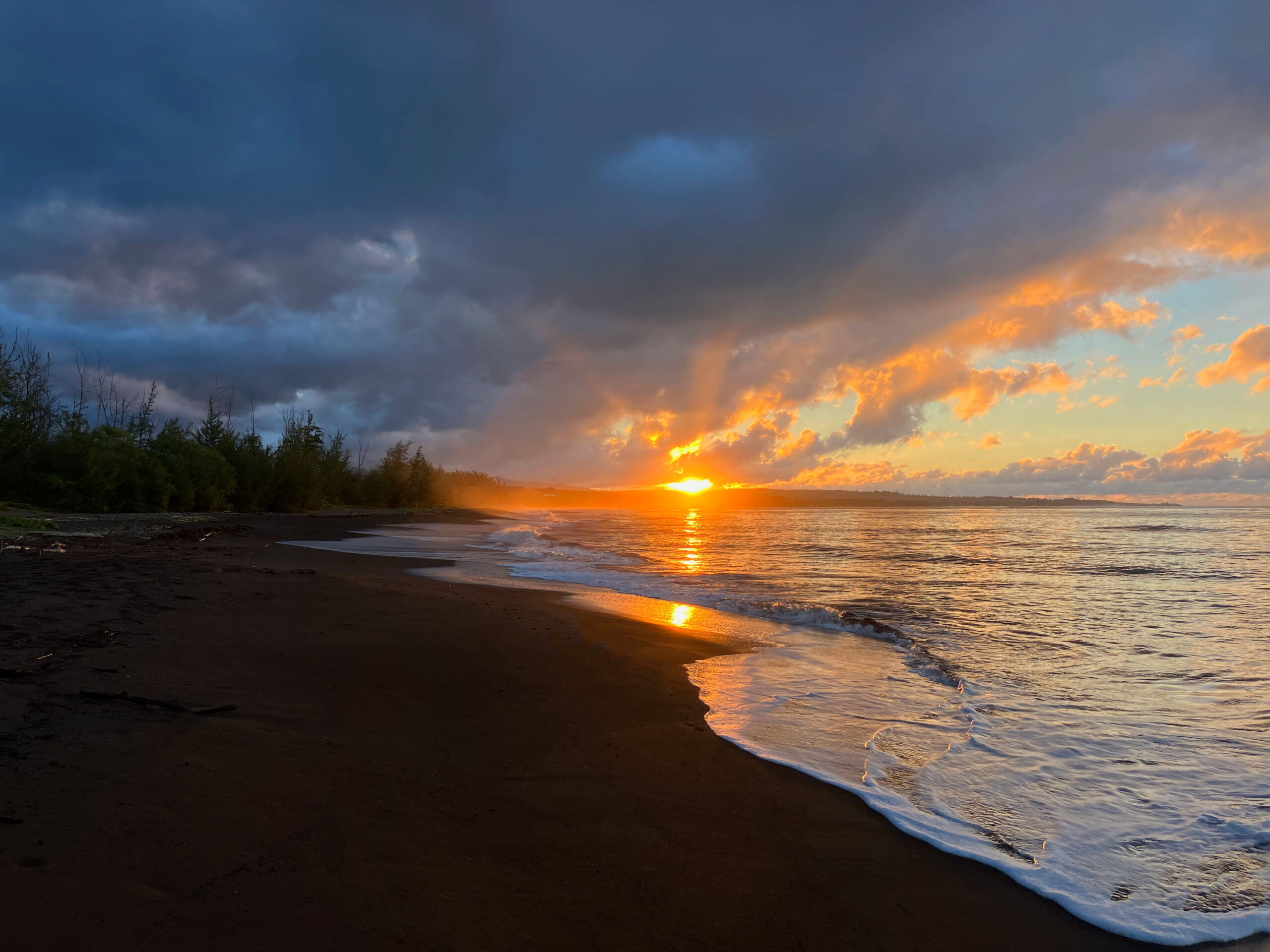
Linda, Willow, and Sage (a.k.a. The Border Collies) walk at Dawn to the Boat Harbor on the day of the removal of the debris.
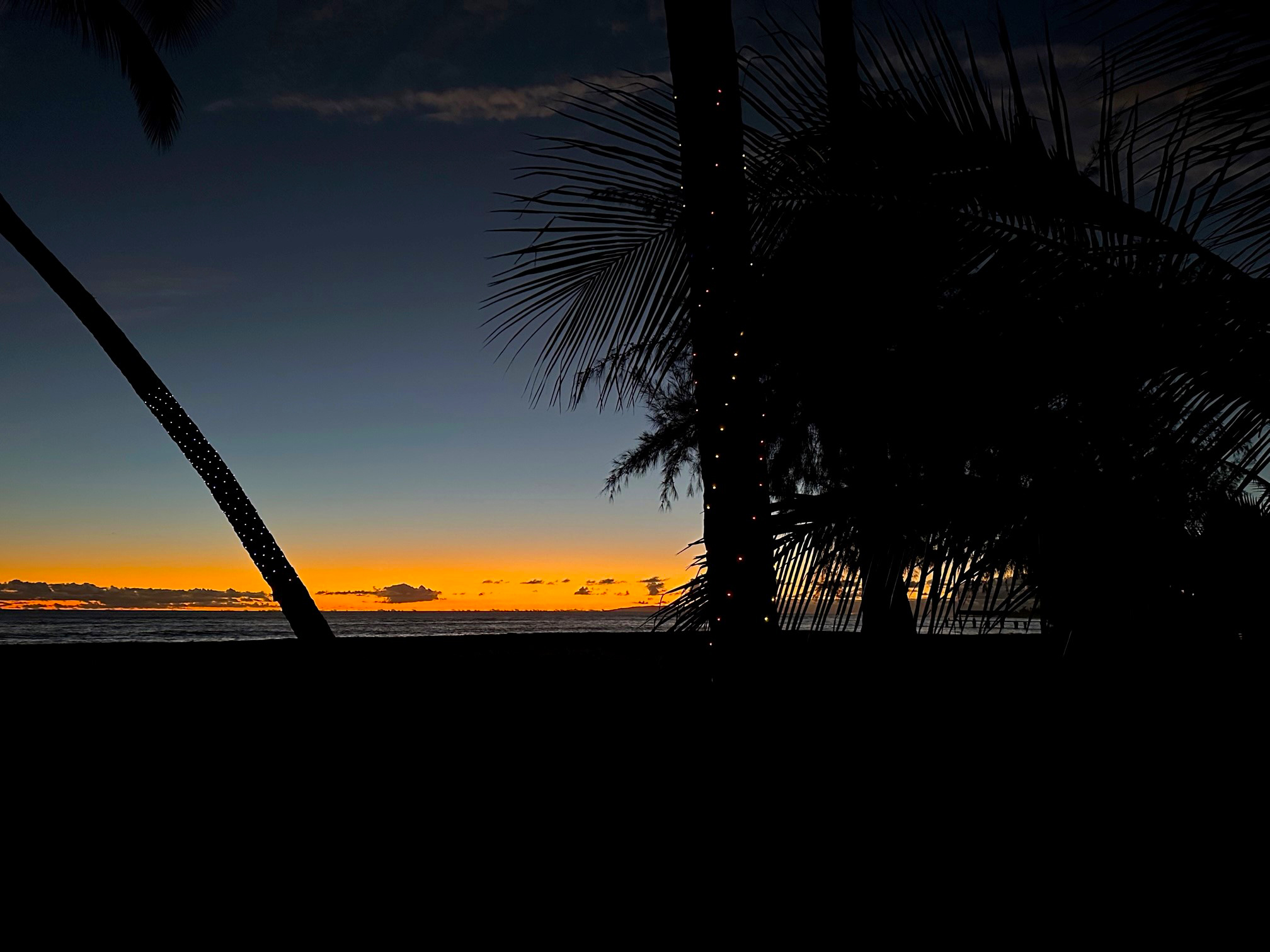
Nautical End of Day at the House on the day of the removal of the debris.
*** Jeff’s Thoughts and Other Worthless Trivia ***
The Surfriders are an interesting organization. The Surfriders state they are dedicated to the protection and enjoyment of the world’s ocean and waves and beaches for all people. From the stories I have read about their actions, the Surfriders are an effective volunteer group. From my first hand experience – they are sincere about it as well.
The Kauai website for the Surfrider Foundation is located [HERE].
The main page of their website utilizes an image captured on Kalepa Ridge. It is one of my very favorite spots – if not my favorite spot – on Kauai. A couple of my Posts about the magical Kalepa Ridge are located [HERE] and [HERE].