I continue to test aspects of the Nikon Z9 Camera and Z Line Lens’. I decide to photograph at some of my favorite spots in order to establish some relative comparisons as it relates to the output from my other gear.
Clouds are beginning to gather in the Waimea Canyon as the afternoon progresses. So I decide to capture some images on the Canyon Road (550) at Mile Marker 1.5 and 3.0. First, however, I capture an image of the Border Colliers patrolling the front yard.
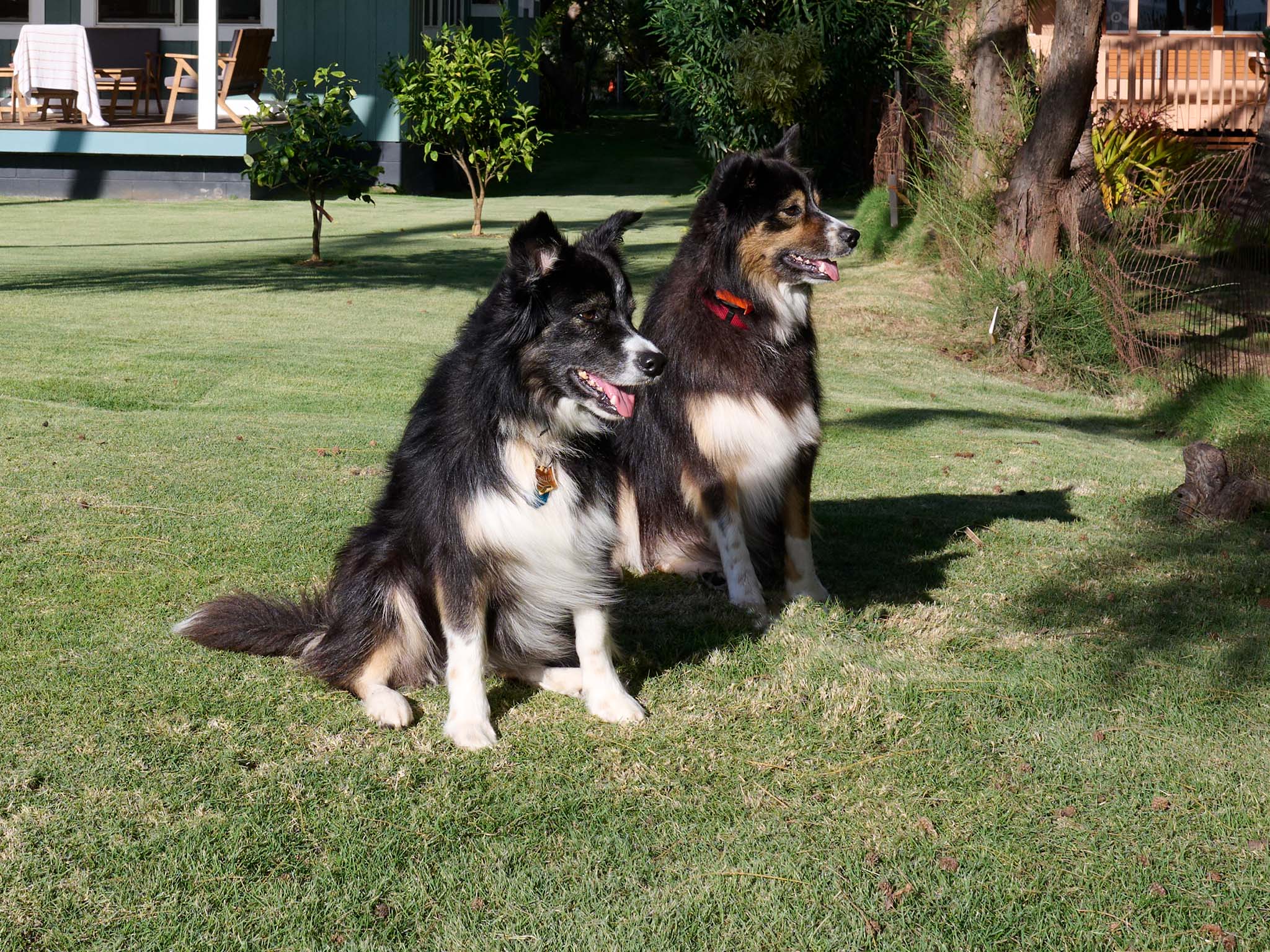
Willow and Sage on-guard at the Southwest Perimeter Observation Post.
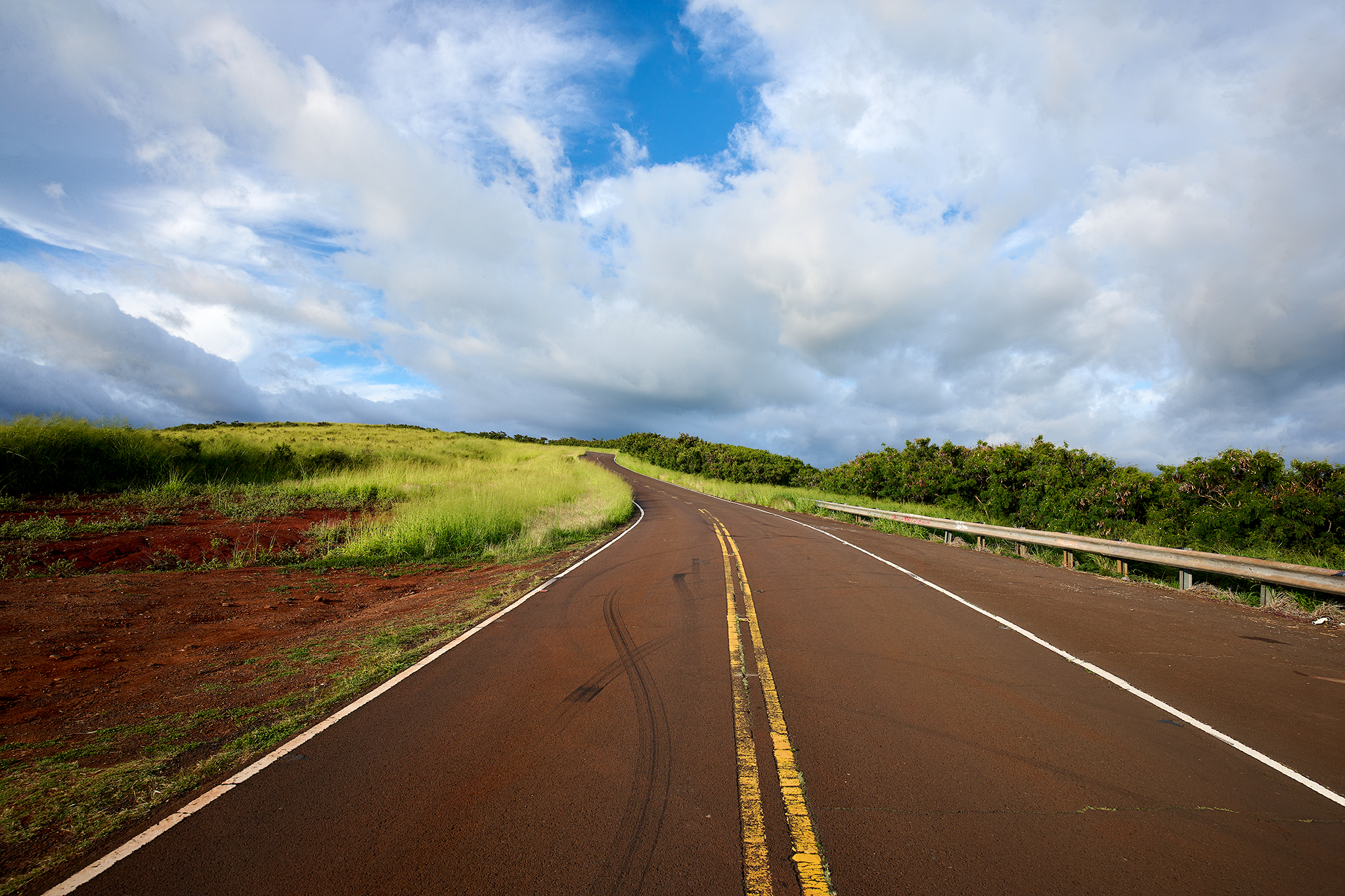
Highway 550 looking uphill at Mile Maker 1.5
Most visitors to the area look downhill towards the ocean or to the right to take in the Grand Canyon of The Pacific. A peek uphill provides this rich and full-bodied image.
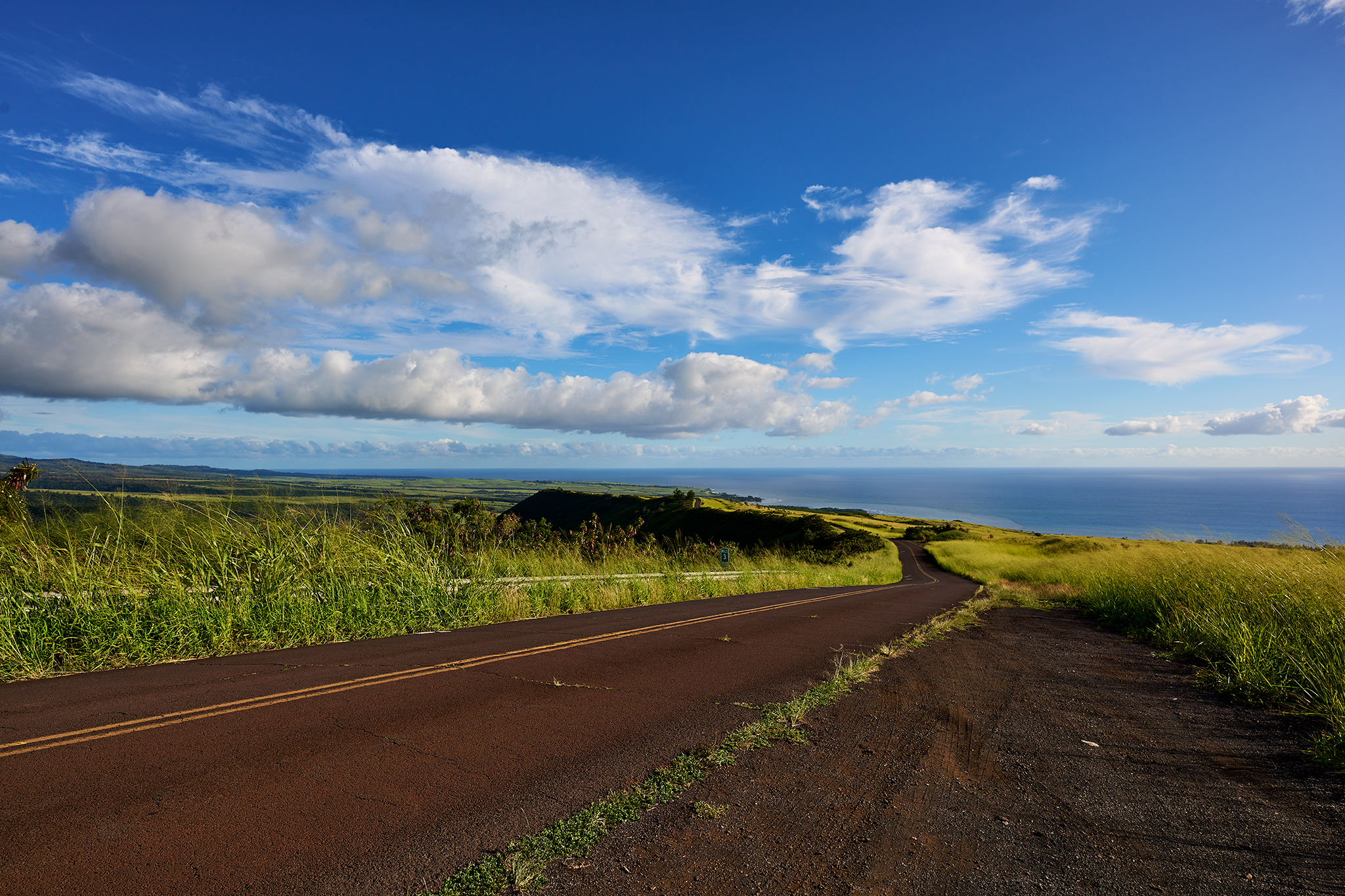
Highway 550 looking back towards the ocean at Mile Marker 3.
Highway 550 between Mile Marker 3 and 1.5 straddles the ridgeline of the Waimea Canyon. Many consider this stretch the best place to take in the sunset on Kauai. On many nights it is lined with locals as the sun sets. Their trucks and cars are lined up to face the west. The view is of Waimea town, Kekaha, the coastline, Niihau Island, and the start of the Na Pali Coast.
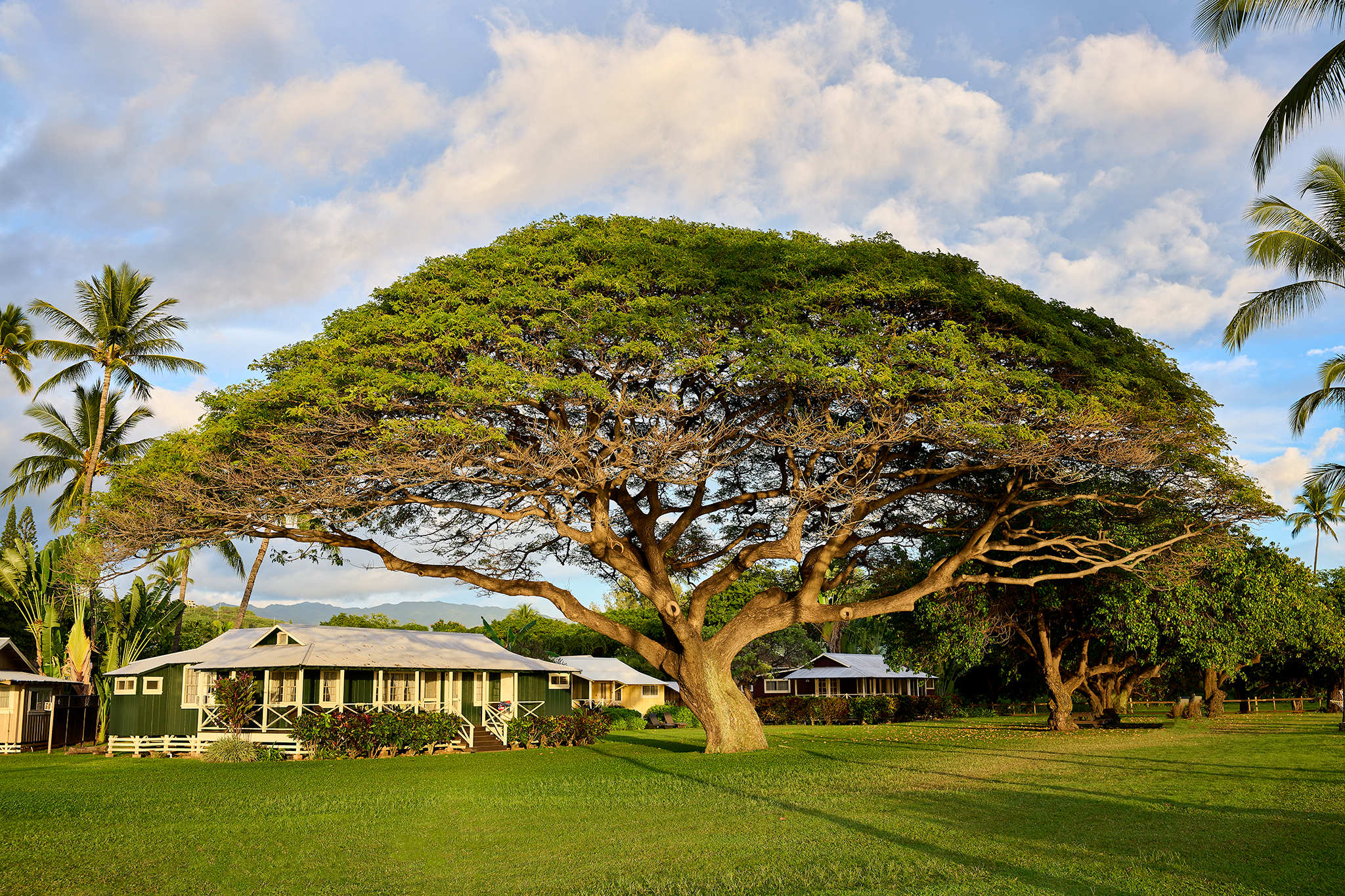
Linda Lubeck’s favorite tree. It is located next to the beach at the Plantation Cottages in Waimea, just north of our home. Highway 550 starts its ascent up the canyon nearby.
— Jeff’ Thoughts and Other Worthless Trivia —
The Image of the Pups…
The Nikon Z9 and Z 20 MM F2.8 S Lens deliver the goods on this one. The wind is kicking up left to right. Because the Grip, and Button and Dial locations are so natural feeling, I can adjust the shot manually to my liking – quickly. As I have found with other Z9 and Z Lens shots, the result is creamy smooth at a glance from a distance, but tack sharp when diving deep into image at 100%. The image is captured at ISO 200, F11 and 1/500 of a second and HAND HELD. The images at 1/320 of a second are not as sharp.
The image at MM 1.5…
The Nikon Z9 and Z 20 MM F2.8 S Lens deliver the goods on this one as well. The result is almost three-dimensional. The wind has calmed. The image is captured at ISO 100, F8 and 1/320 of a second and HAND HELD. I am liking the 20MM more with each subsequent shoot.
The image at MM 3…
The Nikon Z9 and Z 20 MM F2.8 S Lens are 3 for 3 on this day. The result is almost three-dimensional. The wind has died down to almost nothing and the sun is out. The image is captured at ISO 64, F9 and 1/320 of a second and on at Tri Pod. The light is changing with cloud coverage. I try the Nikon Bracketing Tools and my manual application of the same concept. F9 seems the from my manual adjustments yield the best image on this shot.
The image at Plantation Cottages…
The Nikon Z9 and Z 35 MM F2.8 S Lens win out over the same shots using the 20 MM. Shots from the Nikon Bracketing Tools and HDR in Capture One Workflow software win the day. The image is captured at ISO 320, F10 and 1/320 of a second and on at Tri Pod.