December 2025
M T W T F S S
1234567
891011121314
15161718192021
22232425262728
293031  

Capturing Kauai: Big Winds Busy Yard

One thing I have learned about the Hawaiian Islands is that reading about Trade Winds and their effect, is different than experiencing them first hand.

The storms of winter-time and the 35-50 foot waves they can produce – is dramatic.  The concussive effect pounds into your chest – even standing at a great distance.

What has been more surprising, to me, are the otherwise sunny and beautiful days at the beach house where the whole day yields 15-30 mph wind gusts, a relentless string of 6-10 foots waves, and a constantly changing beachfront further impacted by tidal change.

This weekend has seen non-stop movement during the daylight hours.  Despite the high wind swirling from all directions, the birds and butterflies keep busy.

I’m in a hurry. And… do not say Nest and Egg in the same sentence ever again.

We have Three on Approach. Everyone Copy That!

Please stay seated until we are parked at the gate and the doors are open.

At landing, it is 82 degrees with winds out of all directions at 18.3 MPH.

Video Reply confirms there are 12 Chicks on the Field.

— Jeff’s Worthless Trivia & Other Thoughts —

The moth in this image appears to be a Citrus Swallowtail (Papilio Xuthus).  Ironically it is flying around a Mandarin Orange Tree in the Front Yard.  Previously, I did a Post on the Monarch Butterfly in our yard [here].

The Myna bird is one of the two (mates) who live in our yard. These songs birds are really talkative.  My guess in this bird swooped down and raced across the property picking up lumber for their nest.

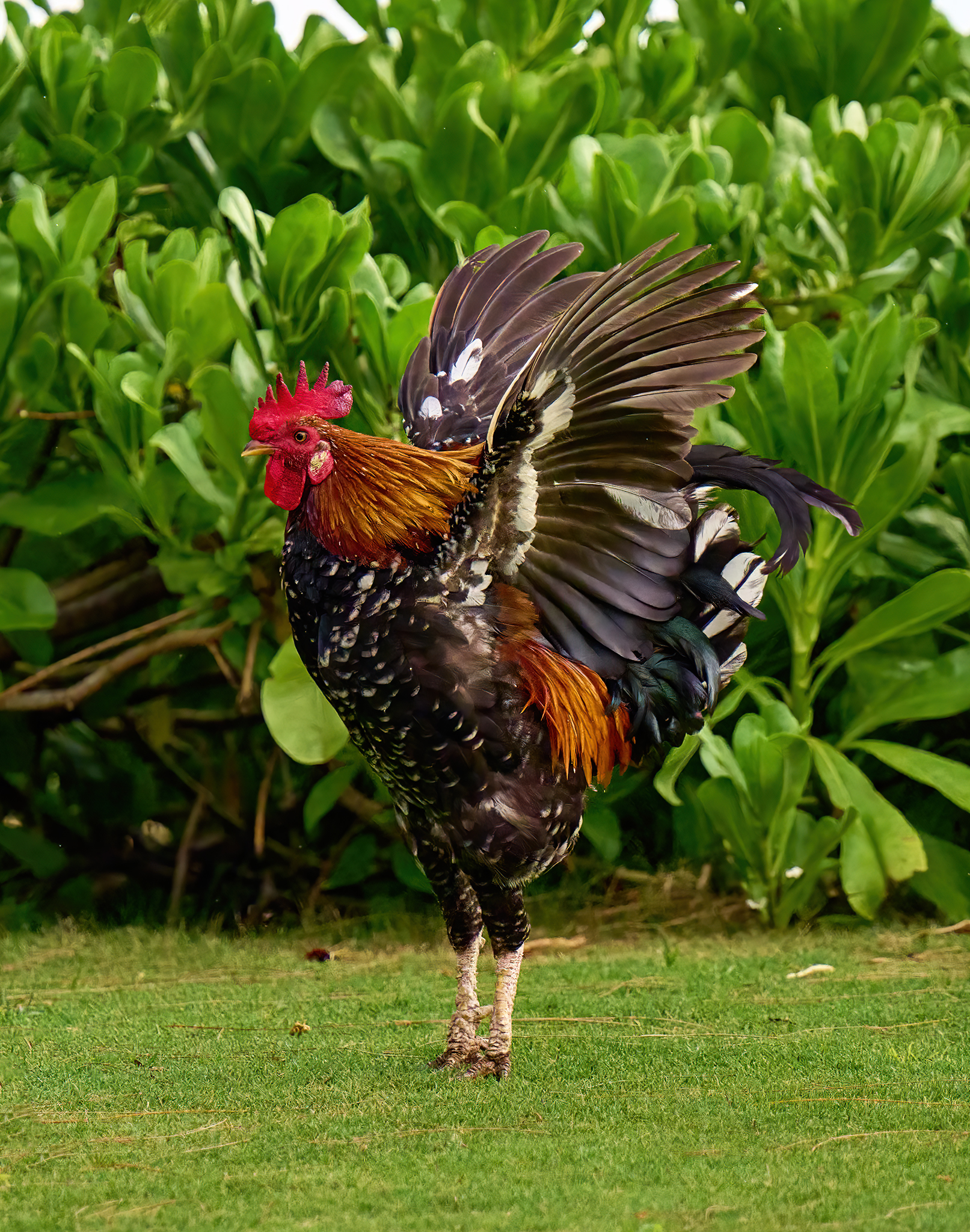
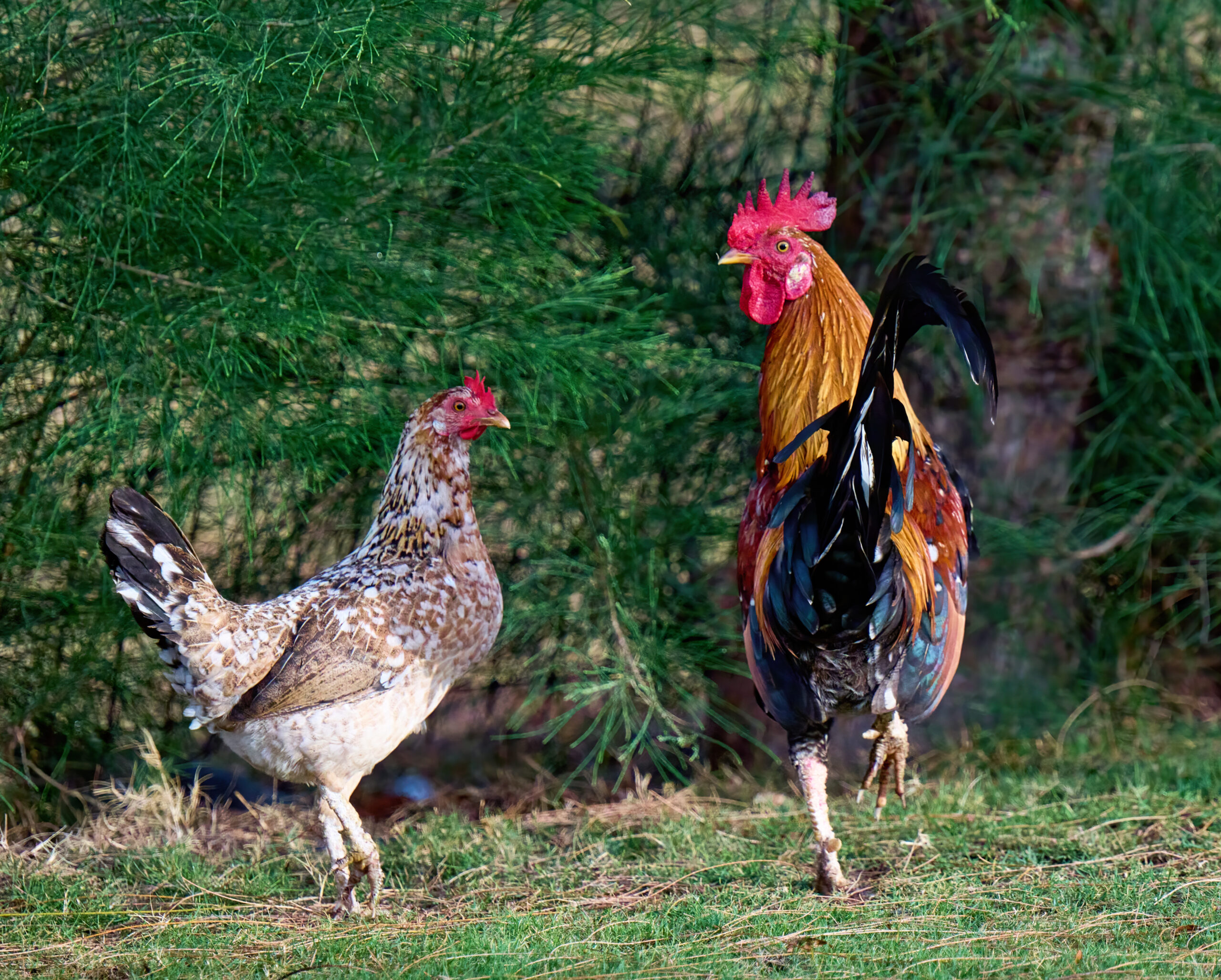
The chickens appear to be breeding more that what we remember from last spring.  Linda and I think there are four different females with chicks that are patrolling the property.

For The Camera Geek

These action shots were captured using the Nikon Z9 camera with the following settings:

Lens: Nikkor Z 70-200 2.8 S @200MM

Hand Held

ISO: 2000

Shutter: 1/6400th of a second

F8

20 Frames Per Second

45 Megapixels

14 BIT Color

3D Wildlife Auto Focus

Capturing Kauai: Windswept Magic on Kalepa Ridge

Travelling the Kalepa Ridge Trail on the Na Pali Coast on the Island of Kauai is an extraordinary experience.  There are few adventures more beautiful or potentially more dangerous.  The trail traverses a knife-like ridgeline as it extends out from the Kalalau Lookout on the Northwestern edge of the Island.  The trail is 1.8 miles in length (out and back).

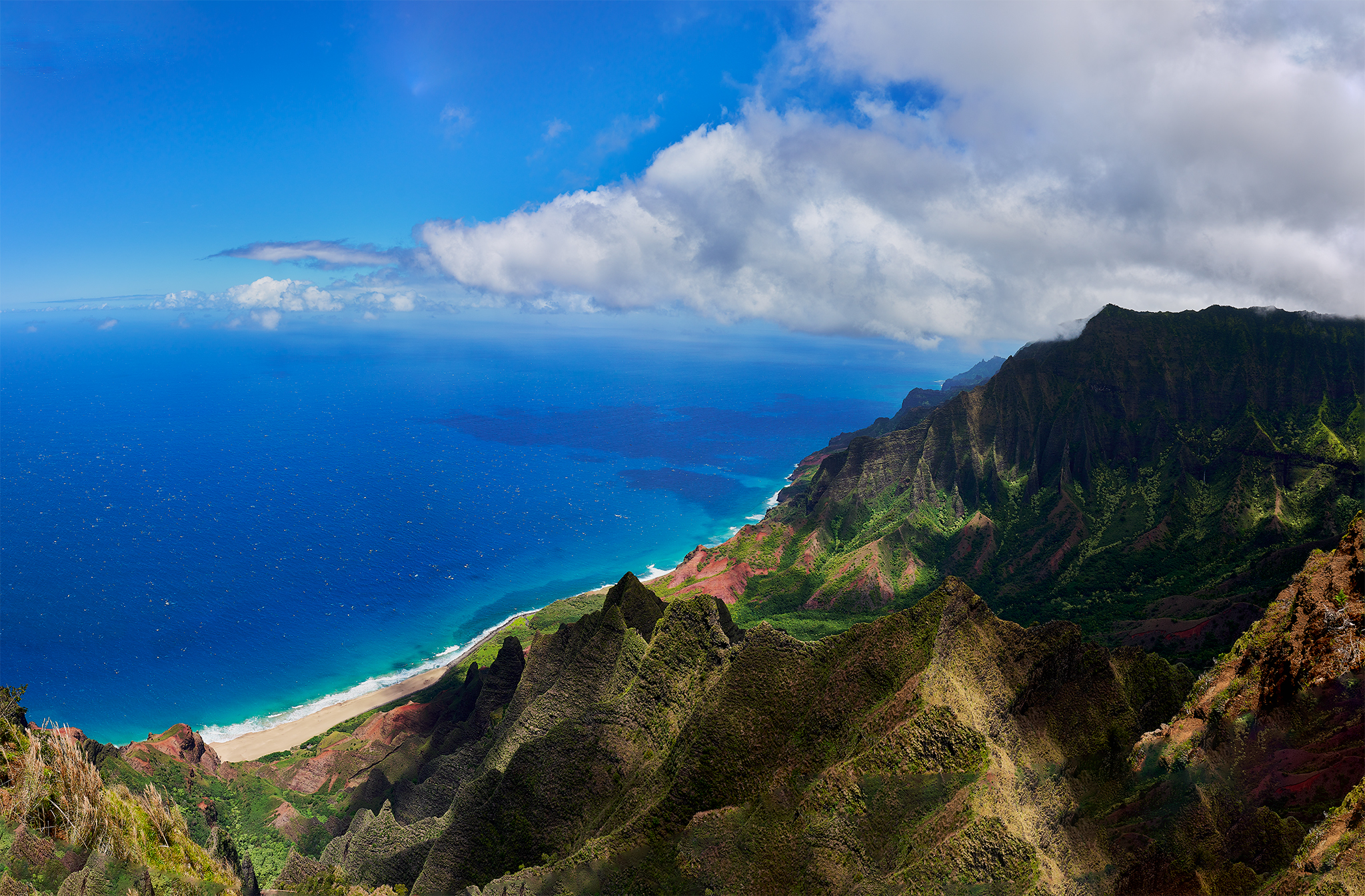
The views are breathtaking for most of the trip. From the endpoint of Ni’ani’au, the Kalalau Valley, Kanakou, Alea’lau, Ka’a’alahina Ridge, Kalalau Beach. Kalalau Trail, Ho’ole’a Falls, Honopu Ridge and Honopu Valley present themselves in their full glory.

All the Key Spots Big and Small in View

The trip is an up and down adventure.  Technically there is only a 500 vertical foot drop.  The elevation change is materially more.  The trail-bed is superb, however, it is narrow.  There are a few spots on the trail where the change in vertical is dramatic.  There are a number of spots where a slip can result in a plummet of 3,000 feet.  There is also a number of spots where level ground is present.  These spots are full of trees and native grass.  These spots make you feel as it you are in an arboretum.

The arboretum that is Kalepa Ridge.

The arboretum that is Kalepa Ridge

The Kalepa Trail is not an official one. It is not maintained. Travel on the trail is explicitly discouraged by the State Parks of Hawaii.  Signs to this effect are posted in and around Kalalau Lookout.  In short, you are on your own on the Kalepa Trail.  The Kalepa Trail, like others on Kauai, is a completely different experience if moisture or rainwater is involved.  This trail’s status moves from Demanding | Difficult to Dangerous | Treacherous with the presence of moisture.

I travel on these trails with hiking cleats and hiking pole at all times.  They change the game in general and are difference makers when wet weather is involved.

Looking down to Kalalau Beach from Ni’ani’au.

I am covering the length of the trail as reconnaissance.  I am trying to establish the best lighting and time of year for future late-afternoon, sunset, sunrise and astrophotography shoots.

Looking up to Ni’ani’au from the Na Pali Coast on Christmas Morning.

One rule-of-thumb on these trails: have your camera-at-the-ready, you might catch a rainbow.

Rainbow on Kalepa

Kalepa Ridge Trail Map

— Jeff’s Worthless Trivia & Other Thoughts — 

The implication of the micro-climates in this area of the island can be material.  Sun, rain, mist, and fog | cloud banks can happen within few moments of each other.  All conditions occur while hiking on this day.

You Never Know Who You’ll Bump Into

Upon leaving the trail, I sit down on the grass at Kalalau Lookout to remove my boots.  The view from Kalalau Lookout is enveloped in clouds.  A lady is standing at the fence talking with other strangers.  I over hear the lady expressing her disappointment because she says she is a landscape photographer, there is no shot to be had, is on a family vacation, and leaves in the next day.

I reach out, and suggest to the lady she wait 15-30 minutes.  The lady thanks me, but says the guideline of family trip rule the day – so no photo today or a return tomorrow.  I understand her and also follow that type of rule.  We chat for but a few seconds more and I am on my way.

Somehow, the lady finds me, my websites, and sends a very nice email later in the day. What a thoughtful thing to do. Not only is the lady a photographer, she is a superb one at that.

A link to the works of Kristen Ryan is [here]

Dark Skies in Goat Creek


The New Moon for March 2022 is long past.  The first days for Dark Sky photography were solid, but clouds and warm moist weather eliminated shooting for a some key days.  Such is Life. However, as I return to the Cabin from a dinner with friends in Stanley (Doug and Cathy Proctor), the stars are out – front and center.

I am situated in the Goat Creek drainage near Stanley, Idaho surrounded by the Sawtooth National Recreation Area. In my direct view is Williams Peak and Merritt Peak, with the Goat Creek Basin splitting the two peaks. The Moon is out and I would never expect the stars in the sky to be shining brightly. Well… Better to be Lucky than Good… I capture two images. One with the Moon present at about 8:52PM and another hours later at 3:30AM.

Sirius is Serious in Goat Creek.

Virgo and Leo Are in the House

— Jeff’s Worthless Trivia and Other Thoughts —

In the Sirius photo, the light from the Moon is blasting down from the right hand side of the sky. The Sky and the landscape around me are a dazzling blue. I feel as if I can reach-out and touch the stars, let alone see them. The large pulsating star near the big tree on the left is Sirius in the Canis Major constellation. Many know Sirius as the Dog Star. It is the brightest star in Earth’s night sky. In Greek, Sirius means glowing. Occupying the center of the image is the Orion Constellation. Orion is named for the hunter in Greek Mythology. Orion is known and seen world-wide as it is located at the celestial equator. Many Astrologers (of which I am not) believe two of the ten brightest stars in the sky are located in Orion — Rigel (Beta Orionis) and Betelgeuse (Alpha Orionis). Both are clearly visible in the image and are the brightest part of Orion on this night.

In the Virgo and Leo photo, the constellations Virgo and Leo are prominent in the center and right center of the image. Virgo is known in mythology and the Virgin and is tied to fertility. Virgo is full of exoplanets. It is the largest constellation of the Zodiac and the second-largest constellation overall, behind Hydra. Spica is the brightest star in Virgo (lower center in image). For context, Spica is 260 light-years from Earth. It is twice as large as our sun, and 2,300 times brighter. Leo (the Lion) was one of the very first identified and documented constellations – by the Mesopotamians. One of the brightest stars in Leo is towards the upper right side of the image. The star is named Al Geiba, which means “the lion’s mane.” In 2001, a planet eight times the size of Jupiter was discovered orbiting Al Geiba.

From a technical perspective… Camera: Nikon Z9,  Lens: Nikon Z 20MM f 1.8  Both images were shot with 13 seconds of exposure at F2 and ISO 2000.