May 2026
M T W T F S S
 123
45678910
11121314151617
18192021222324
25262728293031

Sun Playing Havoc at the Perch

Droplets of rain and soft hail begin to fall upon me as the late afternoon sun peeks through the dark clouds.  Sitting on an exposed knob at 8,800 feet elevation, the Redfish Creek Valley is 2,000+ feet below to my left and the Saddleback Lakes are 400 feet below to my right. Directly across from me, only separated by the exceptionally narrow valley of Saddleback Creek sits 1,200 vertical feet of granite wall otherwise known as The Elephant’s Perch (9,870 ft).

There are 25 established routes to the summit, including the easiest (a Class 3) I planned to take before the weather front moved into the area.  Seeing I am on my own in the middle of the Sawtooth Wilderness, this effort will become a backcountry hike with brief rock scramble and photo shoot.

Although the sound of thunder makes itself known for about 15-20 minutes, no storm of material nature presents itself.  For the next 2 hours the sun teases me with brief appearances.

Although I am able to grab a few shots of the Elephant’s Perch and the mountains on the north side of the Redfish Valley, the sun plays havoc with me and my camera gear.  At one moment the wall of the Elephant’s Perch is a dull slab of rock.  For a brief instant the sun blasts through the rain accompanied with soft hail to light up the face of the mountain.

For almost the entire session the peaks on the north-side of the Redfish Creek Valley are cloaked in a flat light.  However, for brief seconds at a time, the sun acts as a spotlight casting itself on small sections of the terrain.  During these periods I see just about every shade of green possible. Also the sandstone that makes up Braxton Peak and the Magenta colored granite the constitutes Heyburn Mountain become even more obvious.

Initial Hands On with the Nikon D810

At The Start

The release of the D810 camera from Nikon corporation has reaffirmed my belief – invest in the lens.  Do not conclude that I think the D810 is not worth every penny of today’s dollar – doing so would be incorrect.  The advent of the body containing digital sensors and sophisticated processing engines instead of a film stock means the camera has a increased role in determining the outcome.  In short, the impact of a great piece of glass may [technically] be reduced, but not by much. The D810 shines on many fronts and delivers as promised.  However, the D810 proves to be a true bargain if you have already took the time to establish and invest in quality lens’ that works best in the settings and conditions in which you shoot.  For me many of those lens’ were in production long before this camera body was considered.

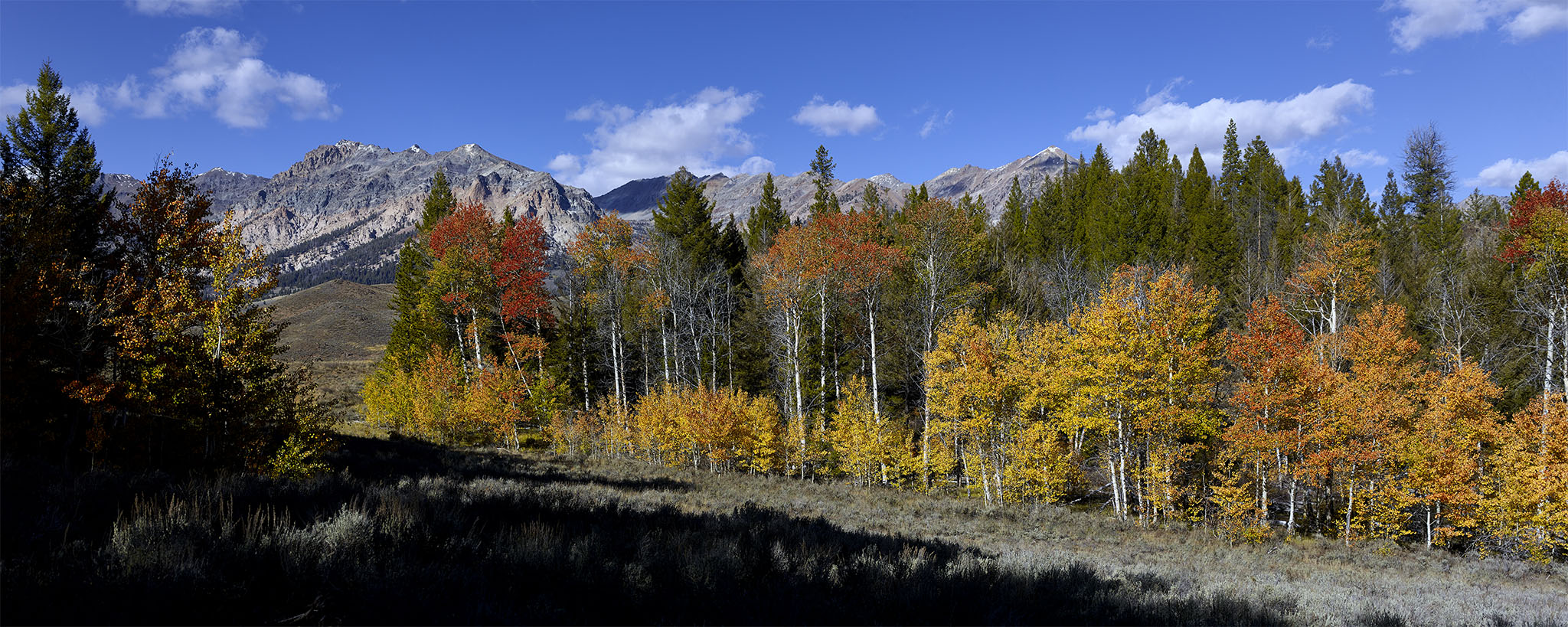
Elephants Perch – Nikon D810 and Nikkor AF DC 105MM shot at: ISO 64 F8 320th/sec

I am pleased that Nikon is selling a digital single lens reflex (DSLR) camera body for semi-professionals/professionals for a few thousand dollars with specifications that were nowhere close to being available a few years ago.  Yet, what excites me is that I could purchase the camera body without the need to buy a single new lens to enjoy its capabilities to the fullest.  Thank you Nikon, professionals providing Sage advise, and commentators on the web such as Ken Rockwell.

For most; the quicker, faster, better sell associated with the D810 is not applicable.  However, if your photography demands are of the highest nature (of which only you can truly establish and justify) the D810 could be a great choice.

The Obligatory Backgrounder

I attempt to create images that can be faithfully reproduced on archival grade canvas with pigment inks in sizes up to four (4) feet by 10 feet.  Many of these images are landscape in nature and taken in relatively remote locations reached in great part via a long hike and the use of a backpack.  The results appear exclusively at The MESH Art Gallery.

Over time I have owned or field-tested camera body and lens offerings from Cambo, Canon, Konica, Leica, Nikon, Mamiya, Phase One, Sigma, Tamron, and Zeiss.

For the past number of years my kit has been as follows:

DSLR 35MM: Nikon D3x camera and Nikkor Lens

4 by 5:  Phase One IQ Digital Back, Cambo Wide RS or Phase One 645 camera body, and Schneider or Rodenstock lens.

Thanks in great part to Capture Integration (Steve Hendrix) the 4 by 5 kit, despite its material cost has been nothing short of a winner in my book.

Nikon Equipment Left at Home Forever?

Despite the extra weight, bulk and lack of allowing for nimbleness the performance of medium format (4 by 5) equipment has forced the Nikon kit to stay home more often than not.  Can the Nikon D810 change things? I have decided to give this camera body a try and experience the results first-hand.

Initial Impression from the Field

I tried out the Nikon D810 with some of my existing Nikkor lens’s while figuring out the basics.  Although the locations are not elaborate, the results are on the post.  The camera is very comfortable and natural to hold during shooting. The movements and actions of the D810 are materially quicker and more responsive than the D3x. Surprisingly so!

My hope/goal is to prove/disprove over the next month or so that the Nikon D810 coupled with the Nikkor lens’s can provide a quality DSLR option to the medium format (4 by 5) when nimbleness is desired.


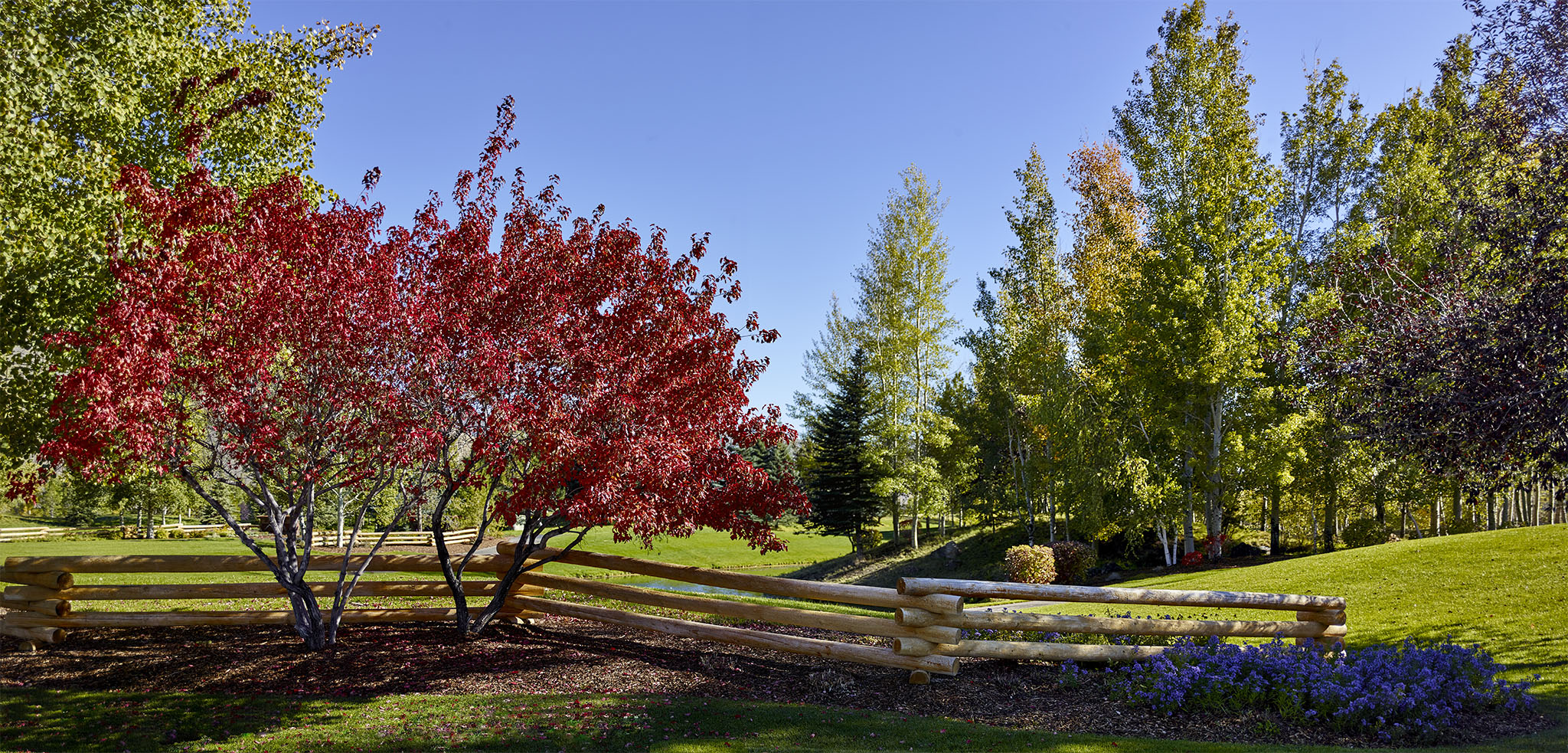
Morning Walk on Indian Creek – Nikon D810 Nikkor AF-S 14-24MM shot at: ISO64 F4.5 400th/second.

Early evening in the garden at the VC.

Flower Basket at the VC

Oops, the sprinkler. Nikon D810 Nikkor 50MM 1.4G shot at ISO 64 F2.5 1600th/second.


Hollywood See Hollywood Do – Dawn of the Planet of the Apes

The film Dawn of the Planet of the Apes provides a fair amount of likeable aspects for its viewers. Three of the them are not originality, filming locations, or appropriate length.  The injection of the standard issue Hollywood Summer Epic techniques (e.g., the overlong, implausible fight between hero and villain towards the end of the film), Campbell River British Columbia posing as Marin County California, and 15-20 minutes of needless screen time hurt what could otherwise be a memorable movie.

However, what Dawn of the Planet of the Apes offers to its viewers are strong lead characters, a sometimes compelling storyline and computer generated images (CGI) that in limited ways are terrific (i.e., the apes facial expression).  Andy Serkis (The Lord of the Rings, The Prestige, The Hobbit) reprises his role as Caesar the leader of the apes. Jason Clarke (Zero Dark Thirty, White House Down) plays Malcomb the leader of the expedition team of the human  survivors.  Both actors and the script associated with their roles are worthy of the price of a movie ticket.  Pretty much everything else in Dawn of the Planet of the Apes you have probably seen many, many, many times before and more often than not of better quality.