February 2026
M T W T F S S
 1
2345678
9101112131415
16171819202122
232425262728  

Capturing Kauai – Only a Week Until Santa Visits

In one week’s time Santa comes for a visit.

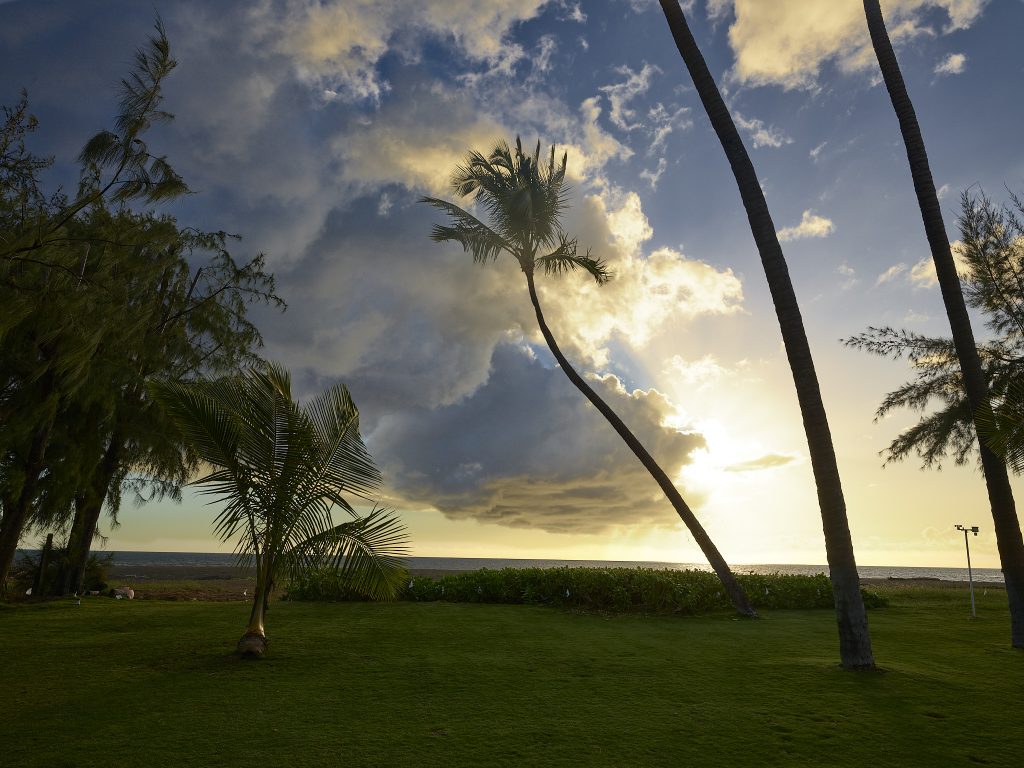
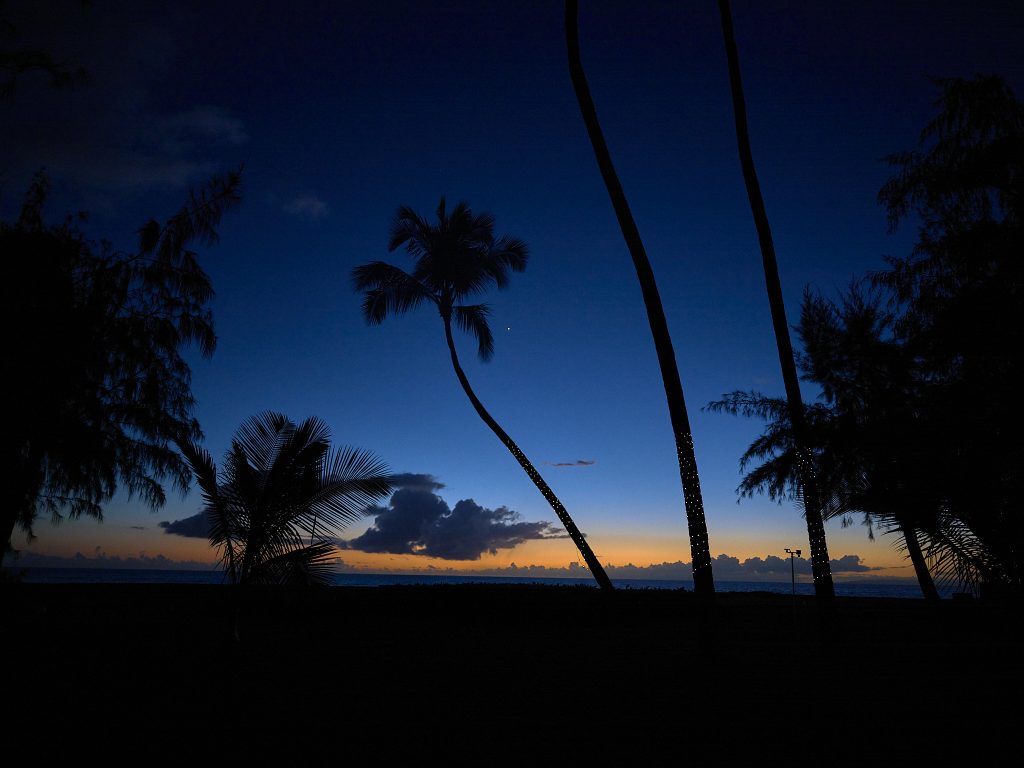
Mother nature has provided some remarkable sunsets this fall.  Linda and I put up some Christmas lights in the Coconut Palm Trees a couple of months ago.

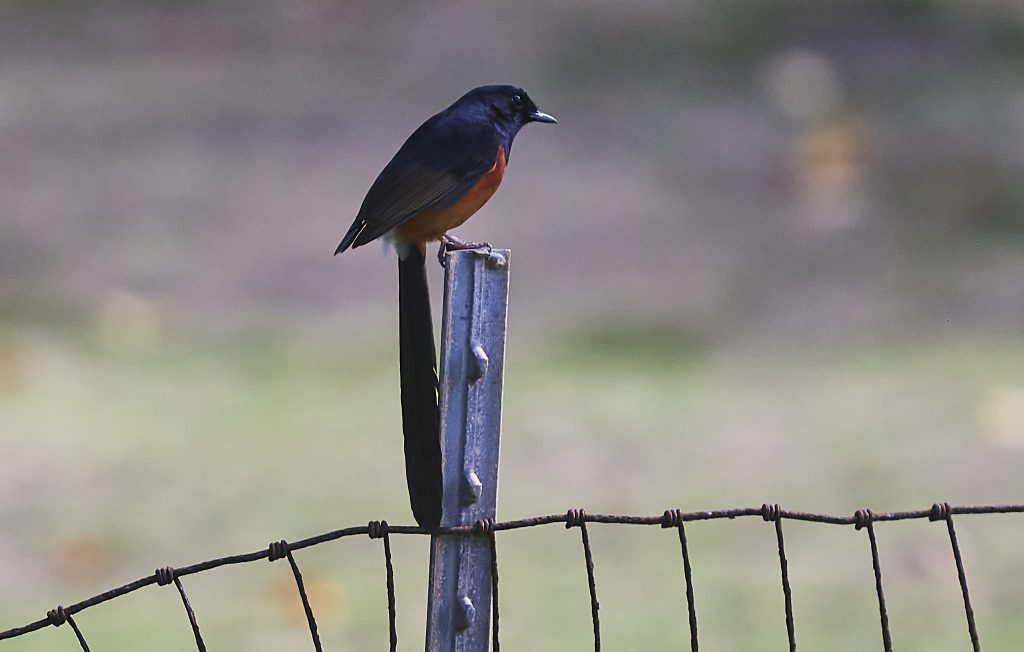
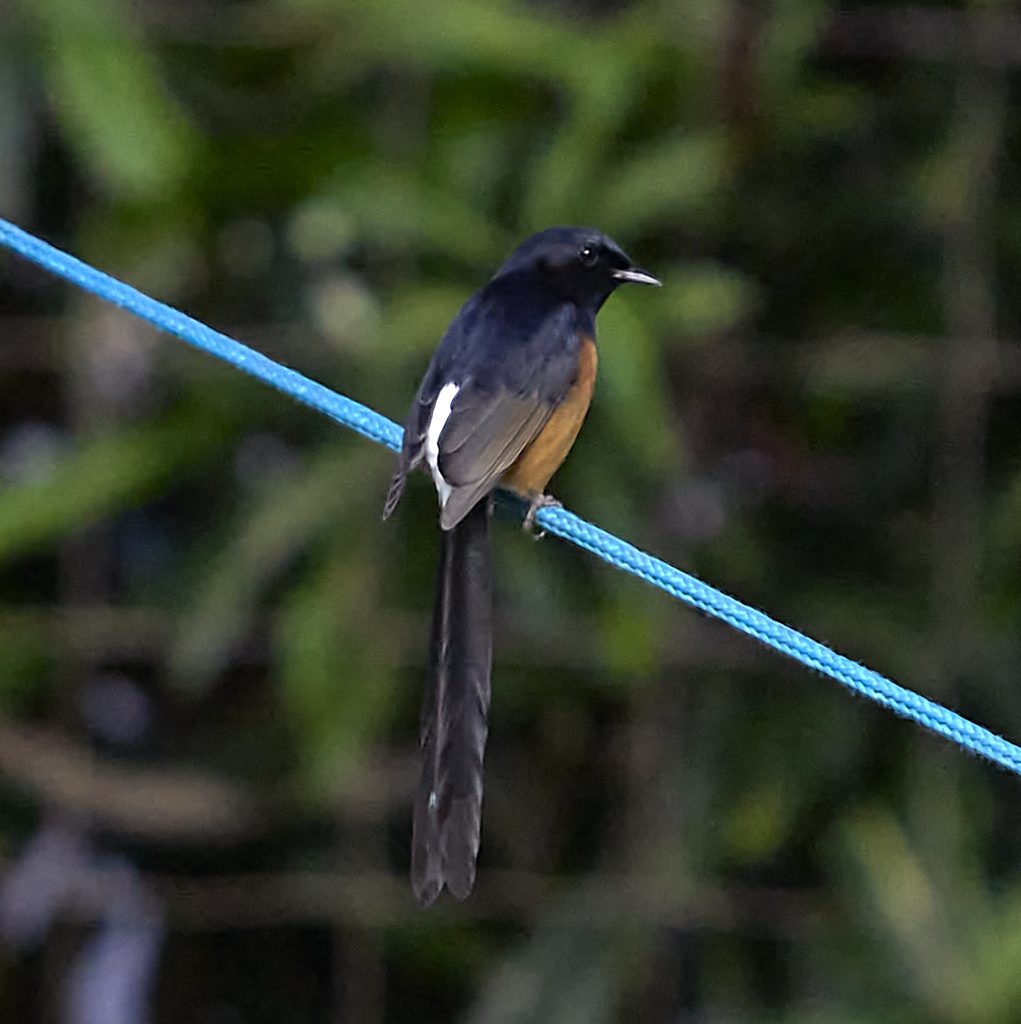
We also have identified another regular visitor to the yard. A male White-Rumped Shama seems to have established that our place is also his.  The long tailed bird’s native habitat is India and Southern Asia.  It was introduced to Kauai in 1931.  The female is smaller and lighter in markings, but also has a long tail.  Different than most of the birds on our property the White-Rumped Shama only pairs with its female companion during mating season (January – April).

The weather pattern changes materially on Kauai in December.  it is the rainiest month in Waimea – 4.3 inches on average.

The cloud patterns have been fascinating.  In the image below, the clouds stayed above our house – with only the slightest movement for hours – through sunset.

Capturing Kauai – Merijo and the ʻōhiʻa lehua sharing life together

The Merijo, a Wren with a White Ring around its eye and originally from Japan, has found Kauai to be a wonderful place to live and even thrive.  At four inches and weighting less than 4 ounces – the tiny and astoundingly quick bird – uses the ʻōhiʻa  and its lehu flower as its primary place to grab a meal (insects).

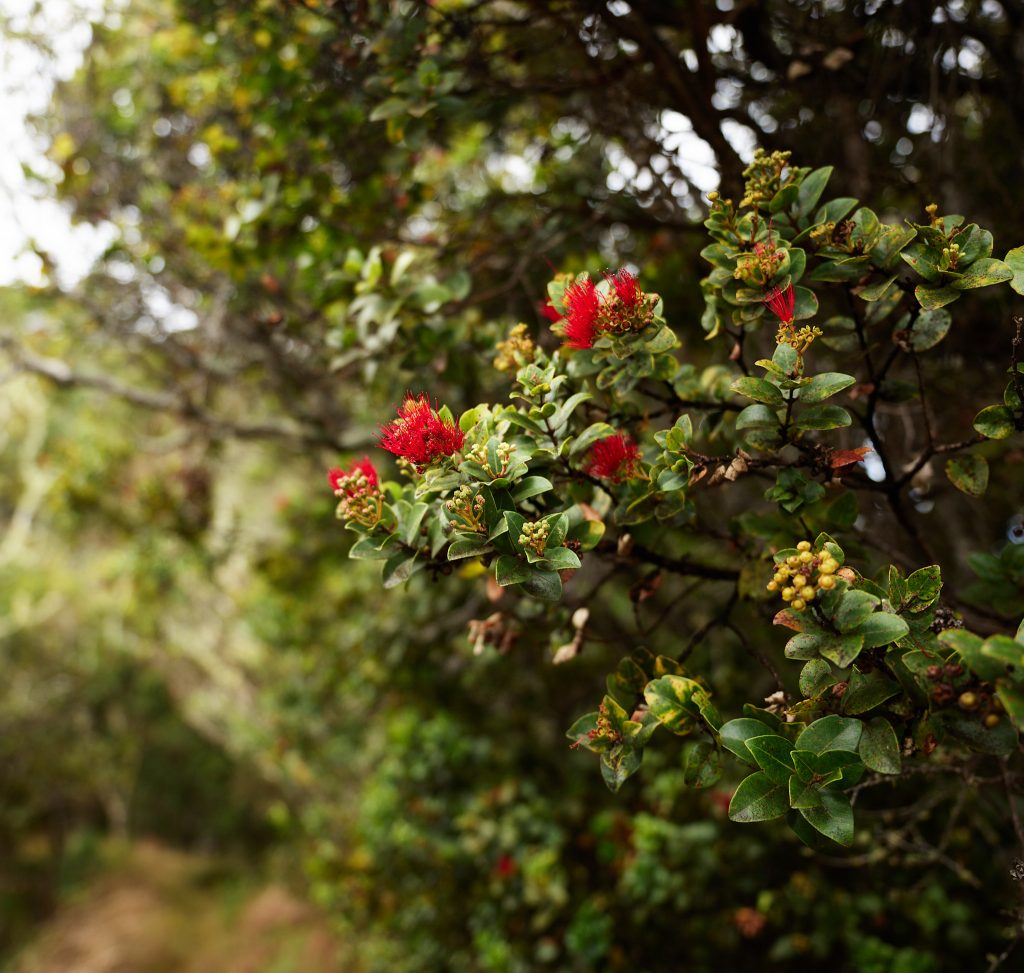
The ʻōhiʻa is a tree or bush endemic to the six main Hawaiian Islands.  The ʻōhiʻa  plays a major role in Hawaiian history and culture.  Its lehu flower blooms in three color ranges (Yellow, Orange and Red). 

The Merijo, uses its olive and yellow greenish body color to protect itself by hiding amongst the similarly colored leaves of the ʻōhiʻa.  The bird only becomes fully apparent when it jumps from the tree limbs up to the lehu flower to nibble on insects.

The Lubeck’s are exceptionally fortunate that a pair of Merijo and a ʻōhiʻa tree call our yard home.  Our ʻōhiʻa tree began to produce its lehu flower earlier this month.

As the sun rises a Merijo feeds sitting a ʻōhiʻa tree and lehu flower.

A closeup of a Merijo as it feeds sitting a ʻōhiʻa tree and lehu flower.

Yesterday I decided that I would use a few late afternoons and sunrises over the next days to attempt to capture the lehu flower and the Merijo.  The photos above were taken this morning at sunrise.  The photo’s of the lehu flower immediately below were taken late yesterday afternoon.

The lehu flower at the top of the ʻōhiʻa tree.

A closeup look at the lehu flower at the top of the ʻōhiʻa tree.

The ʻōhiʻa  and its lehu flower has fascinated all of my days on Kauai.  As a tree or bush it can survive the sunny oceanfront in as little rain as 16 inches per year.  Yet, the ʻōhiʻa can survive the high peaks of the Kōkeʻe or Alakaʻi Swamp and its 460+ average annual inches of rain.

The lehu flower at the top of a 25′ ʻōhiʻa tree in the heart of the Alakaʻi Swamp in November 2021.


The lehu flower at the top of a 2′ ʻōhiʻa bush in February 2021

— Jeff’s Thoughts and Other Worthless Trivia —

While the most prominent native tree in the Hawaiian Islands, the ʻōhiʻa is presently experiencing a grave threat to its very existence. Rapid ʻŌhiʻa Death has become a thing and is proving to be bad news – big time.  In short, a type of fungus – new to the islands – has appeared.  If infected, the ʻōhiʻa can die in as little as a few days.  Unfortunately the insects that eat the fungus are also disappearing – for a different reason; an overall temperature increase in the island chain.

The shots on this page were taken hand-held with my PhaseOne IQ4-150 Digital back, and PHASEOne XF Camera. 

The images of the ʻōhiʻa tree and lehue were captured with the following lenses: PhaseOne 35MM (yard), PhaseOne 110MM (Alakai Wilderness) and PhaseOne 55MM (Alakai Swamp).

The images at sunrise were captured with the PhaseOne 240MM.  Attempting to capture an image of a 4 inch bird 75 feet away and 15 feet in the sky can be tricky.  Normally I would attempt this kind of shot on a tripod.  the bird is quick, very quick – so I captured the images at 1/4000 of a second.  Think F1 Grand Prix car race or Tour deFrance bike race fast.

At the above mentioned speed, and low light, settings for ISO and fStop need to be carefully considered.  The ideal combo of ISO 25 and F11 would be as likely as Miss Universe flying through the window into my bedroom as a 16 year-old.  I do not much like going over ISO 800 with the PhaseOne XF.  So that choice resulted in a f4.5 on the lens which brought me to one stop down (-.3) in light from 0.0 which is where I like to shoot.


Capturing Kauai – A Trek Into the Alakai Wilderness


The Alakai Wilderness on the island of Kauai is a fascinating and confounding place.  It is a region of the island that is isolated from larger human population centers and is somewhat difficult to reach.  Within the Alakai Wilderness there is a collapsed Volcanic Crater (sacred ground to native Hawaiians), The wettest spot on earth, the tallest mountain on the island, the highest elevation swamp on earth, some of the most magnificent water falls on earth, canyons 3,500 feet deep and high alpine desert. All are located within 20 air miles of the Pacific Ocean.

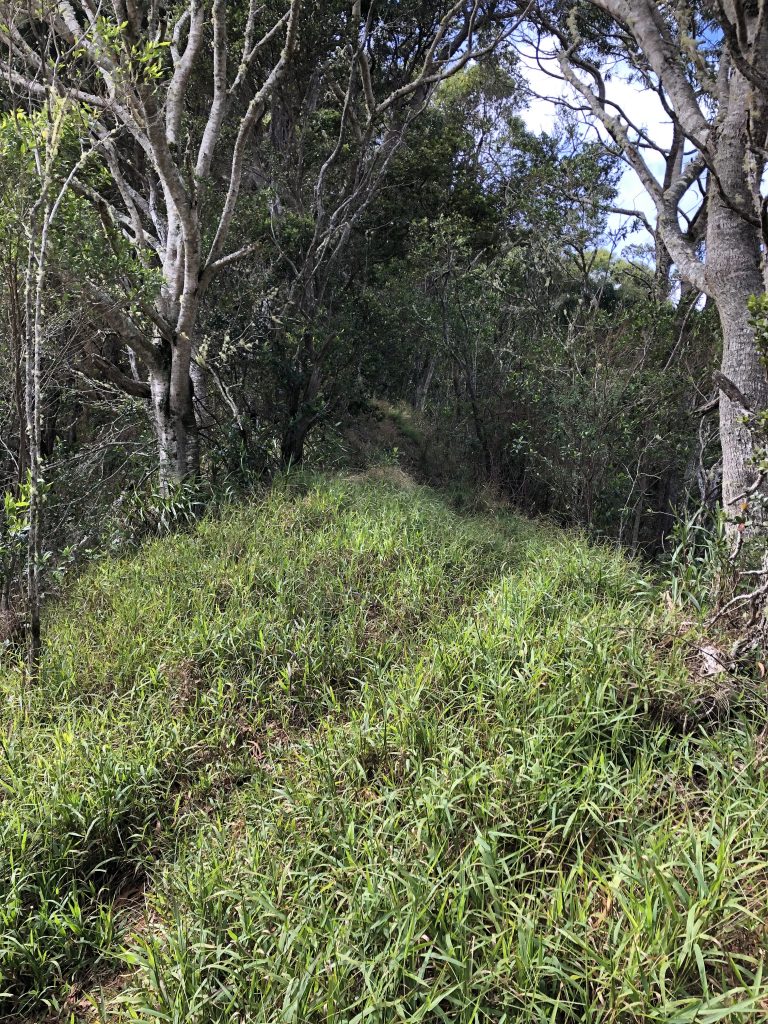
Up through the ferns to the ridgeline from the Mohihi Stream crossing and Sugi Tree grove.

This story is not about the Alakai Swamp area, which I have written about previously [here].  This story is about the high elevation areas of the Alakai Wilderness that overlook the swamp. Eventually The High Alpine region enjoins the swamp just below the rim of the crater of the collapsed Volcano (Mt. Wai’ale’ale).

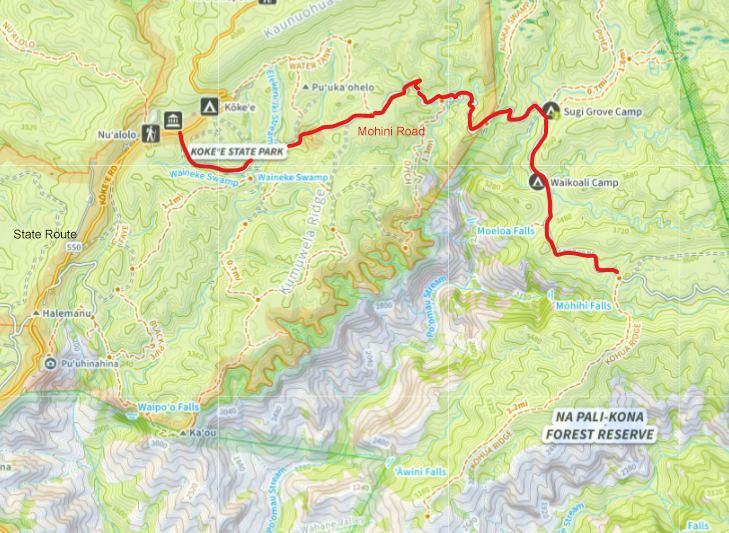
The high elevation areas of Alakai Wilderness are accessible via the Mohihi Camp 10 Road.  The Mohihi Camp 10 Road is accessed via Highway 550 (The Waimea Canyon Road), 15.6 miles from its start in Waimea Town.  The Mohihi Camp 10 Road is 5.8 miles in length and is a rough 4-wheel drive, one-lane, steep, stream fording, significant drop-off, could be washed-out at any point kind of experience.  I have fallen in love with this road.

The high elevation areas of the Alakai Wilderness on this trip are along the Mohini-Wai’ale’ale trail.  The route involves bursts of 50-400 vertical feet of gain or loss that often involve heavy vegetation and a slick trail-bed.  The Mohini-Wai’ale’ale trail is 4.5 miles in length.  The trail covers ground from the Mohini Camp 10 campground to the Alakai swamp. The remainder of the trip to Mt. Wai’ale’ale is off-trail and through the swamp – 6.5 miles.

Decades ago there was a semblance of a trail for locals to follow and celebrate at the summit.  Hurricane Iniki (September 5, 1992) wiped out this trail, damaged or destroyed 14,500 homes and in most respects denuded to island.  The top measured wind was 217 MPH Makaha Ridge (no calibration performed).  Iniki did not visit long – it passed through in about 40 minutes.  However, the State of Hawaii’s Department of Natural Resources decided to  build a fence on long stretches’ of the upper elevation to keep feral pigs from destroying the habitat.  Luckily, Kauai has no snakes or rabies.  However, it does have pigs which man brought to the island to raise and eat. An unintended outcome of the “Pig” fence is there is a stable piece of land bordering the fence to the summit of Mt. Wai’ale’ale.  It is my plan to eventually reach the summit.

Sugi Tree forest.

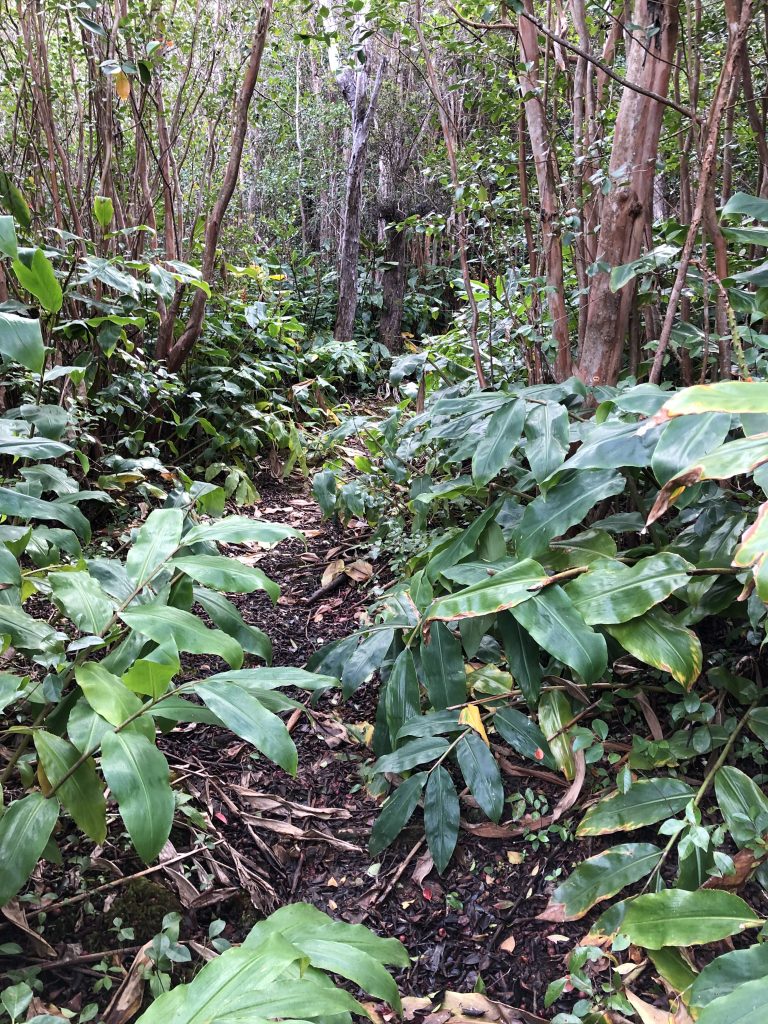
Heavy lush vegetation lines the trail.

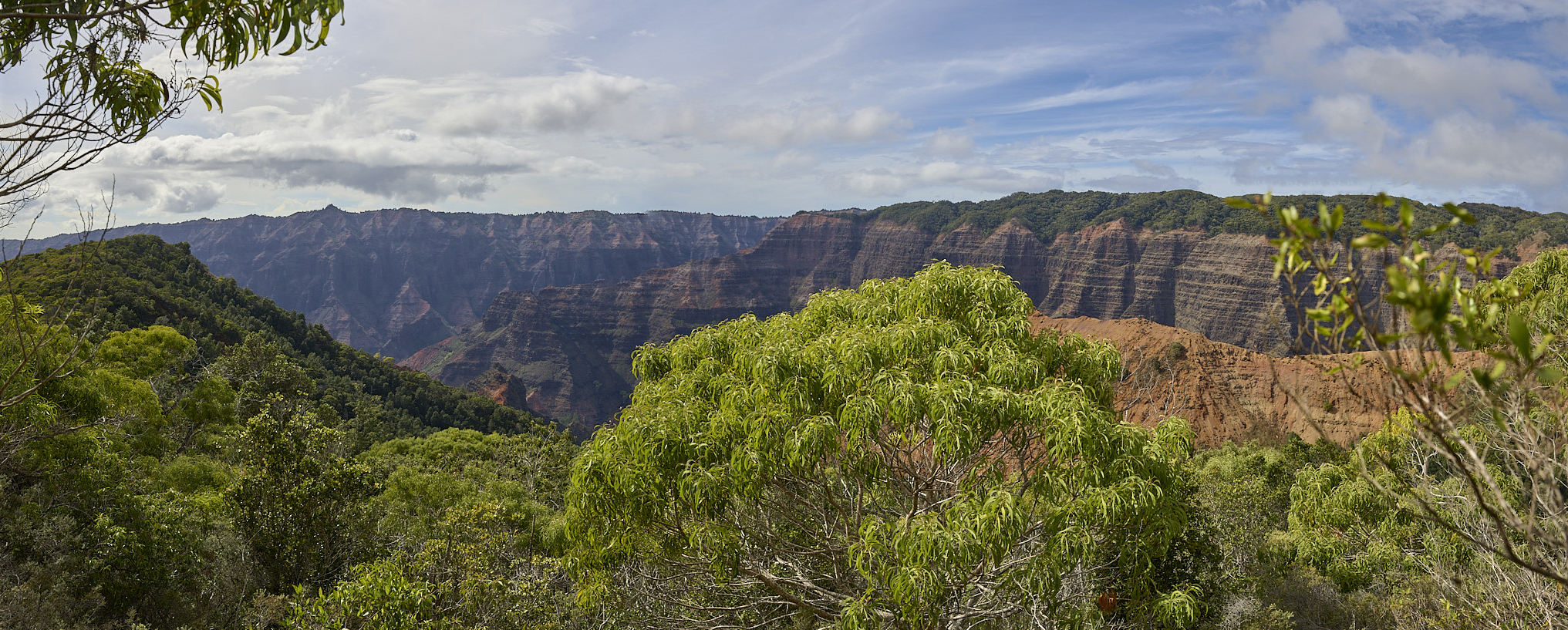
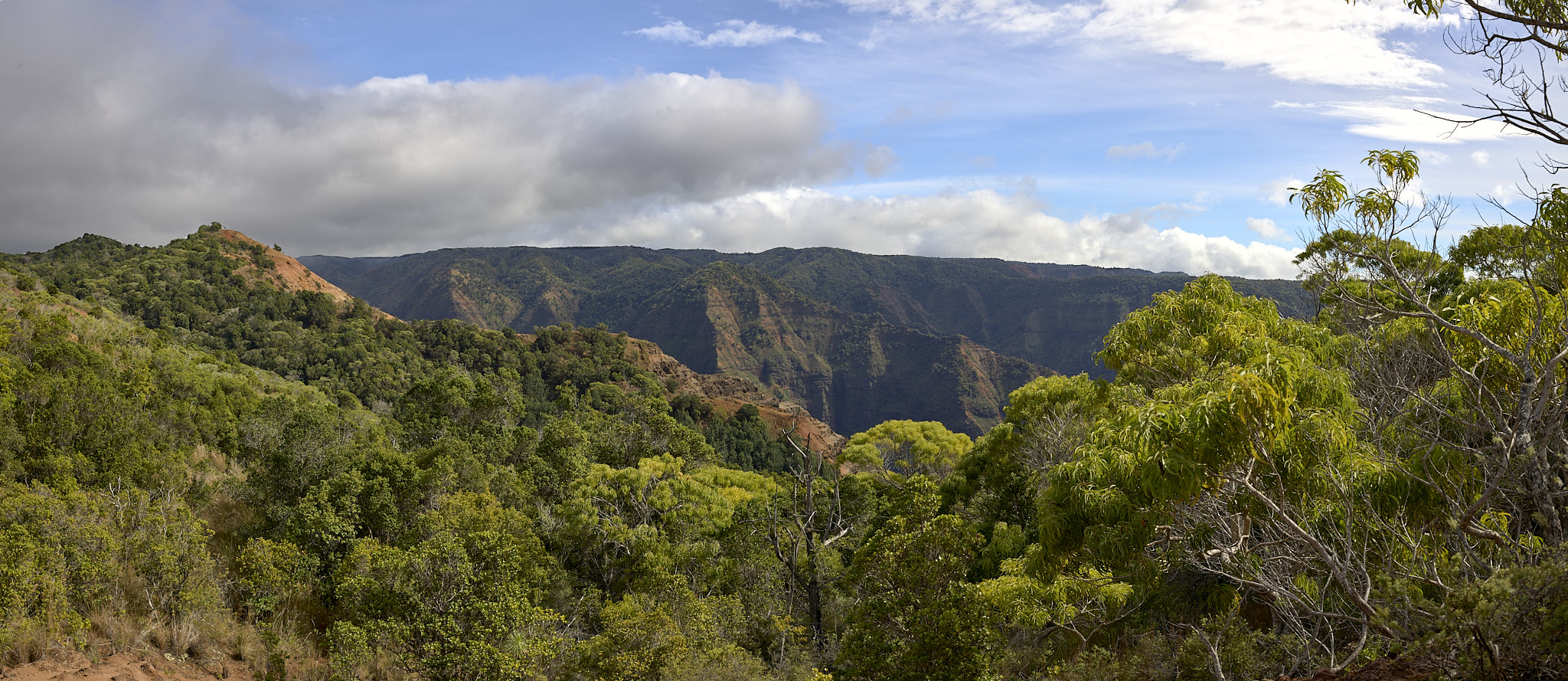
The Koai’e Stream Canyon as seen from the top of the ridgeline of the Alaka’i Wilderness.

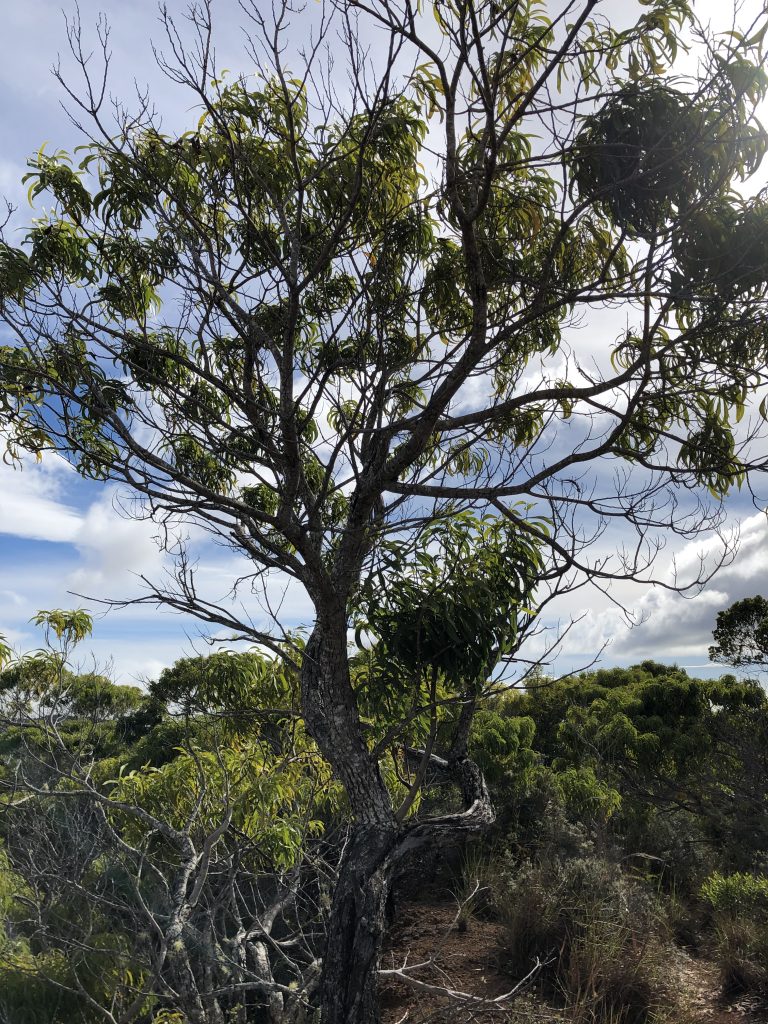
As pretty and elegant as is gets for me.

— Jeff’s Thoughts and Other Worthless Trivia —

I have been taught by Hawaiians to pronounce Alakai as AL-uh-cuh-EYE-ee. The word means: Leader.